
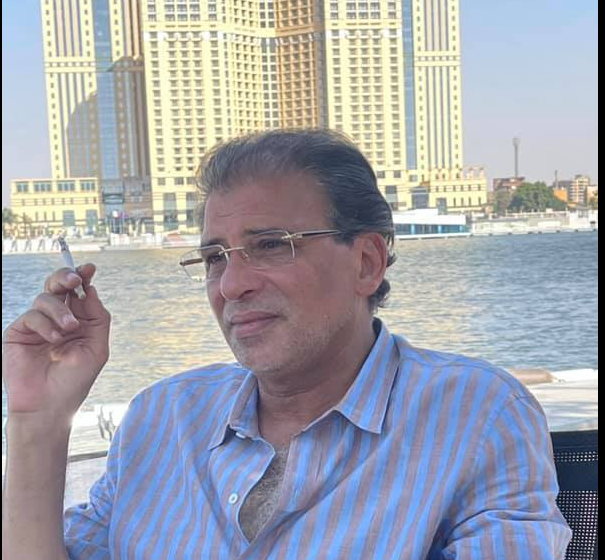
Q&A | Director Khaled Youssef on the national political dialogue: We must take full advantage of this opportunity, even if our chances are slim
Director Khaled Youssef’s career in politics has taken many stripes, as he has moved from playing a crucial role in the June 2013 anti-Muslim Brotherhood movement to falling out of favor with the government as the space for civilian participation continued to shrink.
As a member of the June 30 Coalition, Youssef enjoyed proximity to authorities that granted him permission to use a plane to film mass protests against the Muslim Brotherhood government in 2013.
By 2017, he had moved into a more oppositional space, disputing the government’s decision to cede sovereignty over the islands of Tiran and Sanafir to Saudi Arabia and denouncing the arrest of protestors who took to the streets to demonstrate against the loss of the islands, and later opposing the 2019 constitutional amendments.
Youssef, then an MP, was subject to a series of security restrictions and a major smear campaign, on the back of which he left the country.
With the president’s call for the creation of a new public political forum, the “national political dialogue,” ostensibly intended to encompass figures from across the country’s political spectrum, Youssef appears to have returned to the scene.
Youssef was one of a select group of figures from opposition groups, including former presidential candidate Hamdeen Sabbahi of the Nasserist Popular Current Party, who were invited to the event where President Abdel Fattah al-Sisi first announced the political dialogue, and which was quickly followed by the release of activist Hossam Moanis, who coordinated the campaign for Sabbahi’s presidential bid in 2014.
Mada Masr sat down with Youssef at the end of April to ask the director whether he thinks the developments represent a sea change for opposition politics or for the fate of detained opposition politicians.
Mada Masr: Mohamed Anwar al-Sadat, the head of the Reform and Development Party, has played a leading role in lobbying for the release of political prisoners. Will you and Hamdeen Sabbahi [who also founded the Karama Party] now be taking over this role in efforts to mediate with the state over the issue of political prisoners?
Khaled Youssef: The effort made by Sadat is commendable, but his efforts did not convey the strength of the opposition. He mediated between the opposition and the authorities, but we are now having more direct conversations because the people imprisoned are from among our ranks. I am one of the people who have been harmed, and I have had to pay an exorbitant price. However, I have forgiven, and I just want the country to get to a better place.
MM: Is the invitation of Hamdeen Sabbahi and other opposition leaders to the scene related to preparing an opposing candidate to run against Sisi in 2024?
KY: Absolutely not, no one has approached us about playing that sort of role or putting on such a show. None of us have ever played that role, and we won’t start now.
MM: What role will the opposition play in the coming period?
KY: We are preparing a document outlining the procedural steps and roadmap proposed to us for the [national] dialogue, to be presented at the launch of the dialogue following the Eid break. The preparations will also reveal the extent to which the state is ready for a dialogue that leads to a real national consensus, as the results [of the dialogue] cannot be guaranteed, however the signs are all promising. The state is releasing the people we have asked them to, with the latest one being Hossam Moanis, and they have promised the release of all prisoners of conscience.
MM: Why was there a decision to grant a presidential pardon only to Hossam Moanis, and not to the rest of the individuals accused in the Coalition for Hope case?
KY: We negotiated everyone’s release, including Zyad Elelaimy and Hisham Fouad from the Coalition of Hope, and Ahmed Douma, and all the people who were not involved in violence or inciting violence, without any exceptions, and with a clear national conscience. The authorities are studying the cases of prisoners of conscience one by one and, god willing, they will be released successively, as that was the promise we were given. We know that people have hope, and it is their right to be released. We submitted a list of political prisoners, but it has grown significantly after the reformation of the presidential pardon committee was announced. However, we were promised that the names of politicians we know personally are currently being considered for release, either via presidential pardon or through release orders given the completion of their sentence.
MM: Is there a timeline for implementing the releases or pardons?
KY: The authorities are studying dozens of cases. I don’t want to say hundreds, but at least dozens. So we are waiting for their releases after the Eid holiday. In the days leading up to the holiday, the remaining names on the “list of 41” prisoners [whose release was announced before Eid] are still being released from prisons.
MM: What are the characteristics of the document that you are preparing for the upcoming political dialogue?
KY: As a faction of the opposition, we in the Karama Party, in cooperation with public figures, presented a vision for a document that represents our shared ideology for opposition.
We are waiting for a meeting with the rest of the opposition factions in Egypt so that we can come to an agreement on its terms, and conduct a dialogue with the authorities in the presence of state institutions. We believe that opening the public sphere and addressing social justice are two fundamental issues, in addition to ensuring that there is common ground when it comes to crucial issues, such as the Grand Ethiopian Renaissance Dam and the fight against terrorism.
MM: Did some people discuss the possibility of addressing amendments to the Constitution?
KY: We did not discuss constitutional amendments at all, but of course there are dreamers among the opposition who could make these demands in the future.
MM: What will be the outcome of your participation in this forum?
KY: We demanded that the public sphere must be open to everyone, and asserted that the nation must have room to breathe on more than one front. We are all a part of this nation, and it is the right of every faction to have their say. Engagement with these different opinions could bring about a third solution, in addition to ours or that of the state.
MM: And will the state accept opposing opinions?
KY: The authorities said that they will accept different opinions and that they are ready to listen and conduct a dialogue. We have to take full advantage of this opportunity, and try as best we can to release as many prisoners of conscience as possible, even if our chances are slim.

تقارير ذات صلة
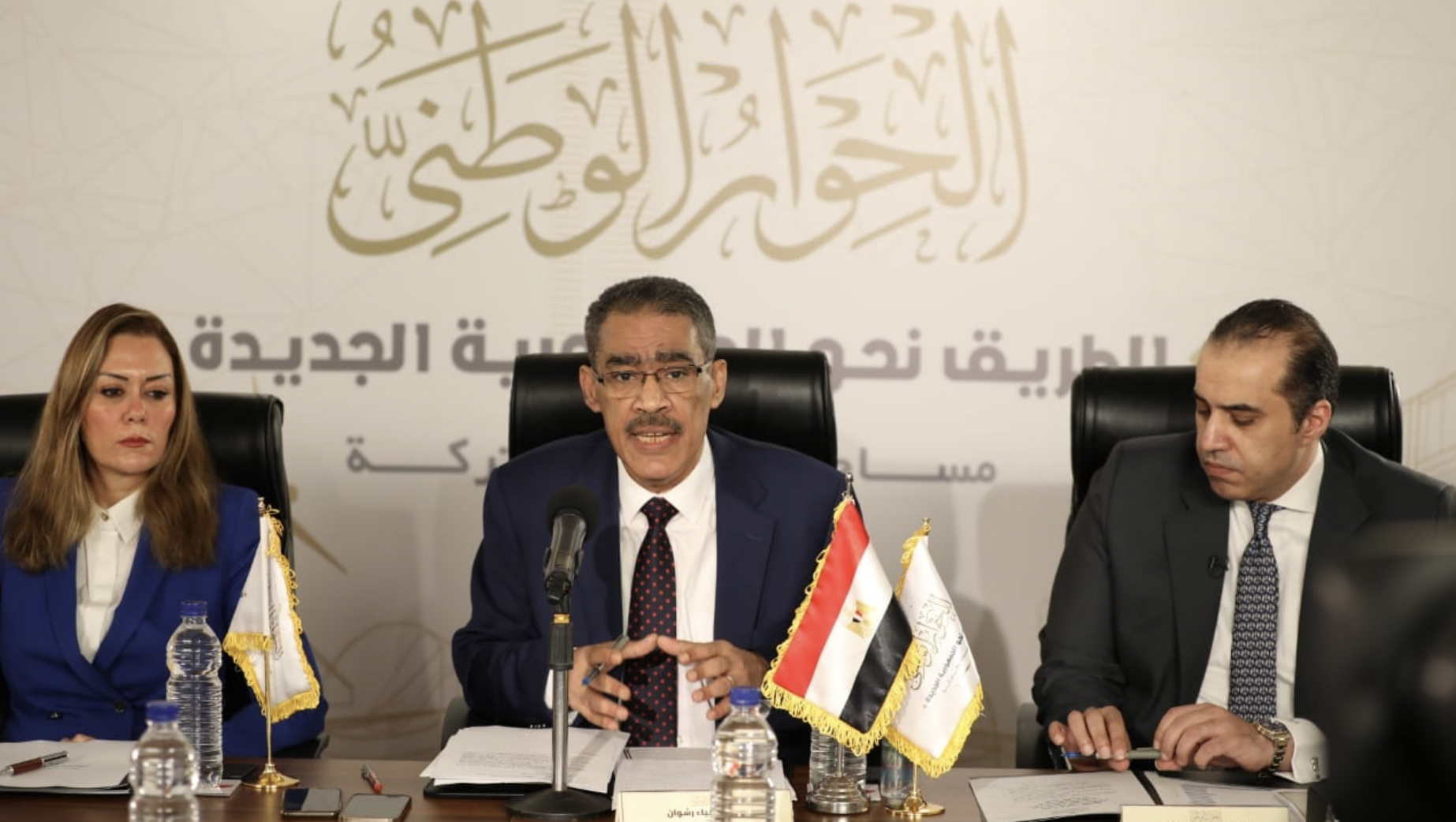
What happened in the first coordinating session of the National Dialogue?
Sessions in the National Dialogue proper are set to begin after Eid al-Adha
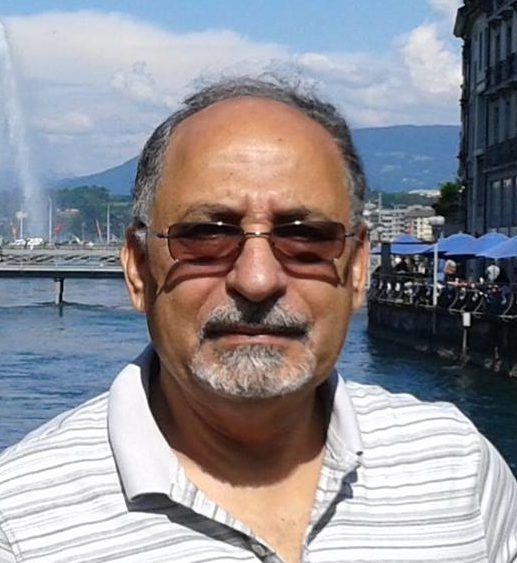
Q&A with Civil Democratic Movement co-founder Mostafa Kamel al-Sayed on the latest in the national political dialogue
"The academy issued its statement without consulting the civil movement"
With 59 political detainees ordered released since April, do steps toward ‘national dialogue’ represent a breakthrough for political freedoms?
So far, releases have been determined on a case-by-case basis
Your support is the only way to ensure independent, progressive journalism survives.
You have a right to access accurate information, be stimulated by innovative and nuanced reporting, and be moved by compelling storytelling. Subscribe now to become part of the growing community of members who help us maintain our editorial independence.
Join us