
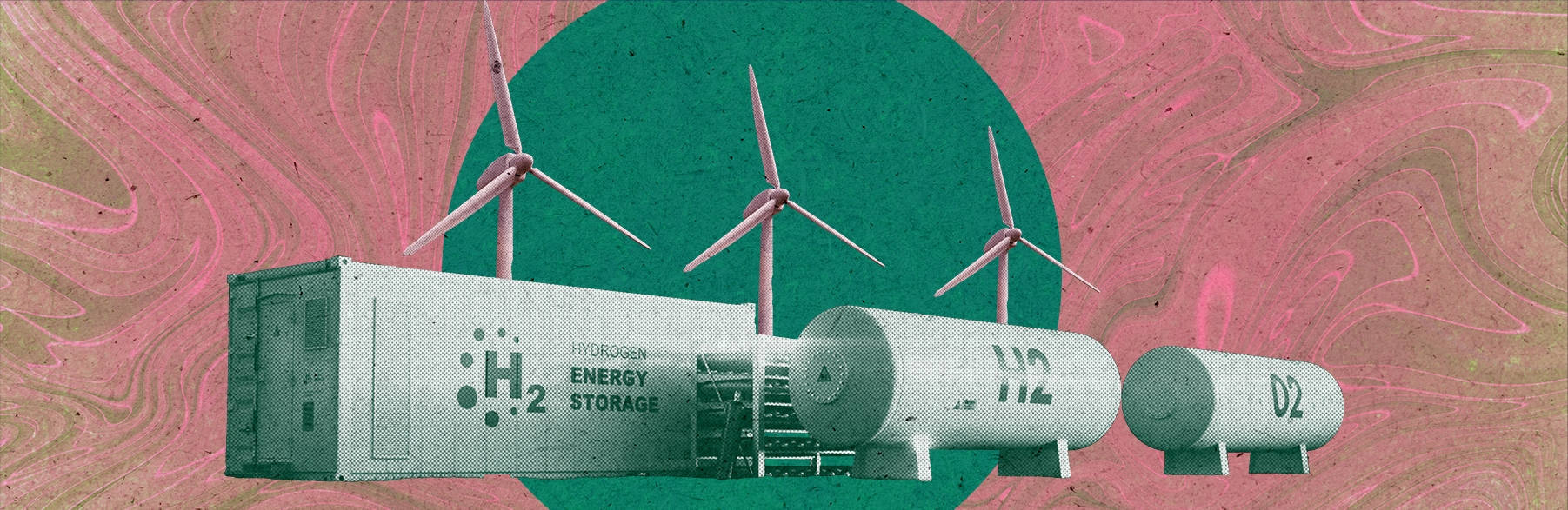
What’s behind Egypt’s green hydrogen hype?
Opened in Aswan in 1963, the KIMA fertilizer plant was a clean energy producer ahead of its time. Running entirely off the surge of cheap, hydroelectric power spilling over from the Aswan Dam, it produced green hydrogen, used to make green ammonia and ultimately fertilizers, all part of a national politics of the time that was oriented toward self-sufficiency.
That the KIMA plant boasted state-of-the-art green credentials was almost a “coincidence” of the project, says Osama Fawzy, hydrogen consultant and manager of Hydrogen Intelligence platform, who attributes the decision to use renewable power at the fertilizer factory to its proximity to the dam and the relatively low cost of hydroelectric power for Egypt at the time. Yet as the natural gas and oil sectors boomed in the 1970s, KIMA’s specialized hydroelectric equipment deteriorated and was never replaced, and the plant was converted to run on cheaper natural gas in 2019.
[wonderplugin_video iframe="https://www.youtube.com/watch?v=qGBGg7Kew0Q&ab_channel=%D9%83%D9%8A%D9%85%D8%A7-%D8%A3%D8%B3%D9%88%D8%A7%D9%86" lightbox=0 lightboxsize=1 lightboxwidth=960 lightboxheight=540 autoopen=0 autoopendelay=0 autoclose=0 lightboxtitle="" lightboxgroup="" lightboxshownavigation=0 showimage="" lightboxoptions="" videowidth=600 videoheight=400 keepaspectratio=1 autoplay=0 loop=0 videocss="position:relative;display:block;background-color:#000;overflow:hidden;max-width:100%;margin:0 auto;" playbutton="https://www.madamasr.com/wp-content/plugins/wonderplugin-video-embed/engine/playvideo-64-64-0.png"] President Gamal Abdel Nasser inaugurates KIMA fertilizer plant in Aswan
Since then, green hydrogen has come to the fore of future-planning across the Mediterranean, where Europe has marked the fuel source out as a promising candidate to power its transition to green energy sources. Hydrogen can be used to power energy-intensive heavy industries like steel and iron production, industries that will be obliged by European Union emission-cutting targets to either radically transform or halt their production entirely. Hydrogen has the potential to facilitate a transformation compatible with climate goals since it can be manufactured, as it once was in Aswan, through a process fueled entirely by renewable energy sources.
***
A commitment to the future promise of hydrogen emerged in Europe in 2020, when 26 of the EU’s member states signed on to a 400-billion-euro industry roadmap that includes plans for Europe to not only produce its own hydrogen, but to fund the installation of high-capacity hydrogen production facilities that rely on renewable energy in North Africa and Ukraine for import by 2030. Russia’s invasion of Ukraine earlier this year has only redoubled the bloc’s interests in a hydrogen-powered future, as Moscow responds to sanctions by turning off the natural gas taps and the EU revs its energy transition plans into a higher gear under the REPowerEU program.
Back in Egypt, just two years after Upper Egypt ceased making green hydrogen, the fuel was reintroduced to the national agenda by President Abdel Fattah al-Sisi in July 2021. Ever since, the media has been awash with news of preliminary agreements between the government and international companies for green hydrogen production and export, with Electricity Minister Mohamed Shaker even designating 2022 as “the year of green hydrogen.” Work has ensued, mostly behind closed doors as industry experts and academics note, on a soon-to-be-launched US$40 billion national hydrogen strategy. And with the global community due to head to Sharm el-Sheikh in November for COP27, Egypt’s prospects for capturing and cashing in on Europe’s hydrogen craze rest on how attractive and convincing the strategy will be.
The media buzz amounts to a "green hydrogen hype," multiple industry experts working in the field tell Mada Masr, an amplification of Egypt’s interest in the industry to secure lively engagement with actors abroad. Yet many voices caution about how feasible it really is for Egypt to establish a viable national industry for the product, noting that the country’s current capacity to produce green hydrogen is low. And while the appetite for the green fuel in Europe could represent a bright investment opportunity, the country will lose out, experts say, if it doesn’t simultaneously ensure that a nascent green hydrogen industry for export also facilitates a green transition for its own people, economy and environment.
Around 1.8 million tons of hydrogen are already produced in Egypt per year. Yet this carbon-emitting “gray hydrogen” is made by burning fossil fuels, namely natural gas. Gray hydrogen is currently used to power domestic industries like steel, cement and iron, or is processed into ammonia, which can more safely be stored, transported and used in fertilizers or as fuel for heavy transport like aviation and shipping.

While Egypt has set a goal for renewables to make up 20 percent of its total energy mix by 2022, in line with its 2030 agenda, none of its current “gray” hydrogen output qualifies for the green stamp, according to Sabry,* a green hydrogen expert who spoke to Mada Masr. Under EU standards, a plant producing hydrogen by drawing energy off the national grid must show proof of what’s called “temporal correlation:” evidence that renewables are being added to the grid at more or less the same time as they are consumed by the hydrogen plant, Sabry explains.
Egypt’s existing national grid doesn’t have the capacity or flexibility to transmit high amounts of renewable energy, let alone the vast quantities needed to power energy-intensive hydrogen production plants. Renewable energy supply is also intermittent and inconsistent by nature, due to the natural seasonal fluctuations in wind speed or the intensity and duration of sun exposure. Without adding huge storage capacity to bank renewable power for consumption when it's dark or when the wind drops, it remains necessary to back up the grid’s power supply with natural gas or coal.
Industry experts speaking to Mada Masr note that it’s unfeasible, then, for Egypt to convert its existing gray hydrogen plants to produce green hydrogen, and anticipate that to enact any of the preliminary deals announced in the media, green hydrogen plants will have to be purpose-built off-grid, likely with their own on or near-site renewable power facilities, and most likely in coastal areas to facilitate export shipping.
As a result, one of the key demands for the national strategy is a commitment from the state to dedicate either renewable energy sources or land to build the renewables needed to power green hydrogen production, Sabry notes. Egypt already aims for renewables to make up 42 percent of its energy mix by 2035. Part of this could be set aside for green hydrogen, or the state could allocate new and specific resources for hydrogen, he suggests. At present, around 5,200 square kilometers have been allocated for renewable energy projects, and according to Sabry, the green hydrogen strategy being drafted should reveal whether further land will be allocated for renewable generation to go to green hydrogen, or whether a portion of the already allotted land area will be set aside.
But as long as ambiguity lingers over how renewables allocations will work, says Assem Korayem, general manager of operations and maintenance at the Egypt branch of Total Eren, a French renewable energy developer, it's impossible for interested companies to make solid business plans as the price-per-renewable-watt supplied by the government is very apt to change.
Several industry experts who spoke to Mada Masr say that this is why, despite the government signing a flurry of preliminary agreements for green hydrogen production, only one has materialized into a final contract expected to be at least partly operational by the time Egypt hosts COP27 in November.
In March, the Sovereign Fund of Egypt signed on with Norwegian renewable energy company Scatec and off-taker Fertiglobe — jointly owned by OCI NV (Orascom Construction’s Netherlands-based parent company) and Abu Dhabi National Oil Company (ADNOC) — to develop a 100 MW hydrogen plant at the Suez Canal Economic Zone, aiming to produce up to 90,000 metric tons of green ammonia per year. The project, estimated to cost $5 billion, is set to convert the existing, natural-gas-powered ammonia plant belonging to the Egyptian Basic Industries Corporation and conveniently stationed by the Suez Canal in Ain Sokhna for the green product to be shipped.
Exceptional circumstances seem to have made the Scatec-Fertiglobe project viable, setting it strides ahead of the other, more tentative project proposals. While most projects are expected to need their own dedicated renewable stations on site, Sabry says the Scatec-Fertiglobe plant could get special permission from the Egyptian Electric Utility and Consumer Protection Regulatory Agency to buy renewable energy for hydrogen production from existing stations instead. On August 31, the Cabinet announced that sites in Benban Solar Park and in wind fields in the Gulf of Suez were granted to the Scatec-Fertiglobe project. To ensure that EU regulations with regards to the hydrogen being designated as “green” are met, the electricity regulator could issue a green certificate to prove that the hydrogen produced by the plant has come from a renewable source, Sabry explains.
The speed of progress at the Scatec-Fertiglobe plant, part of which is expected to be showcased at COP27 in November ahead of its full inauguration in 2025, is a point of much contention among green hydrogen experts. They point to the lack of information regarding how Scatec and Fertiglobe raised financing for the project and how energy transmission and supply for the project will be arranged.
Fertiglobe was able to mobilize quickly, says Fawzy, given that it is using an existing fertilizer plant owned by Orascom to produce the green ammonia, while Sabry notes that the project did not face any issues with raising finances and has most likely been self-funded given that it is run by “three powerful entities.”
The deal was likely pushed through since the government is keen to have some flagship projects up and running by the time COP27 launches, says Korayem. “Before COP is an ideal time for investors to come up with an idea, and the government will buy this idea,” he says.
The SCATEC-Fertiglobe project, then, appears to be a special case, with many telling Mada Masr that actualizing the remainder of the preliminary agreements, worth $63 billion in total, depends on how seriously the government’s national strategy incentivizes investment.
In the absence of a national strategy to showcase those incentives thus far, the hype around hydrogen that’s been created over the recent months is no bad thing, says Halim,* a doctoral researcher in novel methods of green hydrogen production, noting that it comes as the EU reorients its political relationships apace with Russia’s withdrawal from its energy market. Aside from the project with Norway’s Scatec and the Orascom-ADNOC-owned Fertiglobe, Cairo has inked memoranda of understanding with Germany’s Siemens and Thyssenkrupp, Italy’s Eni, France’s EDF Renewables and TotalEnergies, and Belgium’s DEME Group, while the president has more recently held direct talks with Australia’s Fortescue Future Industries and Denmark’s Maersk.
Part of a June agreement for Israel and Egypt to boost natural gas deliveries to Europe also includes a loose clause stating that Egypt, Israel and the EU will “endeavor” to encourage cooperation on “achieving green energy goals and combating climate change” in areas including hydrogen. The value of all these agreements is “political,” notes Halim, serving to “put Egypt on the map” as a potential producer for export at a crucial time.
But whether the hype around hydrogen exports will translate into a long-lasting advantage for Egypt is another question. At present, Halim notes, there is no commitment to using green hydrogen within Egypt: all of the plans are for export to buyers abroad. Halim describes a conference he attended in the United Kingdom, where European companies were “blunt about finding a location in which production will be cheaper” and swift to reject questions about whether “using [North Africa’s] assets for their benefit amounts to neocolonialism.” Similar concerns were articulated in a recent report by Corporate Europe Observatory.
Plans should be shaped not just to incentivize international investors, Mohamed Younes, an energy and environmental consultant with the Egyptian Initiative for Personal Rights tells Mada Masr, but to stimulate domestic employment by hiring local communities to staff factory plants. Green hydrogen is not complex to produce, says Younes, so local communities could be employed to staff factory plants. The government should spread new plants across different governorates, as long as they meet the required conditions for production, adds Younes, instead of only establishing projects in industrial zones which provide special economic incentives to investors.
Beyond employment, Egypt could reap greater benefit to its economy and environment more broadly if it does not limit the horizons of its national strategy to exports only. The revenue Egypt would get by producing hydrogen for export to Europe would be “peanuts,” as Fawzy describes it, in comparison to what it could get by moving up the value chain and selling the industrial products of green hydrogen, such as green fertilizers or green steel, to customers in the Global North. This could be one of the biggest downfalls of the national strategy’s current trajectory, says Fawzy, since heavy polluting gray hydrogen industries at home would continue to release an immense volume of carbon emissions, severely damaging the environment, even as Europe benefits from the green variety. Recent research suggests Egypt’s production of gray hydrogen accounts for as much as six percent of the country’s total CO2 emissions.
Egypt also hazards finding itself snookered in future. At the same time as the EU seeks cheap producers for its new favorite fuel, it is also planning future steps to green its own economy that could include carbon borders — a measure that would see the bloc stop buying the industrial outputs of countries with lower emissions standards, like Egypt's.
Given that the EU represented about 25 percent of Egypt’s total trade volume in 2020, the implementation of carbon-border adjustment mechanisms could see Egypt lose significant export revenue if it fails to green its own heavy industries. Introducing green hydrogen into heavy industries that are technologically and economically difficult to decarbonize would allow for manufacturing industries such as fertilizers, steel, aluminum and cement to flourish and reap further foreign direct investment. Halim emphasizes that subsidizing and funding research and development work for heavy industries is key to facilitating a green transition for Egypt as well.

Currently, Sabry cautions, Egypt lacks the funds to invest in transforming its own heavy industries: the quantity of renewables that it generates is only around 22 percent of what would be required to convert the entire country’s gray hydrogen output to green hydrogen.
In the short term, raising revenue by exporting hydrogen to Europe could provide funds that may ultimately be used to convert national industry at a later stage, Zaki,* an expert working in a European green hydrogen company, suggests to Mada Masr.
While Egypt ranks as a cost-attractive option for producing large amounts of green hydrogen in a report commissioned by the Netherlands Enterprise Agency, it fares less well in the NEA's assessment of its political and economic framework, which takes into account factors such as renewable energy status and targets, expertise and the ease of doing business — factors which the sources who spoke to Mada Masr say the national strategy will need to address.

But so far, the policy path the government will take remains something of a mystery. A committee was formed to design the strategy in November 2020, but was slow to get off the ground, and an initial June 2022 release date for the strategy was delayed until the fall. Numerous lobbying initiatives, says Fawzy, pushed for expert consultants to be included at an early stage in the drafting process, but it took around a year to secure funding to hire consultants. In March, the committee, made up of officials from the ministries of petroleum and electricity, signed on with the European Bank for Reconstruction and Development to fund the regulatory analysis and assessment of the changes “needed to support the development of hydrogen supply chains.” Fawzy also predicts that a three-month study gifted to Egypt by a consortium of Belgian companies with technical expertise consisting of Deme, Antwerp Ports, and Fluxys will be a point of reference for the national strategy. But steps to integrate international expertise were taken too late, Fawzy says, “giving an indication that the state lacks the vision,” and leaving Egypt battling against time in what is now a global race to corner the demand for green hydrogen.
Fawzy praises, however, a number of steps taken thus far to incentivize investment in the industry. In March, the production, storage and export of green hydrogen and its product, green ammonia, were recognized within the state’s economic development strategy, and a decree was passed to allow green hydrogen and green ammonia projects to benefit from a wide range of state support, including tax breaks, under the existing investment law. While Fawzy describes this as “a major milestone,” he adds that the law remains vague and will be insufficient to seriously stimulate investment on its own. No private-sector company or financing institution will follow through with their investment plans without a national strategy for green hydrogen, Fawzy emphasizes.
Several of the experts whom Mada Masr spoke to note that the private sector will also be on the lookout for how the government plans to enter the sector, as this will determine the extent of competition. According to the latest statement made by Prime Minister Mostafa Madbuly, 20 to 25 percent of the expected investments in Egypt’s first phase of green hydrogen projects, amounting to $41.5 billion by 2030, are to come from the state.
It remains to be seen whether the strategy, set for release next month, will be sufficient not only to attract investors, but to imbue value to Egypt’s existing resources and environment and outlive the “coincidence” that saw green hydrogen generated in Aswan over half a century ago.
* Pseudonyms
تقارير ذات صلة
What can we expect from this year’s COP28?
Interview on COP28 with lead Egyptian climate financing negotiator Mohamed Nasr.
Cashing in on greenwashing? Egyptian solar companies sell carbon certificates to Global North
Some note that carbon trading does little to reduce the net production of harmful emissions.
The case against coal in Egypt
Coal imports in Egypt are now mainly used in the cement manufacturing sector
Your support is the only way to ensure independent, progressive journalism survives.
You have a right to access accurate information, be stimulated by innovative and nuanced reporting, and be moved by compelling storytelling. Subscribe now to become part of the growing community of members who help us maintain our editorial independence.
Join us