
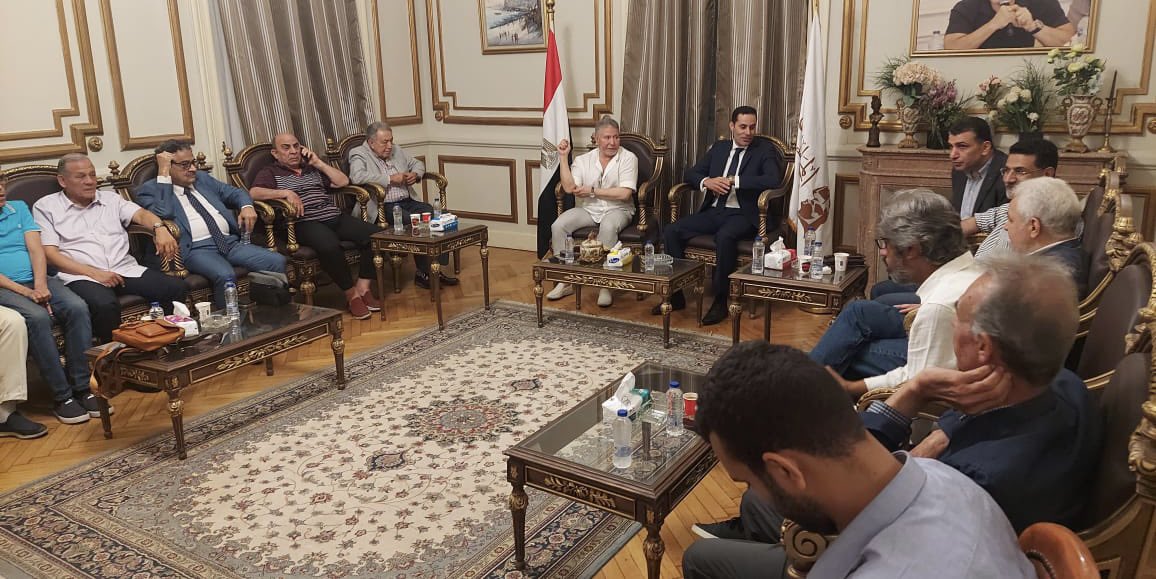
Presidential elections: Seasonal oppositional division
On November 11, a number of public figures and nine of the 12 political groups associated with the Civil Democratic Movement — including the Karama, Conservatives, Dostour, and Popular Socialist Alliance parties — urged voters not to participate in the upcoming presidential election, which they described as being without guarantees, saying they wouldn't accept it “for ourselves or our nation.”
The Egyptian Social Democratic and Justice parties, on the other hand, insisted on participating in the election, accusing other Civil Democratic Movement members of “political one-upmanship and blackmail,” in a statement they decided to postpone that was viewed by Mada Masr.
The two dissenting parties indicated in the statement their intention to suspend their participation in the movement, which, they said, “was civil and democratic and has now become fascist and driven by allegiance to Tantawi.” This is in reference to former MP and presidential hopeful Ahmed Tantawi, who dropped out of the race following intimidation and obstacles imposed by the state that left his campaign unable to collect the public endorsement forms required for nomination.
The two parties believe that the rest of the movement considers Tantawi's participation in the election as the only guarantee of electoral integrity.
Egyptian Social Democratic Party leader and presidential candidate Farid Zahran submitted his nomination papers on October 8, having secured endorsements from 30 members of Parliament, including independents and nine representatives from the dissenting parties.
Mada Masr spoke to various leaders in the movement and the positions stand in stark opposition. Supporters of the first current within the movement see presidential elections as a marginal event that offers no room for political reform. Supporters of the second current believe that Nasserist leaders are trying to control the Civil Democratic Movement, to be the ones who grant and deny opportunities, open and close doors, as if they are agents of the ruling authority within the movement.
Two days after the start of election season in September, the Karama, Conservatives, Dostour, Popular Socialist Alliance, Arab Democratic Nasserist, Socialist, Communist, National Accord and the Bread and Freedom parties, along with six members of the General Secretariat of the Civil Democratic Movement, issued a joint statement to announce that they will not put forward a presidential candidate. They added that the violations that plagued the nomination process had diminished any guarantees of fairness and neutrality, turning the election into an "a referendum in disguise."
In the same statement, the anti-election camp reiterated what they had said in another statement issued independently from the movement. They said the prosecution of Tantawi and 22 members of his electoral campaign confirms “the deep doubts of all parties in the Civil Democratic Movement regarding the credibility and integrity of the upcoming election, which has led them to demand non-participation.” The group concluded their statement by emphasizing that the election “has already been defined in terms of its features and results.”
Mostafa Kamel al-Sayed, a professor of political science and member of the General Secretariat of the Civil Democratic Movement who signed the November 11 statement, tells Mada Masr that the nine parties and the six public figures who drafted the statement deliberately avoided the phrase "boycott the election." He explains that, despite the lack of any guarantees for the integrity of the upcoming presidential election, authors of the statement left the matter open for those who wish to boycott.
Sayed also points out that authors of the statement did not condemn the Zahran’s position and those of the parties supporting his candidacy, saying that there was an intention to completely sever ties between the two fronts: those opposing and those in favor of participation in the presidential elections. Sayed says there was a proposal to vote on expelling the Egyptian Social Democratic, Justice, and Reform and Development parties from the Civil Democratic Movement for participating in the presidential election. The proposal was eventually abandoned.
“Despite our well wishes for Zahran, the presidential election will take place and President Abdel Fattah al-Sisi will win. Afterward, Zahran will return to the opposition once again. There is no other alternative,” Sayed says.
In contrast to this opinion, Khaled Dawoud, the Civil Democratic Movement spokesperson and a member of the Egyptian Social Democratic Party, tells Mada Masr that the move to issue a statement calling for non-participation in the presidential election in the absence of the dissenting parties was a violation of the coalition’s governing rules, which are based on consensus rather than majority rule. He says that majority rule is not suitable for political alliances because it would entail the ejection of dissenting parties.
Dawoud says he doubts whether the Dostour Party’s support of the anti-participation camp is genuine. A former Dostour member himself, Dawoud adds that the party had all but endorsed the election and that its leader, Gameela Ismail, had strongly criticized the Nasserist camp’s attempt to hijack the Civil Democratic Movement.
As for Ismail, she neither confirmed nor denied signing the two statements and declined Mada Masr’s request for comment.
Meanwhile, the Justice and Egyptian Social Democratic parties prepared a joint statement to respond to the anti-electoral participation wing, which included harsh criticisms of the movement’s leaders and announced that they would suspend their participation in the coalition.
Speaking on condition of anonymity, a source from the Justice Party says both parties drafted multiple versions of the statement, most of which accused leaders of the Civil Democratic Movement who signed the statements of “authoritarianism and fascism.” In one of the drafts obtained by Mada Masr, they said that the opposition is conducting its battle against the current regime without any vision for the future, employing the same tactics they used under Hosni Mubarak and Mohamed Morsi.
The statement also points out that participation in presidential elections is what makes reform possible and boycotting or abstaining only serves the interests of the ruling authority.
“We thought that the Civil Democratic Movement was still a unifying umbrella for the Egyptian opposition, but, in recent months, we were confounded by practices closer to authoritarianism and fascism, which we struggle against. Either we consent to a certain direction within the movement, or are vilified and accused of coordinating and aligning with this administration,” the draft statement reads.
It also alludes to existing rifts within the coalition, referencing the police report filed by Karama Party leading member and former Labor Minister Kamal Abu Eita against Free Current leader Hisham Kassem.
The source adds that the Justice and Egyptian Social Democratic parties have made several amendments to the statement before ultimately deciding to postpone its release, emphasizing that Zahran did not want to get involved in this conflict at the moment.
Meanwhile, Mona al-Shamakh, the media secretary of the Egyptian Social Democratic Party, tells Mada Masr that her party and Zahran’s electoral campaign did not issue any public statements about suspending their participation in the Civil Democratic Movement. The party opted instead for an internal letter to members of the coalition notifying them of the suspension, she said.
Similarly, Reform and Development Party leader Mohamed Anwar al-Sadat has not issued any public statements regarding his position on the upcoming presidential election. He did, however, attend Zahran’s electoral conferences with other members of his party and was noticeably absent from the non-participation announcement meeting.
Sadat was part of the Free Current, which suspended its political activities on September 16, announcing that it won’t be nominating a presidential candidate in protest of Kassem’s imprisonment. The group stated that it had been planning on nominating Kassem, who was sentenced to six months in prison by a misdemeanor court after being accused of “insulting Civil Movement leader Kamal Abu Eita and police officers at Sayeda Zeinab police station, where he was detained.”
The Free Current is a political alliance launched on June 27 by liberal parties in the Civil Democratic Movement (the Dostour, Conservatives, and Reform and Development parties) and several public figures. It had conditioned its participation in the election on the presence of guarantees for fairness and impartiality.
Signs of the rifts within the party began almost at the very beginning of the election cycle, growing from a test of the movement's commitment to plurality to differences in tactics. Sayed attributes the rift within the alliance to the fact that it comprises two directions: one believes that it is prudent to engage in negotiations with authorities in order to try to trade concessions for some political gains, while the other argues that negotiations around a tradeoff is a failed strategy that hasn't borne fruit in the last 10 years.
Sayed adds that it all boils down to whether the administration keeps its promises to the pro-election camp after the ballots close. He points out that if the gains are not worth the political cost of participating in an election without fairness and impartiality guarantees, the pro-election camp will have to return to the rest of the movement's position.
The source at the Justice Party disagrees with that assessment, explaining that the movement's Nasserist factions, led by Karama Party founder Hamdeen Sabahi, are trying to block Zahran's path and present themselves as the sole representatives of the opposition standing up to Sisi. The source goes on to ask the difference between Sabahi's presidential run against Sisi in 2014 and Zahran's current bid if the incumbent's victory is guaranteed in both cases.
Tantawi had previously told Mada Masr that the movement suffers from two problems in its formation and decision-making mechanism.
Regarding the formation, Tantawi said that, on many occasions, there was more space for disagreement than agreement between the movement's parties. He added that some parties in the Civil Democratic Movement present themselves as the opposition while coordinating with the government and participating in elections on state-approved lists.
The Reform and Development, Egyptian Social Democratic, and Justice parties participated in the previous parliamentary elections as part of the state's Unified National List, winning nine, seven, and two seats respectively.
As for the decision-making mechanism, Tantawi explained that all of the movement's decisions are not reached through majority rule, but rather through consensus, as if every member has veto powers, contrary to democratic values.
Tantawi added that when the Civil Democratic Movement held a meeting on September 24 to discuss the presidential election, he was the only candidate who supported a vote to choose one opposition candidate or to take a unified position to boycott the election. However, the parties of the movement and its leaders did not resort to voting, despite the lack of consensus.
Tantawi was preparing to launch a political front for civil democratic transformation by the end of October, before postponing it due to Israeli's aggression onGaza.
The Civil Democratic Movement was founded in December 2017 as a new version of a front that included political opposition parties with different ideologies seeking to unite against the regime since 2012. It started off as the National Salvation Front in November 2012, then the Popular Current later that year. It was reestablished in 2014 to support Nasserist leader Hamdeen Sabahi's presidential bid. It then became the National Front in January 2017, after calls from liberal and leftist parties and public figures to endorse a presidential candidate, before being reincarnated as the Civil Democratic Movement at the end of 2017.
The movement initially included a number of public figures and seven parties: the Reform and Development, Popular Socialist Alliance, Dostour, Justice, Egyptian Socialist Democratic, Karama, and Egypt Freedom parties. Its tasks were defined as “engaging in activities to expose the policies of the current regime, defend the civil nature of the state, and confront corruption.” It announced that it would boycott the presidential elections in 2018 under the slogan “stay home.”
The movement suspended its activities in September 2019 following a wide-scale campaign of arrests against political activists, public figures and members of the coalition. It resumed its activities in May 2021 after the administration invited a number of its leaders to participate in the National Dialogue that Sisi called for in April 2021. All the parties of the movement and most of its leaders participated despite the majority’s concerns regarding the state’s disregard for the demands they had conditioned their participation on, foremost of which is the release of all prisoners of conscience.
Then came the presidential election, and the movement’s parties were unable to come to an agreement on one candidate to represent them, neither in the preparatory stage, which saw Ismail, Tantawi, and Zahran announce their intention to run, nor after Zahran made it to the final list of presidential nominees alongside candidates from the Wafd and Republican People’s parties, both of which are affiliated with the current administration.

تقارير ذات صلة
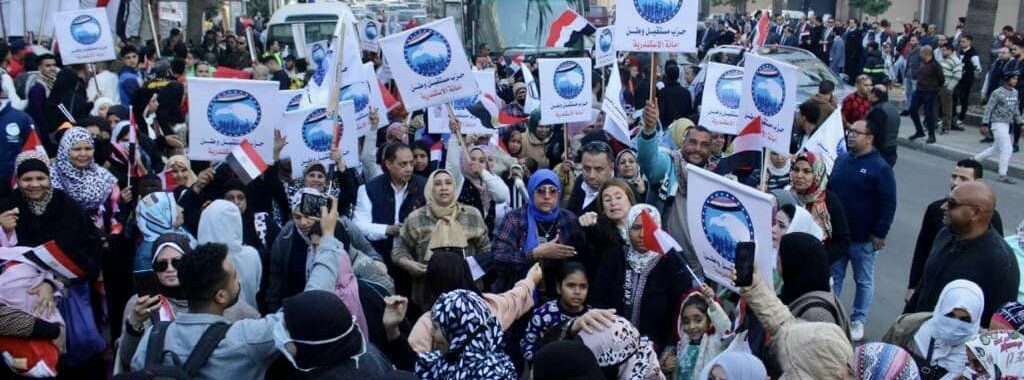
The turnout behind Sisi’s reelection
“There are no obstacles, sir. Voting is proceeding smoothly,” one of the judges supervising polling sites told National Elections Authority director Ahmed Bendari during a conference call, one of many…
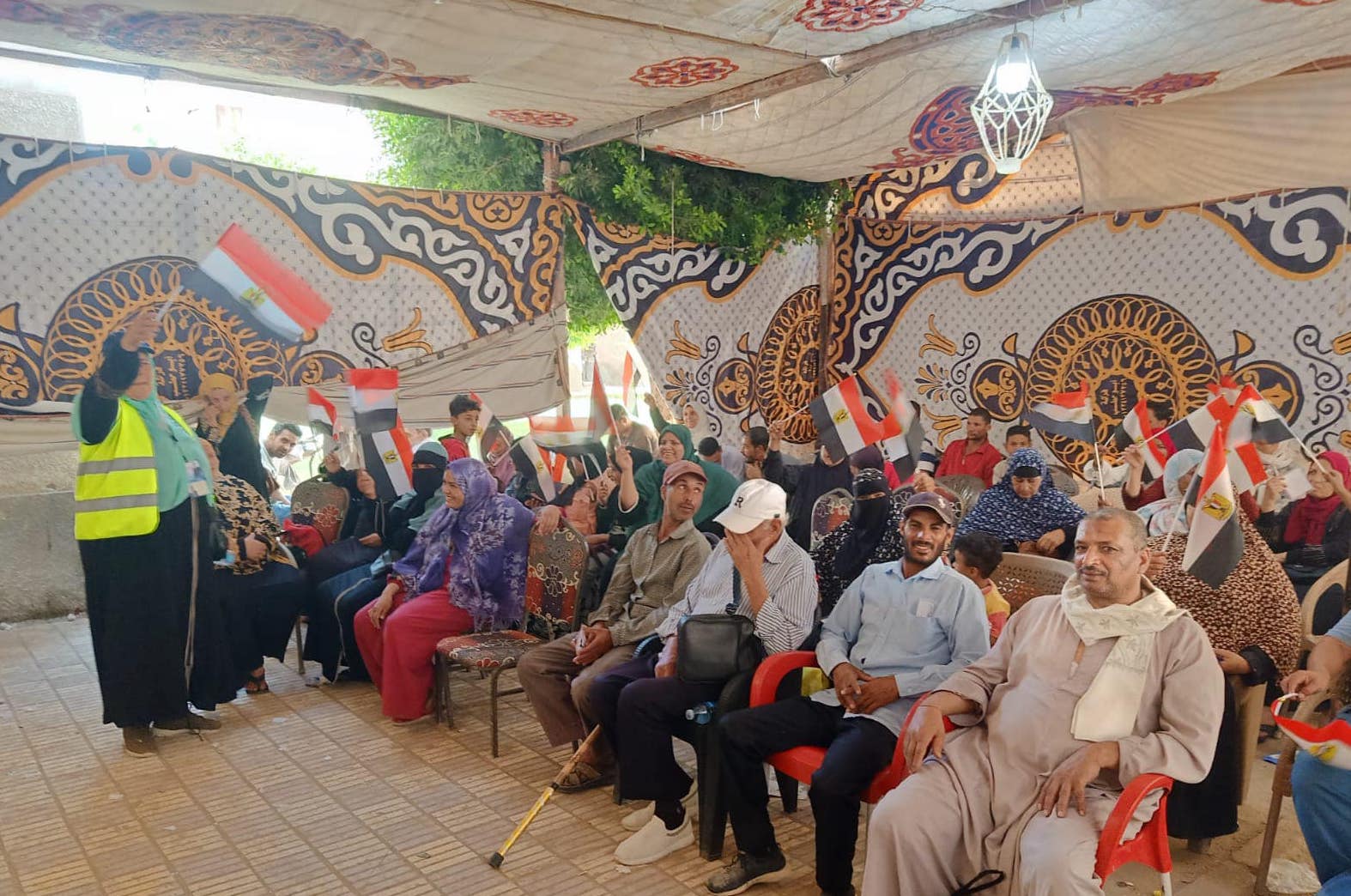
Phase one: The ‘battle’ for presidential endorsements
The effort seemed like part of a plan to create an image of massive public support for Sisi
Presidential elections: An opportunity for the opposition to come out of the margins?
Now, there are three members of the Civil Democratic Movement who have stated their intention to run
Your support is the only way to ensure independent, progressive journalism survives.
You have a right to access accurate information, be stimulated by innovative and nuanced reporting, and be moved by compelling storytelling. Subscribe now to become part of the growing community of members who help us maintain our editorial independence.
Join us