
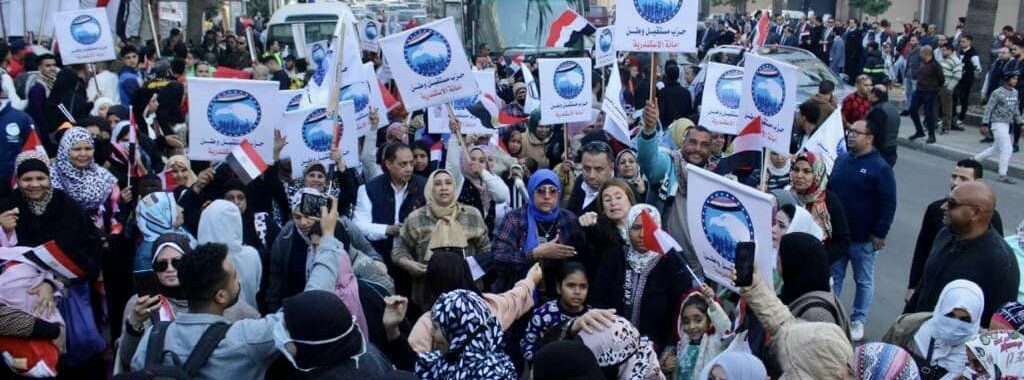
The turnout behind Sisi’s reelection
“There are no obstacles, sir. Voting is proceeding smoothly,” one of the judges supervising polling sites told National Elections Authority director Ahmed Bendari during a conference call, one of many the authority held over the course of the presidential ballot. “And what about the turnout?” Bendari asked, to which the judges in attendance unanimously responded that it was high.
Sure enough, the turnout was at 66.8 percent, as announced by the NEA on Monday, double the turnout in the presidential elections of 2014 and 2018. Behind the figure, considered historically unprecedented, Mada Masr spotted several queues around polling stations that wouldn't change in size or people as the vote proceeded, but rather kept posing for TV cameras. Mada Masr reporters also observed voters receiving tokens before entering polling stations, which they exchanged with LE200 upon exiting the site with ink-stained fingers. Others were asked to show up at polling stations in exchange for food supplies.
The talk about unprecedented turnout, according to Amr Abdulrahman, head of the civil liberties unit at the Egyptian Initiative for Personal Rights, is “contradicted by documented testimonies from our colleagues and neighbors that people were having their IDs taken on the streets and put on microbuses to vote by force.”
Echoing the same insight, Mostafa Kamel al-Sayed, a professor of political science and a member of the Civil Democratic Movement, a loose coalition of left wing and liberal parties, tells Mada Masr that the official estimates of the turnout are at odds with what was witnessed on the ground. He added that testimonies from his friends and students who went to cast their votes indicate a lack of turnout in the polling stations they visited.
Sayed also highlights the unprecedented mobilization by institutions and government bodies during the recent election. He points out that buses from Cairo University continued to transport university employees, deans, and vice deans to polling stations throughout voting days. “What I also know is that those who went to the polls in this way received a reward: 1 kilogram of rice and a bottle of oil.”
Sayed emphasizes that exploiting the need of impoverished citizens for basic goods in exchange for their votes portrays both the citizens and the government in an undignified light.
“Gathering voters by distributing LE200 or a bag of rice and an oil bottle has unfortunately become a standard practice that no longer surprises anyone,” Abdelrahman further notes.
Meanwhile, a source close to President Abdel Fattah al-Sisi's electoral campaign describes the unfolding of the voting as "ideal." The source, who spoke with Mada Masr on condition of anonymity, says that Sisi’s instructions to the campaign were to "let people get out and vote. No one should tell them to vote for Sisi and no one should interfere with the result no matter the outcome." The source believes that due to this directive, Sisi, now re-elected with 89.6 percent of the vote, did not attend any campaign events.
According to the source, representatives of the Nation’s Future and the Homeland Defenders parties, both supportive of Sisi, expressed concerns about a potential low turnout, prompting them to make efforts to encourage the largest number of voters to participate without directing any to vote for Sisi.
Regarding the use of electoral bribes — be it LE200 in some areas or food supplies in others, according to voters who spoke to Mada Masr — the source close to Sisi's campaign confirms that the practice of giving out goods and money in exchange for votes does occur, "especially in urban governorates," estimating that half of the voters benefited from it. However, he argues that this does not negate the fact that at least 20 million people willingly participated in the election. "No one asks those who go to cast their vote, whether for money, goods, or of their own accord, to vote for Sisi." The source added that there is no law that criminalizes urging people to participate in elections.
Furthermore, the source explains that elections always provide a good opportunity to test mobilization capabilities. He adds that authorities have important bases for mobilizing voters, such as the Haya Karima (Decent Life) Initiative and the National Alliance for Civil Development Work, which are very effective and active in Upper Egypt and rural areas, in addition to the Takaful and Karama project and other programs whose beneficiaries wish for Sisi to stay on.
A former member of the NEA explains to Mada Masr that the agency can only be held accountable for negligence if competing candidates’ campaigns submit reports detailing violations — such as vote-buying, voter coercion, voting outside designated committees, or casting multiple votes across different committees — and refuses to investigate them. He adds that this accountability extends beyond the candidates’ campaigns, as any citizen who has witnessed voting irregularities or violations has the right to file a report with the NEA.
Presidential campaigns have all commended the integrity of the election and the impartiality of state apparatuses, except for opposition candidate Farid Zahran’s campaign, which announced during the election that it had observed some violations and breaches and reported them to the NEA.
Zahran's campaign identified some of the violations as interference by some executive authorities in the voting process “in a manner that undermines equality and affects the voter’s will," as well as overcrowding at polling stations for out-of district voters.
The campaign attributed these issues to the limited number of voting sites and the busing of workers and employees, as well as the large presence of state supporters at many polling centers.
There were also altercations and harassment targeting supporters of some candidates, instances of vote-buying and bribes by certain individuals, and some cases of collective voting, in addition to the absence of Braille ballots for visually impaired individuals in some polling stations.
Despite the former NEA member’s assertion that Zahran's report obligates the NEA to open an investigation and review the results of the polling stations where these violations were observed, the agency stated last Friday that it had not received any complaints from candidates or their representatives, which prompted them to announce the results two days ahead of schedule.
The former NEA member points to an overall effort to engineer the election. For example, he says, despite being the first to declare his candidacy, Wafd Party leader Abdel Sanad Yamama didn't submit his nomination papers until after Sisi had filed his, thus allowing the latter to secure the top spot on the ballot. Following Yamama was opposition candidate Farid Zahran.
On the other hand, candidate Hazem Omar, who distinguished himself from Yamama and Zahran by securing 68,000 popular nominations, in addition to parliamentary endorsements, submitted his papers later than both, which was also a deliberate move, according to the source. Omar came in second, with 4.5 percent of the votes, followed by Zahran, with 4 percent, and Yamama came last, with 1.9 percent.
Abdelrahman concurs with the idea of “election engineering,” asserting that the recent presidential election, from its inception, was the worst such ballot the country has seen since 2014. From the very beginning, the idea of competitive elections was made impossible, with the incumbent's opponents carefully selected, reducing the elections into a mere “spectacle.”
Drawing a comparison with the 2018 election, during which human rights lawyer Khaled Ali attempted to run, Abdelrahman notes that, at that time, no one was prevented from documenting popular endorsements for the leftist candidate — under Egyptian law, candidates are required to collect no less than 20 parliamentary endorsements or 25,000 popular nominations from at least 15 governorates, to be able to qualify for a presidential run.
This time around, there was a concerted effort to disqualify former MP and presidential hopeful Ahmed Tantawi who dropped out of the race following intimidation and obstacles imposed by the state, which left his campaign unable to collect the public endorsement forms required for nomination. He and 22 members of his campaign were ultimately referred to trial on charges of printing and circulating unauthorized nomination forms.
Abdelrahman, who was a spokesperson for Ali’s campaign, says that the authorities’ actions to disqualify Tantawi, and the methods employed to eliminate a popular candidate regardless of the scope of his popularity, were crude and distasteful. Abdelrahman points out that in order to exclude Tantawi, authorities rendered deed registry offices — where citizens where required to register their nominations for presidential candidates — a vital facility of the state, inoperable for three weeks.
"Authorities practically occupied Recorder of Deeds offices and engaged in all forms of terrorism and intimidation, fabricating a horrifying case against this candidate and leveling accusations to ruin him," says Abdelrahman.
Abdelrahman concludes that the regime consistently succeeds in thwarting its challengers during both parliamentary and presidential elections. In the end, the practical experience has proved that this success is short-lived and that crises linger, whether political or economic.

تقارير ذات صلة
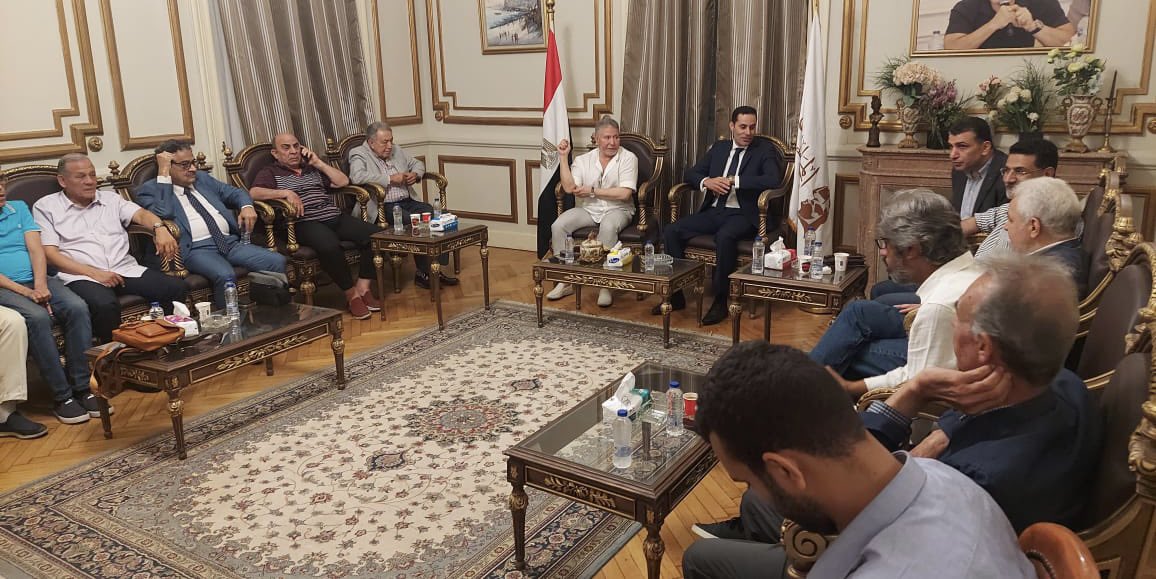
Presidential elections: Seasonal oppositional division
9 of 12 political groups associated with the Civil Democratic Movement urged the public to abstain.
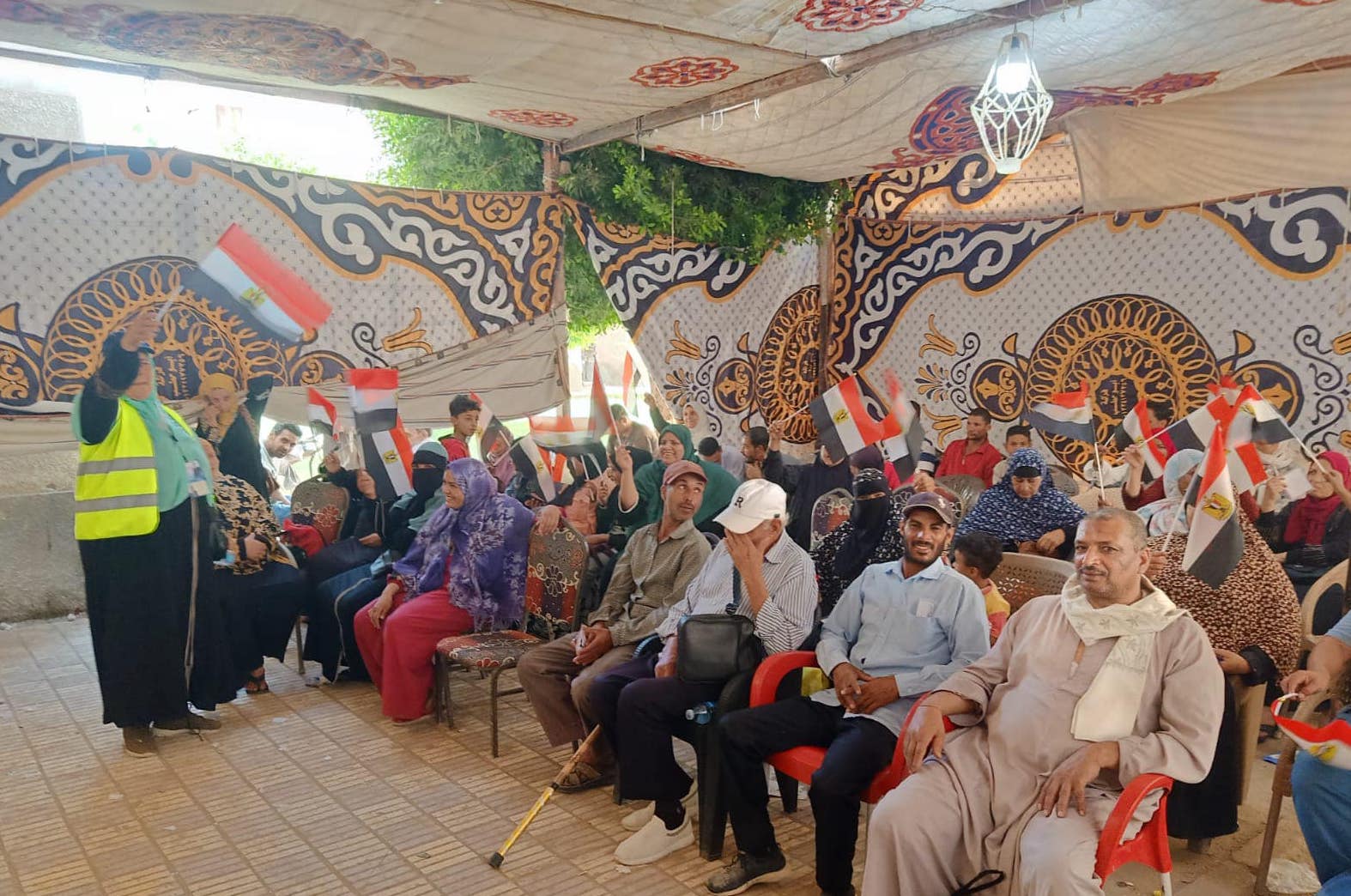
Phase one: The ‘battle’ for presidential endorsements
The effort seemed like part of a plan to create an image of massive public support for Sisi
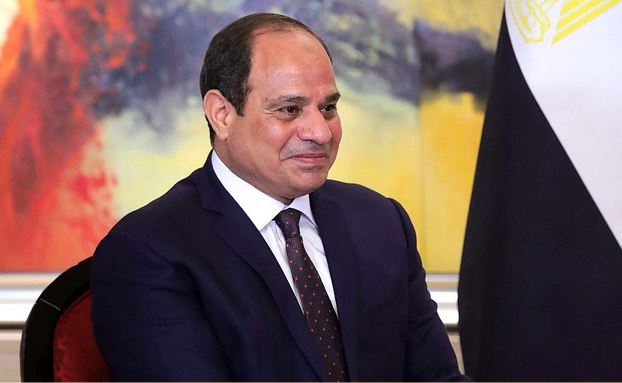
Presidential elections: An opportunity for the opposition to come out of the margins?
Now, there are three members of the Civil Democratic Movement who have stated their intention to run
Your support is the only way to ensure independent, progressive journalism survives.
You have a right to access accurate information, be stimulated by innovative and nuanced reporting, and be moved by compelling storytelling. Subscribe now to become part of the growing community of members who help us maintain our editorial independence.
Join us