
This excerpt was republished with permission from Kayfa ta.
In Soviet times, we were taught at school that every person has two homelands: the large one and the small one. The small homeland is one’s hometown or village of origin, and the large one is the country. The small and large homelands indicate two different levels; at the first level, as living beings we are attached to a certain settlement; at the second, as citizens, we are symbolically bound to a certain territorial whole. Both the form and content of this whole can change, the border can be shifted or reshaped, but the patriotic machine continues working non-stop. When the USSR collapsed, my large homeland disappeared and forcefully took the smaller one with it. Our schools began to teach children how to love Russia, their new country. This didactic tension wasn’t left unnoticed by conceptual artists. In 2005, Dmitry A. Prigov, together with Iraida Yusupova and Alexander Dolgin, recorded a media-opera in which, accompanied by meditation music with elements of Russian folklore, Prigov attempts to convince a cat to repeat after him and say “Russia.” The cat resists and tries to flee, but the artist patiently puts it back and continues to teach it. I think I was like that cat. I can say “Russia,” but this word came to my language from somewhere else.
In Russian culture, the idea of “teaching how to love one’s homeland” is perceived as a threat. The first associations that come to mind are violence, hazing, and torture in prison colonies and detention facilities. The closer the war—in Ukraine, in Syria, in Georgia, in Chechnya, and in other wars and military conflicts where Russia is engaged—the more talks there are about patriotic education. In such moments, the large homeland becomes a generic name for an ideological narrative bringing heterogeneous elements together into a single complex of affective tuning of both the territory and the people. It mobilizes the population and calls it to rise as one against a real or imaginary enemy. According to Irina Sandomirskaya, in the pantheon of the Soviet ideology’ Motherland was one of the main deities that required human sacrifice. As part of this narrative, death in war was presented as a sacred gift.15 The same rhetoric can be observed in other states when they transition into the state of military mobilization.
“When a state sends people to death, it calls itself Motherland.” This quote is accredited to different authors, including Bertolt Brecht. In 1916, still in his teenage years, he was asked to write an essay at school, for which the topic was taken from Horace: Dulce et decorum est pro patria mori (It is sweet and honorable to die for the fatherland). In the essay Brecht wrote:
The claim that dying is supposedly sweet and honourable can only be seen as a form of cheap propaganda for a specific purpose. Parting with one’s life is always hard, both in bed and on the battlefield, and even more so for young people in their prime. Only empty-headed chumps can be so vain as to say that it is easy to slip through these dark gates, and even then, only while they are sure that their last hour is still far away.
For this, he almost got expelled from school.
If we had not known who Brecht was, we could easily arrive at a wrong conclusion and interpret these statements of the young playwright as an expression of his indifference or a complete lack of patriotism (regardless of our stance on it). However, Brecht was a highly engaged author, a communist and an antifascist. It is not that his non-acceptance of the patriotic officialdom and militarist ideology, which at the time was gaining momentum in Germany, is based on the belief that homeland is merely a myth invented by propagandists in need of cannon fodder. Simply, a homeland is not the same as a state or even a territory, upon which the official representatives of the state (or oppressors, in Brecht’s terms) laid their hands. Homeland is neither a state nor a führer. The regime unfairly appropriates its name, identifies itself with the homeland, turning the land into landowning and people into a population. The machine of oppression and violence engages in high-flown false rhetoric meant to turn people into fools, jingoists, and Nazis. To love a homeland in spite of this ideological machine means to take the risk and call things by their proper names, i.e. to peel off the rhetoric from the subject itself.
In 1933, addressing his fellow German antifascists from exile, Brecht wrote a pamphlet called “Five Difficulties in Writing the Truth.” The pamphlet was a guide for those who made a decision to tell the truth in a world ruled by lies. “Today anyone who wants to fight lies and ignorance and to write the truth has to overcome at least five difficulties. He must have the courage to write the truth, even though it is suppressed everywhere; the cleverness to recognise it, even though it is disguised everywhere; the skill to make it fit for use as a weapon; the judgment to select those in whose hands it will become effective; the cunning to spread it amongst them. These difficulties are great for those who write under Fascism, but they also exist for those who were driven out or have fled, indeed, even for those who write in the lands of bourgeois freedom.”17 Brecht especially stressed the importance of the fifth element, which is the cunning: one has to write in such a way that the truth reads between the lines.
Ziffel and Kalle, two characters from his play Conversations in Exile, discuss the notions of homeland and patriotism. Over a cup of coffee, they exchange extremely skeptical remarks. One of them confesses that it has always seemed strange to him to have to love the country where one pays taxes. The other suggests it can be explained by the lack of choice: “It’s as if you loved the woman you married, rather than marrying the woman you loved. Me, I’d like to have a choice. Let’s say I’m shown a bit of France, a yard of England, two Swiss mountains and a Norwegian fjord. I’d point and say ‘I’ll take that as a country.’ And I’d love it. But the way things are now, loving your country is like loving the window you’ve been thrown out of.”18 This is, of course, quite a cunning play.

Russians say, “one does not choose a homeland,” and then throw themselves out of the window. How many waves of migration from Russia have there been? One, two, three—it is now the fourth one that is taking place. People leave for another country to obtain a new passport and start a new life. At the new place, first they unpack their suitcases and then their hearts, and within their hearts they find their homeland that does not look anything like an imposed top-down and officially documented unity of the government and the people from which they fled. Thus, Brecht was born in the German city of Augsburg and spent fifteen years—between 1933 and 1948—outside his home country. He called emigration the higher school of dialectics, and wrote the following about his homeland:
I, Bertolt Brecht, come from the black forests.
My mother carried me into the cities
While I lay in her body. And the coldness of the forests
Will stay in me until I die.
Entering a relationship of mutual negation with the homeland, emigration recreates it through itself in the new place, reestablishing its locus—such is the dialectics of exile. Homeland does not exist without its people, but it can move freely with them around the world. The coldness of our forests, the breadth of our steppes is always with us. Unpacking on new planets, just like now, we will continue to take out and put on a prominent spot our small Chu bowls from Earth.
It was always hard for me to register myself, to answer the question of where I came from. Which one is my large homeland: Russia, the USSR, or Kazakhstan? There isn’t much clarity with the small one either. If I am constantly moving from one place to another, how can I decide which of them and on what grounds should I call one my homeland—the village where I was born, the steppe (which is associated with the very first, joyful and intimate memories of my childhood), or the city where I spent all my school years? I have lived in Moscow for the longest part of my life—for fifteen years in total—but I cannot bring myself to say I am from Moscow. Moscow does not allow anyone to take root; native Muscovites are a separate, closed, privileged group, to which you are supposed to belong or not by the right of birth, and we remain the newcomers in this imperious city forever. But if one really wants to, they can consider Moscow as their homeland, as well as any other place that you would love with all your soul.
What does it mean for a place to be loved with all of one’s soul? Here, a brief introduction into the theory of soul is needed. Aristotle taught that there are three types of soul: the vegetative, or nutritive soul; the animal, or sensible; and the rational one. The soul for him was not what flies to heaven after death but what makes the living alive. A plant only has a nutritive soul; an animal both nutritive and sensible; and a human being, according to Aristotle, has all three kinds of soul. At least the first two of them (nutritive and sensible) are inseparable from the body. The vegetative soul is responsible for nutrition and reproduction; the animal, for sensations and movement; and the rational, for thinking. Hegel (as well as many others, but I chose Hegel’s take on this, because it would have been most appreciated by Brecht) singled out movement as the main principle of distinction between the life of plants and animals: while plants are bound to certain places thanks to their root systems, the first thing animals do is to lift off and leave their place. Hegel called this the power of negation. This is how, according to him, the self-sufficiency and subjectivity of the animal is manifested, as it freely determines itself in choosing a place to be and a place to go. The animal never coincides with itself; it has to be not only here but also there.
If we combine the Aristotelian idea of the three souls with the Hegelian definition of the plant through attachment to—and the animal through disconnection from— the earth, then the coexistence of the animal and the vegetative souls in the human being can be represented as a dialectical contradiction between the desire to get there (expansion), and the will to stay here (to settle down and take root). It is not inaction or inertia but precisely an expression of will; the plant in its own way expresses its stubbornness of existence and persistence through time, which Spinosa called conatus essendi. When I say that any place that you would love with all your soul can become your homeland, I think about the process of taking root. For a homeland to be loved with the fullness of one’s soul means it has touched not only the sensible, but also the most intimate, the vegetative part of the soul. This is the part that makes us attached to the land we came to love—but our attachment is not absolute. If we detach, a part of the nutritive soul that once took root in the place will not die off; it will travel with us as a memory of the homeland, even if it is a memory of something completely forgotten, which does not keep any representation but only the form of the plant’s sensuality, something like a kernel with no further determination.
Let us suppose that the content of the rational part of the soul is determined by the way of synchronizing the oscillations of the animal and the plant, which is unique to every human being. We take off, depart, and attach to other places—and then take off again to come back to the previous ones. In the book What Is Philosophy? Deleuze and Guattari call such movements the formation of territories, deterritorialization (taking off), and reterritorialization (attaching to the new place):
We already know the importance in animals of those activities that consist in forming territories, in abandoning or leaving them, and even in re-creating territory on something of a different nature (ethologists say that an animal’s partner or friend is the “equivalent of a home” or that the family is a “mobile territory”). All the more so for the hominid: from its act of birth, it deterritorializes its front paw, wrests it from the earth to turn it into a hand, and reterritorializes it on branches and tools. A stick is, in turn, a deterritorialized branch. We need to see how everyone, at every age, in the smallest things as in the greatest challenges, seeks a territory, tolerates or carries out deterritorializations, and is reterritorialized on almost anything- memory, fetish, or dream. Refrains express these powerful dynamisms: my cabin in Canada ... farewell, I am leaving ... yes, it’s me; I had to come back...
One very interesting detail here is that Deleuze and Guattari do not talk about taking root. For them, territory, deterritorialization, and reterritorialization determine in the first place the animal’s life—although these concepts can concern anything at all, as they play a key role in the social anthropology of power and society and in the analysis of the relationship between a polis and a clan, empire and indigenous people, settlement and nomadism, labour and capital. What matters are the three types of movement that differentiate territory from land in the animal’s life. We mark our territory, equip the dwelling, put up boundary posts, and then it is us again who go beyond them towards a new no-man’s land (deterritorialization), which perhaps we will call our own (reterritorialization).
The animal is a metaphor, a conceptual character, a performer of their own peculiar refrain (one of such characters is, for instance, Brecht’s refugee, but it can also pertain to a whole nation). The concept of refrain is very important here: Deleuze and Guattari use it to designate a form of relation of the animal to the land. Every animal has its own song that shapes or designates its territory and, generally speaking, its place; this is their refrain of the home, which in fact can be anything—this steppe covered with poppies can be my homeland, or my home; this tree can be my home; you can be my home, and I might sing “I love you” many times. In my understanding, to love means to attach the soul (plant, animal, human, or other) to anything. In Deleuze’s vocabulary, in this particular case, this will be territorialisation and reterritorialization: you settle here, you touch the soil, and you sing a song—this is my land. Yes, it is from the animals’ rites of securing their territory that art emerges:
Perhaps art begins with the animal, at least with the animal that carves out a territory and constructs a house (both are correlative, or even one and the same, in what is called a habitat). The territory-house system transforms a number of organic functions-sexuality, procreation, aggression, feeding. But this transformation does not explain the appearance of the territory and the house; rather it is the other way around: the territory implies the emergence of pure sensory qualities, of sensibilia that cease to be merely functional and become expressive features, making possible a transformation of functions. No doubt this expressiveness is already diffused in life, and the simple field of lilies might be said to celebrate the glory of the skies. But with the territory and the house it becomes constructive and erects ritual monuments of an animal mass that celebrates qualities before extracting new casualties and finalities from them. This emergence of pure sensory qualities is already art, not only in the treatment of external materials but in the body’s postures and colors, in the songs and cries that mark out the territory.
In order to illustrate the emergence of art from the animal’s territorial self-identification through a refrain, Deleuze and Guattari provide a touching example:
Every morning the Scenopoetes dentirostris, a bird of the Australian rainforests, cuts leaves, makes them fall to the ground, and turns them over so that the paler, internal side contrasts with the earth. In this way, it constructs a stage for itself like a ready-made; and directly above, on a creeper or a branch, while fluffing out the feathers beneath its beak to reveal their yellow roots, it sings a complex song made up from its own notes and, at intervals, those of other birds that it imitates: it is a complete artist. This is not synesthesia in the flesh but blocks of sensations in the territory-colors, postures, and sounds that sketch out a total work of art. These sonorous blocs are refrains; but there are also refrains of posture and color, and postures and colors are always being introduced into refrains: bowing low, straightening up, dancing in a circle and lines of colors. The whole of the refrain is the being of sensation. Monuments are refrains. In this respect art is continually haunted by the animal.
It is not only art but also philosophy that Deleuze and Guattari define through refrains:
What is the Fatherland or Homeland invoked by the thinker, by the philosopher or artist? Philosophy is inseparable from a Homeland to which the a priori, the innate, or the memory equally attest. But why is this fatherland unknown, lost, or forgotten, turning the thinker into an Exile? What will restore an equivalent of territory, valid as a home? What will be philosophical refrains? What is thought’s relationship with the earth?
Philosophy is aimed at finding the origin or the source, the place where we came from. A priori, the innate or the memory are considered trophies (like my tea bowl from Chu) that connect us to this place, whatever it may be. In Plato, for instance, it is Hades, the afterlife. As Socrates explained to friends and disciples on the eve of his execution, it is from there that the soul arrives with all the memories that are given to us as the eternal ideas: the good, the just, etc. The soul in the living body is an envoy of death, no less.
Believing that we have an origin that has been lost or forgotten again and again, moves philosophy into the register of the nostalgic. It looks back, toward the home that it might have never had. Of course, when Deleuze and Guattari mention the philosophical refrains of home, they don’t think as much about Plato as Heidegger, who quotes Novalis in his book The Fundamental Concepts of Metaphysics: World, Finitude, Solitude: “Philosophy is really homesickness, an urge to be at home everywhere.”
“To be at home everywhere—what does that mean?” wonders Heidegger.
Not merely here or there, nor even simply in every place, in all places taken together one after the other. Rather, to be at home everywhere means to be at once and at all times within the whole. We name this “within the whole” and its character of wholeness: the world. We are, and to the extent that we are, we are always waiting for something. We are always called upon by something as a whole. This “as a whole” is the world. We are asking: What is that—world? This is where we are driven in our homesickness: to being as a whole. Our very being is this restlessness. We have somehow always already departed toward this whole, or better, we are always already on the way to it. But we are driven on, i.e., we are somehow simultaneously torn back by something, resting in a gravity that draws us downward. We are underway to this “as a whole.” We ourselves are this underway, this transition, this “neither the one nor the other.” What is this oscillating to and from between this neither/nor? Not the one and likewise not the other, this indeed, and yet not, and yet indeed.
The trouble with Heidegger, according to Deleuze and Guattari, is that he unsuccessfully “reterritorialized on Nazism.” Nostalgia for the source made him lose his way:
He wanted to rejoin the Greeks through the Germans, at the worst moment in their history: is there anything worse, said Nietzsche, than to find oneself facing a German when one was expecting a Greek? How could Heidegger’s concepts not be intrinsically sullied by an abject reterritorialization? Unless all concepts include this gray zone and indiscernibility where for a moment the combatants on the ground are confused, and the thinker’s tired eye mistakes one for the other—not only the German for a Greek but the fascist for a creator of existence and freedom.
Reterritorialization in itself is natural and not erroneous in any way: everyone reterritorializes whatever suits them. But in Heidegger’s case, this action results in a wrong choice: “He got the wrong people, earth, and blood,” got the wrong homeland and origin. It turns out that one actually can choose a homeland. A person can also choose the people, earth, and blood for themselves. The question of how one can love their homeland without becoming a fascist or a nationalist is directly linked to the question of how to choose one’s people, earth, and blood.
Building upon Heidegger’s negative case, Deleuze and Guattari propose their version of reterritorialization. One should side, not with a triumphant People, on whose behalf the government with a führer at the helm speaks, but instead with a small people, with the oppressed and excluded: “For the race summoned forth by art or philosophy is not the one that claims to be pure but rather an oppressed, bastard, lower, anarchical, nomadic, and irremediably minor race.” It does not necessarily have to be a human race. The Deleuzian thinker declares an endangered species or a persecuted tribe his homeland:
... becomes Indian, and never stops becoming so-—perhaps ‘so that’ the Indian who is himself Indian becomes something else and tears himself away from his own agony. We think and write for animals themselves. We become animal so that the animal also becomes something else ... Becoming is always double, and it is this double becoming that constitutes the people to come and the new earth.
Thus, Deleuze and Guattari believe that the right, true reterritorialization is the one in utopia—though not a utopia but the utopia of the future, as opposed to the one of the past. We declare our homeland a people or land that does not yet exist. It is perhaps not about finding them but more about inventing (just like Kafka invents the mouse folk: the writer’s becoming a mouse is needed in order to engage the mouse in becoming something else). This land is invented for those who are excluded from the fascist-like unity of the victorious people with the state and the government or for those who voluntarily left the territory marked with the flags of such a unity.
Even though these people do not yet exist, one could imagine a nomadic tribe of exiles of all kinds. Thus, Andrey Platonov gathers such people in his novel Soul:
Turkmen, Karakalpaks, a few Uzbeks, Kazakhs, Persians, Kurds, Baluchis, and people who had forgotten who they were ... runaways and orphans from everywhere, and old, exhausted slaves who had been cast out. There were women who had betrayed their husbands and then vanished ... young girls who came and never left because they loved men who had suddenly died and they didn’t want to marry anyone else. And people who didn’t know God, people who mocked the world. There were criminals.
When the character of the book recognizes his own folk in this description and says that he was born there, the utopian people become real. Literature can indeed be powerful enough to do something like this.
It is important to note that, with regard to the double movement of de- and reterritorialization, we cannot say which one is primary: “perhaps every territory presupposes a prior deterritorialization, or everything happens at the same time.”33
That is, the movement may precede the source, the origin, or even produce it. For Deleuze and Guattari’s criticism of Freud and Lacan’s psychoanalysis, this statement brings territory and deterritorialization closer to the idea of repression, hand in hand with the return of the repressed: prior to repression, the repressed itself might not exist; together with repression, the repressed immediately returns—not from somewhere but from nowhere, from its non-being. There is no original unconscious matter to be repressed. The unconscious, our animal soul, is inscribed into the circle of the retroactivity of the origin—it emerges after, après coup.
Plants work differently, so it can be very confusing. So let it be. The fact is that the plant’s life cycle does not involve moving from its place. A flower does not have a refrain, even if it “celebrates the glory of the skies.” It never leaves its place; it is attached directly to the earth without the mediation of territory, which it would have to secure. The animal has a completely different relationship with the origin. Finding its place in a certain territory has nothing to do with growing from the earth. We can say that the animal’s life form implies a retroactive source; the animal has to leave in order to come back here or somewhere else. Every time we animals come back to a new place (and if we come back to the same one, it is already renewed by our return, like Berlin in Kierkegaard’s Repetition).
Deleuze and Guattari restrict the notions of earth and territory to the animal movement without considering the plants in this regard at all. This is, surely, justified, as it is exactly the metaphor of the plant—the initial attachment to the place, taking root—that serves as a foundation for the nostalgic vision of the large and small homelands. The far-right ideology, conservatism, and nationalism are based on the image of a man-plant rooted deep in the ground, an image which was taken too literally. If it were to happen in reality, it would turn out to be absolutely unviable. The only place to which we are initially attached is the placenta. Our lives as separate beings begin with cutting the umbilical cord. At first, humans are still dependent and helpless, while other mammals begin to move actively as soon as they leave the mother’s body. Therefore, the refrains of home and lost paradise, including the search for the forgotten origin of the philosophical truth, are translated in the language of psychoanalysis as the nostalgia for the mother’s womb, which in the end coincides with the death drive. If we translate it back to the language of philosophy, Heidegger defines the homesickness through finitude and being-toward-death. We want the mother-land to take us back into the womb.
The notion of the animal helps Deleuze and Guattari to block fascist-like trends of thought. The logic of taking off and settling in a certain territory is the foundation of the new geophilosophy, for which the transfer of utopia from the past to the future is fundamental. However, I feel concerned about the plant part of our soul, which takes root here and there. It is as if it were denied the right to exist. We are becoming transnational, like capital; we take planes, we sleep in hotels, cross borders, and wander everywhere like tourists. It is as if there is no homeland, and there should not be one. Thus, Sandomirskaya dismantles the narrative of both the large and the small homelands as a dangerous myth by reconstructing traditional Soviet refrains:
The character’s childhood takes place in a small space, which is most often a village. This small space is home/shelter, the parents’ house/the fold, village of origin, place of origin. This space is inhabited by family and relatives, mother, father. It is protected by the house. The character is surrounded by the familiar: voices, faces, customs he is used to. At home, he is surrounded by nature he knows: familiar Russian birches, familiar forests and fields. High above, wherever you look, there is the familiar sky, the boundless native land where he freely breathes the native air. All of it is native land, the small homeland. The character grows up and leaves his home. He is attracted by the new life, new opportunities, and the childhood world seems too small. He moves to the city and begins his new life in a world where everything is unfamiliar and unknown. However, in his thoughts he constantly comes back to childhood memories. The homeland pulls/draws him back. Having moved to the city, he broke off from the roots, lost connection with the earth and cannot take root; like a plant, he has been transplanted into the new soil and is withering.
Sandomirskaya calls the described figure tumbleweed (which in Russian also means a rolling stone). However, this metaphor is not completely accurate. Strictly speaking, tumbleweed does not wither when it detaches from its root. Large balls tumbling away in the wind across a steppe or a field are formed when the plant dies. Dry stems break away from the root or start moving together with the root, catching other plants and dispersing seeds as they roll. This is an active undead life form. It does not have a longing for its roots and cannot have one. Breaking off, tumbleweed transitions to a new form of existence. It is dead as a plant, but at the same time it moves and reproduces on the fly, like a peculiar animal.
This complex image serves a very simple purpose: indicating that the basic model of the journey of human life as breaking off from the roots is present in culture—not only in Soviet culture but also in the world—as well as underlining the related idea of being able to return to the roots, to press oneself to them and even reattach to them. But the idea that a human being has genuine, authentic roots that precede any movement in reality does not correspond to anything.
However, it does not mean that the tradition of refrains for a small homeland should be discarded. It is quite the opposite. Homeland was sold out too hastily to those who are always ready to grab it, mark it as their own, build a wall, and start a war. They also appropriated the principle of rootedness, linking it with the alleged authenticity of origin as what was here before us: someone has already declared this land their territory, and we can only grow into it as dead bodies.
In fact, we do not yet understand what the plant, the nutritive soul, is and what it is capable of. Very few people talk about the politics of plants. One of them is Michael Marder who dedicated a great number of works to the plant form of life. In his essay Resist Like A Plant! he gives an example of environmental activists tying themselves to trees that are about to be cut down. In a sense, these activists recreate the form of existence of these trees: stubbornness, attachment to a place. The same direct transfer of the plant form of resistance into politics is done by the Occupy movement and similar forms of protest against the occupation of territories. “And when protesters pitch tents in parks or on city squares, they reinvent the strange modern rootedness in the uprooted world of the metropolis, existentially signifying their discontent by merely being there.” Workers who oust their bosses and occupy the factory or students seizing the university building make a decision of staying here instead of leaving for somewhere else. In Shiyes, Arkhangelsk region, Russian authorities decided to destroy many kilometers of forests and swamps and transform this territory into a huge waste deposit. They met with strong resistance, however. People from the region stood up for their land and said that they would not leave. And they hadn’t. Almost every day, they were being arrested and beaten but, paradoxically, their number was growing. More and more people arrived from other parts of Russia and joined their struggle, which became plant-like, in the sense that not only stubbornness and persistence characterize a plant soul, but also its capacity to expand, to grow. People were growing in place of the forest that the government came to cut down, the forest they loved.
Indeed, this form of politics has its limitations, because what is really rooted is not the people, but the system of oppression against which they rose. Russians could say: If you tie yourself to the tree, they will simply cut you down together with the tree. In this struggle, all means are good enough; if you cannot love your homeland as a human being, if the enemy pushes you out, love it like a plant—stay, resist; or love it like a beast—run, attack, or escape, but whatever you do, don’t leave them your homeland; pack it in your heart and take it with you wherever you go.
Love your homeland in such a way that the soil and plants with their roots are on our side. Like it happens in guerrilla wars—when it is not only the people but also the forest, the grass and the animals that rise together to fight fascism. These are our people. Such a war is not similar in any way to the one that the state wages on the neighbor; the guerrilla war is not declared by the government but by the people that are not at all identical with it and that comprise all human and non-human beings—plants, animals, fungi, hay, stones, etc.—inhabiting this land. The haystack will hide my great-grandmother, the tree will stand in the way, the beast will terrify the enemy, and the swamp will drag down those who came here to kill. Apart from the guerrilla resistance, there is also the invisible, quiet resistance of civilians, those who do not leave their place when someone fights on their land. In Russian, the word “civilians,” as opposed to “militaries,” translates literally as “those who live in peace;” they live in peace precisely when there is war, despite the war. They cannot and do not want to leave; they have their house here, their cow, their dog, the garden that no one will water if they take off and become refugees. Civilians stay here because they take root.
As Brecht proposed, one has to fight for one’s homeland with cunning and truth. Our initial animal rootlessness and homelessness makes the inner black forest or steppe that we carry with us ever more valuable. To love means not merely to (re)territorialize like an animal but also to take root like a plant. It does not have to be our own root; we can create an artistic alliance of the animal and the vegetative and plant flowers all over the land that we love with all our soul. Across all states’ borders tying us to a certain territory by protocol, the love for homeland must be free, so that every time, coming back to a new, unprecedented place, every one of us can say:
I am from here.
تقارير ذات صلة
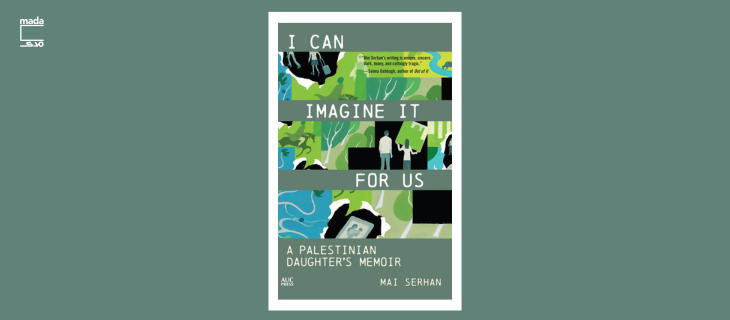
Mai Serhan imagines Palestine and recounts life after for us
"I have never been to the place where I am from, but I can imagine it for us, Baba, for you and me." This opening line of Mai Serhan's I…
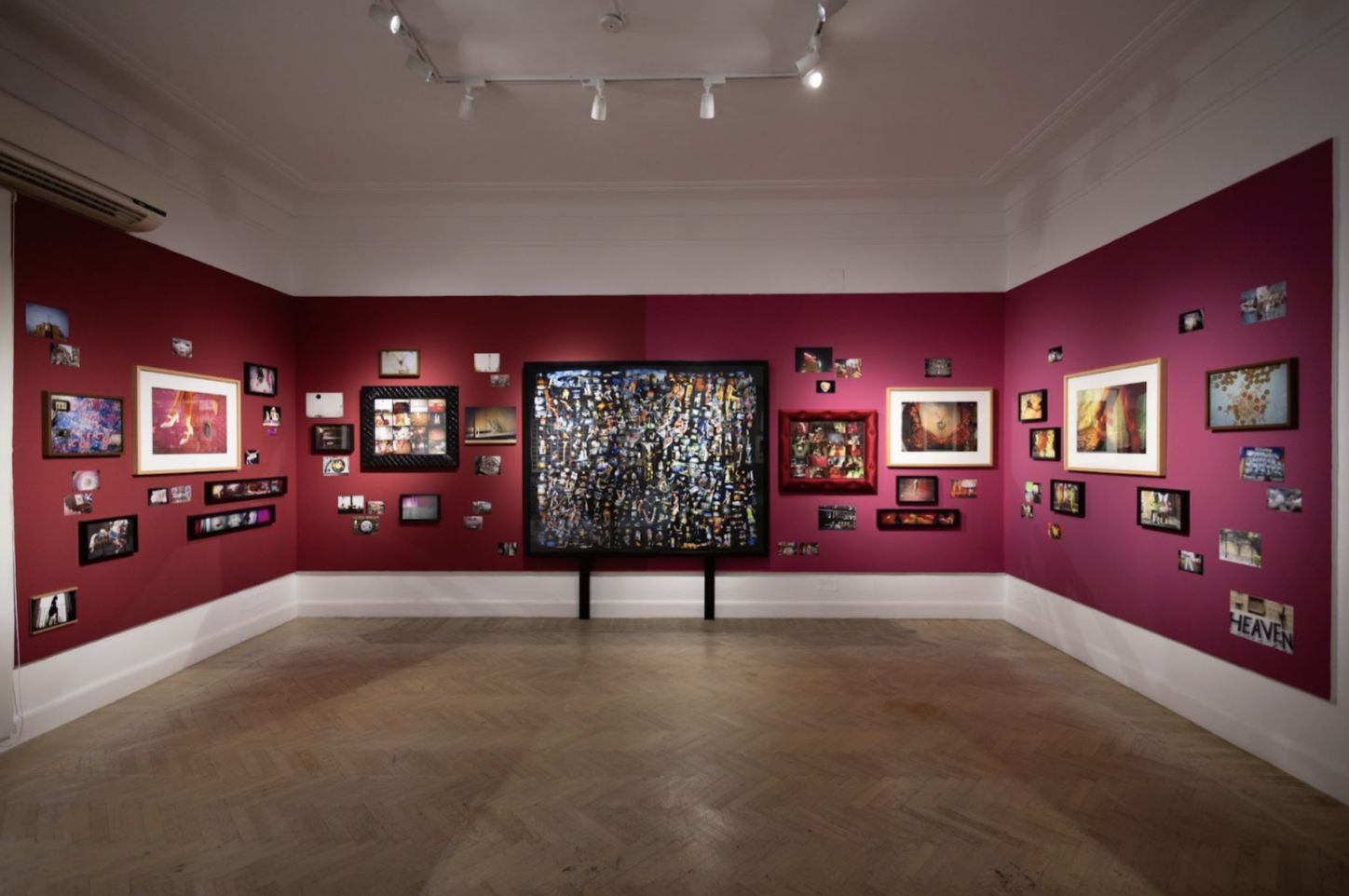
Lara Baladi’s Cosmovision
In Cosmovision, Lara Baladi breaks down photography’s cadre into a discursive unfurling of her becoming from 1996 to 2011, autobiographically performing the logic of the white cube. Shown at Tintera,…
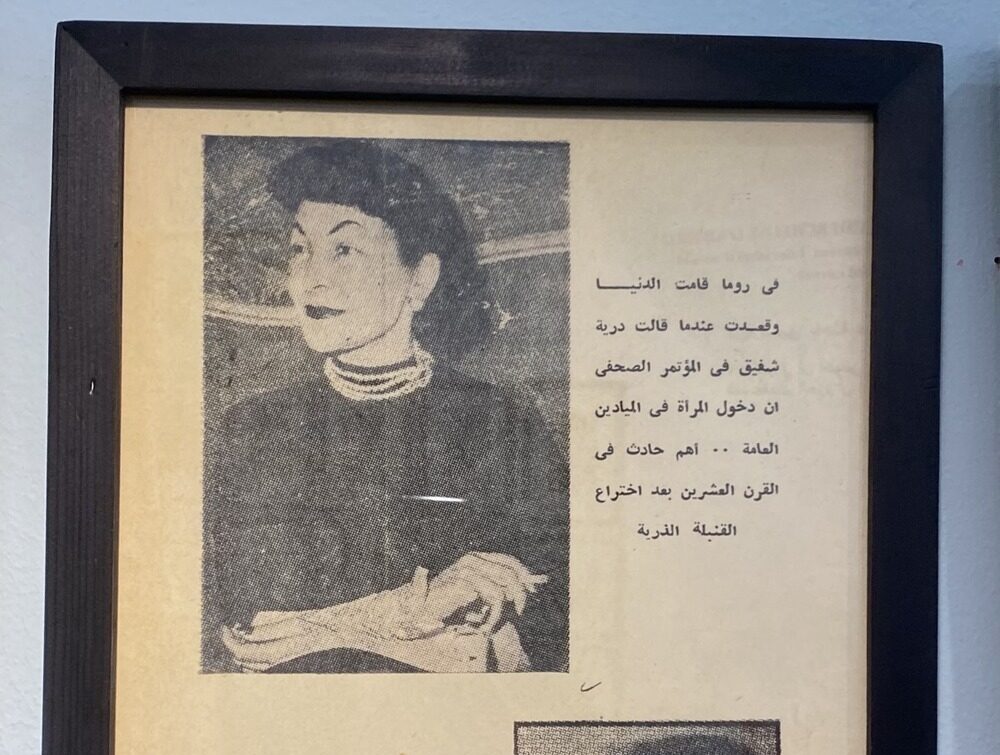
Doria Shafik: A life recovered
Shafik’s life resists simple categorization
Your support is the only way to ensure independent, progressive journalism survives.
You have a right to access accurate information, be stimulated by innovative and nuanced reporting, and be moved by compelling storytelling. Subscribe now to become part of the growing community of members who help us maintain our editorial independence.
Join us