
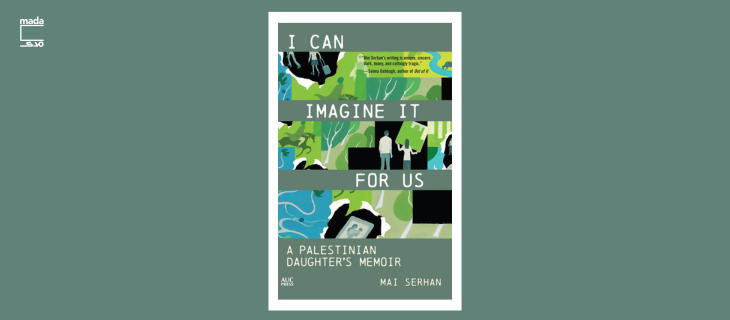
Mai Serhan imagines Palestine and recounts life after for us
"I have never been to the place where I am from, but I can imagine it for us, Baba, for you and me." This opening line of Mai Serhan's I Can Imagine It for Us: A Palestinian Daughter's Memoir establishes both the book's central ache and its driving force: a daughter's attempt to reconstruct, through imagination and memory, what exile has rendered inaccessible to her prickly, estranged father.
Published in October 2025 by the American University in Cairo Press, the memoir takes the form of letters addressed to Serhan's late father, a Palestinian from Acre who, after his family's expulsion during the 1948 Nakba, carried the weight of displacement throughout his life. Growing up between Cairo, Abu Dhabi and Beirut with a Palestinian father and an Egyptian mother, Serhan inherited complex feelings about her identity and heritage. Her father's silence about Palestine was born of tremendous pain, a loss so heavy it rendered him caustic and deflective, and later drove him to China, where he literally worked himself to death.
The book moves with agility between places and times: from Cairo to Shenzhen in 2000, Beirut in 1994, Abu Dhabi in 1981, going as far back as Acre in 1897. Serhan's sharp but lyrical prose makes it easy to follow the intertwined trajectories of herself and her family.
At the heart of Serhan's memoir is a question that is both personal and historical: what does one do with an inherited past that constantly interferes with the possibilities of the future? Serhan's response feels like a natural one to decades shaped by survival, constant rebuilding, fight and flight — writing not merely to endure or to remember, but also to repair.
The memoir acknowledges the fragmented histories of a family forced to leave their ancestral home, a lineage almost hardwired for movement, adaptation and escape.
“Our bloodline is like a tree in a storm, its branches break, they disband in the wind with nothing to obstruct their movement,” she writes.
And yet Serhan pauses. In retelling her family's history, reimagining her lost homeland and its inhabitants, the sensual particularities of the place, its textures and atmospheres, she becomes a kind of medium for a nation and a family of errant ghosts. She allows them to speak not through linear chronology but as an emotionally constructed collage functioning almost the way memory naturally operates, not recalling a life or lives from start to finish but connecting emotional dots, almost forming constellations of family history. In doing so, she seems to recognize the futility of imposing order upon material as charged as inherited trauma and collective memory, choosing instead to reconstruct the past not as a methodical archivist, but as an artist and a daughter attempting to make sense of why she and her family are the way they are, how the expulsion and the resulting pain unspooled in so many unexpected directions.
“Exile led you to believe everywhere was a threat and everyone was in your way,” she writes ruefully, but tempering it with longing. “I wish you’d understood it was no way to live, it could’ve saved us, it might’ve even saved you.”
The deliberate fragmentation of the memoir also mirrors the scattered geographies and dashed temporalities of exile, and also acts as a sort of literary resistance. By refusing linear chronology, Serhan resists the inherited narrative of endless departure and survival. Her epistolary style interrupts the involuntary recursiveness of Palestinian life, transforming repetition into reflection and inherited motion into conscious reconstruction. Her writing wrests the narrative away from outside imposition and is both a reckoning and a pondering of possibilities. “The world is innumerate when it comes to us, Baba. We live, we die, we fall off the grid. We’re Lebanese, no, Egyptian, no, we’re refugees of an alien status, and it doesn’t matter. We’re anything but who we are,” she writes.
This gesture becomes an act of transgenerational healing. At its core, the memoir is a portrait of Serhan's estranged father, whose response to loss is perpetual flight, carried as far as his "fractious feet" will take him. Against this restless, at times heedless, escape, Serhan sets her own counter-movement: first her own attempts at flight, escape, reinvention, discovery and disillusionment, but then an insistence on stillness, and later, a more mindful mode of travel through which she journeys into her own and her family's past, constructing both a physical and emotional cartography of lineage and memory.
She describes Acre to him, the place where she has never been, with lyricism: “It might seem to you that life is an inferno you cannot escape, but there were once four seasons … In Spring, a multi-colored terrain of citrus yellow and henna red, and a green flying carpet to the east and northwest. Summer, nature's wedding and harvest time for lentils, sesame and corn.”
She reconstructs this past through memory, research and imagination, offering it back to him and to herself. “It’s all under your skin … Your body parts are the coast, cliffs, valleys and wide plains of your village, and why they too will stop breathing soon. Why you will stop running, why your body will break,” she writes.
She juxtaposes her own real memories with the reconstructed memories of her family, filling in narrative gaps with imagination. She writes with sometimes lacerating honesty, especially regarding difficult moments with her father, but always with deep compassion.
In doing so, she enacts the classic heroine's journey, one defined by the careful labor of repair: she restores what absence and estrangement have fractured.
Serhan navigates the difficult terrain between appropriation and tribute, between speaking for and speaking to. She handles this tension with remarkable self-awareness, marking the boundaries of her knowledge even as she crosses them, demonstrating how inherited loss might be honored without being claimed, how silence might be respected even as uncomfortable truths are relayed.
In an interview with The London Magazine, Serhan says the memoirs became a Künstlerroman, the coming-of-age narrative of an artist struggling to find herself and her voice and grapple with her identity. The more the reader delves into the story, Serhan becomes an artist of absence, memory and imagination, transforming estrangement into narrative and filling in the painful, silent gaps and historical ellipses with stories and understanding, transmuting her family and nation's history in a way that offers the fragile promise of continuity grounded in knowledge.
تقارير ذات صلة
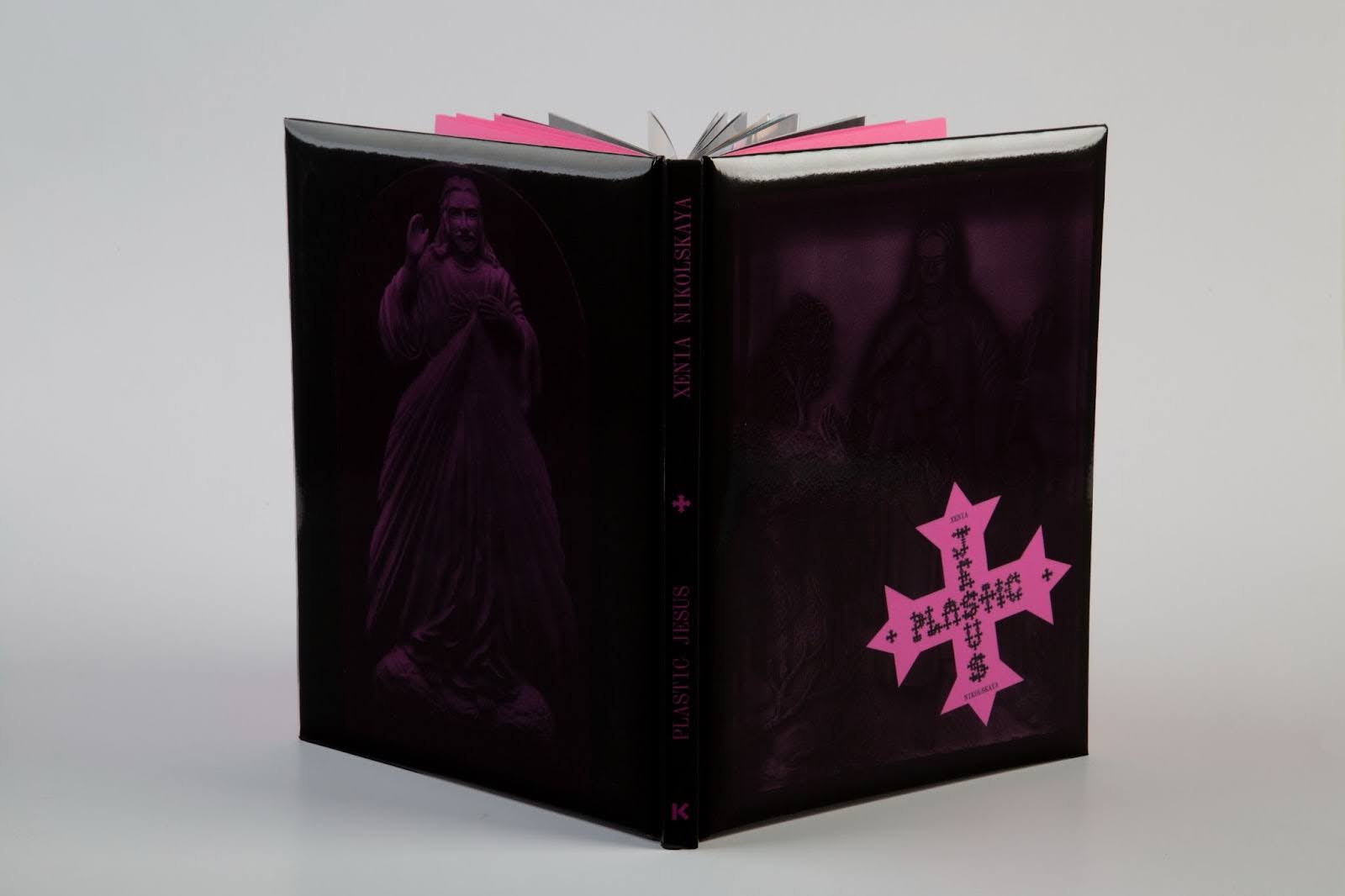
Plastic Jesus, real devotion
Xenia Nikolskaya’s latest photobook Plastic Jesus presents a selection of photographs of Coptic merchandise and architectural interiors from her trips across Egypt between 2003 and 2010. The hardcover book, designed…
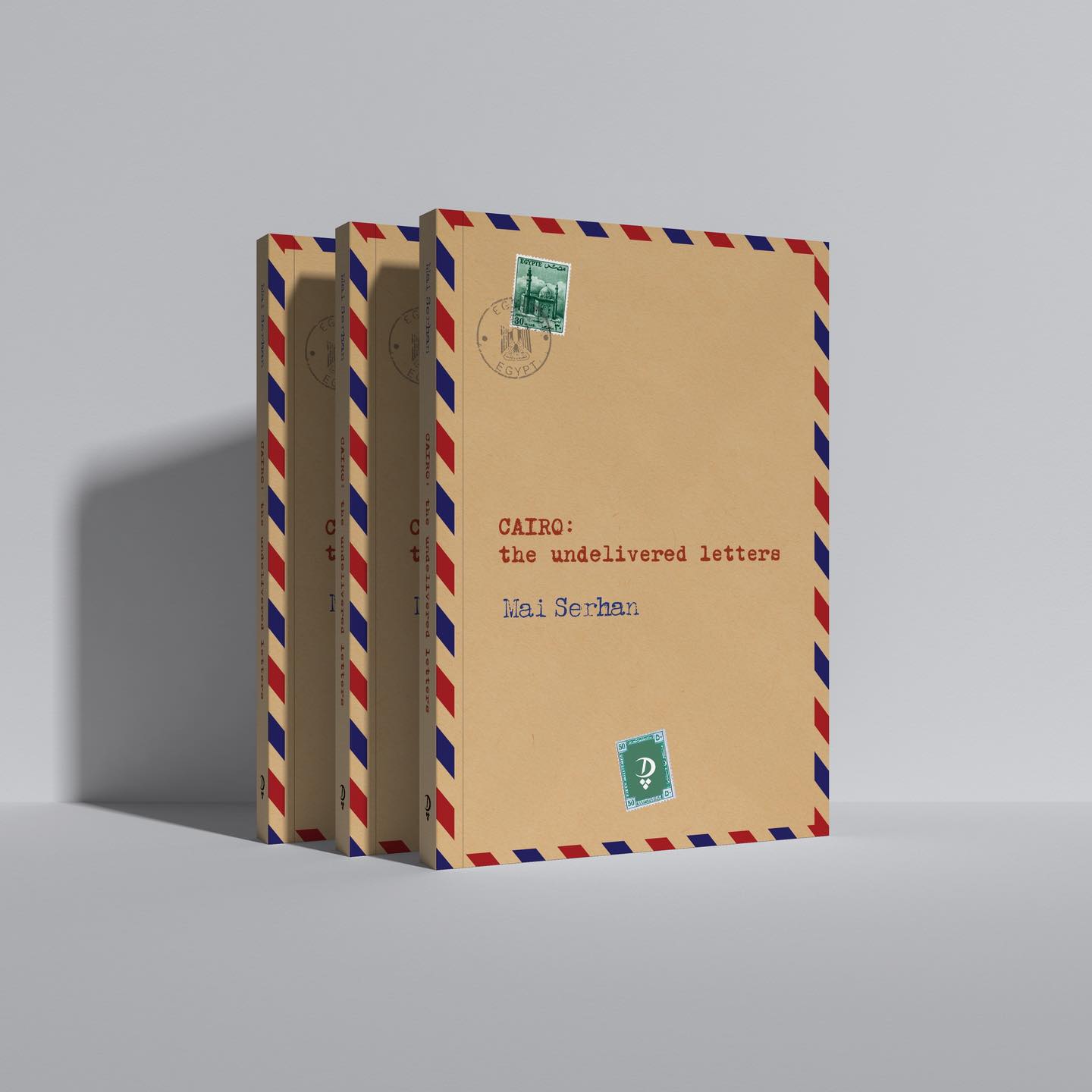
Cairo, undelivered: A conversation with Mai Serhan
Mai’s writing doesn’t seek to provoke. It seeks to reveal
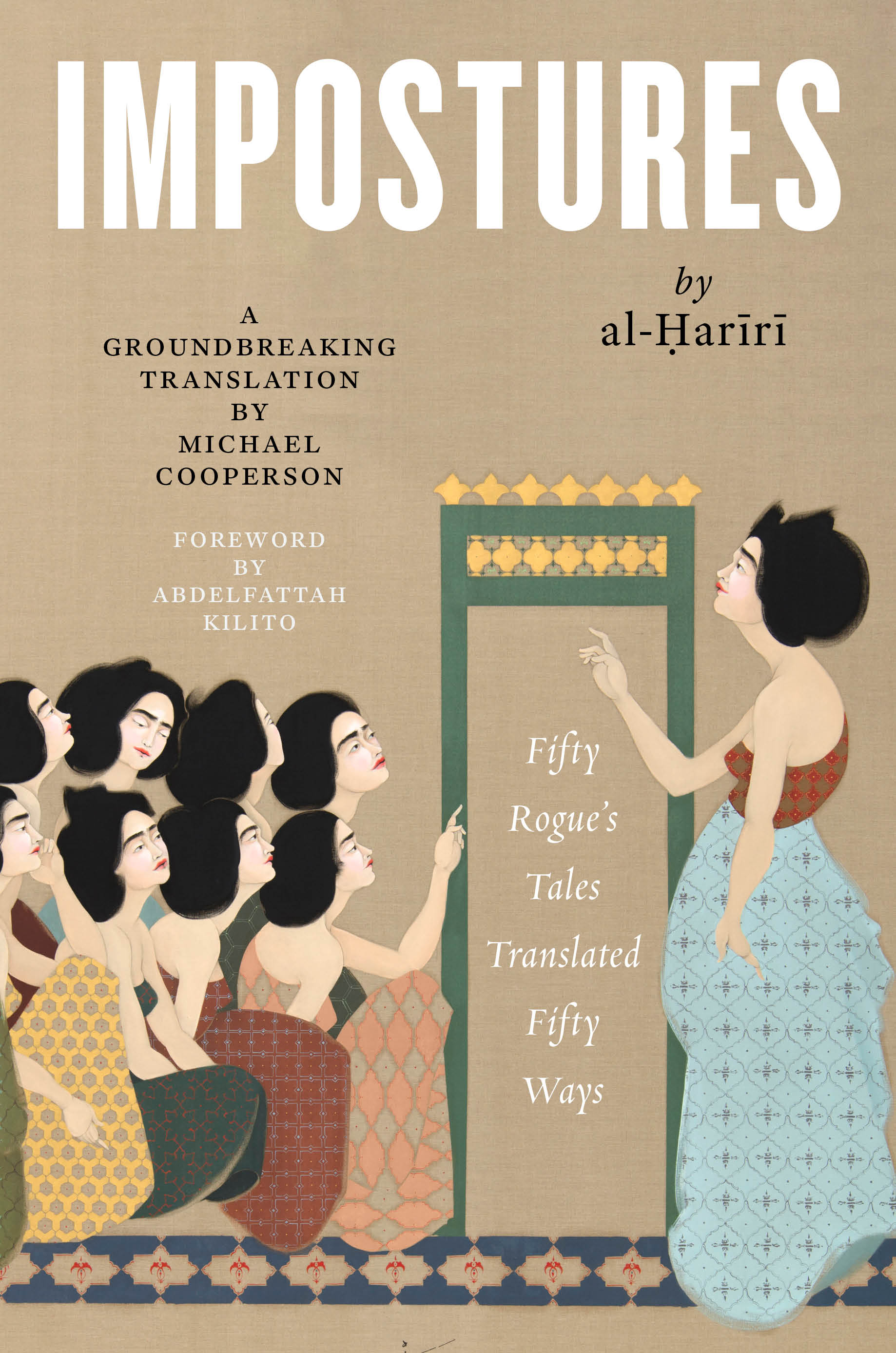
Learning the proper posture to become an internet imposter while reading Impostures
These days we’re all trying to hide on the internet.
Your support is the only way to ensure independent, progressive journalism survives.
You have a right to access accurate information, be stimulated by innovative and nuanced reporting, and be moved by compelling storytelling. Subscribe now to become part of the growing community of members who help us maintain our editorial independence.
Join us