
From Tel Aviv to Jeddah, Biden tour relaunches US Middle East policy but faces region beset by division
United States President Joe Biden is set to arrive in Jeddah on Friday via an unprecedented direct flight from Israel, where, over the two days prior, he underlined America’s commitment to Tel Aviv and Zionism in the first stop of a four-day tour of the region.
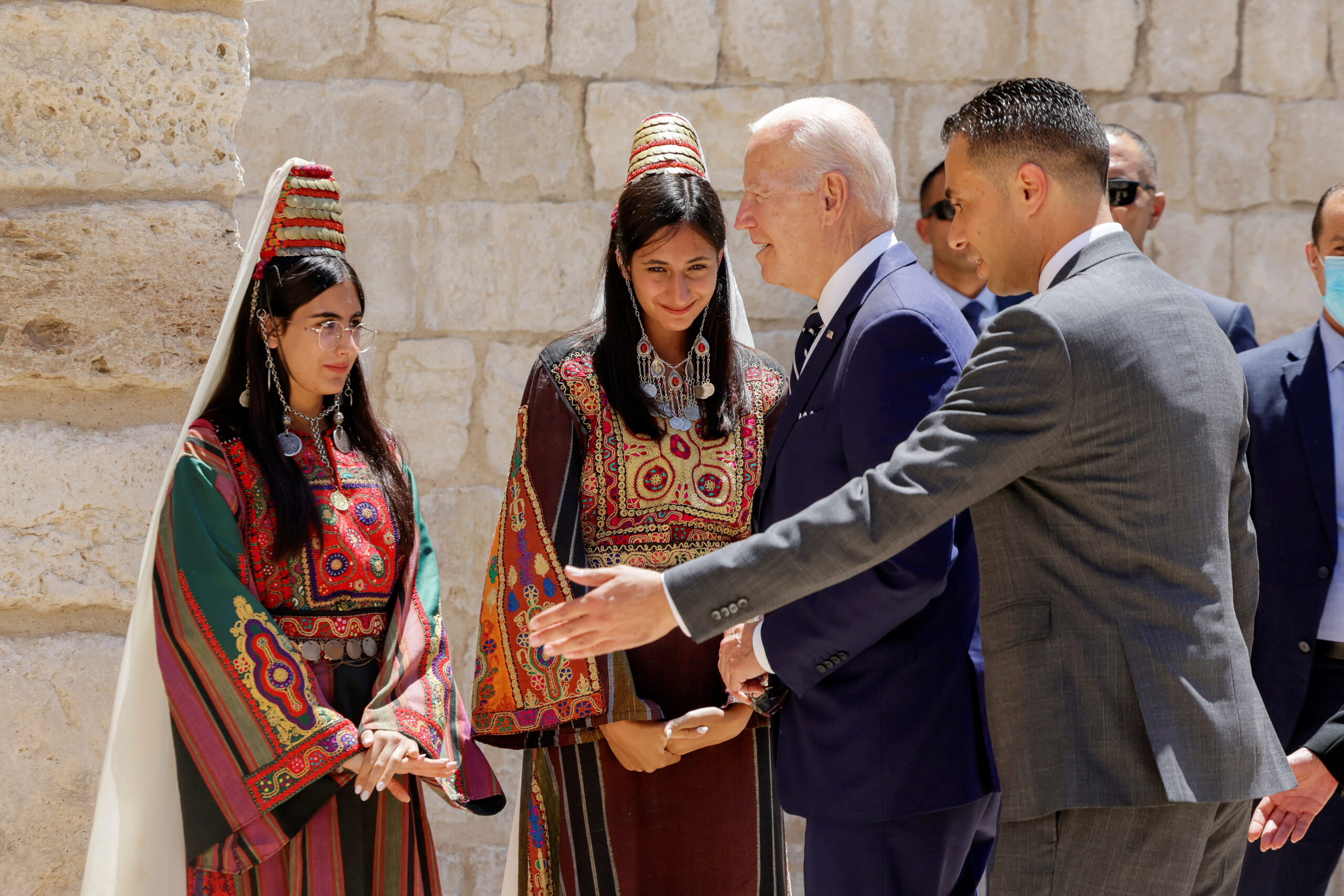
The US head of state did make a trip to Bethlehem to visit a hospital that received substantial donations from the United Arab Emirates in the lead up to the visit and to talk with Palestinian Authority President Mahmoud Abbas. However, Biden offered little in the way of advances in any political process that would change the conditions of Israeli occupation.
The regional tour, which has been in the works for over a month, comes as the global economy is suffering from skyrocketing inflation, energy shortages and major disruptions to food supply chains due to Russia’s invasion of Ukraine in late February.
Biden has faced criticism over the visit, with the US press — which once feted Saudi Crown Prince Mohamed bin Salman as a grand reformer — charging the American president with compromising on his campaign trail promise to make the Saudi kingdom a “pariah” due to bin Salman ordering the assassination of kingdom critic Jamal Khashoggi in 2018.
Biden has repeatedly attempted to downplay criticism, distancing himself from the economic necessity of securing increased oil supply from a key OPEC member for being a reason behind the trip. However, he has acknowledged that such a request is on the table, telling reporters last month “I’ve indicated to them that I thought they should be increasing oil production, generically, not to the Saudis particularly, and I think we’re going to — I hope we see them, in their own interest, concluding that makes sense to do.”
However, seeing an uptick in energy production is only one part of the picture, especially given that OPEC has already agreed to increase production.
While in Saudi Arabia, Biden will attend a meeting of the Gulf Cooperation Council, which includes Bahrain, Kuwait, Oman, Qatar, Saudi Arabia and the United Arab Emirates. The heads of state of Egypt, Iraq and Jordan will also attend the meeting, and Biden is expected to hold bilateral talks with all parties.
Biden has made it clear that the US administration is determined to reassert its presence in the region after downplaying its significance in favor of an increased focus on the Asia-Pacific region since he took office in January 2021.
“I think we have an opportunity to reassert what I think we've made a mistake of walking away from: our influence in the Middle East,” Biden said from the podium after a bilateral meeting with Israeli Prime Minister Yair Lapid. “I'm going to be meeting with nine other heads of state. It's not just as happens to be in Saudi Arabia, and so there are so many issues at stake that I want to make clear that we can continue to lead in the region and not create a vacuum — a vacuum that is filled by China and or Russia against the interest of both Israel and the United States and many other countries. And so the purpose of the visit is to coordinate with nine heads of state what are in US interests and I believe in Israel's interests as well.”
While the Biden administration has quietly been negotiating several key policy issues in recent months that will be finalized in the coming days — from the security arrangements around the Red Sea islands of Tiran and Sanafir, the question over Isreali commercial flights in Saudi airspace, and a regional security framework — sources from Egypt and the Gulf who have spoken to Mada Masr in recent days and weeks say there is fierce competition to capitalize on the return of US patronage in a more pronounced fashion to the region by competing power brokers, who see the visit as an opportunity to reset their sphere of influence.
The most prominent site of friction is between the UAE and Saudi Arabia, as informed diplomatic sources, including some based in the Gulf, have been sharing accounts of growing unease between bin Salman and UAE President Mohamed bin Zayed.

One of Biden’s key proposals during his four-day visit is to form a broader regional security framework that will include Israel.
This proposal is being facilitated through the DEFEND Act currently in the US Congress, which Congressperson Don Bacon, one of the cosponsors of the legislation, told Mada Masr “takes unprecedented action to establish and integrate a technical air defense ‘architecture’ of US partners and allies in the Middle East. This involves coordinating warning indications for countries with a common interest in promoting regional security and defending civilians and infrastructure against missiles, unmanned aerial systems, and rocket attacks from Iran and its proxies.”
Talks around this new security framework have been going on for months, according to an Egyptian diplomat informed on the matter. “It was discussed during an MBZ-Anthony Blinken meeting earlier in the year and during Jordanian King Abdullah’s recent visit to the White House. Turkey and Qatar are in it, and we are not objecting given that the nature of this arrangement is different from the arrangement offered under Trump, in the sense that there will be security, intelligence and military coordination, but not synchronization,” the diplomat says.
King Abdullah II has come out to publicly endorse the “Arab Nato.”
However, awareness of the potential of a new US-sponsored security framework has kicked off competing efforts to become the key partner over other regional players to Washington’s broader cooperation initiative.
In June, bin Salman conducted his first regional tour in years, with stops in Cairo, Ankara and Amman.
The visit, according to what an informed Egyptian source told Mada Masr at the time, was part of a plan for the Saudis to “lead the re-engineering of regional alliances” in the Middle East by accelerating rapprochement between Egypt and the Muslim Brotherhood on one hand and Turkey on the other.
The “urgency” with which the source said the Saudis are pursuing Egyptian-Turkish rapprochement and broader coordination with the Muslim Brotherhood comes from concern over Abu Dhabi’s parallel bid to make inroads with Washington in its plan for a new regional political infrastructure.
The UAE, which has made significant inroads in Egypt in recent years, is worried about the growing rapport between bin Salman and President Abdel Fattah al-Sisi, according to an Egyptian official, even if, at the end of the day, says a second Egyptian official, the crown prince has declined to accommodate straightforward financial demands that were presented to Riyadh through several envoys.

Saudi Arabia and Egypt have shared concerns over the Emiratis’ unilateral regional moves in recent years, most prominently seen in the official normalization of relations with Israel and the facilitation of several countries to join the so-called Abraham Accords.
Egypt has been a longstanding political and economic beneficiary of being the first country to normalize relations with Israel. However, Egypt saw this position undermined by the Emirati-led Abraham Accords.
Following the bin Salman tour, the Emiratis launched their own initiative in the form of the Negev Forum, a cooperation framework for signees to the Abraham Accords and Egypt. The forum, which two Egyptian officials described as “a joint Israeli-UAE brainchild,” was launched in Bahrain at the close of June.
“Egypt was not in agreement at all with the statement, especially the part on the Palestinian issue," an Egyptian official in the US capital told Mada Masr. “We came under a lot of pressure because the UAE was telling Washington that Egypt was making it difficult for the statement to come out.”
But Cairo decided to “swallow” the statement, the source says, because it would allow Sisi to have a bilateral meeting with Biden during his visit to Jeddah. “After we sent our approval to the statement, the Israelis called to say they are happy with our cooperation and that they would support the wish for Sisi to have a bilateral meeting with Biden," the source adds.

Sisi is expected to hold a long-sought-after first bilateral meeting with Biden in the coming days, after which a joint US-Egyptian statement will be issued that will underline strategic relations, joint cooperation, regional security and “a generic reference to issues of governance and human rights,” according to an Egyptian official.” Negotiating the phrasing of the text, the official says, “wasn’t easy.”
The Emiratis and Israelis have focused their push for regional cooperation on an anti-Iran alliance, rhetoric the US administration has mirrored even as the Biden administration is perceived as willing to continue negotiations toward a resumption of the Obama administration’s Joint Comprehensive Plan of Action deal, which the UAE, Israel and Saudi Arabia viewed as disastrous.
The appetite for anti-Iran military push is not shared by all members of the potential alliance.
“There is a clear agreement between Egypt and Jordan that it is not in the interest of either country to get involved in an anti-Iran regional military scheme,” says an Egyptian security source. “Jordan has concerns about the Iranian influence in parts of Syria that might be troubling for Jordanian security. We have concerns about the Iranian influence on Hamas, and we have sent some very clear messages to Hamas during the past few weeks about the drones they are getting from Iran. However, we are not interested in getting involved in a wider regional scheme. The issue is now Israel has become affiliated to the US CENTCOM, along with other Arab US allies. In this sense, we are going to be working together under a US umbrella.”
A European diplomat echoes the limited anti-Iran posturing that any regional alliance can have. “Turkey is not joining a scheme that will aim to attack Iran but to promote stability. The work on a nuclear deal or a substitute deal with Iran is still going on,” the diplomat says. However, Israel and all Arab US allies are now part of US CENTCOM, to which Israel was recently added.
The effect of a more regional security framework also extends to the Red Sea.
In recent months, the Biden administration has been holding talks with Israel and the Saudis to secure Israeli approval to end the presence of Multinational Force and Observers forces on and around Tiran and Sanafir, according to an informed Egyptian diplomat.
In return for Isreali approval, the Saudis would open the kingdom’s airspace for Israeli commercial planes heading east, the diplomat added.
Egypt transferred sovereign control over the two islands to Saudi Arabia in 2016, and the kingdom announced shortly afterward that the islands would be incorporated into the futuristic NEOM development project that has led to massive displacement in the Arabian Peninsula’s northwest.
However, the finalization of any development plans required the approval of Israel due to mandates of the Camp David Accords peace treaty. The deal has remained in limbo for years, as the Saudis, once prominent regional players, have largely been consumed by the war in Yemen and seen their sway give way to an ascendent United Arab Emirates, who have become the most dominant regional player, intervening in conflicts and internal affairs of countries across the region.
On Thursday, Axios reported that Israel agreed to remove the multinational force from Tiran and Sanafir. This was followed by a reciprocal move in the early hours of Friday morning by the Saudi General Authority for Civil Aviation, which announced that Israeli civil aviation planes would be allowed to transit through the kingdom’s airspace.
For the Emiratis, however, Saudi-Israeli rapprochement in the Red Sea is a possible threat to the UAE dictating the terms of the broader security arrangement.
The Gulf country has become a major power broker and the principal architect of the security framework in the fiercely competitive Red Sea, with an airbase in Bosaso, Somalia and several coastal ports in Yemen, where it had fought alongside the Saudi-led coalition since 2015. Most recently it has seen its ally Hassan Sheikh Mohamud return as head of state in Somalia. They are a key backer to the Ethiopian administration of Prime Minister Abiy Ahmed and the Sudanese post-coup security leadership’s second in command, Rapid Support Forces leader Mohamed Hamdan Dagalo “Hemedti,” even if that public support has been tempered by US pressure in recent months.
According to an informed political analyst based in the UAE, the Emiratis are troubled by the islands deal, because it will open the door to direct normalization between Israel and Saudi Arabia due to the presence of a direct Egyptian-Saudi-Israeli maritime border. Egypt’s cessation of these two islands to Saudi Arabia in 2016, the source says, was tantamount to opening the gateway to Saudi normalization and freedom for the movement of Israeli ships within the Red Sea.
Beyond the geopolitical posturing, it is clear that Saudi normalization with Israel is a key bargaining chip, in order to shore up the kingdom’s standing at a delicate moment, according to a Saudi-based former official.
All that is lacking from Saudi-Israeli normalization is an announcement, the source says, adding that Biden’s visit may be one of the biggest steps to formally consolidate this normalization under the pretext of “forming a security alliance to confront Iran.”
“As for the kingdom’s benefit from normalization with the Israeli occupation, it is of personal benefit to bin Salman by obtaining more pledges and guarantees for his accession to the throne after his father dies,” the source says.
However, this may be a dangerous game, for, while bin Salman’s repressive tactics may have tamped down the possibility of any wider popular reaction against normalization with Israel, any move or reaction from a prince against the crown prince “may ignite popular anger,” the source says.
Whether Biden will actually meet with the crown prince in a one-on-one meeting is still up in the air. The White House statement issued on Thursday has no mention of a meeting with bin Salman.
Glimmers of a new round of normalization continue to leak out as well, with Fahad Almasri, a Syrian opposition figure, having penned an article this week entertaining the thought of including Syria within the Abraham Accords. The Syrian regime’s position both outside the Arab League and general international order presents an opportunity for different regional players to gain influence by dictating the terms of its eventual reintegration. With Israeli gas earmarked to pass through Syria and Lebanon under the guise of an Egyptian-Lebanese deal, the stakes for regional jockeying will continue beyond Biden’s departure from Jeddah.
Overall, diplomats and other informed sources, both in Cairo and in the Gulf, say that it is only a matter of time and framing before a much broader state of normalization is announced. Biden, they say, might not be able to have it announced during this week's trip, but the Americans are certainly working to have it sometime this year or early next year.

تقارير ذات صلة

How to make friends, by Jeffrey Epstein
power begets power, even if just by association
Ending ‘autonomy’: How the SDF-Syrian govt talks broke down into a fight
Mada Masr spoke with sources in the SDF, the Syrian government, Turkey and regional diplomats

The fate of the ‘fallen’
How the ceasefire has prompted recalibration between Gaza families and Hamas
Your support is the only way to ensure independent, progressive journalism survives.
You have a right to access accurate information, be stimulated by innovative and nuanced reporting, and be moved by compelling storytelling. Subscribe now to become part of the growing community of members who help us maintain our editorial independence.
Join us