
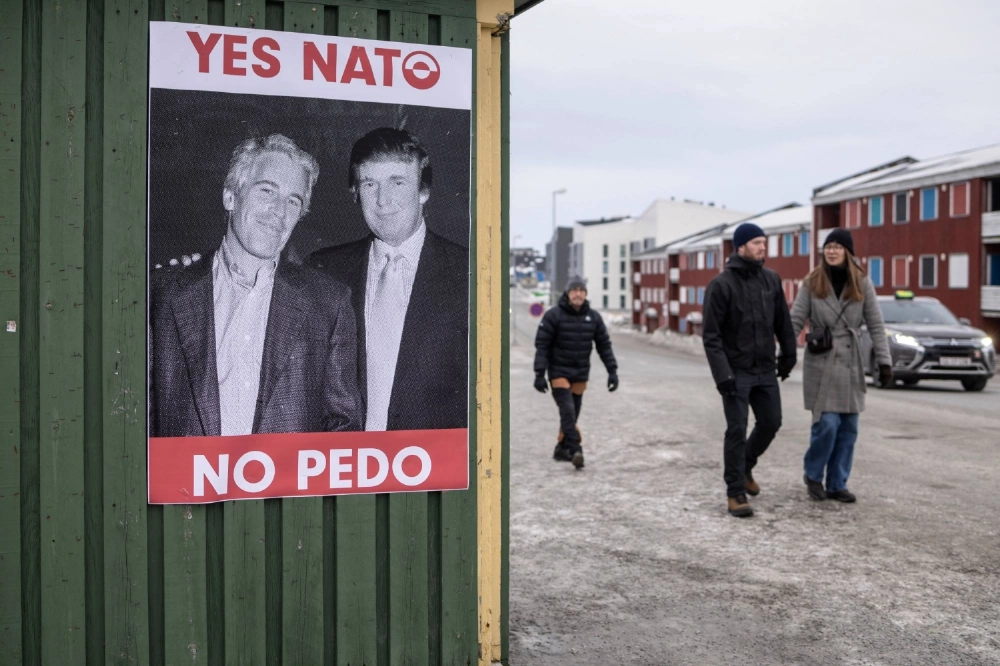
How to make friends, by Jeffrey Epstein
On Friday, the United States Justice Department released over three million pages of documents from its investigation on Jeffery Epstein, an information dump that has quickly flooded screens across the world.
The massive release of documents, the largest in the case so far, reignited a conversation that has never strayed far from popular attention throughout the past seven years: one revolving around the sex crimes of the disgraced New York financier and the possible complicity of his wide network of friends, including sitting and former US presidents and other powerful figures from around the world. The data was released in compliance with the Epstein Files Transparency Act, signed in November last year, the result of internal pressure in the US, with proponents hoping the releases would reveal which US politicians are implicated in the abuses despite the closure of the Epstein case in August 2019, shortly after he died in custody.
The data may not reveal the extent to which Epstein used this access to power to influence the world outside the sphere of his own island. But beyond the stories of powerful men committing horrific crimes and the fascination they exert, the dump clearly depicts him as a man who was able to initiate and sustain conversations with a vast number of people — something he was able to exploit to cultivate immense social capital.
The word “conversation” gives 112,827 search results in the latest Justice Department releases, which include an academic article by an unnamed author on the concept itself. The theme dominates the email threads Epstein is part of and which form the bulk of the release. In the strings of emails, some asked Epstein for advice on “how to have a conversation” with a mutual friend, thanked him for particularly great ones or asked him to set up and initiate new conversations with his network. The conversations vary in seriousness and topic, forming friendships that extend to US presidents like Donald Trump and Bill Clinton, royals like Andrew Mountbatten-Windsor and Mette-Marit of Norway, political actors who have had a profound impact on historical events like former Israeli Prime Minister Ehud Barak, far right strategist Steve Bannon and British politician Peter Mandelson, billionaires and business figures like Elon Musk, Bill Gates and Peter Theil, Hollywood figures like Woody Allen and Kevin Spacey, and even academics and scientists like Noam Chomsky and Lawrence Krauss.
The conversations illustrated in the documents are just as wide-ranging in topic. People approach Epstein with everything from updates on global politics to plans for international business ventures, gossip about sex crimes, media articles, book suggestions, jokes and recipes.
Public conversation around the data and its release has revolved around its potential to reveal the powerful network that may be implicated in his sex crimes. But what the data forcefully shows is that this vast network of conversation helped Epstein himself project enough personal power to attract more players from every level, to inspire them to seek association with him and share their vision of the world with him, even after his first conviction for soliciting prostitution from an underage girl in 2008 in an investigation that had been ongoing since at least 2005. Egyptian figures like former Foreign Minister and Secretary-General of the Arab League Ahmed Aboul Gheit and former activist Wael Ghoniem were among a large number of names invited to dinners with him. Norwegian diplomat Terje Rød-Larsen, architect of the Oslo Accords, can be seen forwarding to him the pleas of help of Khadiga al-Gammal, the wife of Gamal Mubarak, during the trial of her husband and father-in-law in 2011.
To take a deeper dive into figures from our region, let’s look at his messages with Emirati businessman Sultan bin Sulayem, CEO of DP World and chair of Dubai’s Ports, Customs and Free Zone Corporation, who the emails reveal to be a long-time friend of Epstein.
Described by Epstein in one email from 2010 as a “personal close friend” who he has known “for more than 8 years,” Sulayem messaged extensively over the years about many things, ranging from business plans to articles on Middle Eastern politics, and even personal matters.
According to the emails, which include photos of the two hanging out and cooking together, Epstein helped Sulayem apply for a lease in 2010. Sulayem later invited Epstein to attend an event held in New York in Sulayem’s honor in 2012. The release also includes an email in which the director of DP World begins to curate a guest list for the event. Did Epstein have a role in securing the invites? What’s clear is that the relationship proved mutually beneficial and spawned a series of new connections. In 2014, Sulayem had Epstein ask Mandelson to join the board of one of his companies. The former would later introduce Epstein in 2017 to Indian businessman Anil Ambani, who sought Epstein’s guidance on potential Indian ambassadors to facilitate the relationship between Trump’s first administration and Prime Minister Narendra Modi.
Sulayem would also share with Epstein subjects of major political or economic note, such as an interview he gave to Bloomberg on the potential of the New Suez Canal, which he suggested Epstein might want to send to Musk, and a 2018 .docx file titled “the recognition of Somaliland - Q&A” — a reference that has stoked speculation around Epstein’s role in the recent Israeli move to recognize the breakaway region of Somalia to gain access to the Red Sea.
Other exchanges show more of the personal side of the relationship between the two, including Sulayem facilitating the transfer of Epstein's masseuse to a spa in Turkey for training, sending him a link to his “very own hairy porn site,” Epstein advising Sulayem on whether to attend Trump's first inauguration, a conversation on goat cooking, jokes, and comments on developments that he finds funny, among many other emails.
Another of the friendships in the region nurtured over decades by the convicted child sex trafficker and billionaire was with Barak, whose military and political career spanned over 50 years. These decades of life experience in Israel’s military and political establishments were clearly precious to Epstein. “[T]here are very few people that i enjoy spending time with, you are unique,” Epstein wrote Barak in one exchange from 2013, to which the latter responded with, “Thx. The same.”
Previously revealed as business partners and close associates in the early 2000s, the latest document release showed a variety of evidence substantiating the closeness of the relationship between the two, with email exchanges that show Barak seeking the now-disgraced financier’s advice and support in multiple business ventures, like the sale of gas company GADECO and a new solar drone, and his input on geopoliticals and political arrangements, while the two also shared seasonal greetings, condolences and each other’s apartments while passing through town.
This known relationship with Barak on top of the new emails has added fuel to the fire of existing speculation and conspiracy theories around Epstein and the extent of his global influence, with many suggesting he was an Israeli intelligence asset. The speculative bent to engagement with the leaks has thrived, fed by the shock value of detailing the sex trafficking and organized abuse of minors, along with the extent of the network of powerful associates who could be implicated in them, including the most powerful figures on both isles of US politics, sparking fears of a government cover-up to protect a demonic cabal.
But it’s hard to salvage any precise sense of Epstein’s role in political events beyond those at his own doorstep from the enormous amount of documents released on Friday. The more than 3 million pages and 2,000 videos and 180,000 images are hard to navigate, filled with illegible exchanges that loop in and out of conversations which were happening outside the written pages provided to the public and emails whose senders or recipients are redacted, obscuring entirely the nature of their relationship to Epstein and the reason for their presence in the investigation.
The disturbing testimonies included in the release may provide the global public more vivid images of the horrors Epstein and some of his powerful friends inflicted on young girls, children and minors, but do little to illuminate the extent to which his insinuation of himself into this powerful network actually affected US and global politics.
What we do learn from the emails is that Epstein’s art of conversation gave him access to the highest levels of power; and power begets power, even if just by association.
تقارير ذات صلة
The Board of Occupation
“We call it the board of peace. Sort of a beautiful name, the Board of Peace."

Proposed formulas for new US military Red Sea foothold not acceptable to Egypt
Since March 15, the US has carried out nearly daily strikes on targets in Yemen

On the democratic socialist vision for the US: Interview with Jacobin Founding Editor Bhaskar Sunkara
Mada Masr sits down with Sunkara to discuss democratic socialism at this historical juncture.
Your support is the only way to ensure independent, progressive journalism survives.
You have a right to access accurate information, be stimulated by innovative and nuanced reporting, and be moved by compelling storytelling. Subscribe now to become part of the growing community of members who help us maintain our editorial independence.
Join us