
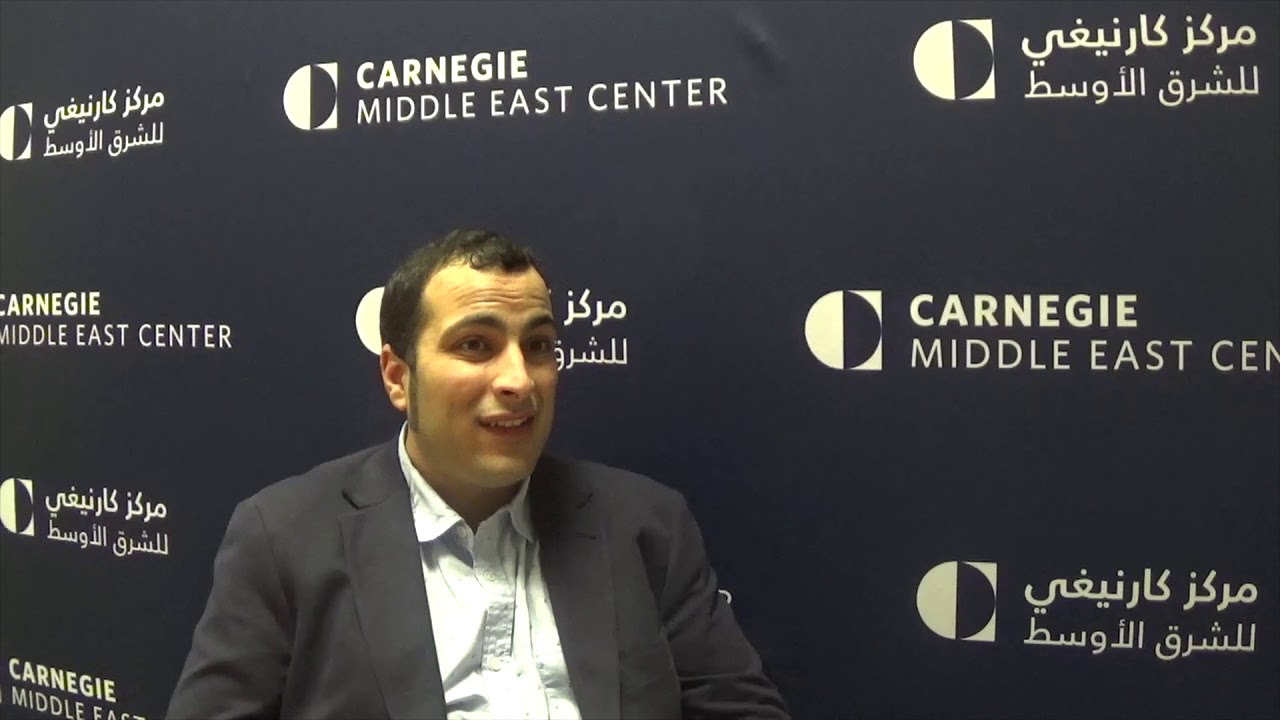
From Aleppo to Damascus, on how Assad fell and what’s next: An interview with Yassin Suweiha
Syrian writer and editor of Al-Jumhuriya Yassin Suweiha takes us through ten tumultuous days that began with Hayat Tahrir al-Sham (HTS) entering Aleppo and liberating the city and its countryside from Bashar al-Assad’s control and ended with the fall of Damascus alongside the 54 years of the Assad rule. What is the social geography of this takeover journey, and how did Assad fall so swiftly? What is there to hope for now?
***
Mada Masr: What stands out about the trajectory of HTS’s advance and Operation Deterrence of Aggression, starting from Aleppo on November 27 and moving south to Damascus?
Yassin Suweiha: The first striking aspect is the high-level coordination among the military factions involved, with HTS at the forefront. Despite the diversity of these groups, their level of coordination and professionalism in planning and preparing is unprecedented in Syria’s conflict and within the factions themselves, even for those with prior governance experience, including HTS in Idlib.
This represents a significant qualitative leap. While there had been reports suggesting these factions had developed substantially, even well-informed observers could not have anticipated this degree of military and political professionalism in managing the battlefield on the ground and their political discourse. This change should be carefully read, as it is not solely attributable to foreign countries or the desire to appeal to their powers — it reflects deeper transformations within their grassroots base and human resources.
No doubt, Ahmed al-Sharaa (Abu Mohamed al-Jolani) remains a figure difficult to trust. However, his efforts go beyond mere external PR — he is also working to promote his group.
The second noteworthy point is that the large-scale military operations and rapid advances cannot be understood without recognizing the Syrian military’s utter decay. This battle has shown that, without Iranian or Iranian-affiliated militias on the ground, the Syrian Army is essentially nothing. This has also paralyzed its largest ally, Russia, whose contribution remains limited to air support. Air power alone is ineffective without ground forces capable of holding territory.
The extent of the decay and incompetence within Assad’s regime is astonishing. Even his allies, including Russia, have made it clear that their investment in him was a mistake. Assad squandered opportunities to rebuild his military and security apparatus. I’m not saying he should have rebuilt Syria, as he is incapable of establishing a ruling regime, but he should have at least rebuilt his forces and security apparatus and the tools necessary for maintaining his position. Reports over the years indicate deep Russian frustration with Assad’s disregard for their advice, such as strengthening defenses in Aleppo. He didn’t care.
MM: Wasn’t operation Deterrence of Aggression a response to Assad’s recent fortifications around Aleppo?
YS: While frontlines had remained stable following the Astana talks and de-escalation agreements, there had recently been multiple waves of Russian and Syrian bombardment. Factions consistently claimed to counter these attacks. However, part of the surprise lies in calling the operation “Deterrence of Aggression.”
When we hear "Deterrence of Aggression," we might expect pushing frontlines five kilometers, dismantling a checkpoint, or reopening a route. This was the pattern of battles in recent years.
MM: How surprised were you by the regime's weakness?
YS: Assad was on the verge of collapse in 2015, even with Iran fully supporting him. We always knew he couldn’t survive without Iran or Russia. I never entertained the possibility that his allies would abandon him. My view has always been that Syria is under a dual Russian-Iranian occupation, not ruled by Assad. One of the derisive terms used for Assad is the Mukhtar (Mayor) of Muhajireen, referring to the neighborhood where his palace is located.
I couldn’t imagine a scenario where the Syrian military would find itself alone — even after Israeli strikes on Iran — or that his regime would grow so isolated. And even if such a scenario came to happen, I never thought the Syrian military was this weak. Yes, we knew it was fragile, but not to this extent. It still has tanks, outdated ones, but they are still tanks — an outdated air force, but an air force all the same.
The most significant shift has been Iran’s position following October 7. Israel’s strikes inflicted serious damage on Iran, including those carried out in Syria. Beyond the painful strikes, there’s a political dimension: reintroducing the Iranian Revolutionary Guard Corps (IRGC) into Syria would risk direct confrontation with Israel and potentially the United States just 40 days before Donald Trump assumes the presidency. A reckless move in Syria could also jeopardize Iran’s hold on Iraq, which is now the crown jewel of its economic and geopolitical strategy.
I think Iran rethought its stance: “We funded and exhausted ourselves in deploying the IRGC and mobilizing militias and aligned with Russia so that Assad can retake territories that had cost us thousands of lives, billions of dollars, and five years to secure — and we lost it all within days.” Their decision was likely not to provide support, or, if they had intended to, logistical preparations would have taken considerable time.
MM: And the Russians?
YS: Russia has Ukraine on one hand and faces a complex relationship with Turkey on the other. So far, Russia hasn’t deployed troops, though some Wagner forces were sent in primarily to protect strategic areas with precious mineral reserves. Air and artillery support are currently concentrated on Ukraine. While some Russian aircraft have conducted strikes in Syria, they could have deployed more.
I think the Russians are deeply frustrated with Assad, who has consistently approached them with a great sense of trying to outsmart them. For Russia, it was crucial for Assad to reconcile with Turkey. Improving ties with Turkey is vital for Russia due to its interests in Ukraine, where Turkey plays a complicated role, including supplying drones.
It seems both allies deemed this battle a lost cause.
MM: And, of course, there’s the weakening of Hezbollah in Lebanon’s battle.
Historically, Hezbollah was a striking force in Syria. In the context of October 7, it’s understandable why a model progressive thinker might feel conflicted about a person with an antagonistic rhetoric about Hezbollah, which we actually saw after Hassan Nasrallah’s assassination. I understand that the centrality of enmity toward Israel in the universal stereotypical thinking makes the first thing that comes to mind when talking about Hezbollah is its liberation of southern Lebanon and the 2006 war.
In reality, however, it’s essential to recognize that the most prolonged, extensive, and intense war Hezbollah has fought was not against Israel — it was in defense of Assad. This isn’t a minor detail, it’s a structural reality for Hezbollah as an Iranian proxy. The Syrian war drained Hezbollah’s popularity, particularly in regions like Qusayr, Aleppo, and Qalamoun.
There is no doubt that if Hezbollah were in a stronger position, it might have been able to assist the Syrian regime — this is a level of autonomy that Hezbollah might have away from Iranian decision-making, being capable of supporting the Syrian regime even if Iran were against it. Hezbollah’s need for Syria goes beyond serving as supply lines — Syria is also an ally in Lebanon’s internal conflict.
Let’s move to notable moments in Operation Deterrence of Aggression across Syria’s diverse regions, each with its own demographics, levels of armament, and experiences of popular revolution-turned-war, as well as histories with the Assad regime. Take Aleppo, for instance. What stood out during the battle to secure it?
Aleppo was the cornerstone for advancing this operation and establishing a successful model. It wasn’t enough to simply take control of the city — the recapture had to be executed as cleanly as possible. A notable focus on kindliness toward Christians (we even started making memes about it) wasn’t solely aimed at a Western audience but was also meant to reassure the Syrian public that “we’re not what we used to be.”
Aleppo is a very complex city. Since 2011, it has been divided. Between 2012 and 2016, the city was split, with dynamics shaped by urban-rural divides, class, and regionalism. To a lesser extent, there was a sectarian dimension involving Christian and Shiaa communities in western Aleppo villages.
Regardless of their opinion of Assad, residents of western Aleppo, which remained under regime control, carry deep trauma from that period — trauma linked to mortar shells, Hell Cannon fire, and siege. For these people, the arrival of forces representing the "revolution," even if not affiliated with Al-Qaeda, is not inherently good news. This must be understood.
The factions seemed aware of this reality. Their military advance toward Aleppo was accompanied by a political discourse framed as reclaiming areas that had historically supported them. Once they entered Aleppo, their rhetoric shifted to one of reassurance.
For those closely following their discourse, it is striking how well-coded it is. The details are telling.
MM: Give us an example.
YS: For example, focusing on securing the industrial zone evokes past traumas. The factories in this area had previously been dismantled and sold off by factions, plus all the banditry and looting. There is a strict discourse forbidding any tampering with private property, and even dealing with public assets was totally different this time.
Another example: when fighters approached the New Aleppo area, spokespersons and officers with urban Aleppine backgrounds, with notable family names, took the lead in addressing the public, with the tone of, “We are the children of this city. We are not rural Aleppo coming in to drag the city into a war it does not want. We are the city’s displaced children. Don’t be afraid; you are our people.”
MM: Let’s move to Hama.
YS: From the outset, it became clear how much the regime had abandoned Hama. The withdrawal from Aleppo wasn’t a minor setback — it carried military symbolic weight because the regime was supposedly gathering its forces on the Hama front, not just to halt advances but to launch a counteroffensive. This coincided with announcements that Iranian militias were en route and that Russian President Vladimir Putin had promised reinforcements within 72 hours. But in Hama, there was no counteroffensive. Not only that, there wasn’t even a real battle.
One key code in the factions’ discourse stood out. Hama holds profound trauma in Syria’s history. While Hayat Tahrir al-Sham’s advance into the city evokes memories of the previous [1982] massacre, this time, the factions avoided framing the battle for Hama as vengeance for 1982. That was surprising, given that they hail from communities still deeply scarred by Hama’s trauma. The rhetoric of revenge had been explicitly invoked in 2016 by the Nusra Front, which named a battle in Aleppo after Ibrahim Youssef — the Syrian Baathist officer who collaborated with the Muslim Brotherhood’s Fighting Vanguard of the Mujahideen in the artillery massacre against Alawite officers, which triggered the Hama massacre. Today, the factions sought to distance their campaign from notions of retribution. They did reference the massacre but framed it in a way that says that the massacred’s families can now grieve openly. On a popular level, however, the rhetoric of vengeance surfaced. To me, this was, “Wow, your PR company is doing exceptionally well.”
MM: The imagery of freeing detainees is stereotypical in any rebellion against a regime. But it holds unique significance in Syria because imprisonment is a shared experience across all factions of society. At one point, after the factions reached Homs, we found ourselves waiting for Damascus and Sednaya prison to fall simultaneously.
YS: While breaking open prisons is part of any conflict, in Syria, prisons are death factories. The Syrian regime spent years constructing a massive machinery of disappearance, sustaining a political economy built on extortion for information, visitation rights, and food deliveries. By 2023, there were around 113,000 documented cases of forced disappearance in Syria — a number that has since grown to around 136,000, according to the Syrian Network for Human Rights. The true figure, I can confidently say, exceeds a quarter of a million. For a country of this population size, that represents a staggering percentage.
Enforced disappearances are a colossal social trauma and will remain so for decades in Syria. Opening prisons is like opening the floodgates to this trauma in all its forms. As liberating as it may be, it’s also profoundly perplexing. At this moment, I think of the families who reunited with loved ones, those who found no one, and those who paid for information only to learn their loved ones were killed. I think of the hundreds of thousands of families left in hellish anguish, waiting for news.
[Breaks into tears]
I don’t like to talk about Syria’s exceptionalism, but imprisonment in Syria is something else.
MM: And Homs? We thought this was going to be the start of a civil war.
YS: Homs is a different story altogether. It’s a major city with a sectarian mix that was engineered and managed by the regime for decades, starting in the 1960s. Homs was a sectarian battlefield from the early days of the Baath rule. It was frightful to see factions advancing against a crumbling regime military.
Let’s not forget the trauma that Homs endured during the years of revolution. It’s a shattered city. Sunni-majority neighborhoods were devastated, with large-scale displacement. Meanwhile, Alawite-majority neighborhoods became security blocks, heavily armed and populated with regime security personnel and military officers. We all saw the video of Rami Makhlouf calling for an Alawite general mobilization.
The fear was that this battle would escalate into a literal civil war: civilians taking up arms against other civilians. Many believed that if the Homs battle unfolded cleanly, the regime would be in deep trouble. This was compounded by simultaneous developments on the southern front, with factions advancing toward Damascus at incredible speed. US-backed factions like the Free Syrian Army, moving from the Tanf base into the desert, captured Palmyra. The opening of these fronts signaled to those considering a fight in Homs that success was unlikely.
Fear persists. There’s been so much bloodshed. In places like Homs, blood has a proper noun. You know exactly who has harmed you. The greatest challenge lies in managing these issues and preserving civil peace.
MM: Maintaining civil peace requires specific efforts, especially with the Alawite community, many of whom have fled to the coast. What’s expected?
YS: So far, it seems there’s a central decision to avoid any form of sectarian confrontation. I believe, however, that such confrontations may occur at some point. Today, the Alawite community is in a tough spot. They might be the group that has paid the heaviest price over the past 15 years, especially in terms of the number of young men who died as volunteers in the military or militias loyal to the regime. Yet, due to political and economic exhaustion and the lack of prospects, they appear to have no strength left.
I’m referring here to organized Alawite groups — those whose ideology is rooted in their Alawite identity and fight on the regime’s side as Alawites. Due to fatigue, disintegration, and incapacity, they didn’t fight alongside Assad in this battle. There wasn’t any serious combat — they simply retreated to their areas.
This is an issue that must be resolved quickly. There needs to be political and popular pressure, as well as from the civil society, to ensure that everyone displaced from their homes — Kurds, Alawites, Sunnis, and all others — can return immediately. After ensuring civil peace, this becomes the next challenge. A massive number of people have been displaced, including Kurds, Shiaa, and Sunnis. In Aleppo, a portion of the displacement stemmed from fear of the factions. This mistrust is entirely understandable. However, the primary and more significant cause of displacement was fear of regime shelling. Over the past 14 years, it has become evident that any area the regime loses is subjected to destruction through barrel bombs and airstrikes. Even those sympathetic to the factions fled due to fear of the regime’s retaliation.
MM: And what about the Kurds?
YS: The challenges regarding the Kurdish situation revolve around two main issues. First, there is significant toxicity in Arab-Kurdish relations today stemming from the atrocities committed in Afrin by Turkey-backed factions, including occupation and demographic displacement. The second issue relates to the behavior of the Syrian Democratic Forces (SDF) toward both Kurds and Arabs under its control. These are the sources of toxicity.
The most significant danger in the coming period is tied to Turkey. On one hand, Turkey has a strict national security doctrine concerning the Kurds, which it enforces in Syria. This doctrine is based on preventing any Kurdish-dominated entity from emerging in Syria or any decentralization that allows a Kurdish national identity to rise.
On the other hand, the group dominating the SDF’s political and military decision-making is the Turkish Kurdistan Workers’ Party (PKK). This causes the SDF, when engaging in Syrian politics, to have their eyes on Turkey and their backs to Syria. For the PKK, Syria is like a backyard — the primary battle is with Turkey. What are Turkey’s plans in this matter? Here lies the real threat. Ultimately, despite all my reservations about the SDF — and theoretically, I’m an “SDF citizen,” since I’m from Raqqa — it remains a significant entity on the ground. The SDF adopts a feminist, ecological, and multiethnic discourse, yet it is, at its core, a strict Stalinist organization obsessed with worship of a person (Abdullah Ocalan). But it has significant weight on the ground.
MM: Wasn’t the SDF’s position in the recent battle somewhat strange or confusing?
YS: There were statements indicating that the SDF had been aware of the battle for two months, suggesting some form of communication or prior notice. The Deterrence of Aggression operation focused southward and made efforts to communicate that its battle wasn’t with the SDF and that there wouldn’t be Kurdish displacement from areas under its control.
Meanwhile, the SDF made opportunistic military advances to seize areas in Aleppo’s countryside that don't concern them, as they have no Kurdish population. As the battle expanded, the SDF expressed intentions to extend its control at the regime’s expense. However, on another front, it coordinated with the regime in eastern Syria, and we know full well that coordination in eastern Aleppo essentially means coordination with the Iranians. This was peculiar for a US-backed entity. The only factor preventing Turkey from launching a war in northern Syria to eliminate the SDF is the American presence.
The SDF’s behavior was strange, contradictory, trying to play smart, and confused. The confusion likely stemmed from its belief — and rightly so — that Turkey plays a significant role in the ongoing developments. It’s impossible to understand recent events without acknowledging Turkey’s hand in them. The biggest risk is that Turkey’s influence may perpetuate the mindset of a transitional phase in Syria while sidelining the SDF because of its association with the PKK, which Turkey deems a terrorist organization.
There can be no moment of historical reconciliation or opening a new chapter in Syria, after the significant step of overthrowing the Assad regime, without a historic reconciliation with the Kurds — though not necessarily with the SDF. The SDF gained legitimacy among the Kurds for protecting them from ISIS, supported by alliances and American intervention. This cannot be ignored.
MM: What about the new heroes? Hayat Tahrir al-Sham and its journey with Jolani before settling in Idlib and moving forward with Operation Deterrence of Aggression?
YS: Jolani is a figure of remarkable intelligence and complexity, driven by an insatiable thirst for power. He is a fascinating character, the kind you'd hope to read a well-crafted biography about. [Commenting on Jolani's CNN interview, Suweiha once described it as akin to a therapy session.] He is a person with layers, with transformations that could one day make for a compelling biography on what might be one of the most complex political figures in Syria's history since Hafez al-Assad. After all, Jolani managed to split the Islamic State of Iraq when he was just 29 years old.
At the same time, the transformations within HTS are not merely ideological. There is a tangible shift on the ground regarding what this group represents, socially. Initially, the Nusra Front socially represented the local salafi-jihadi current, which had domestic leanings in contrast to global jihadism. Jolani’s core dispute with Abu Bakr al-Baghdadi, aside from their power struggle, centered on the belief that Syria should not become the origin of military operations against other countries.
Jolani’s rhetoric today didn’t appear out of nowhere — it traces back to the days of Afghan jihad. These ideas align with the theories of Mustafa Setmariam Nasar (Abu Musab al-Suri), a key mentor of Syrian salafi-jihadism. The social base of the local salafi-jihadi current, which for a long time incorporated foreign fighters, has begun to shift away from the hyperactive, sectarian jihadist model. It now seeks something resembling deep, institutionalized social conservatism: organizations, charities, and even governance under the Salvation Government. The development model in Idlib now includes institutions, universities, training institutes, malls, and malls, and malls, and more malls, alongside gold and car markets. There is undeniably a shift away from the war narrative. In the end, salafi-jihadism is rooted in perpetual war, but here, we see a different kind of life.
It’s crucial to remember the demographic reality that provides HTS with fighters: young men in their twenties, displaced from across Syria. Idlib is now home to millions of people forcibly displaced from other regions, many of whom would not remember Homs on entering, for some were under ten years old when they were displaced. For these displaced youth, the driving force to join the fight, beyond social conservatism and Islamist mobilization, is their displacement itself. There’s a young man willing to die just so his family might one day return to Homs.
The transformations within HTS are closely tied to this displaced social base. Jolani no longer fights alongside the original Nusra Front militants who joined him in 2012 — they’ve died, aged out, left, or been purged. Let’s not forget that HTS’s history over the past decade is one of constant purges. Jolani turned against the weapons of his former comrades, first with ISIS and later with Qaeda itself, crushing the latter’s attempts to establish a rival organization. He has had conflicts with foreign jihadi fighters and even the broader Syrian jihadist movement. His charismatic leadership has enabled him to carry out purges and restructure the organization repeatedly.
I have zero trust in HTS, and I think it would be a grave mistake for us as Syrian political actors to waste time debating whether Jolani is genuinely rebranding himself. It doesn’t matter whether his transformations are real or performative PR. I don’t care if Jolani is honest or not. The focus should instead be on leveraging the capacities developed through civil work and political activism to form an opposing Syrian pole that can prevent any form of new tyranny in Syria.
MM: In regions like Suwayda, where we have an ongoing protest movement since 2023, how did existing players engage with the entry of Deterrence of Aggression forces into their areas? Is there any sign of the opposition pole you’re talking about?
YS: The southern front in Daraa temporarily slipped from regime control before being recaptured with Russian support. Complex factors led to reconciliation agreements enforced by the Russians — agreements that allowed Daraa’s residents to remain with minimal displacement and permitted fighters to retain light arms. The Russians even established a local security brigade somewhat independent from the regime, though still under its banner, creating a security situation different from the rest of Syria. Suwayda presents a comparable case. Suwayda maintained protest momentum at a time when the situation elsewhere was dire, navigating intricate political balances and arrangements that spared it from the regime's measures. Here, I’m speaking about sectarian sensitivities — the regime can frame the genocide, massacre and displacement of Sunni-majority areas as counterterrorism but struggles to justify similar actions in a Druze region. Suwayda bore this burden and offered valuable lessons for the future. I’m particularly curious about the relationship between the southern front in Daraa and the Deterrence of Aggression factions. The southern front reached Damascus — not the Deterrence of Aggression factions — and their political references and experiences differ greatly, likely with distinct international backers.
MM: Apart from the factions, is there substantial experience within popular organizations that could help maintain public peace during this transitional period?
While the regime verged on being a failed state, even failed states perform basic functions. International organizations, constrained to work through state structures, cooperated with the regime on campaigns like polio vaccination, cancer drug imports, bread distribution, education, and public transportation. These essential services, though mediated by international aid, were channeled through the state, often via UN agencies. The potential absence of even this functionality, even just for days, is deeply concerning. Syria’s humanitarian situation is dire. It’s unrealistic to expect networks of cooperation and solidarity to emerge. We shouldn’t indulge in illusions. The situation has deteriorated drastically within a few days and the people are exhausted. Syrians lack strong experience in self-organization. There were attempts during the revolution — coordinating committees, local councils, and the like — but we can’t deceive ourselves. These were efforts rooted in struggle, burdened by the demands of daily survival and ultimately absorbed into the realm of NGOs. The country has been fractured and disconnected for years.
Syria needs the world. The worst-case scenario, in my view, is an international approach similar to the one taken with Afghanistan: “You don’t want Bashar al-Assad? You overthrew him? Then we’ll besiege you.” Syria today is a devastated, shattered nation that requires global support — not just financial aid. A key part of the political process that must take place involves rethinking the country’s political economy. How can it stand on its own feet again? How can its people earn a living? What can be done about wealth disparities? Syria’s major economic problems were a major driver of the revolution. I am deeply concerned that time and energy will be wasted on intellectual discussions about sectarianism. Public freedoms and the fight against oppression are crucial, but the economic monster created under Assad’s regime was the root cause of the uprising. It would be a grave mistake to spend the coming period patting ourselves on the back because HTS-affiliated media show Christians in Aleppo celebrating St. Barbara’s Day or Christmas.
MM: There’s the dilemma of who liberates and who governs Syria now — that is a recurring dilemma in our region. What do you envision for Syria with the hierarchy of weapons embedded in politics?
YS: Turning the page on Assad is tantamount to closing the chapter on the revolution. Today, Assad is no longer there. The possibility of creating a political pole in Syria hinges on uniting the widest possible array of diverse voices — those with a clear denunciation of weapons and no wish for yet another war. Assad's presence was the primary obstacle to this vision. Starting now, Syria needs a pole firmly grounded in the principle that there is no justification for political arms anymore — not against the Kurds, the Alawites, or even against thieves.
During Assad's tenure, there was significant investment in war-weariness rhetoric. It’s our chance as a pole advocating for stability in Syria to seize on this sentiment. Regardless of the current momentum, the broader Syrian community does not want war. Some degree of hostility toward armed factions is actually a welcome phenomenon. There is no clear political project today.
Syria requires the longest possible transitional phase, encompassing arrangements for transitional rule, local governance, economic recovery, humanitarian relief, and basic livelihoods. Such a phase demands international coordination. No one should be allowed to establish a new ruling regime in Syria. Only the parties that fought have gained a place at the negotiation table.
An additional priority is addressing and healing collective trauma through a massive transitional justice process. This includes uncovering the fate of the forcibly disappeared, ensuring the return of displaced people across all affiliations and sects, and protecting property rights. This transitional justice process could span two decades.
I have no issue with a model like Bosnia's. In my ideal vision, I wouldn’t oppose the deployment of UN peacekeeping forces to maintain public security, allowing people to return to their homes, regain composure, and go back to work. Time will pass — those who should retire will retire, those who should pass away will do so, and a new generation will be born. I believe all of us in this panorama — including myself — are damaged. We must be dispensed with as soon as possible. We must shed the mental frameworks of 2011 and embrace the realities of 2024. Personally, I’m trying to free myself from the mold of 2011, even as I acknowledge my captivity within it.
MM: Will you visit Raqqa?
YS: As soon as possible.
MM: Final, perhaps naive, question: Will Jolani liberate the Golan?
YS: Of course not, it’s not even on his mind.

تقارير ذات صلة
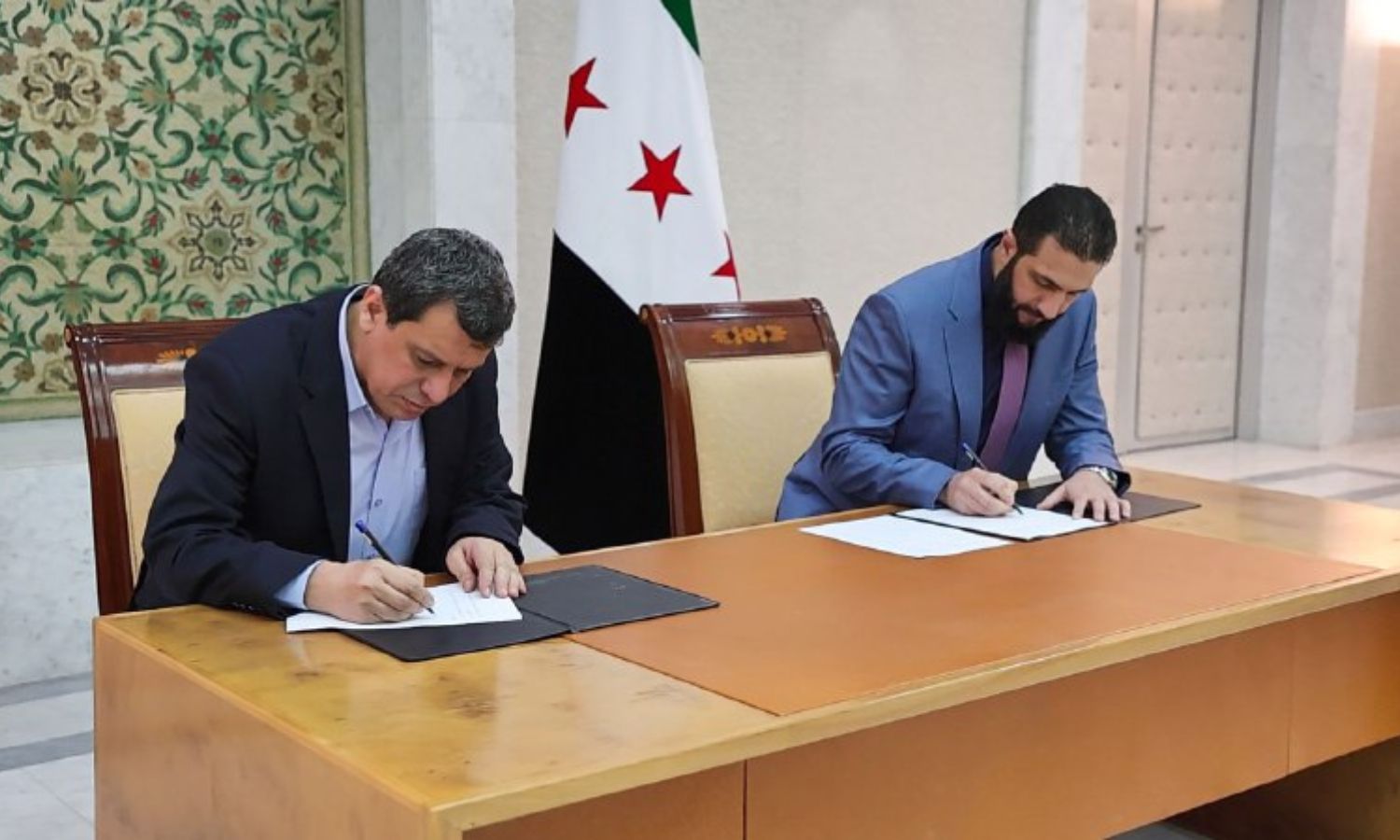
Ending ‘autonomy’: How the SDF-Syrian govt talks broke down into a fight
Mada Masr spoke with sources in the SDF, the Syrian government, Turkey and regional diplomats
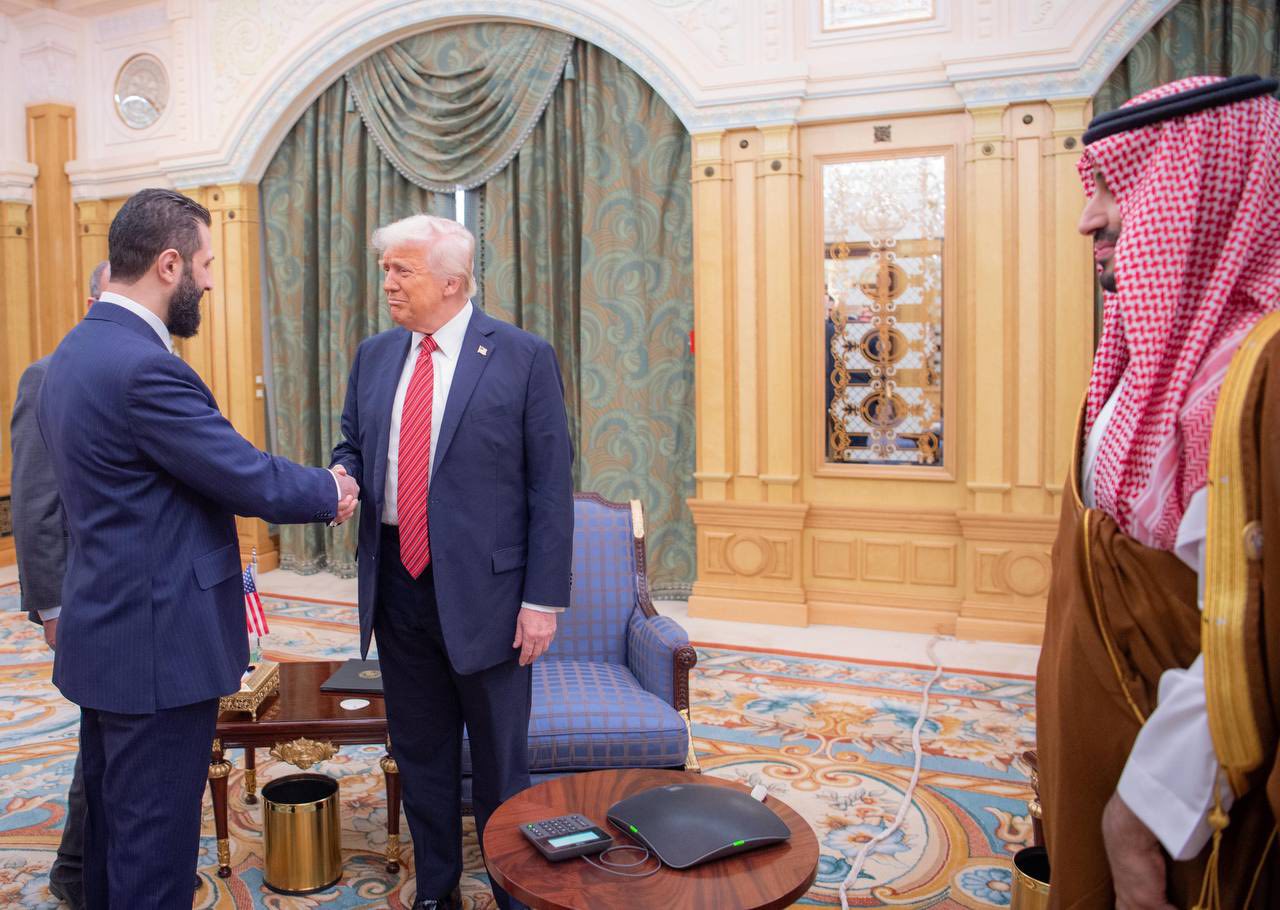
The New Syria, under Israeli-American construction
Syria’s future is tied to a broad regional plan, but the US and Israel are in the driver’s seat.
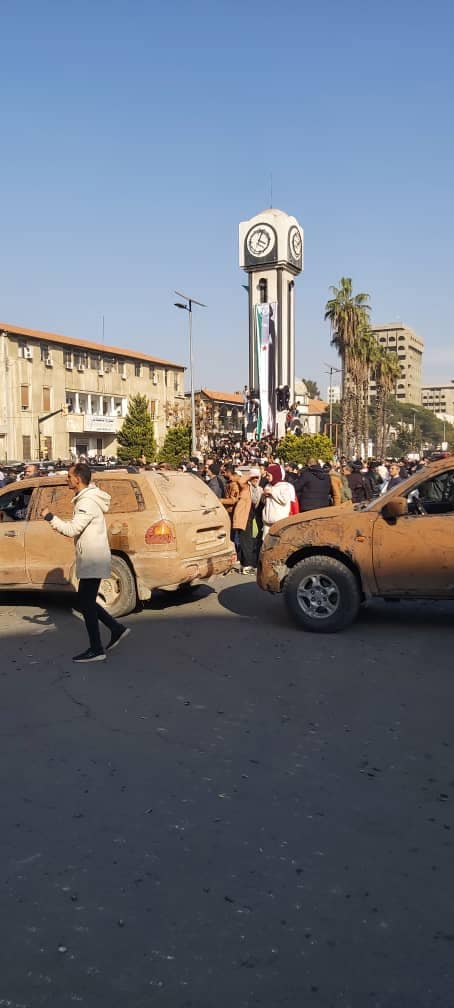
Scenes from liberated Homs
On December 7, my eyes are fixed on the TV screen and the stream of breaking news banners. The factions advanced. The factions retreated. What is happening? Where were we,…
Your support is the only way to ensure independent, progressive journalism survives.
You have a right to access accurate information, be stimulated by innovative and nuanced reporting, and be moved by compelling storytelling. Subscribe now to become part of the growing community of members who help us maintain our editorial independence.
Join us