
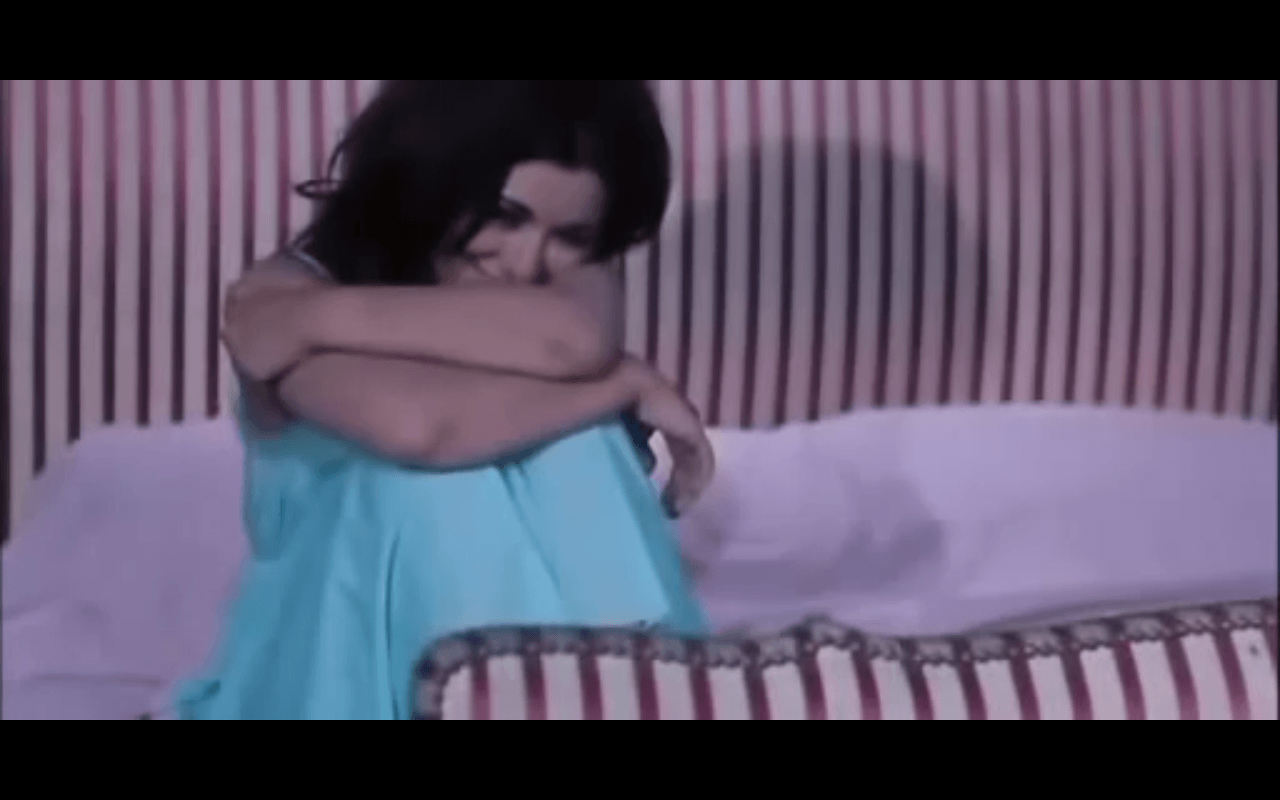
Egypt’s cinematic gems: Watch Out for Zuzu
Looking for a gem to write about this week, I was surprised to find that one of Egypt's most-loved films, Khali Balak Men Zuzu (Watch Out for Zuzu, 1972), wasn't already covered.
Boasting an impressive cast on both sides of the camera, this feel-good musical is written by cartoonist and poet Salah Jahin, directed by Hassan al-Imam and stars Souad Hosny, Hussein Fahmy and Tahiya Karioka.
It begins with a women's race: We hear people's cheers and see Hosny running fast along the track. The camera then pans down from trophy held aloft down to the toes of the protagonist – she's wearing hot pants and she's won the 100-meter race at Cairo University, where she studies literature.
In a big choreographed song and dance staged on a university staircase, her friends crown her the “ideal girl.” Zuzu, now in a short shiny red dress, breaks into song and is on top of the world.
She makes her way home – a quick impressive tour of Cairo street scenes – to Mohamed Ali Street, famous for musicians, dancers and instrument makers, then the heart of the music scene and largely frowned upon by outsiders.
Zuzu's retired belly-dancer mother (Karioka) constantly pressures her to dance in the dodgy nightclubs of Giza's Haram Street so they can make money – a good excuse for lots of seductive dance scenes. But Zuzu aspires to graduate and get a desk job – one that will not pay as much as belly-dancing.

Hosny, always at the center of the frame, is charming as ever as a strong, stubborn woman determined to prove to society that she can transcend her predestined mould. Zuzu represents a generation looking to break free of rigid family structures and class divides so that names and families don't matter as much as education, determination and individuality.
The film was made just after the end of Gamal Abdel Nasser's socialist era, as Anwar Sadat's open door economic policy was starting: As the gloom of the lost 1967 war faded, many in society started hoping for a new future.
Accordingly there's a clear rejection of conservative religiosity and an embrace of ideals of modernity and freedom of expression – for example the student who attacks Zuzu for running in hot pants is looked down on by everyone. And as in many of Imam's films, Zuzu's story revolves around class segregation – ultimately the characters break these prejudices to teach society a lesson.
Zuzu falls for Said (Fahmy), a theater director with a wealthy family and sports car. Like Zuzu, Said is trying to break free of expectations: His family wish him to have a regular desk job and marry his chichi stepsister, but he's looking for love and passionate about his art. Yet Zuzu can't tell him or her friends about her background, which conflicts with the secular modernity they all represent.
This comes to a head when the lovers' two worlds collide – due to some jealous scheming – at a wedding at Said's family house in posh Maadi, prompting one of the most memorable dance scenes in Egyptian cinema. Hosny does a wonderful job, with her grace as a dancer and her teary eyes. The scene was recently recreated in her honor by Mohamed Khan in Factory Girl.
Imam's pallette is colorful, with the characters wearing daring outfits and the action taking place in visually rich locations such as a park, the university campus and the theater where Said's troupe rehearses. The visuals match the caricature-like characters – both primary or secondary ones – creating an idealistic world for two hours in which happiness and sadness are strongly contrasted through music, dance and camera work.
Jahin's lyrics are full of word play and quirky humor. In one famous song Zuzu compares Said's coolness to the calm nerves of a British surgeon or a statue of Ramses, hoping that he won't turn into a police sergeant or diplomat.
It's sad to look back at the film now in 2015 and find that so many of the aspirations for modernity, social justice and freedom have not been achieved and seem even further away than they did in 1972. That said, Watch Out for Zuzu is ultimately a happy film in which love, idealism and art prevail even in the gloomiest of situations. It was one of the country's biggest ever box-office hits.

Rowan El Shimi
Rowan El Shimi is a culture journalist from Cairo, but she often finds herself working on stories all over the country, especially Alexandria. She covers a range of topics in culture, mostly…
تقارير ذات صلة

Avant-titre | Our bread, our dignity: Bread in Egyptian cinema
This episode of Avant-titre is part of Mada Masr's Bread politics, an eight-part series that takes an in-depth look at bread subsidies in Egypt in the context of recent talk…

Video | Privilege and responsibility: A letter from Carol Mansour
Carol explains why allowing the voices of others to be heard helps to make the world a better place

Video | The archivist
Over decades of collecting, Makram Salama has turned his home into a cinema archive.
Your support is the only way to ensure independent, progressive journalism survives.
You have a right to access accurate information, be stimulated by innovative and nuanced reporting, and be moved by compelling storytelling. Subscribe now to become part of the growing community of members who help us maintain our editorial independence.
Join us