
Big fish in a shrinking pond: How an Armed Forces company is building a fish farming monopoly
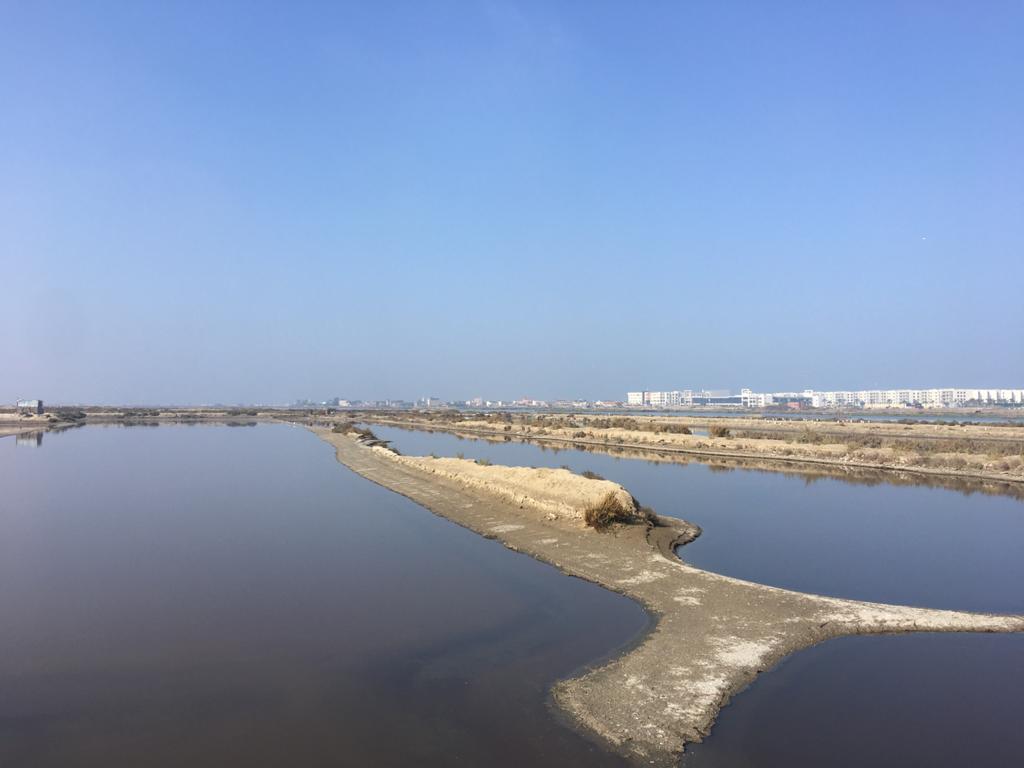
On a cold night last December, 37-year-old Hassan* stands in front of a group of ponds on the fish farm he inherited from his father, watching the movement of the fish in the water. Hassan’s life had been set out for him since birth: fish, fodder and ponds. “My whole family worked in the fish farming field. I was born and raised on this land,” he says, recalling the memories of his childhood and adolescence in this place.
In his first years of work, Hassan was able to secure a stable life for himself, his wife, and his son and daughter. There wasn’t much competition in fish farming in Damietta at the time. “The state was encouraging investment in this field, and the number of farms was generally limited in the Middle East, not just in Egypt,” he says, pointing at his farm. “At first, the land was fallow. My father maintained it so it would be suitable for fish farming. And in 1983, with the establishment of the General Authority for Fish Resources Development, my father signed a contract with the authority to rent the land with a 5 percent increase each year.”
Until recently, Hassan believed that the job he inherited 22 years ago was going to be his until he died. But in 2018, the General Authority for Fish Resources Development issued a decision to increase the rent of fish farms from LE300 per feddan to LE3,000 per feddan. Things didn’t seem so permanent to Hassan anymore.
Adding to this worry was the entrance into the market of the National Company for Fishery and Aquaculture, a company affiliated with the Armed Forces National Service Projects Organization, which was granted exclusive rights in the market under a 2018 decision.
These new challenges are threatening Hassan and all other fish farmers who now face a military competitor in the market, with all the unfair market advantages that the military enjoys. “We were shocked with the 2018 decision to increase the rent tenfold. And, in the case of nonpayment, the land is either confiscated or the farms are destroyed by the state, and the tenant could be imprisoned,” says Hassan. “All I hope for is to get half the support that the National Company for Fishery and Aquaculture gets, especially now that rent has increased along with the prices of fodder and electricity.”

Fish farming depends on two important pillars, namely water and location. Temperature also plays an important role in the vital processes of fish, including metabolism and reproduction, especially spawning.
Fish are divided between species that can survive in cold water, which can mate at 15C or less, and those that survive in warm water, which can mate at temperatures of 16C or more. Tilapia, for instance, need to live in temperatures between 20C and 30C to survive. They stop feeding if the temperature drops below 16C and are endangered if the temperature drops to 10C.
One of the main challenges of fish farming is the potential lack of oxygen for fish, especially during the night, which can lead to their death. This is why it is crucial to choose a suitable location for fish farms, one that is close to a water source and away from agricultural waste.
The production process of fish in Egypt differs depending on the type of fish. For example, Meagre are prevalent in the Diba triangle in Damietta, where they grow at a rate of 3 grams per day on average and reach 1.5 kilograms per fish during their growth cycle, which lasts 10 to 12 months. As for sea bass, they reach the market weight in 18 to 20 months. Grouper fish take 10 to 12 months to breed and to grow to more than 1 kilogram. Tilapia take six to seven months to grow to full size, from April to October, at a growth rate of 1.5 grams per day.
Egypt harvests 1.92 million tons of fish annually, 80 percent of which comes from fish farms. Domestic fish farms and captures from fisheries cover 79 percent of the local market, whereas imports stand at almost 500,000 tons of fish annually. According to CAPMAS, Egypt’s fish productivity surpassed LE250 billion over the last ten years. Egyptian fish imports dropped by 7 percent in the first 11 months of 2020 in a year over year comparison from US$905.1 million to $841.9 million.

From the 1980s until a few years ago, the General Authority for Fish Resources Development has regulated the entire fishing industry. Established by a 1983 law, the authority works under the Agriculture Ministry to develop the national economy through the development of fisheries, conduct research to increase production, implement pilot and model projects, create training and guidance programs, provide technical assistance in the field of fish farming, and plan and implement national fish wealth projects.
According to the law, fish farmers are permitted to rent farms and hatcheries under the jurisdiction of the General Authority for Fish Resources Development. A contract is drawn up to determine the value of rent or usufruct period, with an annual increase of 5 percent.
Hesham Mohamed, the owner of a fish hatchery in Alexandria, tells Mada Masr that the authority’s role is to lease its land to fish farmers and provide them with eggs. “During the 1980s and 1990s, the authority was supporting us in a huge way by supervising the fish farms and renting the lands at extremely reasonable prices,” he says.
Several fish farming experts agree that there have been vigorous efforts by the government over the past few years to pressure the fish resources authority, the main entity responsible for fish wealth and fish farming in Egypt, to step down from its role.
In August of 2015, the Planning Ministry decided to reduce the budget of the General Authority for Fish Resources Development for FY 2014/2015 from LE160 million to LE120 million, as part of an overall substantial reduction in the Agriculture Ministry’s budget. The consequences of that decision were extremely harmful to fish farms, according to an official in the authority who spoke to Mada Masr on the condition of anonymity. He explained that the budget slash prevented the authority from fulfilling its primary role in supporting and developing fish farms, which in turn reduced the productivity of fish farms affiliated with the authority.
On August 27, 2019, the government presented a bill on protecting and developing lakes and fish wealth to the House of Representatives. The bill made way for the creation of a new body, the Authority for the Protection and Development of Lakes and Fish Resources, to assume responsibility for managing and regulating fishing areas, fish farms in lakes, and artificial fish farms. In addition, the authority would be charged with designing, planning, and implementing fish farming projects in different governorates.
Even though the law is still being discussed, some fish farming experts believe there are parallel measures being taken to undermine the General Authority for Fish Resources Development. On December 26, presidential spokesperson Bassam Rady published details of a meeting between President Abdel Fattah al-Sisi, Prime Minister Mostafa Madbouly, Agriculture Minister Al-Sayed al-Qusair, General Mohamed Amin, a presidential advisor on financial affairs, Lieutenant Osama Rabie, the chairman of the Suez Canal Authority, and General Hamdy Badeen, the head of the National Company for Fishery and Aquaculture. The meeting came a few weeks after Sisi issued a decree to allocate almost one million feddans in Toshka to the National Company for Fishery and Aquaculture.
Even though the agriculture minister, who supervises the General Authority for Fish Resources Development, attended the meeting, the authority’s official leader was notably absent. According to Mohamed Shehab, a researcher on fish farming, excluding the head of the authority and its members reflects the state’s persistent policy to marginalize the authority. Shehab added that neither the head of the authority nor any of its members knew about the Toshka allocations.
In contrast, the National Company for Fishery and Aquaculture, which is owned by the Armed Forces National Service Projects Organization, has increasingly taken on a larger role.
“The National Company for Fishery and Aquaculture has become more important than the General Authority for Fish Resources Development. There are officials inside the Agriculture Ministry and the authority who wholeheartedly believe that other authorities are now the ones responsible for fish wealth in Egypt,” says Ahmed al-Sharaky, a former engineer in the fish resources authority and an owner of a fish farm.

According to its official website, the National Company for Fishery and Aquaculture was created following a ministerial decree from the prime minister in November 2014. During an opening ceremony for several projects in November of 2017, which was attended by Sisi, the company’s chairperson stated that he expects to produce 60,000 tons per year.
Over the last few years, that government has moved repeatedly to allocate pieces of state-owned land to the National Service Projects Organization to use for fish farming investments, the most recent one being the one million feddans of Toshka.
In August of 2016, Sisi issued a decree to reallocate some 490 feddans, which were originally allocated for tourism projects in Ain Sokhna, to fish farming ventures. In 2016, the Official Gazette published a series of presidential decrees, one of which was the reallocation of 2,815 feddans of state-owned land in Ghalioun, Kafr al-Sheikh to the National Service Projects Organization to use for fish farming projects.
On November 18, 2017, Sisi inaugurated the first phase of the Berket Ghalioun project for fish farming that was established on an area of 4,100 feddans at a cost of LE1.7 billion. According to former Kafr al-Sheikh Governor General Sayed Nasr, the project established two training, research, and development centers, a hatchery on 18.5 feddans that accommodates 2 billion shrimp eggs and 20 million saltwater fish eggs, a 119-feddan drainage pond, and a 55-feddan industrial zone.
According to two sources, an academic and an owner of a fish farm, who spoke to Mada Masr on condition of anonymity, the Ghalioun project was originally spearheaded by a group of fish farming experts, university professors and agricultural researchers, before it was handed over to the General Authority for Fish Resources Development, which then handed it over to Hamdy Badeen and the national company .
The project also established a farmers’ co-op with a company that owns production services in the field of fish farming, with funding from the European Social Fund. The co-op would provide services to non-competing fish farms across the country raising fish for the local market. But the two sources told Mada Masr that the productivity of the Ghalioun project is low relative to its expenditures and size.
An agricultural engineering professor andexpert on fish farming, who spoke to Mada Masr on condition of anonymity, says that the private sector’s frustration with state-owned fish farms is not due to the latter’s high yields. Rather the private sector’s frustration is because of the state-owned farms’s low production costs, which are a direct result of them having exclusive access to energy inputs. Consequently, the expert says, small fish farmers cannot sell their products at similarly competitive prices.
Mahmoud Salem, the former head of the Production and Operations Administration of the General Authority for Fish Resources Development, echoed this sentiment, describing competition between owners of private fish farms and the National Company for Fishery and Aquaculture as almost “nonexistent.”
“The National Company for Fishery and Aquaculture barely has any production costs, especially because it owns factories that produce fodder specially for the company,” he says.
Even though the company’s productivity remains quite limited as a proportion of the country’s total production, the company’s influence has affected small investors. “The National Company for Fishery and Aquaculture sells at a lower cost than me because it does not incur any production costs. It also outperforms everyone when it comes to industrial inputs, like having access to freshwater and saltwater farms, water pumps, an abundance of electricity, not paying annual rents and having its own factories for producing fodder,” says Hassan.
Hassan added that most merchants prefer to buy from the National Company for Fishery and Aquaculture because of their low prices. “As such, we incur a lot of losses due to the low prices in the market,” he says. Sometimes, Hassan is forced to sell his fish and shrimp at a lower price so that he can lower the gap between him and the military competitor. “The loss can climb up to LE30,000 during one shrimp production cycle. It’s the same for sea bream and sea bass,” he adds.
On top of all this, the National Company for Fishery and Aquaculture is exempt from corporate income taxes and VAT.
According to Hesham Mohamed, the Alexandria fish hatchery owner, General Hamdy Badeen assured fish farmers during a meeting that Mohamed attended in April of 2019 to discuss the Ghalioun project that the farms owned by the company were established for export purposes. However, according to Mohamed, fulfilling that purpose is difficult.
“There is not a single fish farm in Egypt that exports to Europe because they do not have the quality certificates required to export to the European Union. This is because Egyptian law prohibits the usage of freshwater in fish farms. Most farms depend on wastewater,” says Mohamed. “We used to export huge quantities to Gulf countries, but after taxes were imposed at LE12,000 per one ton of fish, exports stopped. Even after the decision was revoked in 2017, Gulf countries did not import from Egyptian fish farms as they had already moved on to other markets like China and Indonesia, which export at lower prices.”

The competitive challenges brought about by the National Company for Fishery and Aquaculture are not the only problem that private fish farmers are confronting. In 2018, the General Authority for Fish Resources Development issued a decision to raise the rental value of one feddan from LE300 and LE400 to LE7,700, before lowering it to LE3,000, which has created a crisis between farm owners and the authority, according to Salem, who says many people working in fisheries are considering deserting the profession altogether.
Salah al-Roudy, a 40-year-old fish farmer, is a case in point. For many years, he worked in fish farming in the village of Diba on the outskirts of Port Said, where the majority of the population depends on fishing and fish farming.
When Roudy first started in fish farming, the profit margin on one production cycle for sea bream and sea bass reached up to 35 percent. However, since 2018, after the increase in fodder prices, electricity fees, and rent, he has incurred huge financial losses and fallen into debt. “Rent for the land used to be LE265 per feddan, but after 2018 it increased to LE3,000, and this is why I decided to leave,” he says.
“I notified the authority that I would give up the land and the expenses of its maintenance. But I was told that I need to pay my debts from 2018 even if I stopped farming,” he adds. “The production cycle for sea bass and sea bream takes two to three years. It was impossible to pay the rent after it multiplied.”
Roudy had to search for an alternative job that could secure a life for him and his family. “I started working as an electrical appliance dealer. I would buy an appliance and sell it to people in the neighborhood at a slight profit. There was no other solution. I have two kids in private schools, and I don’t know how I will pay their school fees next year,” he says.
Two years ago, a presidential decree was issued declaring all northern lakes as border regions. The General Authority for Fish Resources Development threatened to refer farm owners to military court if they did not pay the LE3,000 per feddan rent, according to Sayed, the former head of the Production and Operations Administration in the General Authority for Fish Resources Development.
Roudy did not know that his dream to make a stable living through fish farming would eventually land him in prison after accumulating debts and falling short of paying the rent. In December of 2018, he was startled to discover that there are three military lawsuits filed against him for his failure to pay his debts from May of 2018, even though he had deserted the land. “I was very scared to walk around without the case paper so that I wouldn't get arrested in any checkpoint,” he says.

Even though the government issued a decision to reschedule the accumulated debts, Hassan, like Roudy, is thinking about giving up on fish farming. “I spent so much money on this project and the state did not support me one bit,” he says. “If the state wants to take away my land and compensate me for the expenses I paid to cultivate it, I will be ready to leave tomorrow.”
*Pseudonym
تقارير ذات صلة
New rules entitle govt to 25% of rice crop in bid to stop selling on global markets
Many working in the sector doubted that the state will be able to compete with higher market prices
Keeping Egypt above the breadline: How has the government strategized to supply wheat during a global shortage?
The state looked to local farmers for nearly double what they would in other years
Shortages of Ukrainian corn, price hikes threaten Egypt’s food security
Ukraine is among the top three exporters of corn to Egypt
Your support is the only way to ensure independent, progressive journalism survives.
You have a right to access accurate information, be stimulated by innovative and nuanced reporting, and be moved by compelling storytelling. Subscribe now to become part of the growing community of members who help us maintain our editorial independence.
Join us