
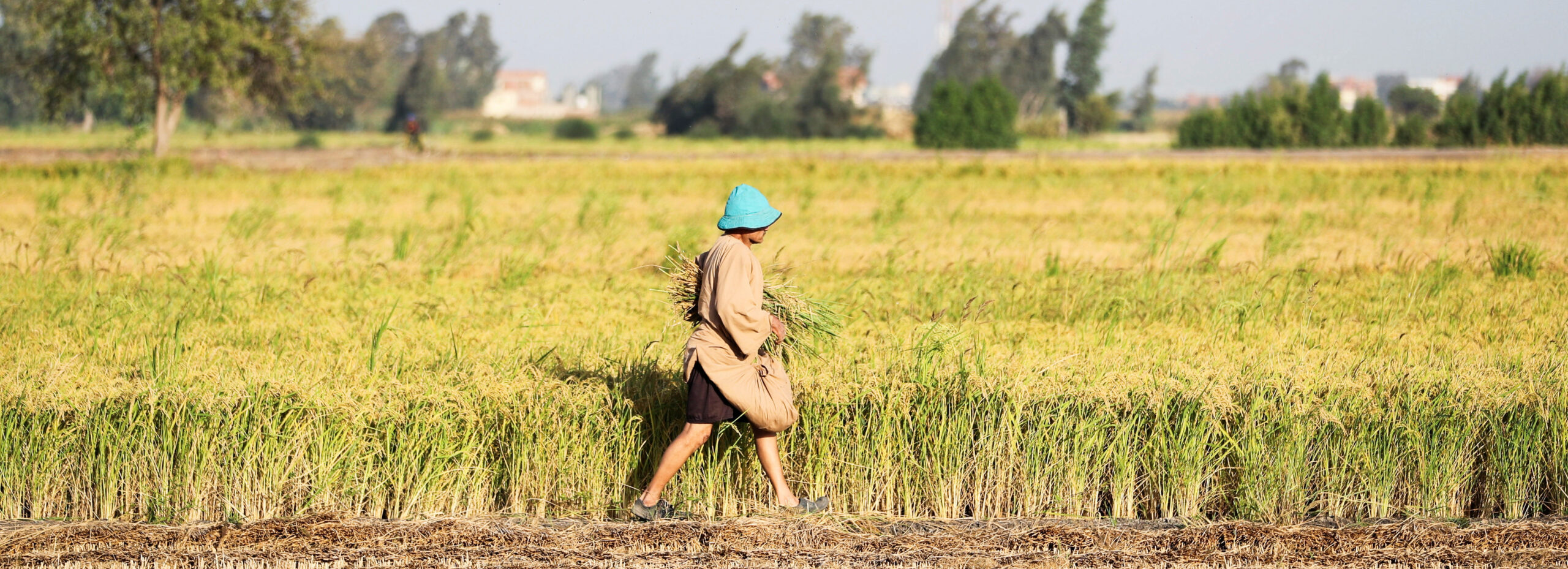
New rules entitle govt to 25% of rice crop in bid to stop selling on global markets
Tightening the regulations delimiting the agricultural sector once again, an August decision from the Supply Ministry is to compel rice farmers to deliver around 25 percent of their crop to the government from now until the end of harvest in December, while other new rules set market rates and require storage sites to gain legal approval before they are used to stock rice crops.
The government said the new rules are to ensure that Egypt can procure 1.5 million tons of locally grown rice to meet its domestic needs and guarantee rice is available to low-income households at a reduced price.
In turn, the government will increase the price per ton it offers to farmers, but will also mete out steep penalties for non-compliance — a ban on cultivating rice over the next season, denial of access to government-subsidized fertilizers, and fines of LE10,000 per undelivered ton — in an effort to deter rice farmers from selling their crop to traders in the private sector or on global markets, where international shortages and supply chain issues have seen prices surge to higher levels than the state’s set price.
Another ministry decision from August requires rice to be stored in sites only if they are first approved by the National Food Safety Authority, which a source in the grain sector who spoke to Mada Masr on condition of anonymity said aims to facilitate the government’s oversight of the harvest.
Many working in agriculture and supply, however, doubted that the new price tag for delivering rice to the state will be high enough to deter farmers from either selling elsewhere, or simply choosing to grow more lucrative crops, as high rates of inflation mean their input costs have soared.
A majority of Egypt’s rice is grown locally. This year, around 1.5 million acres of rice were planted with an expected harvest of around 6 million tons of unprocessed rice, or around 3.4 million tons of processed white rice. “An additional 250,000 tons of rice is sourced through imports annually,” Mostafa al-Saltisy of the rice division of the Federation of Egyptian Industries’ grains chamber, told Mada Masr.
For low-income households, the Supply Ministry secures an annual amount of between 360,000 and 420,000 tons to be sold at a subsidized price of LE10 per kilo, grains chamber member Magdy al-Weleily said. The government first purchases the crop from farmers, then the rice is tendered out for sale to state mills under the Holding Company for Food Industries as well as to private-sector mills at near-market prices. As local production approaches its end, the government then puts out international tenders to import the rest of the rice it needs.
Last year, rice farmers were discontent with the price offered by the government. At the beginning of the 2021 harvest, the Supply Ministry set an indicative price of LE3,700 per ton. Though farmers demanded LE4,000 per ton, and both public and private rice mills bought up local stocks at LE4,000 and higher, the General Authority for Supply Commodities refused to pay more than LE3,700.
In October, Supply Minister Ali Meselhy told rice mill operators to stop competing to buy rice at high prices, stressing that the government would not allow stocks to be exported and that reserves in the country were sufficient for up to three months. “Anyone who wants to hold on to their rice can keep it, and even take a picture next to it.”
“As the minister remarked, people did hold on to the rice, but they used it for something else entirely,” Mohamed al-Gohary, a farmer in Daqahlia, told Mada Masr. With corn prices rising in the markets at the time, farmers began to use rice for animal feed, according to Gohary and other agricultural sources.
Animals were the endpoint consumer for the majority of last season’s rice stocks, ultimately creating a market shortage that caused prices to surge to over LE10,000 per ton.
“At the end of March, and for more than a month, we tried to convince the minister to issue an import tender to reduce the burden on local supply, but he refused,” a grains sector source told Mada Masr.“The import tender ended up being offered in May, with 50,000 tons arriving [in August]. But prices had already reached unprecedented levels and remained at LE13,000 per ton.”
The new regulations obliging farmers to deliver rice stocks to the government this season represent a tightening of the working environment in agriculture, similar to that imposed on wheat farmers over their recent harvest season. The new rules for rice farmers came off the back of a proposal made by a member of the Federation of Egyptian Industries’ grains chamber who spoke to Mada Masr on condition of anonymity, saying that the supply minister initially rejected the plan, not wishing to intervene in the market.
“But we clarified our point of view by explaining the difficult situation that occurred last season, including the depletion of supply and the unprecedented price increases,” the chamber member said. “‘If the state starts storing rice, we can avoid this situation,’ we told him, and with that, the proposal was approved.”
Accordingly, the ministry has now priced unprocessed short-grain rice at LE6,850 per ton, and fine-grain rice at LE6,600 per ton. Globally, average prices of unprocessed rice in August stood at around LE7,000, according to food price indices of the Food and Agriculture Organization of the United Nations.
“We were keen to increase the prices of this year’s rice compared to last year, taking inflated production costs for farmers into account, and to encourage them to continue farming,” according to the grains chamber member.
The government also took steps to regulate trading domestically on stocks of rice left over from last year, which had exceeded LE10,000 per ton for both types of rice, according to Saltisy. A Cabinet decision last week brought the price down to LE7,500, while Weleily said that authorities had monitored a number of trade infractions over recent days, and had taken legal action against the offending party.
Industry figures noted that if the government is to meet its procurement target, it will need to keep prices competitive with their global equivalents to prevent farmers from trying to sell elsewhere. “As long as there is a price difference [between the government’s purchase price and the market price], even if it’s just LE10, the ministry will not be able to collect anything, as we have seen with wheat,” said Walid Diab, the former head of the mills division of the Federation of Egyptian Industries.
“When the private sector was prohibited from buying Egyptian-grown wheat,” said a source in the grains sector who spoke to Mada Masr on condition of anonymity, “all the wheat was leaked to the private sector.” “Imagine what will happen with rice, which the private sector is not forbidden from buying."
Wheat farmers were similarly obliged by law over the outgoing harvest season to hand over a share of their crop to the Supply Ministry, as the government sought to reduce its dependence on imports of wheat which surged in price on global markets after Russia’s invasion of Ukraine. At the time, the ministry threatened penalties up to imprisonment for non-compliance, and extended the harvest season until the end of August rather than July. Ultimately the measures saw the government procure less than 4 million tons, falling substantially below its original 6 million ton target.
Farmers speaking to Mada Masr grumbled that the government rates make it unfeasible for them to cultivate rice, since production inputs are only getting more expensive, and it currently costs approximately LE17,000 to grow an acre of the crop. Instead of “intimidating and threatening” farmers, said Gohary, the farmer from Daqahlia, the state should encourage farmers to plant strategic crops with financial and technical incentives. “Their actions will make the farmers stop farming completely, even if their threats are empty. We will seek other jobs, and if that happens, everyone loses out.”

تقارير ذات صلة
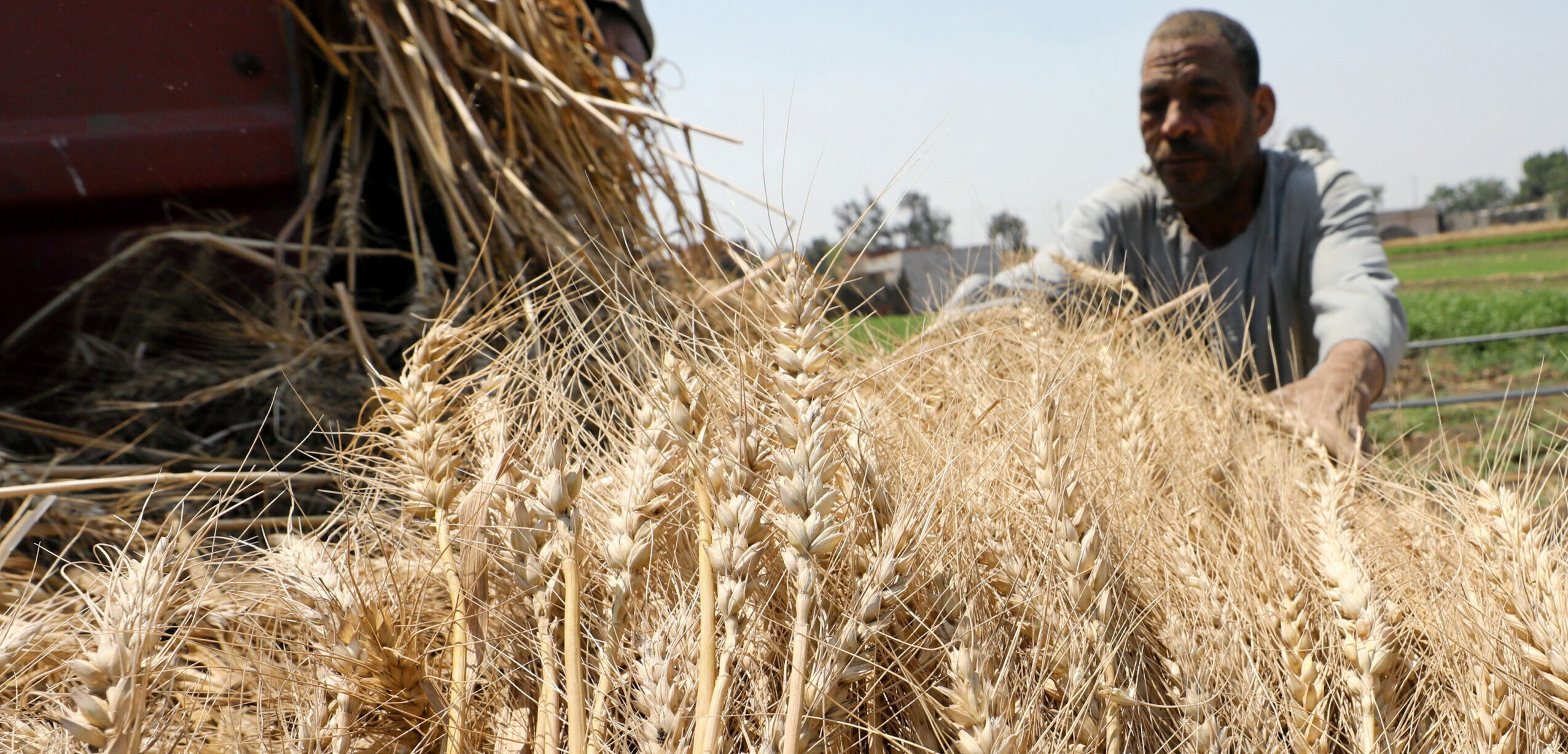
Keeping Egypt above the breadline: How has the government strategized to supply wheat during a global shortage?
The state looked to local farmers for nearly double what they would in other years
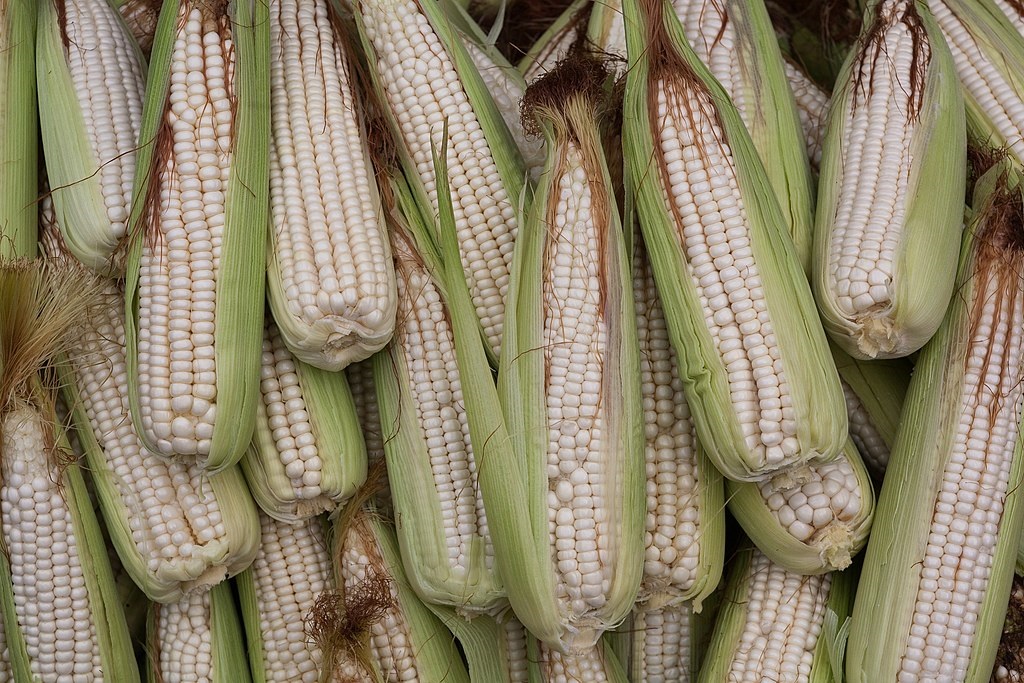
Shortages of Ukrainian corn, price hikes threaten Egypt’s food security
Ukraine is among the top three exporters of corn to Egypt

Farmers suffer as fertilizers sellers turn to open market amid global price surge
The issue affects a variety of key crops, threatening Egypt's food security
Your support is the only way to ensure independent, progressive journalism survives.
You have a right to access accurate information, be stimulated by innovative and nuanced reporting, and be moved by compelling storytelling. Subscribe now to become part of the growing community of members who help us maintain our editorial independence.
Join us