
Shortages of Ukrainian corn, price hikes threaten Egypt’s food security
Russia’s invasion of Ukraine has caused major fluctuations in global markets and is having far-reaching economic implications, including direct effects on Egypt’s food security. Since before the outbreak of the war, the Cabinet has been holding emergency meetings to discuss how to manage the fallout from the conflict.
Public statements by the government have focused on certain imports, most notably wheat, a commodity whose price Cairo is particularly sensitive to as the world’s largest wheat importer. However, the government has said little about another crucial crop: corn.
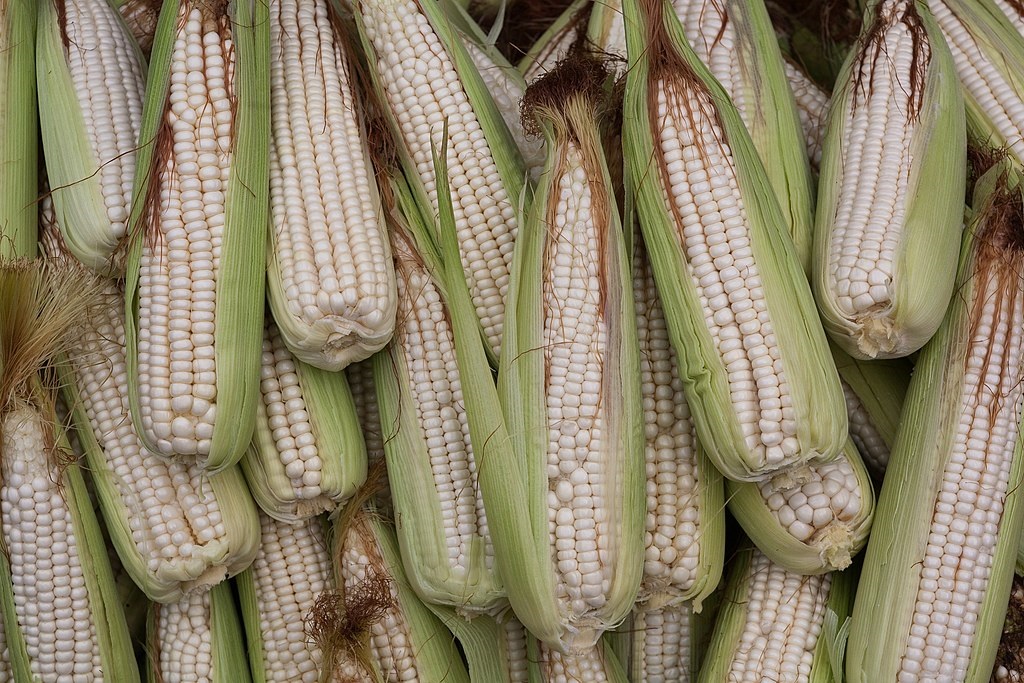
“Corn is the cornerstone of the production of protein sources in Egypt, including poultry, red meat, eggs, dairy. If we are short on corn in the market, it will be a disaster,” Hesham Suleiman, a grain importer, told Mada Masr.
Russia and Ukraine produce about one fifth of the world’s corn yield, and the war is having a direct effect on corn prices in the global market. In Egypt, the effect was immediate. The price of yellow corn jumped from LE5,600 per ton at the end of February to LE7,000 on March 1.
Last week, the Trade and Industry Ministry banned the export of corn, durum and oils of all kinds, just days after the announcement of a similar ban on flour, pasta, beans, lentils and wheat exports. The decision was made to secure the availability of basic commodities in the local market ahead of Ramadan, during which food consumption rates increase significantly, Trade and Industry Minister Nevine Gamea said in a statement.
Unlike wheat, corn is not subsidized in Egypt. The government does not directly import corn nor does it maintain a strategic supply as it does with wheat. Instead, the entire market for corn is handled by the private sector. Even state-owned factories producing animal fodder get their supply of corn from the private sector, according to several sources who spoke to Mada Masr.
“The government used to import corn when it would mix wheat with 20 percent corn flour to produce subsidized bread. As soon as bread started being produced with 100 percent wheat, the government was no longer involved in corn imports,” says Suleiman.
Corn imports have steadily increased over the last three decades, recently growing from 4.3 million tons in 2014, to 10 million tons last year at a cost of over US$2 billion, with local production accounting for just around a quarter of consumption in 2020.
Ukraine — the world’s sixth largest corn producer — is among the top three exporters to Egypt, along with Brazil and Argentina, according to data from Egypt’s agricultural quarantine body and the United States Department of Agriculture.
Several factors account for Ukraine’s importance as a source of Egypt’s corn supply, including its location on the Black Sea, which allows for shipments to arrive in Egypt in under a week, thus lowering transportation costs. Coupled with Ukrainian corn being of medium quality, this translates to the best value for money when compared to other corn producers in the region, like Bulgaria, whose corn production is of lower quality, and Romania, whose product is of higher quality and therefore more expensive. Meanwhile, Egypt does not allow the import of Russian corn because it contains ragweed, a plant that is prohibited from entering the country by the quarantine authority, according to several importers who spoke to Mada Masr.
Corn prices have been increasing since the beginning of the year as part of a global rise in food prices, reaching US$231 per ton just before Russia’s invasion of Ukraine, a 22 percent increase over the same period last year. After the invasion, corn prices rose even further to US$294 per ton, a figure that is expected to continue to climb as the conflict drags on, along with a lower crop yield expected in Argentina and Brazil due to lighter levels of rainfall.
On average, Egypt imports 800,000 tons of corn per month. At the current price, corn importers in Egypt would need an additional US$600 million to meet import needs for the year.
Several importers and industry sources told Mada Masr that if the government does not intervene to regulate the local market, any shortages of corn or increases in price will lead to a disastrous situation, especially as the month of Ramadan is approaching and the consumption of meat and dairy products is expected to rise. “In less than a month, one egg will cost more than LE3,” says Suleiman.
However, government officials dismissed the issue as being overblown. Abbas al-Shennawy, the head of the Agriculture Ministry’s services and monitoring department, told Mada Masr that no “crisis” is expected in the corn market, only “minor pressures.”
Similarly, Abdel Aziz al-Sayed, a member of Cabinet’s commodities committee, told Mada Masr that the situation is secure and that Egypt has a strategic reserve of corn that can last six months. Sayed claimed the information on the strategic reserve was contained in reports sent by various ministries to the commodities committee during the recent emergency Cabinet meetings. While he declined to provide Mada Masr with a copy of these reports, Sayed says the strategic reserve came as a result of the country’s “enlightened leadership,” which asked the government three months ago to store strategic crops.
Suleiman counters Sayed’s comments on the existence of a strategic reserve of corn, saying it defies logic. “Who gathered these strategic reserves? Where did they gather the crops from?,” he says. “Only the private sector imports corn. Where would they store it? The silos have a capacity of three and a half million tons and they are supposedly filled with wheat now. So where would they store 5 million tons of corn?”
According to data gathered by Mada Masr from various government and private sector sources, Egypt imported a total of 1.7 million tons of corn in January and February, which is in line with the monthly average of around 800,000 tons. The data included the lists of ships transporting grain that arrived in Egyptian ports over the last two months, but it did not include any additional figures that would corroborate what Sayed claimed regarding an enlightened leadership acquiring additional corn reserves.
According to several importers and factory owners, state-owned fodder factories consume 800,000 tons of corn per month, so any decrease in imports will have ramifications. And in light of the recent price hikes and broader market disruptions as a result of the war, and the absence of governmental regulation, Suleiman expects that importers will stop signing onto corn import deals in the coming period and instead store the supply they currently have. “Why would a trader take a risk and buy corn at a high price when he could store what he actually has? That way, he will guarantee a greater profit when he sells,” he says.
This very practice was observed earlier this month in the rice market, when the price of broad grain rice increased to LE6,500 from LE6,000 and fine grain rice to LE6,300 from LE5,300. Egypt is largely self-sufficient when it comes to rice, according to the state statistics agency, producing around 80 percent of local consumption. According to multiple sources who previously spoke to Mada Masr, the price hike came as a result of traders storing their supplies in order to take advantage of global grain price increases. This came as the government urged the concerned authorities to “closely monitor the markets and prevent price manipulations or the abuse of the circumstances to achieve personal gains,” according to a Cabinet statement.
With the halt of corn shipments from Ukraine, Egypt will likely have to compensate by purchasing from other sources, such as Argentina, Brazil and the United States, from which Egypt already imports smaller amounts, but at a higher cost and longer transportation times.
This move will lead to an increase in the prices of animal products on the market, according to Nader Noureddin, a land and water professor at Cairo University.
A case in point is poultry, where 74 percent of the industry depends on fodder whose components are imported from abroad. Poultry fodder is made up of 70 percent yellow corn and 19 percent soybeans. “If we have a shortage of yellow corn, the poultry industry in Egypt can collapse,” Hussein Abu Saddam, the head of the Farmers Syndicate, told Mada Masr.
In order to tackle the crisis, according to farmer Mohamed al-Gawhary, the Agriculture Ministry should aim to decrease import burdens by supporting and encouraging farmers to expand corn cultivation through contract farming arrangements or offering credit lines for the crop before the start of the planting season in mid-March
Meanwhile, Sherif Fayyad, a professor of Agricultural Economics, says that the absence of a specific and clear framework for the marketing of crops has led farmers to cultivate them in a random, unplanned way. He adds that the Ministry of Agriculture has not put forward a clear procurement map for corn — including announcing prices and coordinating between different agricultural cooperatives — which discourages farmers from cultivating the strategic crop.
Contract farming is a mechanism that guarantees farmers a predetermined price for crops before cultivation begins. Shennawy, the head of services and monitoring at the Agriculture Ministry, told Mada Masr that there are no plans to implement contract farming for corn, but he says that the ministry “has been working for years to increase [its] cultivation.”
Contract farming does indeed seem to be a distant prospect. In the March 3 edition of the Official Gazette, the Agriculture Ministry published a decision first issued by the minister last year to organize the work of a contract farming center, which was established by executive decree seven years ago.
Even after finally being published in the Official Gazette, the decision will not lead to the center taking the lead on solving crises in strategic crops like corn. The terms of the decision are limited to outlining the center’s role in registering contract farming agreements if the parties involved choose to do so, in addition to settling disputes, along with other bureaucratic tasks. And even that administrative role will likely take years to go into effect, as it requires the bill’s bylaws to be issued.
“There are some crops that the state should not abandon,” Gawhary says, “national food security crops, like wheat, rice and corn.”

تقارير ذات صلة

Video | Home-grown wheat, home-baked bread
The pressure on farmers has posed a threat to the private wheat reserves of many Egyptians
Keeping Egypt above the breadline: How has the government strategized to supply wheat during a global shortage?
The state looked to local farmers for nearly double what they would in other years

How is our food security holding up in the pandemic? An interview with agriculture professor Nader Nour Eddin
If the pandemic has shown us anything, it’s that we don’t produce a large portion of our food.
Your support is the only way to ensure independent, progressive journalism survives.
You have a right to access accurate information, be stimulated by innovative and nuanced reporting, and be moved by compelling storytelling. Subscribe now to become part of the growing community of members who help us maintain our editorial independence.
Join us