
Source: Deliberate obstructions to listing military companies behind Ayman Soliman’s sovereign fund resignation
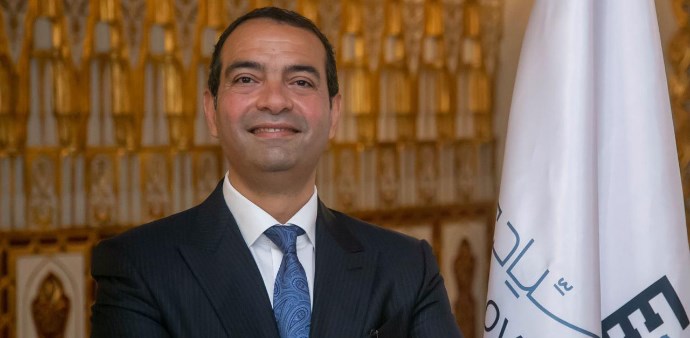
State entities deliberately obstructing the public listing of military-owned companies is a key factor behind the resignation of Ayman Soliman, the Sovereign Fund of Egypt’s CEO, an informed source in the Planning Ministry told Mada Masr on condition of anonymity.
The sovereign fund, whose executive board includes the planning minister, was tasked years ago with managing the public listing of Safi, a bottled water company, and Wataniya, a gas-station firm — military-owned companies which became flagheads for a move to reduce the state’s footprint in the economy.
State entities continuously interfered with the fund's operations and priorities, the Planning Ministry source said. The fund invested a lot of money in the valuation process of companies affiliated with the Defense Ministry's National Service Projects Organization (NSPO) and in preparing acquisition and investment offers, the source added, but each time, procedures would be abruptly halted.
Soliman faced significant challenges in the asset sale program, the source continued, describing backtracking on agreements after most of the implementation steps were completed. There was also ongoing debate regarding the fund's governance and attempts to interfere in its technical management. The source emphasized that "the fund should be a technical body, independent and responsible for its decisions, free from political disputes and power struggles."
Soliman submitted his resignation in June, ahead of the recent Cabinet reshuffle, but has agreed to stay in office until the end of August, local and international outlets reported in recent days, citing informed sources. Soliman’s annual contract as head of the sovereign fund was due to expire in October.
Mada Masr reached out to Soliman for a comment on his resignation but received no response. No successor to the head of the fund has been appointed, and no comment on his resignation has been made by the government or the Planning, Economic Development and International Cooperation Ministry led by Rania al-Mashat.
Mashat replaced former Planning Minister Hala al-Saeed in the July reshuffle of ministers, which also saw the ministry merged with the International Cooperation Ministry.
In February 2020, the Sovereign Fund of Egypt and the NSPO signed a cooperation agreement for the latter to leverage the fund’s expertise to privatize some of its assets, following directives from President Abdel Fattah al-Sisi to list military-owned companies on the stock exchange.
Sisi first raised the question of listing military companies publicly on the stock exchange in late 2016, at the same time as Egypt was in talks with the International Monetary Fund for what would become a US$12 billion loan program. In its policy recommendations, the fund urged for the military’s withdrawal from the economy.
Sisi continued to reiterate this directive in the following years. In November 2022, he held a meeting with the prime minister, the head of the Armed Forces’ Financial Affairs Authority, the director of the NSPO, the chair of the National Petroleum Company (Wataniya), and the chair of the National Company for Producing and Bottling Natural Water (Safi). The meeting reviewed the progress of listing military-owned companies, particularly Wataniya and Safi, on the stock exchange.
Following the meeting, the government announced that it would list other companies owned by the organization, noting the complexity of listing such companies, such as the structure of expenses, wages and profits, which it stated required more time for fair valuation.
During his tenure, Soliman announced repeatedly that the fund had received numerous offers from countries in the Gulf to purchase stakes in Wataniya and Safi, the most recent of which was in April 2023, when a strategic investor was expected to purchase shares in the companies within weeks, with a public listing to follow.
“The fund holds the country’s wealth and is intended for future generations," the Planning Ministry source said, highlighting that it was supposed to have the authority to utilize and promote assets and form partnerships with investors wary of competition. In practice, however, the source said, the fund is managed by state entities that control its affairs. The source added that, when Saeed was minister, she had connections with the presidency, which allowed her to manage some pressures. With her departure from the ministry and new role as economic advisor to the president, the source concluded, any chance of resolving Soliman’s issues with managing the fund has vanished.
The fund, established in 2018, was created as a private investment fund. Assets were to be transferred to it by presidential decree following a proposal submitted by the planning minister and approved by the prime minister. The fund was intended to create partnerships with local and foreign private sector investors by optimizing the utilization of state-owned assets.
The sovereign fund law permits the fund to dispose of its assets or those of its wholly-owned subsidiary funds through sale, lease-to-own, usufruct licensing, or in-kind contributions based on market value and not less than the average valuation from three reports by financial valuators accredited by the Financial Regulatory Authority and the Central Bank of Egypt.
The law sets the fund's goals as "contributing to sustainable economic development through the management of its funds and assets and maximizing their value according to the best international standards and rules for future generations."
Economic consultant and financial market expert Wael al-Nahhas, speaking to Mada Masr, viewed the departure of the planning minister as a clear precursor to a restructuring of the fund’s operations and shifting of its priorities, noting that Soliman's resignation was "a matter of course" given his association with Saeed.
Looking at the prime minister and several ministers’ decisions and statements after the recent cabinet reshuffle confirms that decision-makers intend to restructure the fund’s operations and re-evaluate its priorities after the departure of Saeed and Soliman, Nahhas said.
A reconsideration of the Planning Ministry and the sovereign fund's roles and jurisdictions in light of past deals with investors could be a "positive matter,” said Nahhas.
He cited, for example, the sale of the government’s stake in historic hotels last year. "The fund sold a stake in the historic hotels for $800 million, while Hesham Talaat Mostafa sold some sand in the North Coast for $8 billion.”
Noting that most of the deals made by the fund did not generate the targeted revenue, he said, "Where is the skill of the Egyptian negotiator?”
As for the fund’s future under Mashat’s ministry, Nahhas suggested that sustainable green industries and green hydrogen production are likely to become top priorities. He noted that the government plans to amend the fund’s establishment law to transfer its oversight and decision-making authority from the president to the prime minister. Nahhas also said that the finance minister has frequently discussed asset sales, particularly in real estate, as well as the continuation of the asset sales program — tasks that fall within the fund’s competences. This suggests potential legislative changes to the fund’s law, according to Nahhas.
Nahhas, who opposed the creation of the fund from the outset, argued, "A country with no money should establish a wealth management fund, not an asset management fund." He explained that the latter is more appropriate for countries with resources they can invest in, like those in the Gulf, to increase asset value for future generations.
Egypt, by contrast, has projects that require effective promotion to attract investor funds.

أخبار ذات صلة
Brandishing the military trial stick: The govt’s price control bluff
Another wave of inflation is crashing in. On March 10, and for the third time in the course of a year, the government raised fuel prices again, justifying the decision…

What’s up tomatoes?
During Saturday’s press conference, Prime Minister Mostafa Madbuly addressed the recent surge in tomato prices, following a tour of the Obour Wholesale Fruit and Vegetable Market. “There was a problem…

‘Subsidizing profit?’ – A look into the lifespan of energy subsidies for the industrial sector
The price that industrial actors pay for natural gas remained untouched by the government

Between rising inflation and shrinking foreign currency: What is the state doing?
The Egyptian pound resumed its slide on Thursday, reaching LE52.42 for the dollar, after a brief rise in value to LE51.92 the previous day. The currency’s slide had begun in…
Your support is the only way to ensure independent, progressive journalism survives.
You have a right to access accurate information, be stimulated by innovative and nuanced reporting, and be moved by compelling storytelling. Subscribe now to become part of the growing community of members who help us maintain our editorial independence.
Join us