

What’s up tomatoes?
During Saturday’s press conference, Prime Minister Mostafa Madbuly addressed the recent surge in tomato prices, following a tour of the Obour Wholesale Fruit and Vegetable Market.
“There was a problem with tomatoes in recent days. The reason was an emergency affecting the crop in a number of Upper Egypt governorates, where an issue led to reduced supply and drove prices up,” Madbuly said.
“Thank God, we’ve overcome this,” he added, noting that he personally monitored prices during his tour. “They have improved, with prices now ranging between LE15 and LE20 per kilogram,” he said, promising further price drops as additional produce enters the market.
Tomato prices in Egypt have surged during the second half of Ramadan, reaching unprecedented levels of LE40 and LE60 per kilogram across different areas, up from LE15 to LE25. The spike was disruptive for a market and a society whose cuisine has centered tomatoes in all shapes and forms, across classes.
While Madbuly framed the issue as a temporary disruption in Upper Egypt, several tomato farmers, traders and agricultural economists who spoke to Mada Masr say the problem is rather a recurring one.
Gamal al-Amrousy, a tomato trader in Upper Egypt, describes the crop as “totally devastated” in Luxor, Esna and Beheira, which are the key production areas during the winter growing season. The season begins in August, and the crop is harvested in January.

The production decline resulted from an infestation by the tomato leafminer, also known as Tuta absoluta, a pest infamous for halting fruit development and destroying entire crops, causing absolute devastation, hence its name. At the same time, severe cold waves negatively affected yields, halting harvesting in March instead of continuing until mid-April, as is typical.
Hosny Abu Taher, a tomato farmer in Samalut, Minya, says that in previous seasons, one or two pesticide applications were sufficient to control the pest. “Now we’re confused and unable to get rid of it — to the point that some farmers have decided to uproot their tomato crops entirely,” he says.
Rural development researcher Saqr al-Nour explains that sudden temperature fluctuations create favorable conditions for pest proliferation. One of the less visible impacts of climate change on agriculture, he notes, is the increased life cycles of pests, allowing them to appear multiple times within a single growing season.
The widespread use of pesticides, often counterfeit due to rising costs, has led to growing resistance among insects. Tomatoes, Nour adds, are particularly vulnerable because they are cultivated in open fields rather than greenhouses.
Beyond pest damage and weather fluctuations, some farmland was not planted with tomatoes at all. After suffering heavy losses over three consecutive growing cycles, many farmers abandoned cultivation altogether during the winter season, according to one farmer, further tightening supply,
According to Amrousy and Mohamed al-Remeily, a professor of agricultural economics at Beni Suef University, these losses stem from a recurring pattern affecting certain crops: prices spike due to low supply, prompting farmers to plant more. But when too many do so, supply exceeds demand, prices collapse and farmers incur losses.
Tomato farming is particularly costly. Cultivating one feddan costs between LE100,000 and LE110,000, according to Abu Taher, who broke down the expenses: LE25,000 for chemical fertilizers and pesticides; LE20,000 for seedlings, for which prices have risen to LE2,500 per thousand, up from LE800; LE10,000 for electricity; LE10,000 for organic fertilizer; and LE10,000 for drip irrigation systems, in addition to rent and labor costs.
Fuel price increases, especially diesel, have also driven up transportation costs. Amrousy says the cost of transporting a truck carrying 280 crates rose from LE17,000 to LE21,000, following recent hikes.
Farmers noted that current high prices barely compensate for last year’s losses, which ranged from thousands to millions of pounds among small- and medium-scale growers.
At market level, tomato trade has slowed sharply, starting with wholesalers. One trader explains: “Traders are now afraid to buy tomatoes — prices might fall and we lose money. Instead of handling 70 or 80 loads, we now deal with only 20 to 25.”
Retailers in Giza’s Suleiman Gohar Market echo this, saying they now purchase fewer quantities due to declining consumer demand.
At the press conference, a journalist, speaking as a citizen, said she was surprised by the rise in tomato prices even before the fuel price hikes. She added that she filed a complaint through the Unified Government Complaints System, to which she received a swift response: a price inspection campaign in her neighborhood, and an explanation that the cause was a disturbance in the winter growing cycle.
That this journalist expressed frustration at tomato price rises, and that the government took her complaint seriously, speaks to how only consumers can bring attention to farming issues, Nour reflects. Farmers remain, for the most part, unseen and unheard.
This is how tomatoes, long known for their volatile price and perishability — so much so that they are charged with madness in local culture — serve as a link between the growing field and the dining table, or between the farmer and the journalist.


Tomatoes are Egypt’s fifth-largest crop locally, after sugar beet, sugarcane, wheat and potatoes, according to 2024 Food and Agriculture Organization data. However, cultivated areas have declined by about one-fifth over the past decade, while production has fallen by 15 percent to 7 million tons, according to latest data from the Central Agency for Public Mobilization and Statistics.
Beyond domestic markets, tomatoes were typically exported to neighboring countries, fresh or processed. That is no longer the case. Exports of processed tomato products such as paste, sauce and ketchup dropped sharply last year, the lowest level in five years. Key importers like Sudan, Palestine and Libya have largely been lost, while newer markets such as the UAE and Saudi Arabia have not compensated for the loss.
Fresh tomato exports also fell to a five-year low, reaching just US$4 million last year, one-quarter of the exports from the year before, according to the same data.
Cherry tomatoes were the only exception, with exports growing from $10,000 in 2021 to over $2 million last year. Russia, Ukraine and the Netherlands were the largest importers.
In this context, Nour returns to the question of the state’s role in the agricultural sector, which he says has noticeably declined, particularly in traditional farming around the Nile Valley, as opposed to investment-driven agriculture in the desert. This decline has affected various aspects of agriculture, including the development and distribution of pest- and climate-resistant seeds, as well as oversight of pesticide markets.
Remeily also points to the collapse of agricultural guidance services: “The Agricultural Ministry no longer has the same reach as before. There are hardly any agricultural engineers left, so guidance services have stopped, and the ministry is no longer able to control the situation.”
Moreover, both Nour and Remeily argue that regulating the market ultimately remains the state’s responsibility.
A shop owner on Suleiman Gohar Street tells Mada Masr she is frustrated by the prices announced by Madbuly, saying they do not reflect real market conditions. Instead, his statements only brought her “abuse” from customers throughout the day, repeating his claims and accusing her of greed.
Though the government complaints system pointed out to the journalist that lower prices could be found at state-run outlets, Mada Masr observed on Sunday that one such outlet in Dokki was selling tomatoes for LE35 per kilogram. However, the quality appeared to be among the worst available, while ripe tomatoes were selling for LE30 per kilogram in private shops, making state outlets more expensive despite their lower quality.
تقارير ذات صلة
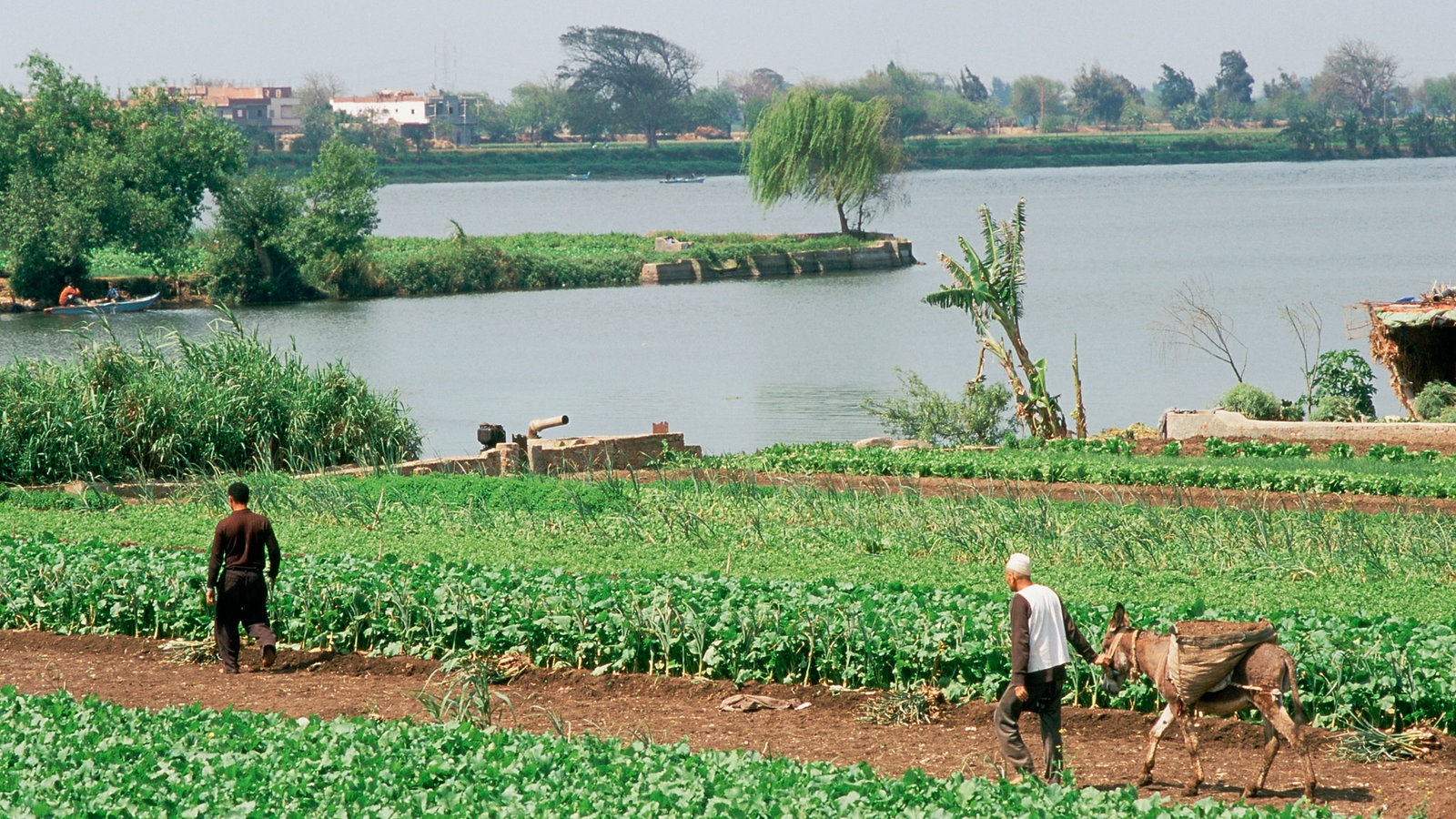
‘We inherited this land, we cannot leave it:’ Rent hikes over 170% threaten farmers on Endowments, Agricultural Reform land
The hikes come within a recent push to maximize state revenue and prioritize large-scale farming
Rice export ban for everyone but Argany
In early February, the Egyptian Customs Authority renewed its ban on rice exports, which has been in place for over eight years per the given rationale that it will help…
Video | Home-grown wheat, home-baked bread
The pressure on farmers has posed a threat to the private wheat reserves of many Egyptians
Your support is the only way to ensure independent, progressive journalism survives.
You have a right to access accurate information, be stimulated by innovative and nuanced reporting, and be moved by compelling storytelling. Subscribe now to become part of the growing community of members who help us maintain our editorial independence.
Join us