
Between rising inflation and shrinking foreign currency: What is the state doing?
The Egyptian pound resumed its slide on Thursday, reaching LE52.42 for the dollar, after a brief rise in value to LE51.92 the previous day. The currency’s slide had begun in mid-February after several months of gradual recovery.
Two sources — one in the Cabinet and the other a parliamentarian with close ties to the government — told Mada Masr that Wednesday’s temporary improvement was likely the result of an intervention by the Central Bank of Egypt aimed at balancing the inflationary effects of the drop in the currency’s value and the recent sharp increases in fuel prices.
Net foreign outflows from government debt instruments and equities exceeded LE54.68 billion on Wednesday, according to Egyptian Exchange data. The pound’s decline on Thursday came even as foreign investors returned to purchasing Egyptian government debt and securities for the first time since early March. By market close, their net purchases had reached over LE52 billion, around US$1 billion.
Mahmoud Naglah, the executive director for Fixed Income and Money Market at Al-Ahly Financial Investments Management, says the purchases recorded in Thursday’s exchange data reflected transactions that began earlier in the week, throughout Tuesday and the first half of Wednesday.
Foreign investors had sold dollars at that time in preparation for re-entering the Egyptian market, Naglah says, encouraged by improving expectations surrounding the war and by the pound’s weaker level, which made Egyptian assets attractive under the flexible exchange rate system.
But that trend was quickly reversed. As negative speculation about the war emerged, investors began buying dollars again in anticipation of selling government debt, pushing the currency higher once more.
Efforts to contain inflation form part of the CBE’s intervention to protect the pound. At the same time, the government remains committed to maintaining a flexible exchange rate in order to retain foreign investment, which has become the country’s main, albeit fragile, source of foreign currency, particularly amid concerns about a slowdown in other sources of foreign currency, including remittances from Egyptians abroad and tourism revenues.
“We review monetary policy, but the policy itself does not change. Our target is exchange rate flexibility,” Prime Minister Mostafa Madbuly said on Tuesday, stressing that the government is working diligently with the central bank to ensure the availability of dollars to meet the state’s needs.
According to the parliamentary source, who requested anonymity, the central bank’s commitment to this flexibility stems from the fact that it allows the pound to weaken to levels that may impose losses on some foreign investors, potentially making them more hesitant to exit the market.
For instance, an investor who purchased securities in the first half of February, when the dollar had fallen to below LE47, would have sold dollars on the Egyptian market at a relatively low rate in order to buy local currency and purchase those securities. If that investor now wants to exit the Egyptian market, they would need to buy dollars again at a higher rate — a currency loss that could discourage them from withdrawing from the Egyptian debt market at this moment.
Meanwhile, several economic analysts expect the central bank to hold interest rates steady at the upcoming meeting of the Monetary Policy Committee, scheduled for April 1 — another indication of the government’s attempt to balance inflationary pressures with the need to maintain foreign investment in government debt.
The interest rate cuts that the central bank began adopting last year represent an accommodative monetary policy, enabling investors to benefit from easier borrowing conditions. The policy also helps reduce the government’s cost of borrowing to finance the state budget.
But this policy can contribute to rising inflation, partly by discouraging saving. The reverse is also true: raising interest rates can help curb inflation and increase the appeal of treasury bills and government bonds to foreign investors, but it places additional pressure on the state budget and raises borrowing costs for investors.
“The impact of the pound’s depreciation on inflation will not become clear until the inflation data for March is released,” Mohamed Abdel Aal, board member of the Egyptian Gulf Bank, told Mada Masr. “The figures are expected to be announced on April 10, after the Monetary Policy Committee meeting, which makes it more likely that the central bank will opt to hold interest rates steady rather than raise them. A rate cut, meanwhile, is naturally out of the question under the current circumstances.”
Another factor behind Abdel Aal’s projection that the central bank won’t raise interest rates at the upcoming meeting is the government’s effort to attract back hot money.
“Hot money inherently strikes a balance between an acceptable level of risk on the one hand and a reasonable level of profit based on the gap between low interest rates in developed markets and higher rates in emerging markets, including Egypt,” he says. “Once risk rises to a level foreign investors consider unacceptable, higher returns will not be enough to keep those funds in place.”
Walaa Bakry, head of the Institute of Middle East for Public Policy, likewise says the current situation would most likely push the central bank to keep interest rates unchanged at the next Monetary Policy Committee meeting.
“The gap between general inflation and the interest rate announced by the central bank remains positive,” Bakry says. “The difference in favor of interest rates is around 8 percent — a significant margin that does not put the central bank under pressure to raise rates quickly to offset any potential increase in inflation.”
Abdel Aal, however, believes that a sharp rise in inflation — as expected in the March data — could prompt the central bank to raise interest rates at the following Monetary Policy Committee meeting, despite the implications for the state budget in terms of higher interest costs.
“It is true that there is coordination between fiscal and monetary policy, but the central bank ultimately has no choice but to use its tools to confront inflation, which is its core mandate,” he says.
Annual inflation in February rose to 11.5 percent, up from 10.1 percent in January, marking the first notable increase in the annual rate since May 2025.
Any retreat from monetary easing, however, carries a significant cost for the state budget, as it would mean maintaining high borrowing costs. “The state budget for [fiscal year 2025/26] assumed an average interest rate of 18 percent, while the actual average so far this year stands at around 25 percent,” the parliamentary source says.
The war and its effects — particularly through interest rates — will likely make any government effort to implement a plan to reduce public debt unlikely, the source adds. “These pressures will serve as justification for the public debt crisis to persist for some time,” the source says.
In December, Madbuly said the government is working to bring public debt down to its lowest level in 50 years. “This issue is being handled forcefully and is under follow-up,” he said at the time.
Medhat Nafie, an economics professor and member of the prime minister’s macroeconomic advisory committee, tells Mada Masr that the state budget also faces pressure from the pound’s depreciation, which increases the burden of foreign debt.
Both the state budget and the budgets of economic entities include external debts recorded in Egyptian pounds based on exchange rates. As a result, any weakening of the pound automatically increases the pound-denominated value of those liabilities, he says.
***
At the same time, a new inflationary wave appears imminent, especially after fuel prices increased this week by 15-22 percent.
The decision to raise fuel prices came despite statements by Finance Minister Ahmed Kouchouk just a few days prior in which he said the government had signed hedging contracts covering half of its petroleum products. The system — used for the past three years — is designed to insure against rising oil prices and ensure the stability of supply costs. Kouchouk said the government purchases contracts for future periods to guard against price increases.
Early signs of repricing have already begun to emerge in some goods, particularly poultry. The producer price of live chickens has risen by around 15 percent, bringing the price per kilogram to LE105, according to Abdel Aziz al-Sayed, head of the Poultry Division at the Federation of Egyptian Chambers of Commerce, and Sameh al-Sayed, head of the Poultry Division at the Giza Chamber of Commerce.
Sayed says the increase in producer prices was justified by higher feed costs after manufacturers raised their prices. However, he notes that feed production costs have not changed significantly, since producers are still relying on large stockpiles of grains, such as yellow corn and soybeans, purchased before the war’s effects on prices. Around 135,000 tons of these inputs remain available in the market at earlier prices, he adds.
Poultry farms nonetheless passed the higher feed prices on to consumers, Sayed says, even though the poultry production cycle lasts about 45 days. This means that the chickens currently being sold were not fed the newly priced, more expensive feed.
Instead, he says, what the market is witnessing is precautionary pricing. In periods of uncertainty — particularly surrounding the dollar’s exchange rate — producers and traders tend to raise prices preemptively to ensure that revenues will cover the cost of the next production and trading cycle.
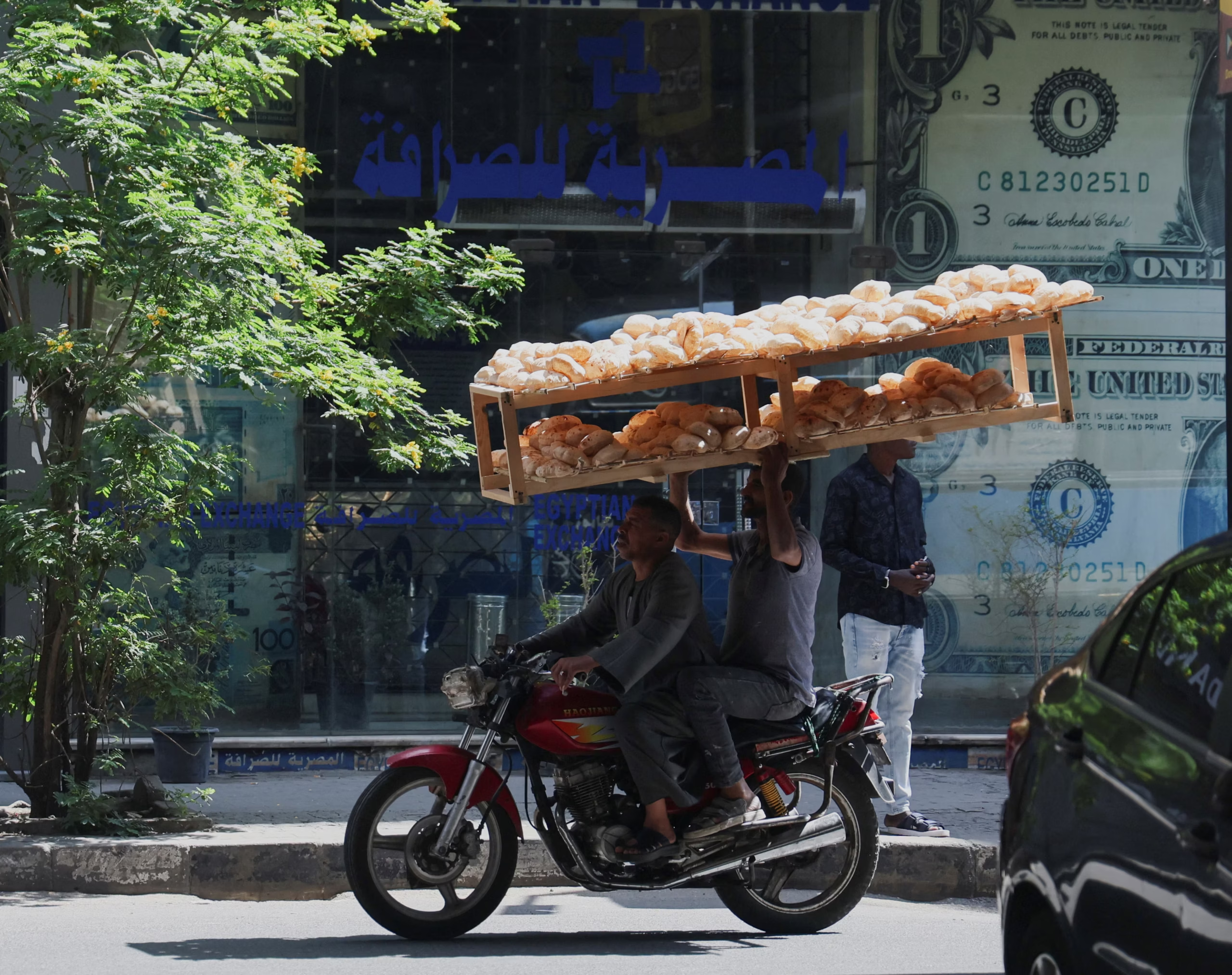
Price increases have also begun to appear in tandem with higher energy costs. On Wednesday, the commercial bakeries division at the Cairo Chamber of Commerce agreed, in coordination with the Supply Ministry, to raise the price of unsubsidized bread.
The agreement resulted in a 33 percent increase in the prices of baladi and fino bread sold on the open market, raising the maximum price of a loaf from LE1.5 to LE2, according to Khaled Sabry, a member of the division. The move follows a 17-22 percent increase in the prices of diesel and natural gas — which fuel most bakeries.
Bread prices have also been pushed higher by a rise of over LE1,000 per ton in flour prices, roughly a 9 percent increase since the start of the war, according to Sabry and Abdallah Ghorab, head of the bakeries division. Flour prices began climbing rapidly at the beginning of last week alongside the initial rise in exchange rates, but also as a precaution amid growing expectations that the pound will continue to weaken against the dollar, Sabry says.
Additional indirect pressures are also building, Sabry adds, including expected wage demands from bakery workers as transportation costs rise, as well as higher prices for other inputs such as packaging bags and yeast.
As for subsidized bread, Supply Minister Sherif Farouk said in a ministry statement this week that its price will remain unchanged.
Beyond currency depreciation and rising energy prices, macroeconomic analyst Esraa Ahmed says supply chain disruptions linked to higher insurance costs for shipping goods could further increase the overall cost of transporting imported products.
And it has already begun to show. A member of the importers division at the Federation of Egyptian Chambers of Commerce, speaking to Mada Masr on condition of anonymity, says price increases have already become particularly noticeable in automobiles and household appliances.
For several years, the state has ruled out one mechanism traditionally used to mitigate rising import costs caused by currency depreciation: the “customs dollar.” The mechanism involves fixing an exchange rate for foreign currency — rather than using the market rate — when calculating the customs tax base, meaning imported goods are valued in local currency at a predetermined rate before tariffs are applied.
The government abolished the customs dollar in mid-2022 and has since maintained the market exchange rate, according to a former official at the Egyptian Customs Authority.
Another former official in the authority tells Mada Masr that the law allows the customs dollar mechanism to be applied selectively to certain goods. The authority had previously used this approach following the 2016 decision to float the pound.
The senior official calls for reintroducing the customs dollar for a number of essential goods — particularly food products — amid the pound’s current decline.
***
Nafie points to the expected compounded impact of the current war on the Egyptian pound through what he described as “cold” sources — a reference to foreign currency inflows other than hot money.
“Beyond hot money and its outflows, several other sources of foreign currency could decline sharply, most notably remittances from Egyptians abroad,” he says.
These remittances represent one of Egypt’s most important sources of foreign currency, but they are heavily tied to Egyptian workers in Gulf countries, where the largest concentration of expatriate Egyptians reside, according to Nafie.
That dependence leaves the flows vulnerable if Gulf economies slow down, particularly in light of declining oil exports. “These revenues are at risk because foreign labor in the Gulf could face layoffs,” he says.
But even without layoffs, remittances could still fall. Nafie says Egyptians working in the Gulf might become less inclined to transfer part of their income back to Egypt out of concern about the possibility of restrictions on withdrawing remittances in dollars should foreign currency resources decline.
Remittances from Egyptians abroad had been a cornerstone of the recent improvement in Egypt’s foreign currency inflows before the current war. Those inflows helped support the pound and the dollar fell below LE47 before the currency resumed weakening.
According to central bank data, remittances reached a record high in 2025, rising by 40.5 percent to about $41.5 billion.
Beyond remittances, Nafie says there are “real” risks to revenues from the Suez Canal. Disruption to navigation through the Strait of Hormuz would likely reduce the number of ships passing through the canal and therefore its revenues, according to Nafie.
The canal has already faced significant disruptions in recent years. Israel’s genocidal war on Gaza and attacks on shipping in the Bab al-Mandab Strait by Yemen’s Houthis pushed canal revenues to their lowest levels in two decades during FY 2024/25, before beginning to recover in the current fiscal year as navigation conditions improved.
According to Suez Canal Authority head Osama Rabie in December, the canal generated around $2 billion in revenue during the first five months of FY 2025/26, marking an annual growth of 17.5 percent.
Nafie also points to the possibility of declining tourism revenues, even though Egypt remains relatively stable compared to other countries in the region. The broader regional climate, he says, may still deter tourists.
Tourism revenues rose by 16.3 percent in FY 2024/25 compared with the previous year, while tourist nights increased to 179 million from 154.1 million, according to balance of payments data.
Tourism Minister Sherif Fathy told the press on Tuesday that “indicators of inbound tourism remain positive so far, with growth compared to last year.” At the same time, he acknowledged what he described as “a relative slowdown in bookings for April,” attributing it to “the current events in the region.”
Further risks linked to the Gulf, according to Nafie, also include the likelihood of a slowdown in large-scale foreign direct investment agreements such as Ras al-Hikma or Alamein’s Alam al-Roum. These were “exceptional in scale” and effectively acted as “rescue deals,” though they were presented as “repeatable deals that could be relied on for debt reduction,” he says. Considering the Gulf may reprioritize its spending in light of the war, however, Nafie says this outlook now seems plausible.
In September 2024, Madbuly said the government aims to develop four or five areas along the Red Sea coast, including Ras Banas, “similar to the major developmental hubs that have already been established, such as in the Ras al-Hikma deal.”
تقارير ذات صلة

Uber in the rear-view mirror: The story of the rise and fall of the ride-hailing company’s reputation
Habiba al-Shamaa booked an Uber ride in February to drive her the 25-kilometer trip from Fifth Settlement to Heliopolis. The cab and driver arrived, and Shamaa set off to her…

‘Typical negotiating lines’: Assessing the 1st round of US-Iran talks
Regional diplomats and officials in US foreign policy quarters say talks will likely resume.

Iran’s insistence on Lebanon ceasefire a test for regional sway
After authorizing the deadliest strikes on Lebanon in years on Wednesday, Israeli Prime Minister Benjamin Netanyahu took to the podium in a national address to assure his audience that Tel…
Your support is the only way to ensure independent, progressive journalism survives.
You have a right to access accurate information, be stimulated by innovative and nuanced reporting, and be moved by compelling storytelling. Subscribe now to become part of the growing community of members who help us maintain our editorial independence.
Join us