
Sixty political prisoners released ahead of round 2 of national political dialogue
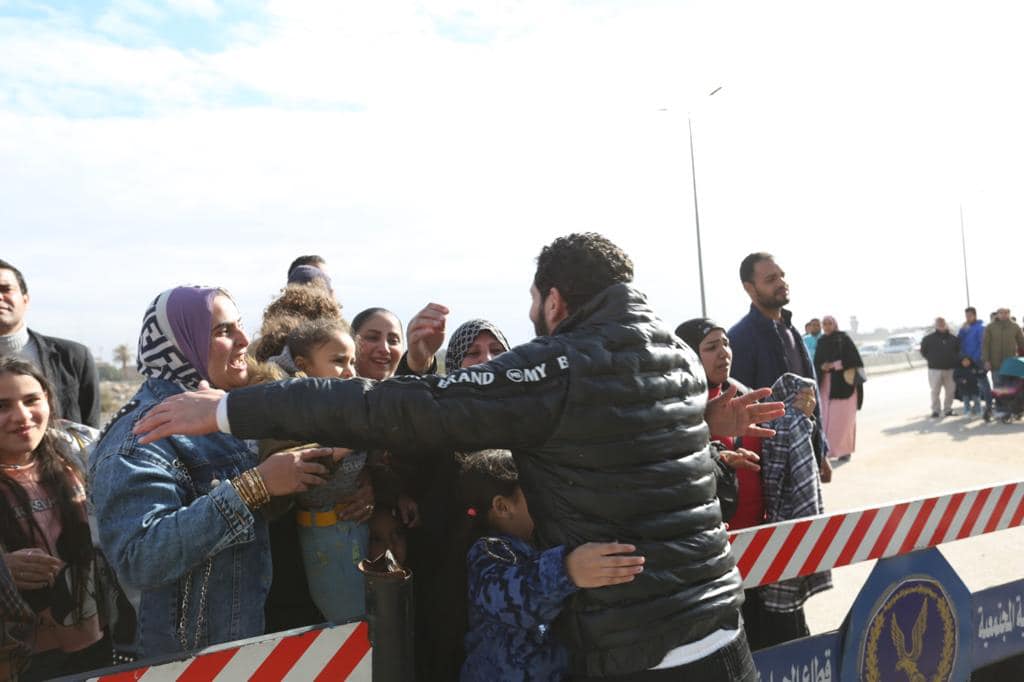
Sixty detainees, among them journalists and teachers that were arrested in political cases over the past two years, were released last week after being held for lengthy periods in remand detention.
Prisoners in political cases can sometimes spend years in remand detention, although releases have been slightly more frequent since the launch of the National Dialogue as an initiative intended to improve political representation in 2022.
However, opposition politicians who spoke to Mada Masr still say that the releases are happening too slowly.
The detainees who were able to return home last week include Manal Agarma, deputy editor-in-chief of Radio and Television Magazine, who was detained in a 2022 arrest campaign following calls on social media for popular protests amid the growing economic crisis at the time.
Journalists Hala Fahmy and Safaa al-Korbeegy, who were detained in 2022 as well for publicly supporting the protests that took place at the Maspero headquarters of the Egyptian Radio and Television Union, were also released.
Despite the detainees' involvement in different cases that were opened at different times, most of them were faced with the same standard list of political charges, including publishing and broadcasting false news and statements and misusing social media outlets, said Nabeeh al-Genedy, who is a defense lawyer with the Egyptian Initiative for Personal Rights and is representing some of those detained.
Common accusations directed at political detainees also include participation in terrorist groups.
Fourteen teachers were also among those released last week after getting arrested in October of last year for protesting what they described as obscure and prejudiced hiring criteria in a recent public education program.
All of those newly released were investigated for publishing crimes, except for the “14 teachers that were accused in a protest case with no political background, they were just defending their rights to teach,” Genedy said.
The releases were described by the Public Prosecution as directives from Public Prosecutor Mohamed Shawqy to all Egyptian prosecutors “to periodically review the legal position of all defendants held in remand detention.”
But Khaled Daoud, a member of the Egyptian Social Democratic Party and spokesperson of the Civil Democratic Movement (CDM), noted that these releases of political prisoners are overdue and are the first to take place for quite some time. “We have been requesting their release for some time now,” he told Mada Masr.
Opposition parties in the CDM participated in the National Dialogue last year, using the forum as an opportunity to call on authorities to release political prisoners.
“Among the opposition’s demands in the National Dialogue was amending the law renewing pretrial detention and the adoption of a proportional list system for elections,” said Akram Ismail, who heads the political issues branch of the Bread and Freedom Party, which is a member of the CDM.
But now that round two of the National Dialogue is on the way, some parties that are members of the CDM are refusing to participate.
“You participate in a dialogue and it is assumed that strides have been made, and therefore [you] also assume that there will be a response [to your demands] before a second wave of the dialogue,” said Ismail, noting that fewer releases have taken place than the CDM requested in round one of the dialogue.
Daoud, too, highlighted that there are many people still in detention facilities following arrests made back in October during protests for Gaza, as well as people who were arrested before that for participating in former presidential hopeful Ahmed Tantawi’s presidential campaign.
The new round of the National Dialogue that is coming at the height of an economic crisis is set to have a special focus on economic change, with recommendations set to be urgently submitted to the president.
Ismail said that he is against participating in the new National Dialogue sessions given the opposition’s recommendations had little effect in the first round.
For Daoud, the current situation presents the National Dialogue with an opportunity to respond to the opposition’s demands for amendments to the election and pre-trial detention laws as well as an end to arrests on the grounds of expression of opinion on social media platforms. Since the country is currently going through an exceptional situation with the economic crisis, and given the current war on Gaza, a response could bring about “national unity," he said.
أخبار ذات صلة
UN human rights experts raise concerns about Egypt’s Criminal Procedures bill in letter to govt
A group of United Nations human rights experts have sent a communication to the Egyptian government expressing their concerns about draft articles…

The weeks of dispute around reforms to the Criminal Procedures Code
Amid an ongoing political conversation around the use and abuse of remand detention to hold political detainees, legislators have dusted off a…
More cash support, less in-kind subsidies likely outcome of National Dialogue sessions next week
The National Dialogue is preparing for discussions next week on the transition from in-kind subsidies to cash-based government support. The government has…
Former prisoners, legal experts present recommendations to stop endless pretrial detention for speech cases during National Dialogue
Parliamentarians, former detainees, journalists and criminal law experts gathered for nearly 12 hours of National Dialogue sessions on Tuesday. Their mission? To…
Your support is the only way to ensure independent, progressive journalism survives.
You have a right to access accurate information, be stimulated by innovative and nuanced reporting, and be moved by compelling storytelling. Subscribe now to become part of the growing community of members who help us maintain our editorial independence.
Join us