
Former prisoners, legal experts present recommendations to stop endless pretrial detention for speech cases during National Dialogue
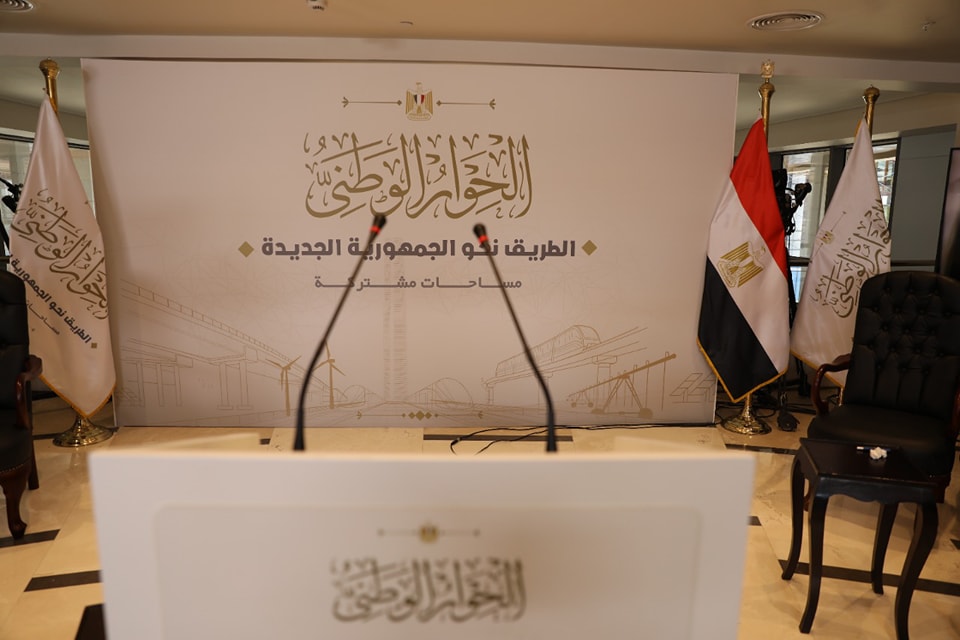
Parliamentarians, former detainees, journalists and criminal law experts gathered for nearly 12 hours of National Dialogue sessions on Tuesday.
Their mission? To generate recommendations that will protect defendants from spending extended periods of time in custody by altering how judicial authorities apply remand detention laws.
In recent years, many defendants have been held in detention facilities for extended periods of time over suspected involvement in political activities, like demonstrations or publishing commentary critical of the government, all under remand detention laws.
Some were held beyond the two-year legal limit on the duration of pretrial detention for defendants in the most serious of cases.
To prolong detention beyond the two-year ceiling, authorities often resort to shifting defendants from one case to another in a practice that lawyers refer to as “tadweer.”
Proposals presented by participants, who were broadly optimistic about the outcomes, included an overhaul of the legal parameters which limit how long people can be held in remand, and prohibitions on authorities extending remand detention by directing new accusations to defendants already under arrest.
Tuesday’s session also saw a proposal to restrict the use of remand detention as a last resort measure, and to ban the use of remand detention in speech-related cases.
A recommendation was also put forward on Tuesday to compensate those wrongfully detained, among other advisory opinions.
Mada Masr spoke to some of the participants before and after the sessions to learn more about the issues discussed, their outcomes, and whether positive changes could be around the corner.
Before the sessions, politician Khaled Daoud, a member of the Egyptian Social Democratic Party and one of the participants in the dialogue, explained to Mada Masr that the issue is with how authorities use remand detention laws in political cases.
“Pretrial detention is often used in cases related to publishing false news or using social media platforms to express opinions,” said Daoud.
He added that judicial authorities also frequently add terrorism charges to defendants' cases, allowing for individuals to be held for years at a time prior to trial.
If individuals were to be referred to trial and prosecuted more quickly on specific charges, “people wouldn’t stay in prison for years in remand detention and instead, if they were convicted, they’d be sentenced to three-six months,” Daoud explained.
But instead, Daoud continued, remand detention on terrorism charges became a tool used against all types of political opposition figures for illegitimate reasons, despite the fact that the concerned individuals do not belong to “the terrorist current” in most cases.
After Tuesday’s sessions, member of the Board of Trustees and defense lawyer Negad al-Borai told Mada Masr he believes they were some of the dialogue’s most successful sessions to date.
Borai attributed this success to the choice of participants in the sessions, most of whom, he said, are experts on the topic.
“The sessions proved to me that the human rights movement is a unified one,” said Borai, acknowledging that approaches from different parties to the talks differed. “The discourse and goals are the same,” he said.
“Even with the loyalist parties, such as the Nation’s Future or Nation’s Protectors parties, there is an agreement that there is a crisis called remand detention, that it lasted for too long and must end, and that we must find a legal solution to repeated remand detention, and that the presidential or supervisory authorities in the Public Prosecution and other relevant authorities must play their role in this,” Borai added.
“The session included a diverse attendance of rights activists, the head of the Journalists Syndicate, the head of the subcommittee to amend the Criminal Procedure Code in Parliament, MPs from different parties, the head of the House Human Rights Committee, as well as people from the targeted groups who had previously been imprisoned, and lawyers who worked with detainees, such as Nabih al-Genady. This diversity confirms that there is an intention to resolve the crisis,” Borai continued.
Some opposition parties and figures have criticized those attending the National Dialogue sessions for legitimizing a political forum they don’t believe will bring real change.
When the National Dialogue first launched in 2022, some demanded the quick release of political prisoners as a guarantee of the forum’s seriousness, even choosing to withdraw from the sessions in protest.
But defense lawyer Mohamed al-Baqer, who was held in remand detention for years until his release in 2023, explained in a post published on social media that he chose to attend “after I learned that it would be a focused session of experts with a specific number and time available for explanation and comment.”
Borai also praised limited attendance at Tuesday’s sessions, and the fact that they were not broadcast live, which he said allowed everyone to speak at length about remand detention without time being lost to political performances for the camera.
Most recommendations presented by the different parties and figures involved, Borai noted, were similar to the detailed list presented by Baqer during the session yesterday and which he published on social media on Wednesday. Baqer’s published list included:
- Amending the law to make precautionary measures the basis for dealing with defendants and to limit the application of remand detention to exceptional cases
- Limiting the number of crimes for which remand detention is allowed
- Limiting remand detention to 45 days-six months for misdemeanors, six-18 months for felonies and 12-24 months for charges that warrant life sentence or the death penalty
- Canceling the so-called Adly Mansour amendments, which allowed for the duration of remand detention to be extended in cases where the penalty is a lifelong prison sentence or death sentence and in which the case is being re-adjudicated after being sent back from the Court of Cassation
- Abolishing remand detention for speech cases
- Changing the legal formulation to ensure that the duration of remand is limited to arrest, precautionary measures, investigation and the duration of trial, so that imprisonment can’t be extended by curtailing the period of remand detention and adding additional detention time for the other procedures, or be left to the judge to decide
- Stipulating release except for in cases where the defendant is caught red-handed or if the arrest report does not include irrefutable evidence or is otherwise flawed
- Investigative authorities should not order remand detention without stating the reasons
- Amending articles which lump children together with adults in procedures related to felony charges
- Stipulating immediate releases be granted before any legal amendments are implemented for those detained for over six months without clear evidence because they were added to a new case to extend the period of their imprisonment on charges of which they were previously cleared; as well as for women; the elderly, or those in critical health conditions, sole breadwinners for their families, or in cases where the defendant will not be able to tamper with evidence or witnesses if they are released
Other suggestions put forward by head of the Reform and Development Party Anwar al-Sadat, who, with his lobbying group the International Dialogue Group successfully advocated for multiple prison releases in 2021, suggested the formation of a committee involving representatives of the Public Prosecution, Foreign Ministry, security services, lawyers and members of civil society to look into cases in which travel bans are imposed on defendants or involve arrest-upon-arrival orders.
Sadat also proposed alternatives to remand detention may include electronic bracelets, community service, a weekly check-in at the nearest police station, requiring permission for travel abroad, and house arrest as a last resort.
He also referred in the sessions to the initiative by the families of some of Egypt’s political detainees demanding the release of long-detained prisoners in exchange for alternative precautionary measures.
Borai told Mada Masr that there are no clear guarantees that the recommendations will be implemented, but he said that the next step is for the technical secretariat of the National Dialogue’s human rights branch to write down the recommendations from the sessions, which are to be announced by the rapporteurs of the dialogue’s human rights committee, lawyer Ahmed Ragheb and political scientist Nevine Mousaad.
After that, the recommendations will be sent to the presidency, along with lists of detainees recommended for release, Borai added.
Despite being on summer recess, legislators in the House of Representatives’ subcommittee on Constitutional and Legislative Affairs met on Tuesday as well, granting their approval to a draft law related to the Criminal Procedures Code which specifically aims to alter some of the provisions affecting remand detention.
The draft law includes a number of proposals similar to the topics discussed in the National Dialogue, such as reducing the legally licensed duration of imprisonment and setting a time limit for it, compensation for wrongful remand detention, as well as adopting alternatives to the procedure.
The move comes following discussions by the subcommittee which House Speaker Hanafy al-Gebali said have been ongoing for the past 14 months, “drawing on many judicial and legal experiences” and taking into account “Egypt’s international commitments on human rights.”
Gebali described the new draft law on remand detention as a human rights “breakthrough.”
When asked whether the draft law is connected to the dialogue, Ragheb told Mada Masr that the dialogue’s participants aren’t yet aware of the content of the bill.
But Borai, for his part, noted that MPs in pro-government parties who will have a role in the bill’s progress through Parliament were attending the dialogue sessions, and that it is possible that the presidency could refer the recommendations to the legislators.
أخبار ذات صلة
UN human rights experts raise concerns about Egypt’s Criminal Procedures bill in letter to govt
A group of United Nations human rights experts have sent a communication to the Egyptian government expressing their concerns about draft articles…

The weeks of dispute around reforms to the Criminal Procedures Code
Amid an ongoing political conversation around the use and abuse of remand detention to hold political detainees, legislators have dusted off a…

More cash support, less in-kind subsidies likely outcome of National Dialogue sessions next week
The National Dialogue is preparing for discussions next week on the transition from in-kind subsidies to cash-based government support. The government has…
What to expect from National Dialogue’s discussion on reforming remand detention
Politicians, legal experts and rights lawyers are to discuss reforms today to remand detention.
Your support is the only way to ensure independent, progressive journalism survives.
You have a right to access accurate information, be stimulated by innovative and nuanced reporting, and be moved by compelling storytelling. Subscribe now to become part of the growing community of members who help us maintain our editorial independence.
Join us