
Residents describe first hours of Israel’s escalation on Lebanon: ‘I didn’t know it was a terrorist explosion’

At around 3 pm on Tuesday, September 17, Tala was leaving her home in Rweiss, Dahiyeh, when she heard and saw an explosion coming from inside a car on her street, a few meters away from her. Confused, she continued walking, only to be met with the signs of more explosions, and smoke coming out of nearby apartments.
"I didn’t think it was a terrorist attack," Tala told Mada Masr. "I reached the highway and saw people panicking, running around, not knowing what was going on."
Initially, Tala had no idea that she was living through the first day of Israeli attacks conducted last week, and that around 4,000 pagers distributed to Hezbollah members and staff at Hezbollah-run institutions had just exploded simultaneously. At least 12 civilians were killed that Tuesday and around 2,750 wounded. A second wave of explosions, this time from walkie-talkies, struck on Wednesday as crowds gathered to mourn the victims of the previous day, killing at least 20 people and injuring over 450.
"As soon as I realized it was an attack, I rushed with others to help as many people as possible," Tala recalled, explaining how people banded together to extinguish fires, aid the wounded and clear paths for ambulances.
Initial reports citing Lebanese security sources suggest that the devices were rigged with explosive material before reaching Hezbollah members. Hezbollah and Lebanese government officials have said Israel was behind the detonations. Although the Israeli government has not officially claimed responsibility for the attacks, media has reported that Prime Minister Benjamin Netanyahu and the Cabinet gave approval for the operation.
How and when the devices were rigged remains unclear. According to two security sources who spoke to Reuters, Hezbollah was distributing new Gold Apollo-branded pagers, which were delivered to Lebanon starting 2022, to its members just hours before they detonated. One Hezbollah member reportedly received a new pager on Monday before it exploded the following day while it was still in its packaging, one of the sources said. Two companies involved in the supply chain manufacturing the pagers, one in Taiwan and the other in Hungary, have denied any involvement. The Taiwanese government also said that none of the pager components were sourced from Taiwan. Meanwhile, a Japanese firm that used to produce the walkie-talkies that exploded on Wednesday said it discontinued that model a decade ago.
In Lebanese hospitals, hundreds of patients flooded emergency rooms, overwhelming the medical staff as they struggled to keep pace. With operating rooms full, doctors were forced to perform emergency surgeries in the ER. Nurses rushed between beds, and supplies dwindled as more victims poured in.
Around 1,850 people were injured in the southern suburbs of Beirut on Tuesday, as well as around 750 in the south and 150 in the Bekaa, according to a press conference held on Saturday by the Lebanese Health Ministry. Many of those wounded in the south were transported to hospitals across Sidon, Nabatieh and Sur, while ambulance services worked to transport serious cases in the south to more specialized hospitals in Beirut and the north.
Doctors rushed to work as waves of patients arrived, many with severe injuries to their eyes and hands. They described the horror of treating victims who had lost fingers, suffered shrapnel wounds to the eyes, and in some cases, were completely blinded.
For 20-year-old Lama, a newly graduated nurse, the experience was especially shocking. It was her first week on the job at the hospital located outside of Beirut, and the day had started calmly as she conducted routine check-ups in the pediatric section. That afternoon, she heard screams and cries coming from the ER.
"All the doctors and nurses rushed to the ER," Lama told Mada. "I was the only inexperienced one, and I felt so overwhelmed."
Ambulances began flooding the hospital with hundreds of patients. Lama was confronted with horrifying sights: limbs blown off, faces disfigured and bloody, empty eye sockets. Most of the victims were men in their twenties.
"My role was to try to stabilize as many patients as possible and make sure the wounds were disinfected," she said. "But it was so difficult with all these traumatizing scenes — I wasn’t sure where I found the strength to carry on."
Lama also treated veiled women, ensuring they were given privacy in separate rooms. Despite her anxiety and fear, she remained committed to her duty as a nurse.
"We had to do more than 55 X-rays for eyes in less than 30 minutes on Tuesday," she recalled, her voice heavy with exhaustion. "Only three or four of them can still see."
"When I close my eyes at night, I still see the scenes from the hospital," she said. "But I’m proud of myself and the medical team for being able to treat as many people as we did."
Wednesday was less chaotic for Lama, as her hospital outside of Beirut received fewer patients as many were transferred to Beirut hospitals. At a funeral in the Ghobeiry district of Beirut on Wednesday, one person was killed and around 100 injured, according to a Lebanese security source who spoke to Mada Masr.
There was a heavy air of heartbreak at Lama’s workplace as families lingered in the corridors, hoping for news of their loved ones' recovery or the possibility of regaining eyesight following their injuries on Tuesday.
Zeinab, 31, was attending a university lecture when news of Tuesday’s attacks broke. Within minutes, her phone lit up with more than 20 calls and countless messages from family and friends, urging her to come home immediately.
"We had family members, friends and neighbors injured," Zeinab told Mada Masr. "The first challenge was trying to locate them all at different hospitals. Ambulances were taking so many people at once that it was difficult to track them down." Zeinab described the hospitals using numbers instead of names, to speed up the process of triaging the wounded.
Living in Beirut, Zeinab and her family rushed to Saida, where more than ten of their injured relatives were being treated. The chaotic reality sank in as they arrived at the hospital, but Zeinab found strength in the resilience of her injured family members.
"There was definitely an element of shock, but it quickly faded," she said. "Our injured were the ones pushing us to stay calm and strong."
One moment still haunts her. She vividly remembers asking about a family member whose "green, beautiful eyes" were injured. "I begged the doctor, ‘Please, tell us — did he lose his gorgeous eyes?’"
The family recently learned that one of the patient’s eyes is completely blind, while the other has only a 10 percent chance of regaining vision. Despite the heartbreak, Zeinab emphasized the injured's sense of duty and sacrifice.
"The injured are always thankful to God for the opportunity to make this sacrifice for the Palestinian cause. They understand that resistance comes with a price," she said. "And we draw our strength from them."
Now, as the injured begin the road to recovery, many have already expressed their desire to return to the frontlines, undeterred by their injuries. Zeinab also witnessed other families making desperate offers to donate their own eyes to their loved ones, pleading with doctors to perform surgeries immediately.
Many families, similar to Zeinab's, have had their lives turned upside down, with this new reality feeling like an unending nightmare.
"One day, you're checking up on family and friends, and the next, you're seeing them in hospital beds, their lives completely and drastically changed," she said.
Though she has shown remarkable strength, Zeinab, a mother of two, admits she is still struggling to adjust to this new reality. The psychological toll, combined with the demands of work and raising her children, has created a heavy burden.
"One can only thank God for everything," she said. "All the families of the injured and martyrs share a sense of calm and resilience. They have placed their fate in God's hands, knowing that with him, there is always victory."
*Aliases have been used to protect the identity of sources.
أخبار ذات صلة
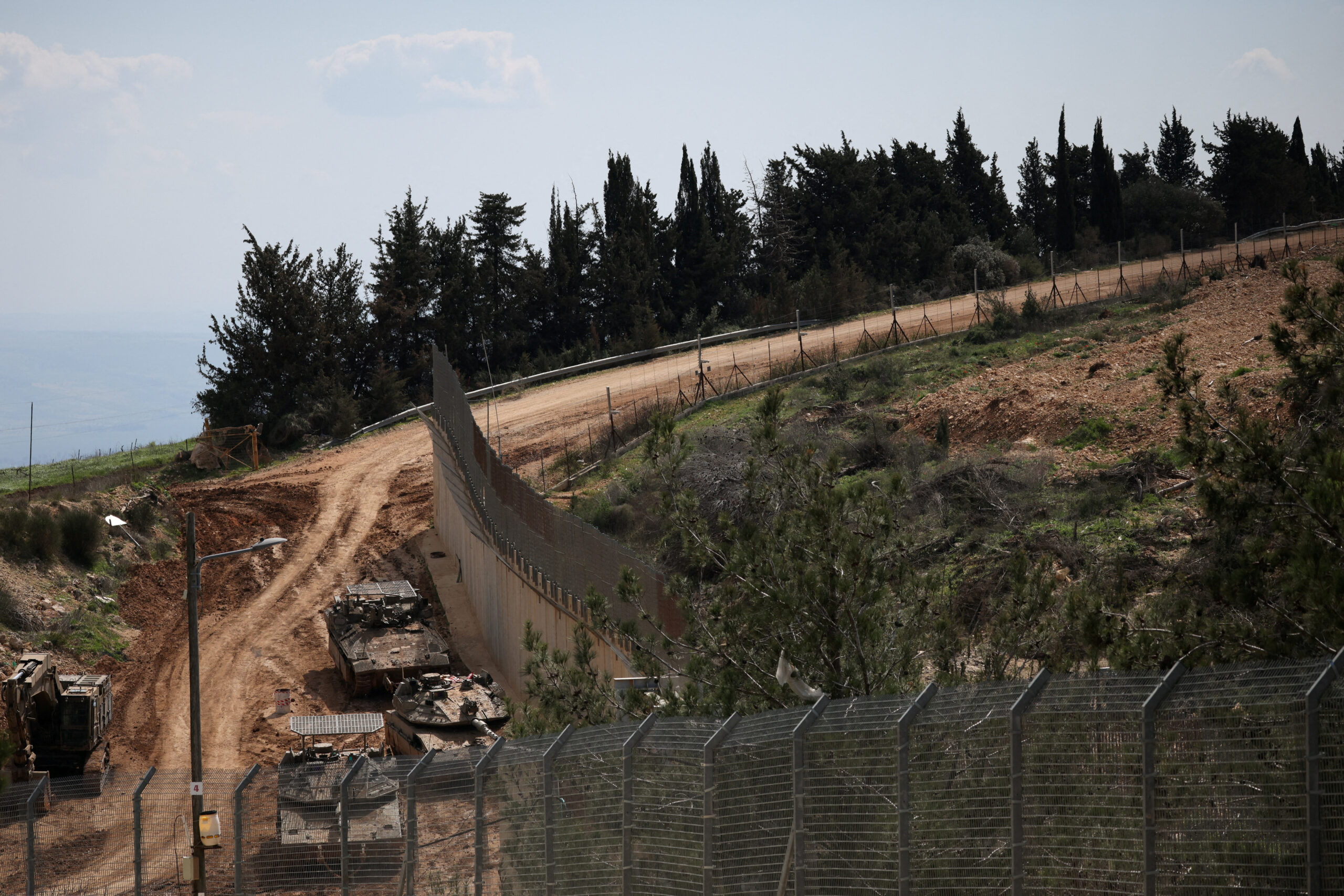
Israel launches ground incursion into south Lebanon, Lebanese govt reviews scenarios as military withdraws
Israeli forces began an incursion into south Lebanon on Tuesday under cover of airstrikes, its military announced. While the Israeli military downplayed…
The ‘open battle’ comes to Lebanon
In the Lebanese border village of Ainata, Batoul Ismail was awoken by her mother shortly after midnight with the news: rockets had…
Shutdowns at Gulf industrial facilities as scope of US-Israel war on Iran widens
Iranian strikes over the last 24 hours began to hit Gulf industrial and logistical hotspots, leading to shutdowns at key facilities —…
As Israel ramps up strikes on Lebanon, Egypt’s intelligence chief joins international push to de-escalate by kickstarting talks
“Calming the situation in Gaza should reflect positively on the region,” Egypt’s ambassador to Lebanon, Alaa Moussa, told reporters at a press…
Your support is the only way to ensure independent, progressive journalism survives.
You have a right to access accurate information, be stimulated by innovative and nuanced reporting, and be moved by compelling storytelling. Subscribe now to become part of the growing community of members who help us maintain our editorial independence.
Join us