
The ‘open battle’ comes to Lebanon
In the Lebanese border village of Ainata, Batoul Ismail was awoken by her mother shortly after midnight with the news: rockets had been fired from the south of Lebanon toward Israeli military installations in Haifa.
For Ismail and many others across Lebanon’s south, it was clear that the war that had broken out between Israel and Iran on Saturday was coming to Lebanon.
“We immediately knew we had to leave,” Ismail said.
As she began to pack, her father shouted that Israeli forces were ordering residents to evacuate over its loudspeakers, fixtures that, along with a host of other military infrastructure and intimidation tactics, have been in place since the 2024 ceasefire despite its provisions for Israel to withdraw from the border areas it occupied during the war.
“That’s when we knew this could turn into a ground invasion,” she said. “We also knew that if we left, we might not come back.”
At dawn, the Israeli military gave credence to those fears, issuing evacuation orders for over 50 towns south of the Litani River and mobilizing 100,000 reservists along the Lebanese border. In a briefing early on Monday morning, Israel’s military Chief-of-Staff Eyal Zamir said the military launched an “offensive campaign” against Hezbollah, which claimed responsibility for the rockets fired into Israel in retaliation for the killing of Iran’s Supreme Leader Ali Khamenei, that would likely last several days.
When asked directly whether Israel’s planned campaign might include ground forces, a military spokesman said “all options are on the table.”
Several families that spoke to Mada Masr sensed the danger and decided to make for safety, joining thousands of people making their way northward.
And while Lebanon’s Social Affairs minister said 29,000 people fled to safety today, Lebanese politicians convened early this morning to decide how to respond to the escalation, a crucial stress test on a broad national alliance that has seen careful management of demands for the disarmament of Hezbollah over the last year.
***
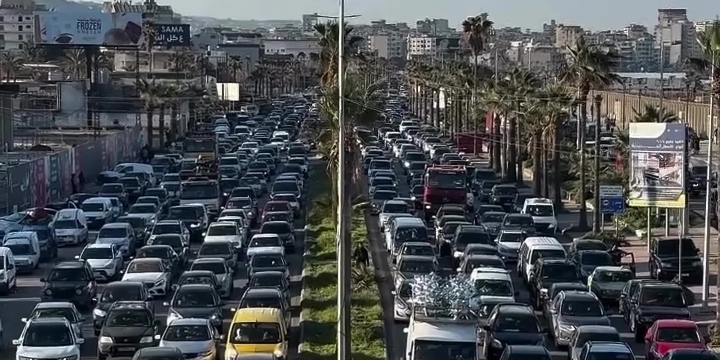
The drive to Beirut usually takes up to two hours from the south, but with hundreds of people fleeing, the roads were blocked.
Ismails’ family decided to stop at a relative’s home in Nabatieh, a central city in southern Lebanon, some 15 kilometers away from the border with Israel, for the night in the face of the traffic.
For Zeinab Halawi, who lives in the village of Seddikine in the southern district of Sur, the decision to leave was not easy. “We’re a large family. It’s not easy to just leave everything behind,” she told Mada Masr. Nonetheless, at dawn, Halawi, her three sisters and two brothers, each with their own children, left their home without knowing where they would go.
They found the roads already full. The highway from Sur to Abbasiyeh further north was gridlocked with cars barely moving forward. “There were children crying. Some cars broke down. People looked exhausted. God help us,” she said.
Now, the family is considering splitting up to find shelter as rising rents and limited options — worsened by many landlords refusing to lease to Shiaa families — make it harder to stay together.
“If we have to separate so some of us can at least be safe, then that’s what we’ll do,” she said.
For Ismail in Nabatieh, which was all but flattened by Israeli strikes in the 2024 war, things are not any clearer. “We still don’t know where we’ll go next. We don’t have another home waiting for us,” she said.
While people began fleeing from the south, Israel began its attack on Lebanon. Just before 3 am, it bombed Beirut’s southern suburbs, the sound of the strikes reverberating across the capital and in the surrounding mountains.
In Baabda, perched in the mountains just south of Beirut, Samar Zeidan woke up to the sound of explosions. “They were very loud. You could hear several at once,” she said.
Her sister, who lives in the Beirut neighborhood of Ghobeiry, called Zeidan to ask for help leaving, as they had no car and their elderly mother could barely walk.
Zeidan tried to make her way to help her sister but the roads entering and exiting Dahiyeh, the southern suburbs of the city, were closed, and she couldn’t reach them. She called her nephew and asked him to bring them as close as possible.
As hundreds of people rushed to exit the neighborhoods where Israeli strikes are normally concentrated, it took him nearly an hour to reach her, a trip that normally takes minutes. “My mother arrived shaking and nauseous from the stress,” Zeidan said. “She could barely stand. I had to get her medicine. She was overwhelmed with fear.”
Families without immediate access to alternative housing took temporary refuge in open spaces across the city, from Horsh Beirut to Martyrs Square and the Hamra Corniche, while some opted for the government shelters in schools and municipal buildings.
Israel later claimed to have killed Hezbollah MP Mohammad Raad and Hussein Maklad, the head of Hezbollah’s intelligence forces, in the strike on Beirut.
Israel continued to pummel Lebanon throughout Monday morning in areas away from the capital, hitting sites across southern Lebanon and the Beqaa Valley. In the afternoon, Israel issued evacuation warnings ahead of airstrikes against a building used by Hezbollah in Beirut and Qard al-Hasan branches across Lebanon.
According to Lebanon’s Health Ministry, at least 31 people have been killed, and 149 others injured in the Israeli strikes on Beirut, southern Lebanon and the Beqaa Valley.
***
To address the escalation, the Lebanese government called an urgent Cabinet meeting at 8 am on Monday morning.
In an address afterward and as Israel continued its barrage of strikes on the country, Prime Minister Nawaf Salam struck a strident tone against Hezbollah, announcing a government ban on its military activity. “We are banning the military activities of Hezbollah and instructing the security agencies to prevent any military operations or rocket launches from Lebanese territory and to arrest those responsible,” said the prime minister.
A source close to the Lebanese prime minister explained Salam’s thinking. “Hezbollah’s unilateral decision to engage in Iran’s war will force Lebanon to pay the full price, providing a pretext for the country’s total destruction,” the source said.
Since his appointment as prime minister in February last year, Salam has been an ardent supporter of Hezbollah’s disarmament, a key Israeli stipulation of the 2024 ceasefire, even as other government actors have been less willing to ignite a conflict by pushing for enforcement of an already difficult to enforce demand.
One of those actors was Lebanese President Joseph Aoun. According to a regional diplomat informed of the politics around disarmament, “there was a limit in terms of how far Aoun could go in pressuring Hezbollah” without pushing the country into a broader conflict.
“While there is a considerable Christian segment in Lebanon that is inciting Israel to attack Hezbollah, there was enough lobbying by the side of Aoun and US Ambassador to Lebanon Michel Eissa to convince [US President Donald] Trump to put pressure on Netanyahu to suspend his plans for increased attacks on southern Lebanon,” the source said. “Their argument is that Aoun is handling the matter and that the Israeli army is comfortable with the work Aoun is doing and that if Israel decided to attack Iran today, Hezbollah today is not that of Nasrallah.”
A Lebanese diplomat who spoke to Mada Masr in December described a similar position from the Lebanese president toward far right parties that have been calling for more immediate action against Hezbollah.
“Aoun has zero relations with the Lebanese Forces and kataeb parties and doesn’t care what they think. But his relationship with the Free Patriotic Movement is good, and the latter maintains a grey stance on Hezbollah’s weapons,” the source said. To avoid having to take an escalatory step, Aoun was betting on past US experience in Lebanon and the Middle East: “Washington loses steam quickly in negotiations. It opens a file and soon drops it and moves on to another,” the source added.
Today, even after the escalation, Aoun continues to adhere to that position, even as his ability to win international backing or delay seems to be gone amid the heightened climate of war.
A political source close to Aoun’s circle told Mada Masr on Monday that the Lebanese government will not treat Hezbollah “as though it were a gang” subject to security provisions, given that the group participates in the Lebanese state and government, holding ministerial, parliamentary and even military positions.
“We are in an open battle and all possibilities are on the table. It cannot be said with certainty that the battle will be resolved and brought to a halt,” the source said. “Hezbollah believes that the war is its existence, and therefore it wants to defend itself. It has nothing left to lose. That is why Hezbollah views the war as decisive, but the Lebanese government is not happy about it.”
And even if Aoun is not ready to try to enforce today’s security decision, it does not mean the detente between Lebanon’s patchwork of actors is on good terms. “Immediately after the outbreak of the war between Iran and Israel, Aoun contacted Hezbollah leaders and they promised him they would not enter the war,” the source close to the Lebanese president said. “But they broke the promise when they retaliated for the assassination of Khamenei. Frankly, that is why the Lebanese government does not trust Hezbollah’s promises.”
أخبار ذات صلة
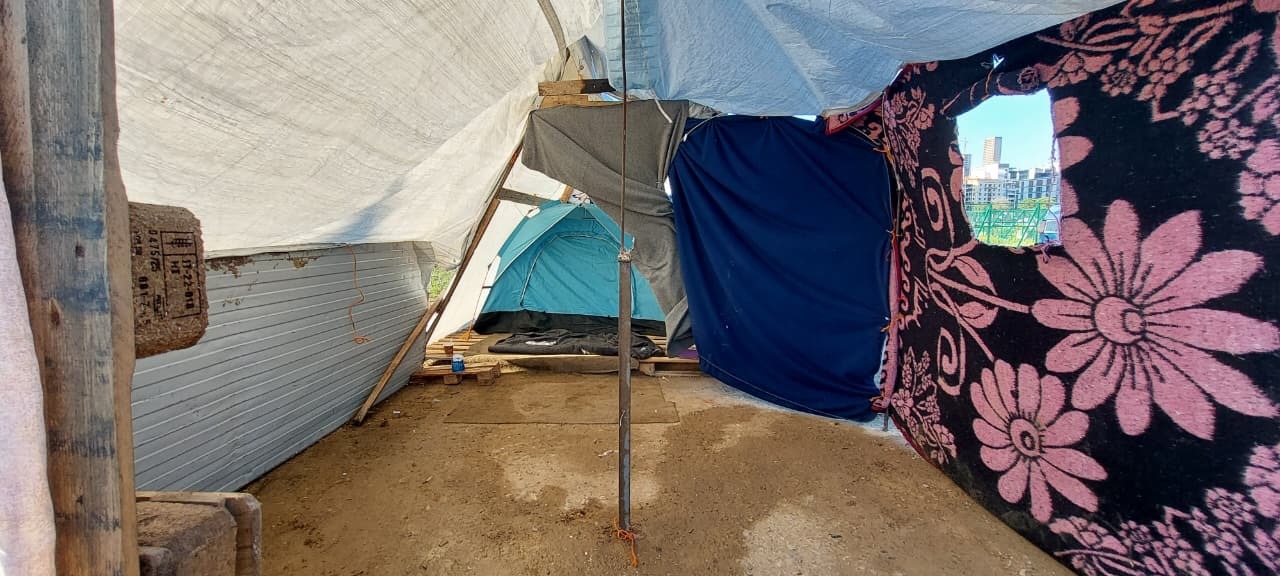
We will sit together on Srifa hill, Qassem
Two friends try to reclaim a memory other than what the Israeli genocidal machine carved into them.

Delayed for a phone call that didn’t happen: US declares ceasefire in Lebanon
The ceasefire was ready 24 hours before it was announced. Trump wasn't ready yet.
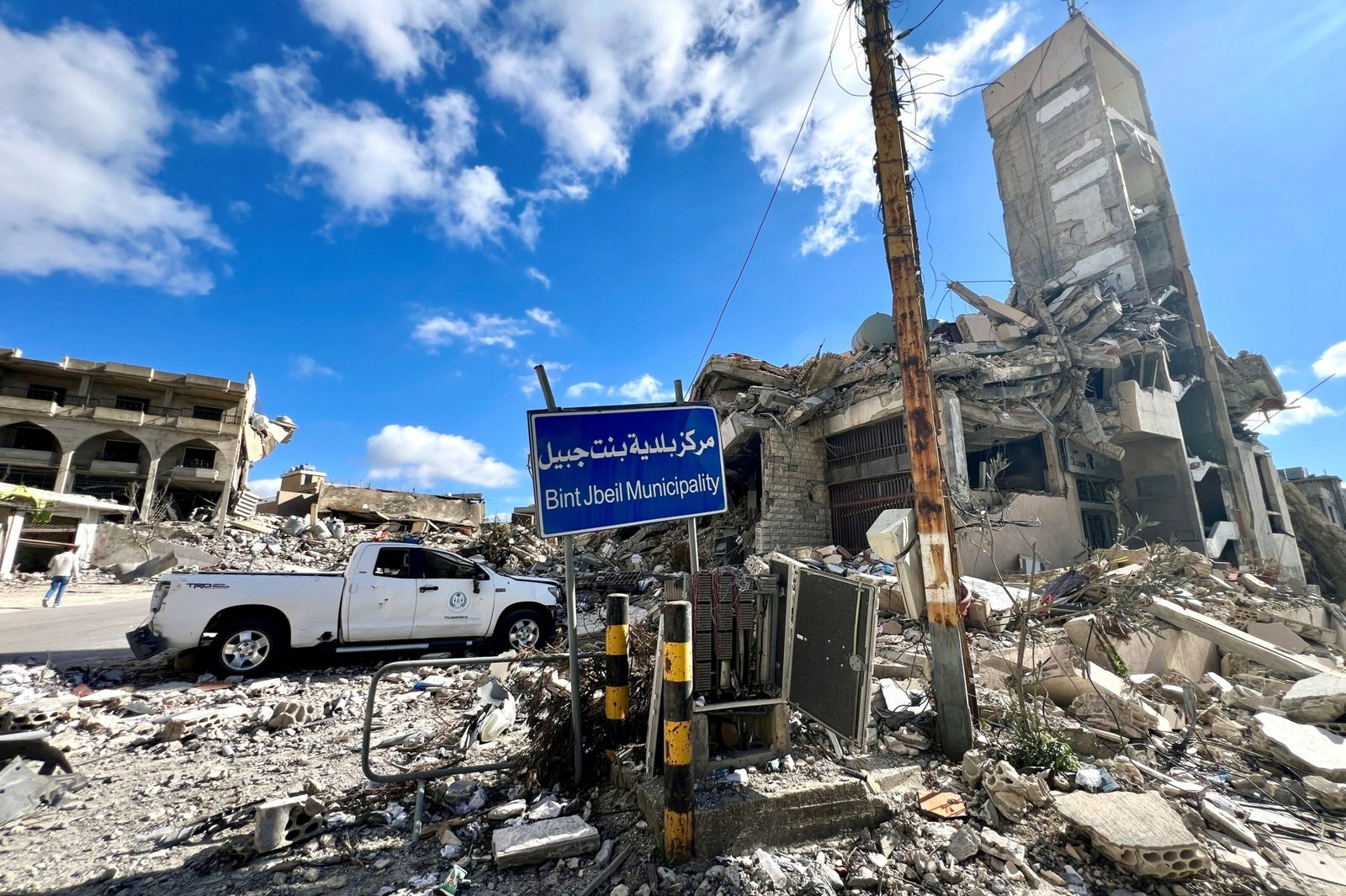
Israeli forces encircle Bint Jbeil but fail to enter town, as Netanyahu looks to Lebanese front to spoil Islamabad talks
Lebanon has become the focal point of two parallel — and competing — ceasefire tracks, one unfolding in Islamabad and another in…

Iran’s insistence on Lebanon ceasefire a test for regional sway
After authorizing the deadliest strikes on Lebanon in years on Wednesday, Israeli Prime Minister Benjamin Netanyahu took to the podium in a national address to assure his audience that Tel…
Your support is the only way to ensure independent, progressive journalism survives.
You have a right to access accurate information, be stimulated by innovative and nuanced reporting, and be moved by compelling storytelling. Subscribe now to become part of the growing community of members who help us maintain our editorial independence.
Join us