
Israeli troops yet to invade as exchange of fire intensifies at border, continuous airstrikes on Beirut suburbs

Hezbollah and Israeli forces exchanged heavy fire on Monday evening and into Tuesday. The Israeli military shelled areas along the Lebanese border, including Khiam, Wazzani and Kfar Kila, while Hezbollah launched long-range rockets toward central Israel and targeted Israeli soldiers with artillery and rocket fire in border settlements such as the Matalla, Shtola and Avivim. The group claimed Israeli soldiers were injured in some of the strikes.
A Hezbollah source told Mada Masr that the party is confident in their ability to fend off an Israeli invasion.
Hezbollah released several new types of fire — including the Fadi 4 and Khaybar rockets — toward central Israel on Monday night and Tuesday. Both targeted positions in Tel Aviv, including Israeli military and intelligence positions. The Israeli military shared footage of Hezbollah rocket fire striking a village to the north east of Tel Aviv on Tuesday, while Israeli media reported that two people were wounded.
Despite the Israeli Cabinet reportedly giving the green light on Monday to a ground invasion and the military classifying an area of northern Israel as a closed military area, no troops had advanced into areas they did not previously hold by Tuesday, according to a source in Hezbollah and a Lebanese security source who spoke to Mada Masr on condition of anonymity.
United Nations Interim Force in Lebanon (UNIFIL) spokesperson Andrea Tenenti also told Agence France-Press on Tuesday that there was “no ground incursion right now.”
The Israeli military claimed in a statement in the early hours of Tuesday morning that it had begun “limited, localized and targeted ground raids” against Hezbollah targets and infrastructure in southern Lebanon. The statement said its targets “are located in villages close to the border.”
UNIFIL criticized the Israeli military’s plan to undertake limited ground incursions into Lebanon in a Tuesday statement, confirming that Israel had notified the UN body of its intention to do so. UNIFIL underscored that “any crossing into Lebanon is in violation of Lebanese sovereignty and territorial integrity.”
“We urge all actors to step back from such escalatory acts, which will only lead to more violence and more bloodshed,” said the statement, noting that UNIFIL would retain a presence in the area in its capacity as a peacekeeping force.
The Lebanese military, meanwhile, which is also authorized under the provisions of United Nations Security Council Resolution 1701 to retain a presence south of the Litani River, acted on Monday night on the basis of a request from UNIFIL to pull some of its troops away from some positions along the UN-imposed Blue Line in which they might be in danger, according to a military source who spoke to Mada Masr.
The Blue Line was published in the 2000s by the international body to serve as a “withdrawal line” for Israeli occupying forces that had invaded Lebanon in 1982.
A soldier in the Lebanese Armed Forces was killed near a military site by Israeli military fire on Monday.
The Lebanese military issued a statement on Tuesday saying that it had repositioned some of its forward observation posts.
Displacement continues
Residents of areas near the border were added to the growing numbers of internally displaced people in Lebanon on Monday, with hundreds beginning to move northward amid Israel’s intensified aggression.
Mohamed Ahmed, the mayor of Wazani, which lies adjacent to the Blue Line, told Mada Masr that he received a call on Monday evening from an Israeli officer with instructions for the complete evacuation of the area, which was also instructed to evacuate on a prior occasion in mid-September.
Ahmed said that families residing in the area, of whom there were around 20, left to Haboush in the Nabatieh district some kilometers north.
Displaced Syrian nationals who were sheltering in the area also departed to the Beqaa, according to Ayoub, a Syrian national living in the Burj al-Khouf camp in nearby Marjayoun who spoke to Mada Masr on Tuesday.
Israeli soldiers made similar calls to residents of 28 areas in the south on Tuesday, telling them to withdraw to the north of the Awali River and saying that if anyone remained in their homes, their lives could be in danger.
The Awali River lies significantly north of the Litani River’s south, behind which Israel has said it wants Hezbollah to withdraw in accordance with United Nations Security Council Resolution 1701.
Repeated strikes on the capital, assassinations continue
In Beirut, the Israeli military issued another set of evacuation orders for specific buildings in the southern suburbs of Dahiyeh. Shortly after, heavy Israeli rocket fire targeted sites in the neighborhood, causing a major explosion that billowed smoke high over the city’s skyline in the early hours of Tuesday morning. At least eight airstrikes in total were conducted on the area in the span of a few hours, destroying 12 buildings in two residential housing projects, according to the Lebanese Al-Jadeed channel — a repetition of the area’s heavy bombardment on Friday with the massive raid that assassinated Nasrallah.
Several more airstrikes targeted the suburbs of Beirut on Tuesday afternoon, striking a building near Zahraa Hospital in Bir Hassan and a site in Jinah at the same time.
Israeli air raids also targeted the crowded residential area of Ain al-Helwe camp in Lebanon’s South Governorate in an attempt to assassinate Mounir Maqdeh, the leader of the Aqsa Martyrs Brigades, the military wing of Fatah. The airstrike killed at least six people, including Hassan Maqdeh, the leader’s son, as well as at least two children, according to the National News Agency.
The Israeli military killed 95 people and injured over 170 in attacks on Lebanon over the course of the 24-hour period prior, the Lebanese Health Ministry said in a statement on Monday night.
أخبار ذات صلة
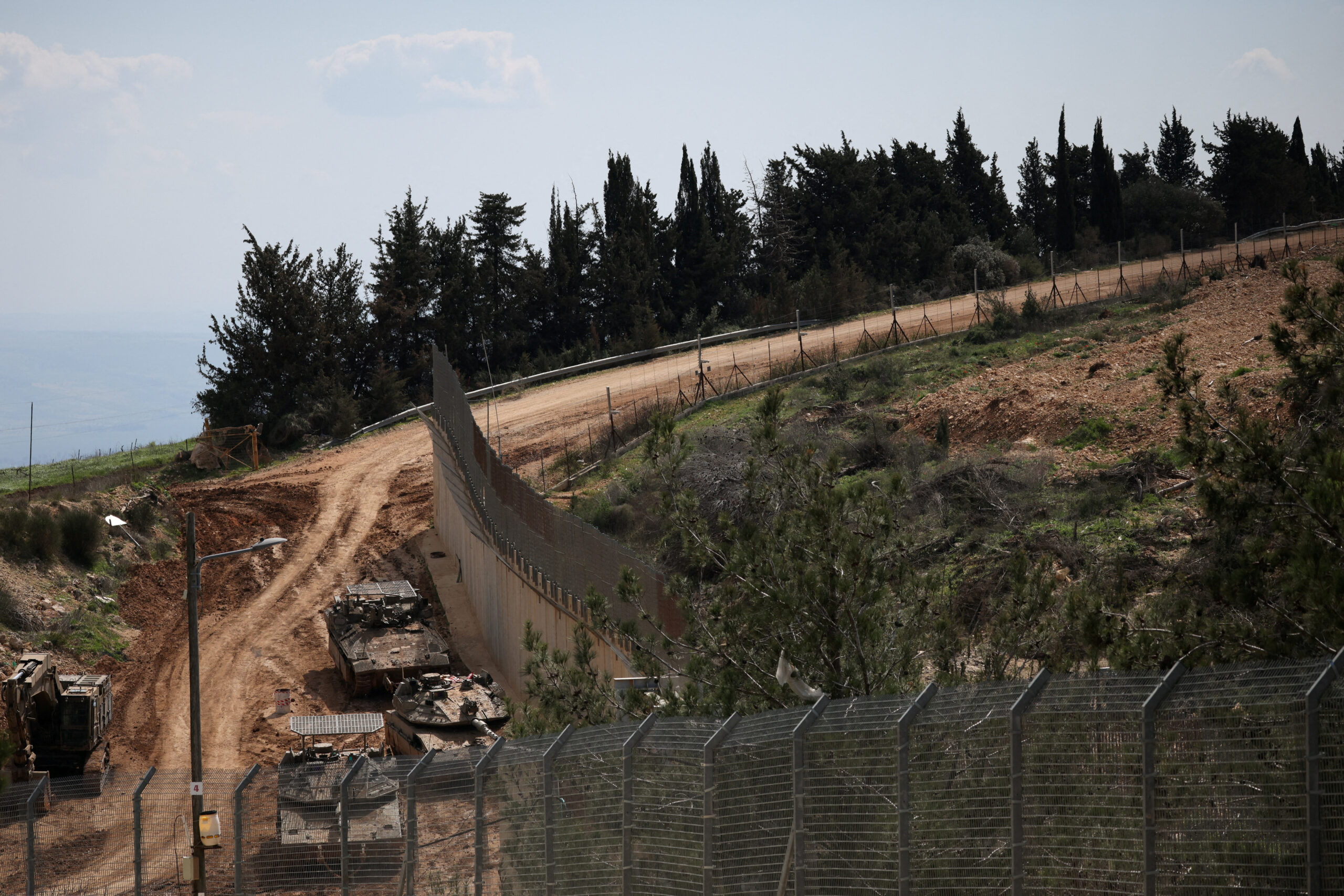
Israel launches ground incursion into south Lebanon, Lebanese govt reviews scenarios as military withdraws
Israeli forces began an incursion into south Lebanon on Tuesday under cover of airstrikes, its military announced. While the Israeli military downplayed…
The ‘open battle’ comes to Lebanon
In the Lebanese border village of Ainata, Batoul Ismail was awoken by her mother shortly after midnight with the news: rockets had…
Shutdowns at Gulf industrial facilities as scope of US-Israel war on Iran widens
Iranian strikes over the last 24 hours began to hit Gulf industrial and logistical hotspots, leading to shutdowns at key facilities —…
As Israel ramps up strikes on Lebanon, Egypt’s intelligence chief joins international push to de-escalate by kickstarting talks
“Calming the situation in Gaza should reflect positively on the region,” Egypt’s ambassador to Lebanon, Alaa Moussa, told reporters at a press…
Your support is the only way to ensure independent, progressive journalism survives.
You have a right to access accurate information, be stimulated by innovative and nuanced reporting, and be moved by compelling storytelling. Subscribe now to become part of the growing community of members who help us maintain our editorial independence.
Join us