
House approves new Criminal Procedures Law, codifying ‘violations’ despite widespread opposition

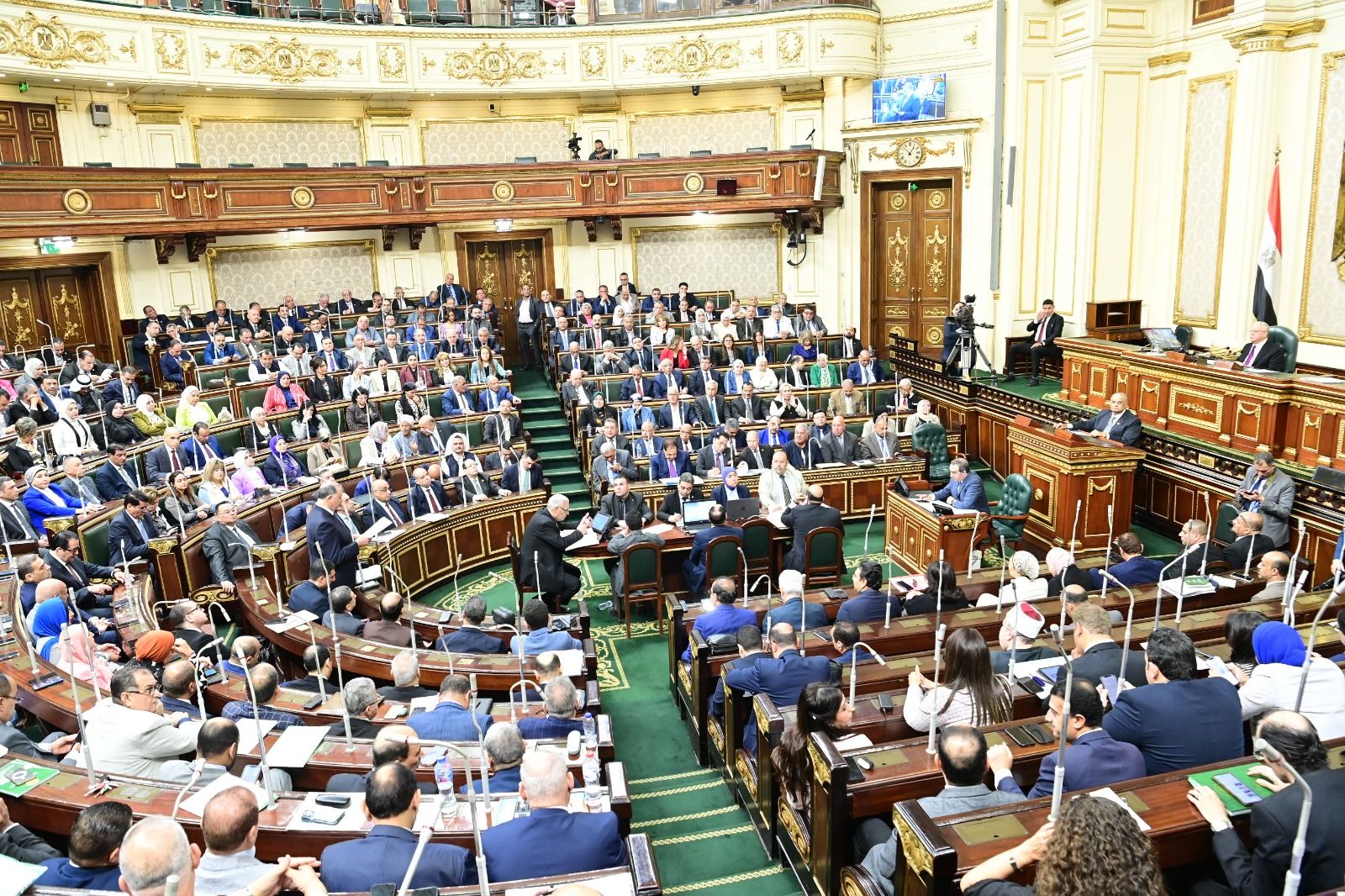
The House of Representatives approved the new Criminal Procedures Code on Tuesday, marking an end to months of controversy around the foundational piece of legislation’s impact on the powers granted to authorities and the rights of defendants.
The new law, prepared by the government, was publicized by officials last year as combatting chronic practices around remand detention, a measure frequently used punitively against political detainees and long criticized by advocates and activists.
Legal and rights groups, however, argued that the bill fails to protect detainees as claimed, arguing instead that it includes unconstitutional articles that expand authorities’ power to detain and investigate individuals at the expense of their rights.
The new law moved rapidly through parliament regardless, as many expected it would, with only minor amendments, including last minute changes to 13 articles presented by Justice Minister Adnan al-Fangary.
Nasser Amin, director of the Arab Centre for Independence of Judiciary and Legal Profession, told Mada Masr that the last-minute changes were limited to refining the wording of certain texts, without altering their meaning or the rights they confer.
“All the legal and constitutional violations in the original texts were kept, and only some of the language was rephrased,” said Amin.
One of the amendments passed during Monday’s House session even removed the statute of limitations for certain crimes, lifting time constraints on when the government can bring someone to trial. The minister explained that the change was requested on the grounds that certain crimes threatening national security, such as espionage, should be subject to prosecution without time limits.
Other amendments that sought to improve conditions for detainees — by allowing them to attend court sessions without physical restraint and protecting their right to meet with lawyers — were largely rejected by the House.
Below, we list several of the issues related to the newly approved Criminal Procedures Code that were raised by experts and critics since the resurfacing and discussions around its bill last year.
Remand detention
While the new law reduced the time defendants can be held in remand detention before trial, experts argued that it failed to address the growing use of remand detention as the first alternative to other legal measures.
Article 123 reduced the maximum period of remand detention for misdemeanours from six to four months, for felonies from 18 to 12 months, and for crimes that carry the death penalty or life imprisonment from 24 to 18 months, Parliamentary and Legal Affairs Minister Mahmoud Fawzy stated in January.
However, UN human rights experts stressed in their communication that the changes do nothing to limit the practice of “rotating cases” among prosecuting powers in Egypt, whereby prosecutors add defendants to multiple cases on near-identical charges in order to restart the remand detention clock and evade the obligation to grant releases.
Egyptian Initiative for Personal Rights director Hossam Bahgat told Mada Masr in October that the issue is one of judicial practice: articles in the previous version of the law should have been enough of a guarantee against authorities’ misuse of remand detention, the lawyer said.
The new law does nothing to combat the practice, he argued, nor to disincentivize the continued incarceration of defendants even after their sentences have expired. Bahgat stressed that prosecutors should use alternatives to remand detention instead.
The Arab Center for Independence of Judiciary and Legal Profession also called out the detention limits introduced in the draft last year, saying they prove pointless as long as the anti-terrorism law remains in operation, particularly articles that allow judicial authorities to override limits on remand detention.
Political detainees are often investigated on terrorism charges, extending the periods for which they are held.
Jeopardizing the privacy of the accused
Opposition lawmakers also argued that the new law will codify and legitimize violations of defendants' digital and real-life privacy. During House discussions on the bill in January, MPs flagged that articles 79, 80 and 82 grant prosecutors the right to seize, review, monitor or record personal belongings, electronics and accounts of defendants after receiving approval from a judge.
Wafd Party spokesperson Mohamed Abdel Alim and Egyptian Social Democratic Party spokesperson Freddy al-Bayady argued that these articles contradict constitutional guarantees that protect defendants’ private lives.
Prosecuting officials can use these articles to arrest any individual who uses a laptop, a phone or social media platforms to express opposition views, Bayady said at the time.
Limits to remote hearings
Also weakening defendants’ right to fair trial, according to concerns raised in the UN’s communication on the bill, is the fact that it codifies the practice of conducting hearings remotely, which was introduced during the coronavirus pandemic.
UN experts and domestic advocates have criticized remote trials given that, even under the previous law, judges in court did not allow detainees the opportunity to speak freely due to the lack of time and increased number of cases.
Rights of legal representatives
Bahgat also raised concerns about guarantees of lawyers’ rights in the new law, arguing that it clearly violates their ability to carry out their professional duties.
Under the old law, authorities often obstructed lawyers' work by denying them access to defendants' places of detention or, in some cases, incarcerating the lawyers themselves.
Bahgat explained that the past ten years have been increasingly difficult for lawyers, marked by a weakening of their profession’s status. He described infringements on their rights and freedoms, violations of their right to defense, and a pattern of arrests targeting lawyers — including instances of lawyers being forcibly held inside court buildings, public prosecution offices, and judicial premises while carrying out their duties.
A balance of power, guarantees and immunity is therefore necessary, Bahgat said, between the investigative authorities, the Public Prosecution and judges on one side, and defense lawyers on the other — something he argues the new bill fails to achieve.
The Lawyers Syndicate was one of the first independent bodies to publicly oppose the bill last year, vowing at the time to prepare its own detailed proposal in response.
However, following a closed meeting with the House committee reviewing the draft law in September, the syndicate began to adopt a softer tone in its statements, with its head even stating that some of the syndicate's proposals had been approved.
National Dialogue recommendations sidelined
Another point raised by many critics was the sidestepping of experts in the law’s preparation. Recommendations presented by the National Dialogue regarding remand detention, which were prepared simultaneously with the draft Criminal Procedures Code, were not taken into consideration during the latter’s preparation.
Lawyers Ahmed Ragheb, Negad al-Borai and Mohamed al-Baqer — all of whom played roles in the forum — prepared a paper last year, reviewed by Mada Masr, stating that the draft law not only contradicts many articles of the Constitution and the International Covenant on Civil and Political Rights, but also entirely overlooks the dialogue’s recommendations on remand detention.
The dialogue’s sessions took place amid a climate of renewed calls for releases surfacing from rights organizations and the families of political detainees, including those held in remand detention for long periods.
Lack of community representation
The lack of participation of broader segments of Egyptian civil society in discussions around the new law was also highlighted in a joint statement issued by NGOs, lawyers and the Journalists Syndicate in September.
Despite multiple attempts to slow the draft law’s progress through the legislature, or to withdraw it altogether due to its flaws and the threats it poses, House Speaker Hanafy Gebaly celebrated its final approval on Tuesday.
In a speech to MPs, Gebaly acknowledged that while the new law “is a stop in the unending journey toward perfection,” he promised, “God is our witness — we have been mindful of our Lord in every step we took, we acted with sincere intentions, exerted our utmost effort and fulfilled the trust placed in us.”

أخبار ذات صلة

Reformist push fails to break through undercurrent of security concerns dominating rewrite of criminal procedures law
The law passed with minor changes despite calls for stronger safeguards

Critics warn govt edits to criminal procedures bill ‘violate Constitution,’ erode right to defense
"The fact that the Public Prosecution can interrogate defendants without a lawyer present constitutes a violation of the Constitution,” MP Maha Abdel…
Sisi returns criminal procedures bill to Parliament in rare reversal
In a rare reversal, President Abdel Fattah al-Sisi returned a draft law on criminal investigation and trial process to the House of…

The weeks of dispute around reforms to the Criminal Procedures Code
Amid an ongoing political conversation around the use and abuse of remand detention to hold political detainees, legislators have dusted off a…
Your support is the only way to ensure independent, progressive journalism survives.
You have a right to access accurate information, be stimulated by innovative and nuanced reporting, and be moved by compelling storytelling. Subscribe now to become part of the growing community of members who help us maintain our editorial independence.
Join us