
Factory inspections, oversight in one man’s grip
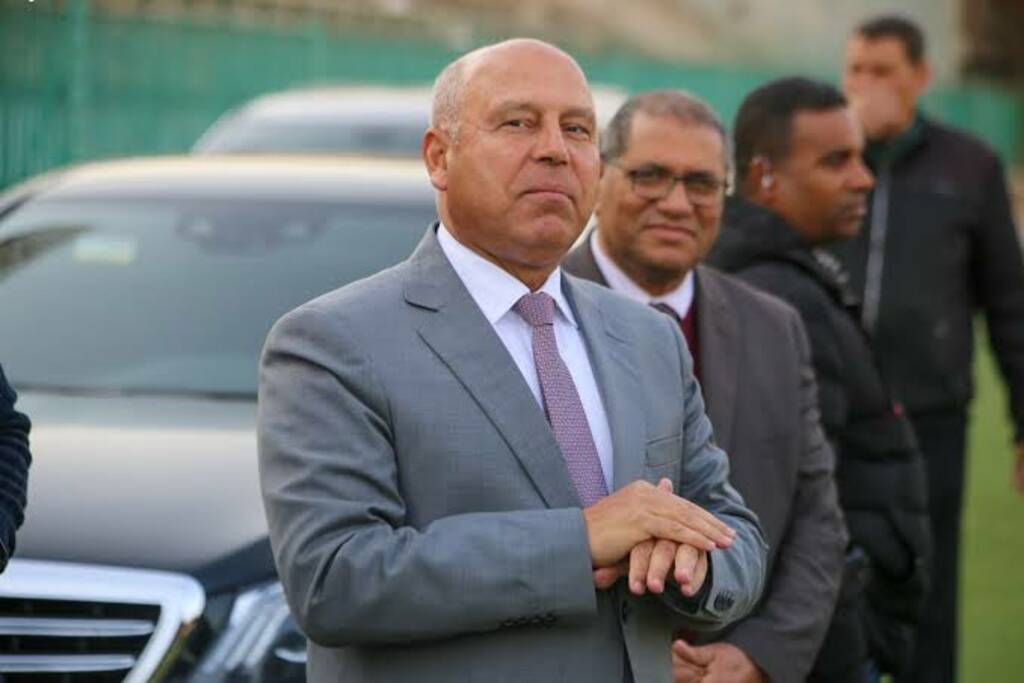
Earlier this month, various bodies were stripped of powers they formerly held to inspect and oversee tens of thousands of industrial facilities employing millions of workers across Egypt.
The decision implementing the change on August 10 was issued by Kamel al-Wazir, the lieutenant general who holds multiple ministerial portfolios and is leading the government’s drive for industrial development, and it transferred the industrial oversight powers to a new committee, formed and chaired by Wazir himself.
As a consequence of the decision and a follow-up Wazir issued weeks later, no legally authorized entity can close an industrial establishment without first obtaining a written order from Wazir himself.
Factory owners were also imbued by the decision with the right to refuse entry to inspectors from any concerned entity not represented on the newly formed committee.
The reason for the abrupt change was not specified in the text of the decision. But in his own words, during an August 15 meeting of the ministerial group for industrial development, attended by ceramics and automotive industry representatives from the Federation of Egyptian Industries, Wazir said the change was enacted "to enhance the principles of transparency and integrity between the private sector and the state, rectify and regularize the status of factories, and improve the quality of Egyptian products and boost their competitiveness in both the local and foreign markets."
Behind the scenes, according to two industry insiders who spoke to Mada Masr, were recent complaints about inspectors from pharmaceuticals manufacturers.
Shortly before Wazir issued the decision, a senior official in the Egyptian Drug Authority's (EDA) inspection department had ordered the closure of a major pharmaceutical factory due to violations, according to a pharmaceutical inspector at the Health Ministry who spoke to Mada Masr on condition of anonymity. The inspector said that the factory owner filed a complaint against the official, and that additional complaints were lodged by other factories about “the intransigence” of EDA inspectors toward pharmaceutical factories. A second source, an official in the Pharmaceuticals Division of the Federation of Egyptian Chambers of Commerce, confirmed that the major drug factory owner had recently submitted a complaint.
Then came "a meeting at the beginning of August in which Wazir met with members of the Pharmaceutical Chamber,” the pharmaceuticals commerce official said. Industry crises including export and financing issues arose as the main topic of discussion at the session, according to the official. “We requested that Lieutenant General Kamel al-Wazir expedite the process of industrial registration because it takes a long time, and that he localize pharmaceuticals and instate financial initiatives and support for factories and company owners in general, as well as localizing raw material production," the official added.
The decision to create the new inspection committee was enacted after that, with Wazir chairing it in his capacity as head of the Industrial Development Authority. Members designated included representatives from the health, petroleum, environment, local development, interior and labor ministries, members of the Federation of Egyptian Industries, and representatives from the supply and irrigation ministries who were added to the committee in the follow-up decree.
The pharmaceutical official acknowledges that concentrating absolute authority and inspection powers within a single entity is unhealthy for the sector. However, they believe that the Industrial Development Authority and the Federation of Egyptian Industries "are very important for inspecting factories alongside the EDA as they are fully aware of this industry."
Beyond the underlying motives, the decision raises many questions. Perhaps the most significant of these questions concerns the degree to which it is legal for the executive authority to suspend the legally established responsibilities and duties of regulatory bodies without corresponding legislative amendments first passing through Parliament. There are also questions about how effective it is to centralize under a single committee the inspection and supervision of all the registered industrial establishments across the country, which numbered 56,500 and employed around 3.2 million people in 2021, according to data from the Cabinet’s research center. Centralizing the power to close establishments in the hands of a single official, namely Wazir, is also questionable.
This vast number of establishments spread across the country and spanning diverse sectors makes it difficult to fully assess the decision’s full impact. This report will therefore examine just two of the sectors most crucial to all citizens: food and pharmaceuticals.

A former pharmaceutical inspector at the Health Ministry told Mada Masr on condition of anonymity that Wazir’s decision means that "even if I, as an inspector, have all the evidence that a factory needs to be shut down, the concerned committee could override the decision," likely leading to an increase in substandard drugs. Pharmaceutical factory owners are undoubtedly thrilled with this decision, they continued, saying that "now, if a drug inspector visits a factory due to violations, the owner will simply kick them out, as they aren’t part of the committee formed by the decision, even if it’s clear the factory is in violation."
An inspector at the National Food Safety Authority speaking to Mada Masr on condition of anonymity echoed the same concerns. "Now, if I receive a complaint about violations in a factory’s products, I won’t go to inspect it. I’ll have to wait to contact the committee first and get permission from them to send an agent along with me for the inspection,” they said.
By the time the committee makes a decision, the NSFA inspector noted, “the factory could have disposed of the spoiled food. It could shut down temporarily and resume operations as if nothing happened.”
Naturally, many factories are resentful of inspectors’ work, said the NFSA inspector, particularly back-room factories operating in rural areas without adhering to health standards. Decisions to close such factories are only made in cases of significant health violations, however, the inspector said, and even then the inspectors’ work is supervised by superiors in the NFSA and the Health Ministry directorates, so their powers are not absolute.
A former food safety inspector told Mada Masr that an inspector's role primarily involves checking quality, occupational health and safety standards, personal hygiene and preventive measures.
Both the NFSA inspector and the former food safety inspector said they believe the real issue lies in the shortage of inspectors. In Minya, there are just 30 inspectors, meaning one inspector might be responsible for an entire district, said the former inspector. Districts include a large number of villages, presenting difficulties to inspectors tasked with carrying out inspections and issuing licenses.
An EDA inspector told Mada Masr on condition of anonymity that their job required weekly visits to factories, but "if the latest decision is implemented, inspectors will only visit once a year, having to wait to coordinate with different committees for inspections, resulting in less frequent and weaker oversight." They added that the number of available inspectors was also diminished by the dismissal of many after the inspection authority was transferred from the Health Ministry to the EDA, exacerbating the spread of counterfeit and substandard drugs. Now, after the latest decision, this already small number of inspectors won’t even be able to enter factories, the source said.
***
Others differed in their interpretation of the issues in the sector. An official in the FECC’s pharmaceutical industry committee told Mada Masr that the minister's decision was a response to the “intransigence” toward factories on the part of the EDA. "The EDA would shut down factories under the pretext of development, telling factory owners that there were new WHO standards that must be implemented. Of course, these standards take a long time [to implement] because upgrading factory infrastructure is very difficult — it can’t be developed in days or even months. Inspectors shouldn’t be talking about factory upgrades when most don’t have inventory or money. It’s fortunate that employees are still getting paid and working,” the official said.
“When someone tells you to invest LE10 or LE20 million in infrastructure or shut down, people choose to shut down," the official added. "Recently, there was a fierce crackdown by the EDA on factories, but this did nothing to solve the problem of counterfeit or substandard drugs.”
“On the contrary — not long ago, a child in Alexandria died from a counterfeit drug, and many factories in Mansoura tamper with drugs. Where is the EDA’s role in this? Any inspector passing by a factory could shut it down, and this wasn’t just in the pharmaceutical industry. It is definitely unhealthy for the industry."
However, the EDA inspector said that inspectors do not have the authority to shut down factories unilaterally. They have to "write a report that is then submitted to the Supreme Committee for Inspection, which makes the final decision."
Mohamed Anwar, the owner of a factory producing dietary supplements, told Mada Masr that "under the old inspection system, there were 20 different government entities, all chasing after factories.” "For example," he added, "there was the Environment Ministry, industrial waste inspection, Assay and Weights Administration, the General Authority for the Censorship of Works of Art, the Supply Ministry, the Consumer Protection Agency, the Egyptian Competition Authority, the Industrial Development Authority, and in my case, the National Food Safety Authority, along with the tax and insurance authorities, the labor office, safety and security and civil defense. Each inspector from these entities would come in with a fines book, and their goal was financial penalties, not raising awareness or training. It was like I was expected to memorize the environment and labor laws, the NFSA’s laws, as well as tax laws, which is impossible, but the inspector was determined to issue a fine on the spot."
"The multitude of intransigent regulatory agencies hindered any business owner and created a vast space for corruption and bribery because inspectors had absolute authority."
The number of bodies responsible for inspecting Egypt’s drugs and food manufacturers has been streamlined over recent years.
Countering the complaints from industry actors about oversight, the EDA inspector said that during their time in the authority, they had never seen an EDA inspector “accept a bribe or act unethically with a factory owner. No inspector has ever been accused of taking a bribe, and if we assume there’s any misconduct by an inspector, it should be reported to the regulatory bodies, not result in the prevention of inspections."
The inspector cited an example of the strict oversight of their work. "Two years ago, when some inspectors were lax in shutting down a factory with violations, they were referred to the administrative prosecution for negligence in closing the factory and failing to protect public health. Since then, the EDA has tightened inspection over factories."
Although Anwar is optimistic about the implications of Wazir’s decision for industry, he is concerned that "unscrupulous factories in the market might exploit the ambiguity of how things will work going forward, thinking that inspection procedures have become more lenient and that there’s no longer any inspection over factories. All we hope for is that the inspection committees will be activated as soon as possible."
A major ready-made garment manufacturer likewise expressed concern about the lack of clarity in how the decision will be implemented and how the new committee will operate "with Egypt’s factories, from Alexandria to Aswan," noting that "the problems of the industrial sector are much deeper and more significant than this decision. Issues with licensing, bureaucracy, committees, lack of unified laws, conflicting ministerial decisions — a never-ending list that could lead to factory closures."
The official from the FECC’s pharmaceutical industry committee noted that, during a meeting the day after the latest decision was issued, which included the committee and seven members of parliament, Wazir did not clarify the implementation mechanism for the new decision. He merely reiterated that, as the industry minister, he alone now has the authority to decide on the closure of any factory and emphasized that the responsibility for sending inspectors to any factory now, under the decision, falls solely to the Industrial Development Authority, which he also heads.
"The intent is to inspect general requirements, not specialized ones, meaning inspections related to factory space, activities, civil defense or environmental requirements, or whether an activity has shifted from warehousing to manufacturing," says the director of a major pharmaceutical factory, attempting to interpret the new centralized mechanism. They dismissed the idea that the goal is to overlook violations, and said "neither Kamel al-Wazir nor Mostafa Madbuly would allow that, because if they did, the decision would only contribute to informal industries." The director explained that ultimately, "if you have a production line that doesn’t meet the standards, the EDA or the NFSA will have the final word because they are the ones most knowledgeable about technical inspections."
Hesham Abdullah, a meat factory owner, agreed on the need for stricter control over factory owners’ violations, but through fines rather than closures. "Perhaps if there are too many fines, a factory’s license could be revoked, and having a committee instead of a lone inspector would eliminate personal biases in the inspection process," Abdullah said. On the other hand, Mohamed Abdel Halim, another meat factory owner, stressed the importance of stricter oversight of non-compliant factories as they harm the overall investment climate. "For example, if you export non-compliant products, it damages the reputation of Egyptian products," he said.
***
The EDA inspector believes that Wazir’s decision is not only wrong but also constitutes a legal violation. "If you want to remove the EDA’s inspection authority over factories, a law should be discussed in Parliament to revoke the law enforcement powers granted to inspectors," which the pharmaceutical inspector at the Health Ministry echoed.
Legally, EDA members are granted law enforcement powers, the authority to enter manufacturing and storage sites, as well as any facilities subject to the authority’s oversight and inspection, and to examine the equipment, devices, preparations, or supplies. They are also permitted access to review any records, books, documents and papers they request in pursuit of their work.
EDA inspectors are granted powers under the Criminal Procedures Code to search for crimes and their perpetrators as well as for evidence to be used in their prosecution, and EDA inspectors are normally appointed by decisions from the Justice Ministry.
Therefore, lawyer Hany Sameh told Mada Masr that preventing a drug or food inspector from performing their duties is a legal violation punishable by imprisonment, as "they are a law enforcement officer, and no one has the authority to issue an administrative decision that revokes that. There must be a law passed by Parliament, not by a minister or a formed committee," Sameh said.
أخبار ذات صلة
Brandishing the military trial stick: The govt’s price control bluff
Another wave of inflation is crashing in. On March 10, and for the third time in the course of a year, the government raised fuel prices again, justifying the decision…

What’s up tomatoes?
During Saturday’s press conference, Prime Minister Mostafa Madbuly addressed the recent surge in tomato prices, following a tour of the Obour Wholesale Fruit and Vegetable Market. “There was a problem…

‘Subsidizing profit?’ – A look into the lifespan of energy subsidies for the industrial sector
The price that industrial actors pay for natural gas remained untouched by the government

Between rising inflation and shrinking foreign currency: What is the state doing?
The Egyptian pound resumed its slide on Thursday, reaching LE52.42 for the dollar, after a brief rise in value to LE51.92 the previous day. The currency’s slide had begun in…
Your support is the only way to ensure independent, progressive journalism survives.
You have a right to access accurate information, be stimulated by innovative and nuanced reporting, and be moved by compelling storytelling. Subscribe now to become part of the growing community of members who help us maintain our editorial independence.
Join us