
Candidate withdraws, low turnout, voter bribery on display as polls open from Giza to Aswan

Polling stations opened their doors and ballot boxes on Monday morning in the 14 governorates where the first phase of voting is taking place in this year’s House of Representatives elections.
Elected candidates will assume seats in the House for the coming five years, in what Prime Minister Mostafa Madbuly described as a “continuation of the effective cooperation between the government and the previous parliament” in press comments while he cast his own ballot in Giza on Monday morning.
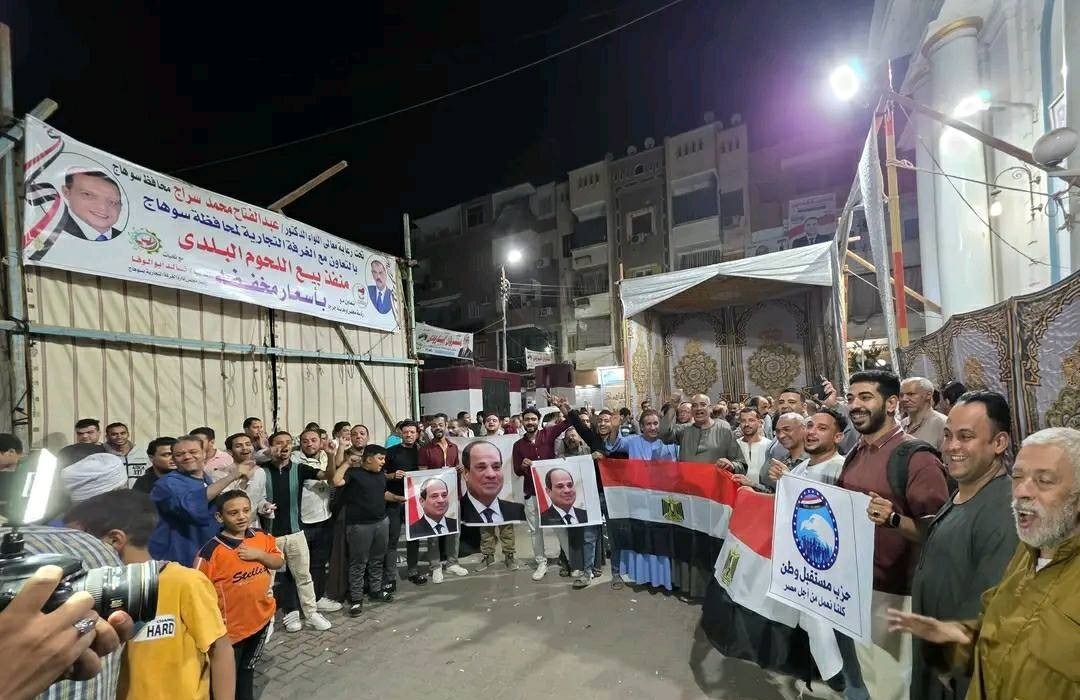
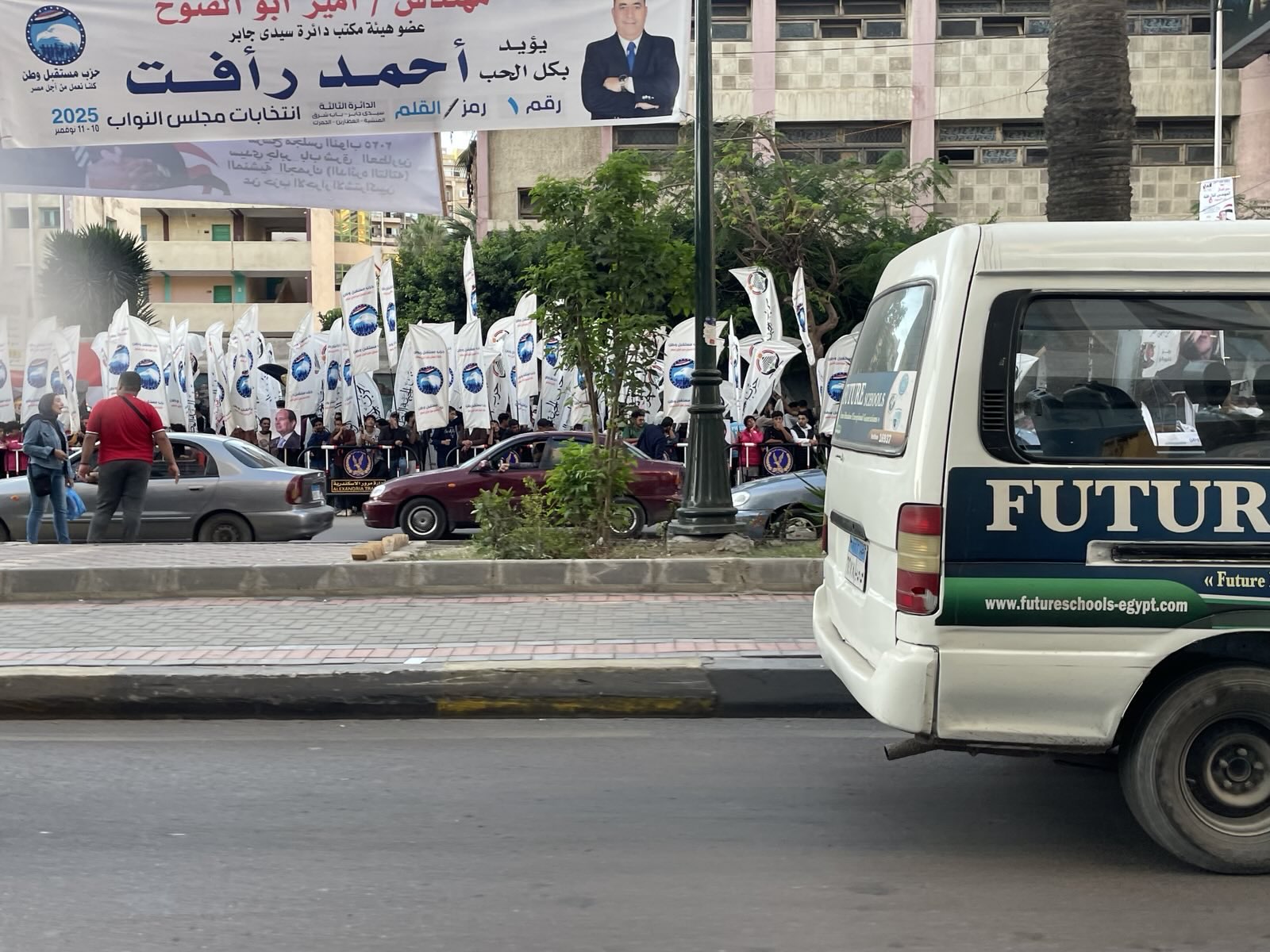
Mada Masr observed low turnout at several of the polling stations despite the encouragement to vote proclaimed by everyone from the prime minister to the media, religious fatwas, text messages from restaurants, street banners and even — in violation of laws on electoral silence — parties who continued their campaign efforts at the ballot on Monday.
Whether it is ultimately high or low, however, the turnout is expected to have little impact on which candidates will be elected. The National List, curated by Nation’s Future Party, is running with no competition. Its candidates are therefore expected to win over half of the seats in the 2026-2031 legislative session.
Over 280 of the seats in Egypt’s lower parliamentary chamber are voted in by an absolute list system, whereby groupings of candidates representing 12 parties run side-by-side for voters to endorse as a group.
The executive manager of the National Elections Authority remarked on Monday that the lists need only five percent of the national voter base in total in order to secure their seats.
The list is dominated by Nation’s Future Party, National Front Party and Homeland Defenders Party, alongside a pre-agreed quota of candidates from the parties categorized as the opposition, who accept limited representation on the list to gain access to Parliament.
Candidates competing for the 70 individual seats in phase one districts were also pre-arranged through inter-party agreements, head of the Reform and Development Party Mohamed Anwar al-Sadat told media earlier this year.
Elections to the Senate earlier this year were dominated by the Nation’s Future Party inside and outside polling stations, with some of the low voter turnout mobilized by security agencies that instructed charitable organizations to encourage their beneficiaries to vote in exchange for coupons worth up to LE300.
Similar forms of bribery were monitored on Monday, with charitable associations again directing their beneficiaries to vote for specific candidates, while the Egyptian Social Democratic Party’s operations room documented cases of “election bribes.”
State-owned companies announced they would provide buses to transport their employees to polling stations, such as Kima in Aswan and Petromaint in Alexandria, the latter using the slogan: “We don’t just work; we take part in decision-making.”
The first day of voting began with the current MP Nashwa al-Deeb announcing her withdrawal from the elections, saying “we can’t run in an election that’s already decided before it starts.” Speaking to her supporters, she said that charitable associations had been informed to direct voters to choose “one and two” — referring to the first two candidates on the ballot. In Imbaba district, where she was running, those slots were held by Walid al-Meligy of the Nation’s Future Party and former MP Ehab al-Khouly of the Conservative Party.
Otherwise, Mada Masr observed low turnout at several polling stations despite reports of a high electoral showing in the media.
In Aswan Governorate, where 59 candidates are competing for five individual seats, voters were a rare sight in the first Aswan district, the governorate’s capital. Campaigners for pro-state parties and independents were seen hovering around any voter who appeared near polling stations to steer their votes in violation of electoral silence. Walls and entrances of polling stations were also plastered with posters and banners, particularly those of the Nation’s Future Party.
In the Kom Ombo district, Wael al-Sayed, a member of the campaign team for Justice Party candidate Nagwa Othman, said voter turnout was noticeable.
Campaign violations were committed by all pro-state parties, he said, though the Nation’s Future Party’s breaches were the most visible — ranging from attempts to influence voters to the widespread distribution of party banners, including directly at polling station entrances. Food parcels were also distributed to voters in the district.
In Edfu, the governorate’s most populous district, violations extended inside polling stations. The Justice Party’s election monitoring team filmed a member of a Nation’s Future Party campaign team inside a polling station wearing a campaign vest, according to the footage which Mada Masr reviewed.
The Egyptian Social Democratic Party said in a statement on Monday that it observed “serious violations and infractions that marred the electoral process.” These included pro-state parties distributing campaign material inside and around polling stations, handing out food parcels and bribes, preventing certain candidates and their representatives from entering polling stations and directing voters inside stations to vote for pro-state party candidates. The party called on the NEA to “take immediate action to halt these breaches, investigate them and take the necessary legal measure against those responsible,” and also urged an inquiry into the complaint filed by Deeb, who withdrew from the Imbaba race citing the same reasons.
An official in the Egyptian Social Democratic Party central operations room told Mada Masr that documented violations have been recorded in six governorates so far, including Fayoum, Beni Suef, Giza, Assiut and the Red Sea. While pro-state parties were the main culprits, “some candidates from other parties and independents also committed breaches, depending on the area and the local demographics,” they said.
Voting continues tomorrow in Giza, Fayoum, Beni Suef, Minya, Assiut, the New Valley, Sohag, Qena, Luxor, Aswan, the Red Sea, Alexandria, Beheira and Matrouh.
The ballot will open in the 13 remaining governorates on November 24.

أخبار ذات صلة

After first ‘old rent’ hikes, tenants fear next rent rise will be worse
The hike was the first concession permitted to landlords by the new law passed earlier this year
Presidential reckoning: The story of an election
Sources agreed that Monday’s rare presidential intervention is only the tip of the iceberg
Voter bribery in Alexandria, Aswan, Giza: Coercion, cash, coupons and supermarket discounts
Electoral violations were visible at polling stations across the country on day two of voting in the first phase of elections to…
Critics warn govt edits to criminal procedures bill ‘violate Constitution,’ erode right to defense
"The fact that the Public Prosecution can interrogate defendants without a lawyer present constitutes a violation of the Constitution,” MP Maha Abdel…
Your support is the only way to ensure independent, progressive journalism survives.
You have a right to access accurate information, be stimulated by innovative and nuanced reporting, and be moved by compelling storytelling. Subscribe now to become part of the growing community of members who help us maintain our editorial independence.
Join us