
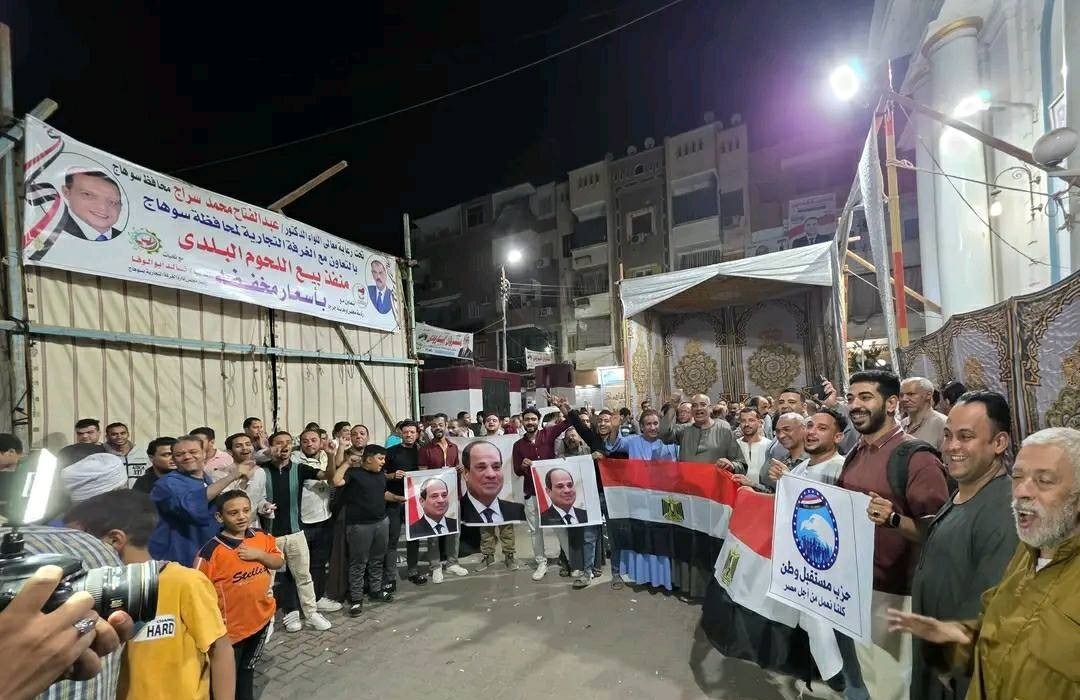
Presidential reckoning: The story of an election
Until yesterday, all was going smoothly in the first phase of this year’s House of Representatives elections, or so went the official narrative.
In all its official statements over the past days, the National Elections Authority (NEA) stressed that the election was swimming along nicely, the only challenge being the long queues of zealous voters flocking to the polls.
Meanwhile, in reality, issues in phase one have ranged from a candidate announcing her withdrawal from the elections in the street while surrounded by her supporters, to disputes outside several polling stations in Upper Egypt, to the very public talk of corruption among many candidates to discrepancies in the voter tally figures — reaching exaggerated levels in some cases.
During a livestream from the Fifth Settlement voting district — where polls are set to open for the elections’ second round next week — one of the candidates lost his temper.
Mahmoud al-Gweily said he’d paid LE20 million to secure his seat in the House but was later informed that the sum he paid was not a guarantee.
In response, the Interior Ministry did what it does best. Gweily was arrested shortly after he published the video. His wife, who witnessed his arrest, later announced that he was kidnapped by unknown individuals.
The Interior Ministry then “soothed her concern” by announcing that it arrested Gweily and that he was referred to the State Security Prosecution, which accused him of publishing false news and released him on LE100,000 bail.
The NEA, meanwhile, received more grievances than there are constituencies, but rejected most of them, accepting only two submitted by candidates in Alexandria’s Montaza district.
Aside from that, and despite the many documented violations, everything was going well according to headlines in the state-aligned press over the past week, which celebrated the integrity and administration of the electoral process.

But a surprise statement by President Abdel Fattah al-Sisi on Monday showed things were actually not going that well.
Unprecedented in nature, Sisi’s statement addressed the reported violations in the ongoing elections. Sisi stressed that decisions going forward should be made in a way “that pleases God” and “faithfully reflects the true will of the voters.”
He also instructed that “every candidate’s representative should receive a copy of the vote tally from the sub-committee,” urging the NEA to take action if voters’ will is “impossible to determine,” even if it requires the full or partial annulment of the elections’ first phase.
His statement heralded a sea change.
After they had spoken extensively about the smooth execution of the electoral process over the past week, NEA head Hazem Badawy and executive director Ahmed Bendary suddenly realized that numerous violations had in fact occurred. They reversed course at a Monday press conference, claiming they had yet to review grievances, even though they had already dismissed most of them.
They even said that they would not accept any interference in voters’ will, even if it requires cancelling the elections altogether.
From their side, news outlets that had spent the week revelling in the joy of Egypt’s democracy embarked upon a new press cycle, thanking God for the blessing that is Sisi, without whom the absurd parliamentary elections, manipulated by various unnamed parties at the expense of the public, would have continued unchecked. “The president upheld the will of the people,” they proclaimed.
The next day, the NEA would decide to annul the elections in more than a quarter of the constituencies represented by individual seats. Around half of the seats in the House go to candidates who run for the individual seats, while the other half go to candidates who run as part of four electoral lists, which comprise multi-party coalitions of dozens of candidates that voters can choose to elect as a group.
The NEA ordered complete reruns of the vote for those 14 electoral districts.
Where did all of this come from? Sources who spoke to Mada Masr agreed that Monday’s rare presidential intervention is only the tip of the iceberg, and that beneath the surface a battle is raging over the parliamentary elections: not a battle between backers and opponents of the current forces in power, but rather a tussle between different state-aligned camps; a conflict that poses a much greater threat to the regime’s calculations.
They explained that the state relies on these different camps of political supporters to mobilize people on the ground, a capacity that could be crucial if the government’s camp is to seek a new round of amendments to the Constitution to extend Sisi’s rule beyond his current presidential term.
Mada Masr spoke to several political and judicial sources to understand what went on between the start of the elections earlier this year and the president’s statement, the upheaval it caused and its repercussions — which go beyond the legal niceties of electoral due process to political considerations at a pivotal moment for those who have been in power for more than a decade.
Accusations regarding parliamentary elections are not new.
The 2020 legislative elections were marked by similar claims that the process was engineered to produce a majority for the Nation’s Future Party, which is affiliated with the National Security Agency — charges that sparked the anger of other parties who were shocked by what one politician described to Mada Masr at the time as the symbolic share of seats they were given.
The way that the national security and the Nation’s Future Party handled preparations for the 2020 elections triggered crises within most parties, including Nation’s Future itself, leading some candidates to withdraw from the electoral process altogether and other parties to oust several of their leading members, sources told Mada Masr at the time.
This year there were attempts to avoid these crises from being repeated.
A political source told Mada Masr that Sisi's office director, legal counsel and former Justice Minister Omar Marwan held a meeting three months ahead of the elections with several of the president’s aides, along with members of various security agencies to discuss preparations for the ongoing elections.
The source added that, during the meeting, Marwan stressed the need to run the elections “calmly” and directed the security agencies to work and coordinate among themselves to prevent any clashes on the ground between candidates backed by the two opposing sides: the National Security and the General Intelligence Service (GIS).
State agencies, including the GIS, wanted to inject “fresh blood” into the running at the expense of candidates affiliated with the Nation’s Future Party, given the latter’s declining popularity and the potential impact this could have on the regime’s image, the source added.
But ultimately, the National Security Agency’s successful management of the previous parliamentary elections without any apparent political cost earned it the trust to run the current round of elections on its own.
An informed political source explains that the decision to sideline candidates of several political entities — such as the Coordination of Youth Parties and Politicians and several former MPs — was done with the aim of expanding the base of regime supporters but sparked anger within the traditional circles of power.
However, preparations for the current elections were implemented differently compared to those of 2020.
The first notable difference was the focus on arranging seat distribution, while little attention was paid in comparison to mobilizing voter turnout.
Before, the Interior Ministry played a direct role through its network of police stations in mobilizing and rallying voters with the assistance of civil society associations and volunteer networks, collecting voter ID cards and returning them at polling stations to guarantee participation. Candidate representatives were responsible for distributing cash and food boxes to incentivize turnout.
But during elections for the upcoming term, as well as the recent Senate elections, little attention was paid to mobilization. Police stations abandoned the role and left it to civil society and candidates’ representatives.
The result was patently low voter turnout, so extreme that a trigger-happy judge in a Montaza polling station in Alexandria began to count up the votes before official closing time.
This demonstrable violation of process was published by one of the area’s candidates in a video that quickly circulated on social media platforms, adding to a series of similar videos documenting infractions of the voting process.
Two Montaza candidates filed appeals with the NEA, and since the infraction was undeniable, their complaints were the only ones of dozens submitted to be accepted by the authority before the president’s intervention.
The second difference in this round of parliamentary elections was the decentralized approach to managing the electoral arrangements and voting process.
A source from the National List — which ran for list seats with no competitors, effectively securing half of Parliament before the vote even took place — said that the election’s management was left to national security offices in different governorates. However, each office ran its operations independently, which led to varying levels of crisis across governorates, the source said.
The National List was curated by the Nation’s Future Party.
The decentralized and unorganized management of the elections also opened the door for the widespread interference of “policial money” — a polite term for electoral bribery — which has inflamed public opinion over the past few weeks.
The concerns forced the NEA’s executive director, Ahmed Bendary, to comment a few days ago that the term political money “confuses me personally. I’m trying to figure out what it means. I really don’t understand.”
Bendary landed on a definition that limited the phenomenon to small bribes paid by some candidates to buy votes in front of polling stations, stressing that these practices did not interfere with the electoral process overall.
But the real crisis stemming from political money that has dominated general discussions concerns the incidents in which candidates have been asked to pay millions of pounds to secure their seats in Parliament.
Two months ago, Homeland Defenders Party member Hanan Shershar posted a video in which she described her unsuccessful attempt to meet the party leadership at its headquarters to complain about her exclusion from running in the legislative elections.
Since no one agreed to meet her, she headed instead to MP Nafea Abdel Hady, the Homeland Defenders Party’s secretary general for Giza, seeking nomination for her district, Warraq. She complained that businessmen paying huge sums were being chosen as candidates at the expense of candidates working tirelessly on the ground.
While Shershar didn’t reject money-for-candidacy on principle, she however said in the video that she told Abdel Hady that “the requested amount is huge for me,” to which he responded, “That’s the required amount and that’s the way it goes.”
Homeland Defenders Party member Hanan Shershar's video
Accusations of paying money to secure candidacy — or even to guarantee parliamentary seats — culminated in the video posted by Gweily, the Fifth Settlement candidate, where he appealed to Sisi and to NEA director Hazem Badawy to investigate the sale of election seats, stating that he was asked to pay LE20 million for his.
All these scandals and crises led to divisions within the pro-Sisi camp, which spans several parties. This angered Marwan who, according to the parliamentary source, wants to pave a way toward constitutional amendments that could extend Sisi’s presidency and sees what has happened in the elections as “fragmenting the constituencies that would support any forthcoming legal moves.”
The 2019 constitutional amendments extended the limit on consecutive presidential terms to a maximum of three consecutive terms instead of two, and lengthened presidential terms from four to six years, doubling the viable duration of his presidency rule from a maximum of eight years to sixteen — grounds for his presidency lasting until 2030. The amendments also granted the president the right to run for a fourth term, provided that a new president serves at least one full term after the end of his current period.
The newly elected Parliament is to take on the task of shaping the political landscape at the end of Sisi’s final term, whether by amending the Constitution again to allow additional terms or by awaiting the president’s successor.
A source from one of the parties represented on the National List agrees that the electoral crisis comes with repercussions for the pro-president alliance at such a delicate political moment.
According to the source's analysis, this has “widened the anger among yesterday’s allies and its effect on passing constitutional amendments smoothly,” especially after the current elections revealed “the weakened capacity of pro-regime entities to mobilize.”
This, in the source’s opinion, is what led the president to intervene.
While the president’s intervention earned him some points, according to two sources, one political and one judicial, it was not limited to a symbolic expression of disapproval but rather addressed details that confused the calculations of several entities.
One of the confused calculations is the legal grounds for the NEA’s Tuesday decision to cancel the results in a quarter of the first phase electoral districts.
Under the political rights law, the NEA is empowered to cancel voting if it has proven evidence of a voting or counting process defect affecting the fairness or legitimacy of the outcome.
But this would rely upon the NEA ruling that complaints about process were legitimate within 24 hours of their submission. The issue here is that the NEA rejected nearly all of the complaints it received. A deputy head of the State Council and an elections supervisor told Mada Masr that the issue could leave the NEA decision to cancel results open to legal challenges at the Supreme Administrative Court.
This legal maze makes the available scenarios for addressing the crisis a sensitive and unclear matter.
The president also instructed the NEA in his Monday statement to give “every candidate’s representative” a copy of “the vote count from the sub-committee, so that members of the House of Representatives come to represent the people of Egypt genuinely.”
The instruction implicitly places the NEA under scrutiny.
Unlike in previous elections, the NEA instructed sub-committee heads not to provide candidates or their representatives with officially stamped tally sheets this year, limiting them to verbally reporting numbers on the sorting results.
This angered several candidates, especially given the significant discrepancies in some constituencies between what candidates were told and what the general committees announced.
Ahmed al-Argawi, a current MP for the Nour Party and an independent candidate for the third constituency (Abu Homs and Idku), told Mada Masr a few days ago that “systematic fraud was repeated across most governorates.”
He added that vote counts were manipulated, even though candidates had previously received sub-committee tally sheets for all 80 sub-committees in the constituency, which showed that only about 87,000 voters participated.
But when the general committee announced its numbers, this figure “was inflated” to 212,850 voters, Argawi added.
In another constituency in Qena, a seat was awarded to a candidate who was not even among the top four who received votes according to sub-committee counts.
Implementing the president’s instructions regarding handing sub-committee results to candidates will raise difficult questions around who altered or changed the results, and whether the general committees — including advisers from the State Council and Administrative Prosecution — or others, were involved.
This casts doubt on the NEA’s work and integrity, especially since it is theoretically the only entity authorized to manage the entire electoral process.
Despite the severity of what occurred in the first phase, it represents only one part of the crisis.
The second part concerns what is expected to happen in the coming days and weeks until the end of the second phase of the elections.
According to the parliamentary source, the president’s statement caused confusion among candidates, particularly those associated with the National Security, as “they are now unsure on who is leading the electoral process, which will strongly affect the second round.”
He added that the president’s hint that things “are not going as they should” will encourage more of the angered candidates who were previously silent to express their discontent and appeal the results of the first phase.
Basel Adel — head of the Awareness Party, which has several members running in these elections — turned to physics to describe what happened. He called it “fatigue stress,” the weakening experienced by any material placed under repeated pressure.
According to Adel, Sisi preempted this weakness and intervened before the entire political process collapsed.
Officials are now trying to salvage what they can. A Senate member told Mada Masr that there is currently a crisis management group led by Marwan, under the direct supervision of the president, working around the clock. The source added that the NEA was instructed to re-open the door for all complaints and appeals.
What is happening now is crisis management, the source said. From his side, the National List source explained that without the president’s intervention, a rebellion among pro-president forces was imminent.
“If you ask someone who failed [the elections] to mobilize for you, they’ll tell you they’re busy,” the source said.
For another political source close to the authorities, the crisis extends far beyond the role of security agencies, the NEA, or the judiciary alone. The crisis, as the source sees it, is the “continued sidelining of politics.”
“The president should blame his advisers who pushed for this course from the beginning,” the source says.

تقارير ذات صلة
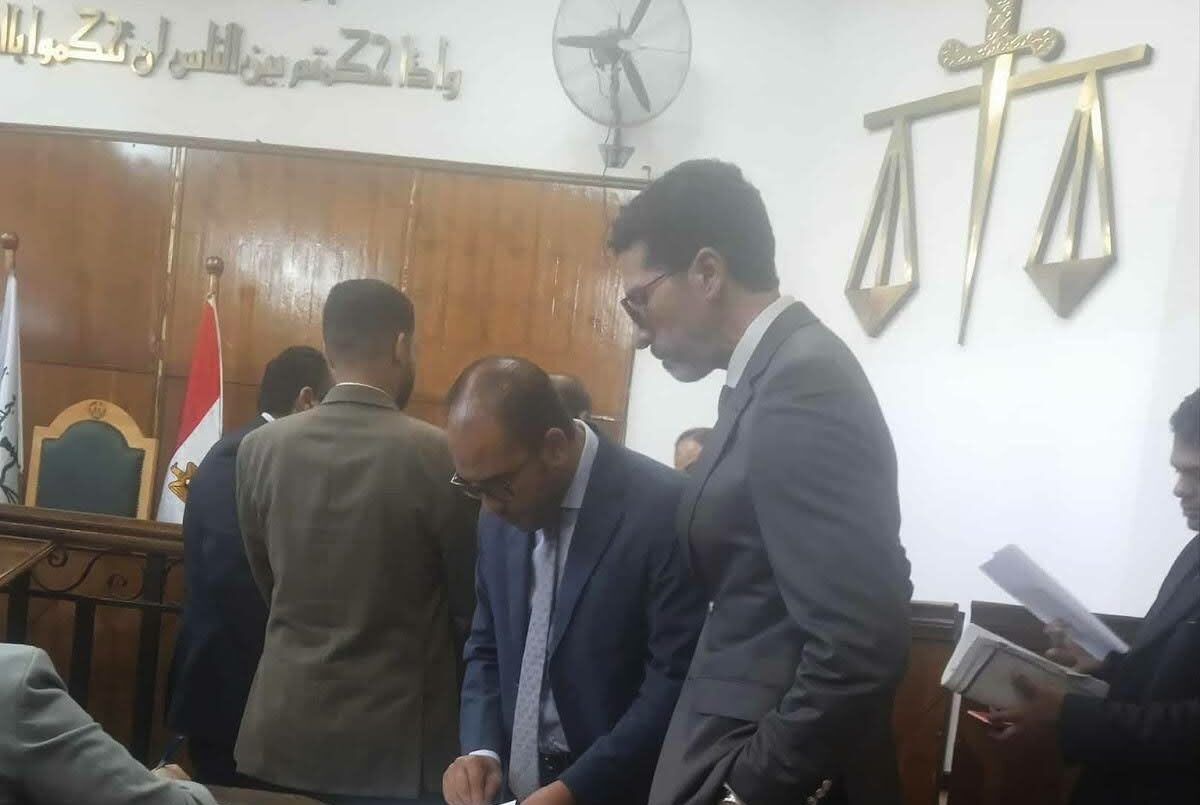
Haitham al-Hariry: Sentenced to political death solely because my father was an opposition politician
Hariry is now one of at least six politicians to be disqualified from the 2025 parliamentary race

Socialist Popular Alliance’s Haitham al-Hariry becomes latest candidate disqualified from 2025 House election
The list of nominees disqualified from the 2025 ballot is growing
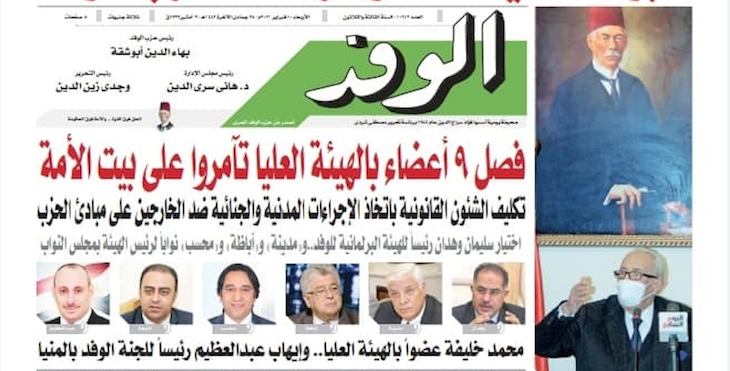
9 senior figures dismissed from Wafd Party in purge of opposition faction
Ousted member Abd Elaleem Dawood called the move “baseless” and “an act of political thuggery”
Your support is the only way to ensure independent, progressive journalism survives.
You have a right to access accurate information, be stimulated by innovative and nuanced reporting, and be moved by compelling storytelling. Subscribe now to become part of the growing community of members who help us maintain our editorial independence.
Join us