
2,000 workers at Universal for Electrical Appliances strike against wage delays
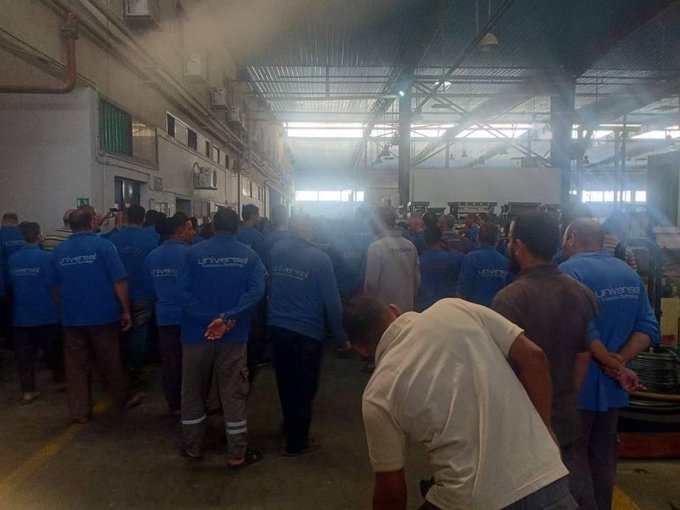
Around 2,000 workers at Universal for Electrical Appliances entered a fifth day of strike action on Wednesday in 6th of October City to protest late wage payments.
Workers at Universal have not been paid for two months. On Tuesday, September 14, one worker died of a heart attack under financial pressure, driving the workers to announce the strike, one worker told Mada Masr on condition of anonymity.
The chair of Universal's board, Yusri Qutb, ordered all workers to take Wednesday and Thursday off, but workers continued the strike following the weekend on Sunday.
Their demands include a remedy to the irregularity of their salary payments, reductions to their wages of up to 50 percent, non-payment of monthly incentive bonuses, and arbitrary administrative decisions, the Center for Trade Union and Workers Services said in a Monday statement.
In talks mediated by the Manpower Ministry, Qutb offered to disburse half a month of wages if workers agreed to call off the strike. Universal workers refused, and the talks fell apart on Monday.
Workers at Universal for Electrical Appliances took similar action against wage delays in 2019, when the company employed around 6,000 workers. Universal management claimed at the time that the company was going through a financial crisis. The 2019 strike was quickly called off after the Manpower Ministry agreed to shoulder the expense of paying out half the value of salaries for a six-month period, leaving Universal responsible for the other half.
But even following the ministry's intervention, the company continued to be inconsistent in paying out wages, despite management significantly reducing the volume of staff. Last year, during the pandemic-induced economic crisis, Qutb, also said that he did not intend to reduce workers’ wages to mitigate the situation, but rather to increase them. Over the past six months, however, wages have been delayed for up to 15 days rendering conditions untenable for workers.
In a bid to ease pressure on its budget, Universal’s management decided to disburse payments in two installments and later altered the period over which the payroll is distributed so that not all workers were paid at the same time. Hoping the arrangement would facilitate the payment of full salaries, the workers agreed.
Yet, citing financial pressures, the company’s management then began to pay monthly salaries in up to six installments throughout the year, and, one worker told Mada Masr, salaries were halved for some workers for four months from April through August 2020.
In July 2021, Universal stopped disbursing salaries entirely, a number of company workers told Mada Masr.
Universal’s management also failed to pay bonuses, the first worker said, adding that although he has been with the company for 11 years his baseline salary is only LE2,400: the same as the new minimum wage that is to be implemented in the private sector from 2022. “We are supposed to get incentives of LE700, but these incentives are always reduced. For me, they are never more than LE380,” another worker said.
أخبار ذات صلة
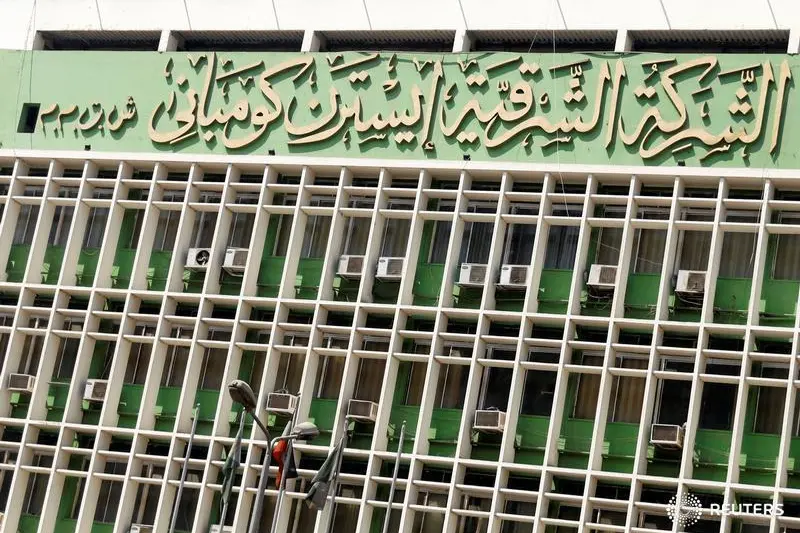
Former employees sue to block sale of Eastern Company workers’ shares to Fidelity
Two hundred former workers at Eastern Company have filed a lawsuit to halt the payout of proceeds from the sale of the…
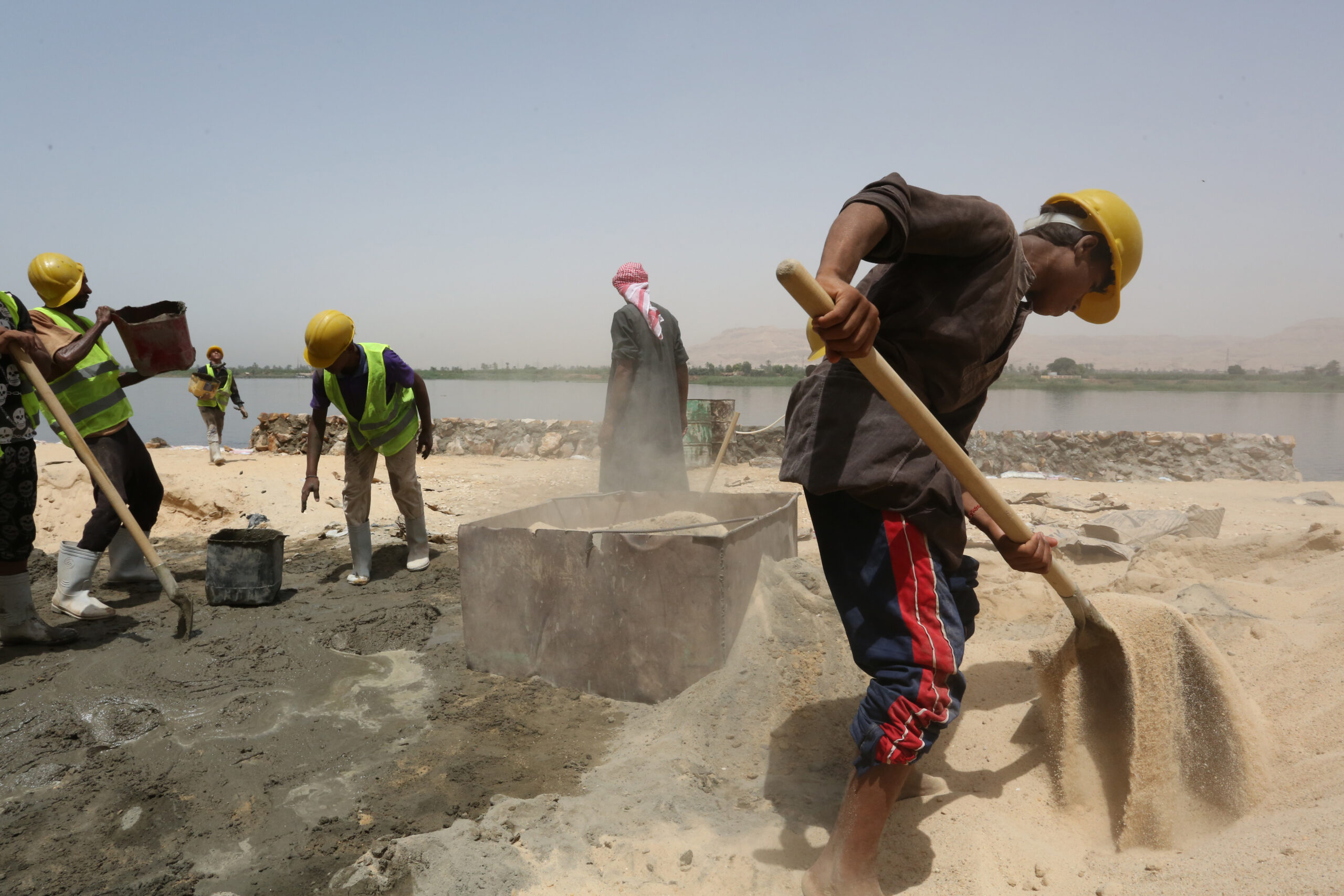
Egypt’s 1st hourly minimum wage: An ‘announcement to global markets that our labor is cheap’
Sources express fear that the decision will formalize and entrench an already precarious situation

New labor law, same pro-business bias
A decade after initiating the process to draft a new labor law, the government announced on November 6 that the bill had finally been completed after incorporating several amendments. The…
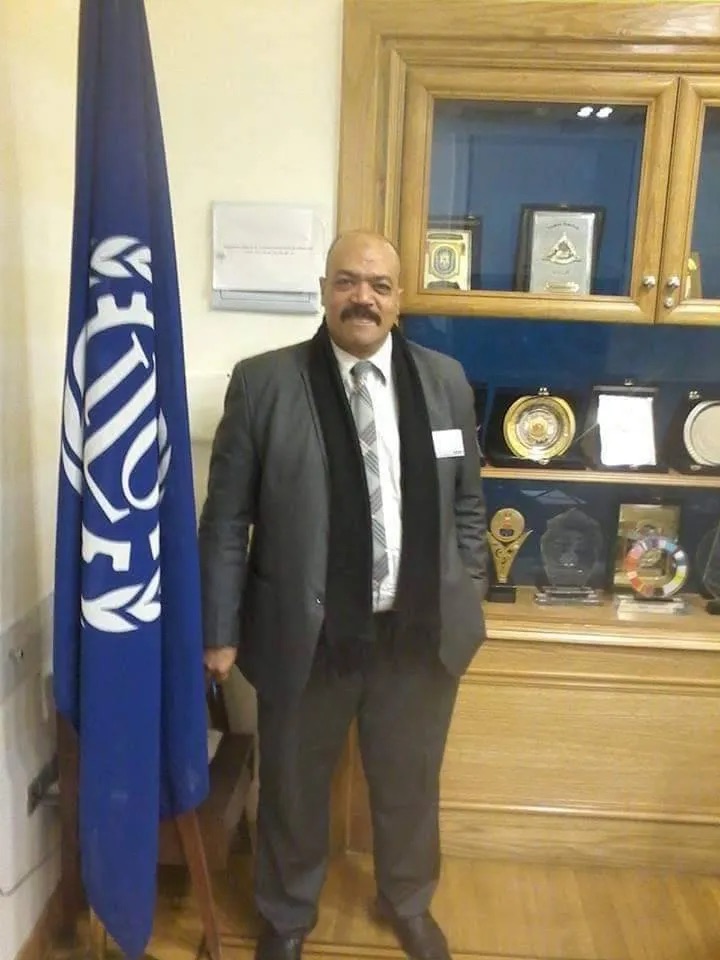
Following strike, Samanoud Textiles Company seeks to fire union leader
Samanoud Textiles Company launched a new lawsuit aiming to fire union leader Hesham al-Banna from the company, his lawyer Haitham Mohamedien told…
Your support is the only way to ensure independent, progressive journalism survives.
You have a right to access accurate information, be stimulated by innovative and nuanced reporting, and be moved by compelling storytelling. Subscribe now to become part of the growing community of members who help us maintain our editorial independence.
Join us