
Following strike, Samanoud Textiles Company seeks to fire union leader
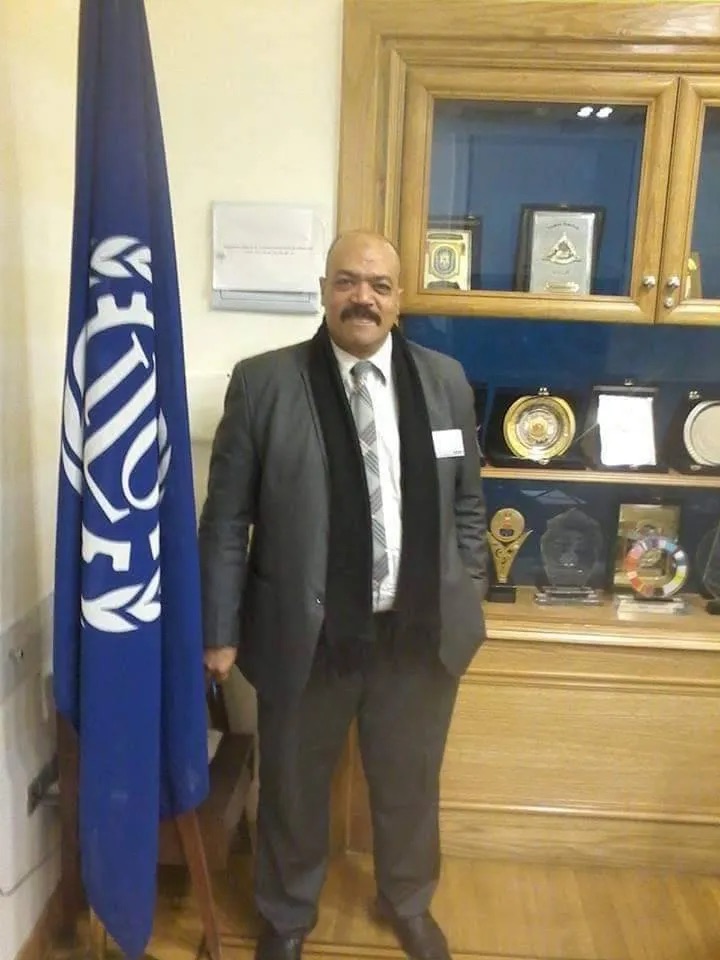
Samanoud Textiles Company launched a new lawsuit aiming to fire union leader Hesham al-Banna from the company, his lawyer Haitham Mohamedien told Mada Masr.
This is the second lawsuit filed by the company against Banna, against the backdrop of a strike the company workers began on August 18 to demand they be granted the new monthly minimum wage of LE6,000 announced earlier this year by President Abdel Fattah al-Sisi.
The strike ended a month later under threats of arrest by security forces and dismissal from work.
While most employees at the textile factory have been spared the degree of punitive action faced by Banna, they were paid vastly reduced wages for September — with the company citing the strike as the reason it made deductions to salaries.
Banna was informed on Monday of the new lawsuit, of which Mada Masr obtained a copy, accusing him of inciting the strike and illegally disrupting company operations, and demanding his complete dismissal from the company. The first hearing before East Tanta Misdemeanor Appeals Court is set to be held on November 6, Mohamedien said.
Banna was among eight workers who, along with two others, were accused of inciting the strike and subsequently arrested and held in custody for a number of days before being released. The company suspended all ten workers, eventually reinstating nine of them, with the exception of Banna.
Instead of reinstating him, the company launched its first lawsuit against Banna seeking his suspension from work on similar grounds to those used to arrest him.
The company lawyer asked the court in a hearing on Wednesday to alter the suit to one seeking the permanent termination of the union leader’s contract, Mohamedien said at the time.
Following the receipt on Monday of the second lawsuit to terminate Banna’s contract, his defense said that he will now seek to combine the two cases, due to the similarity of the company’s demands in each.
Back at the factory, and after more than a week of delay, the company’s managers paid out September’s salaries last week at hugely reduced rates, two workers told Mada Masr.
Kamal Abbas, general coordinator of the Center for Trade Union and Worker Services, told Mada Masr that September salaries were eventually paid at half rate, but deductions for debts and penalties further slashed wages, leaving some with as little as LE150 in hand.
“I usually earn LE3,450, but I only received LE1,300. Even with the 3,400, it’s not enough, and now they give us 1,300? What are we supposed to do?” one of the workers told Mada Masr, adding that LE1,300 was the highest amount any worker received.
A LE500 development incentive was also missing from paychecks, on the grounds that it can be withheld if workers use up all their vacation days.
The company initially promised to pay the incentive at a later point, but on October 13, management backtracked, claiming workers had exhausted their leave time during the strike. The decision effectively strips them of both their vacation days and their financial compensation, the worker said.
“One of us only got LE150 because she was absent for three or four days,” they added.
Another worker told Mada Masr that when the evening shift workers tried to protest their drastically reduced wages on October 10 — the day the wages were disbursed — they were once again met with threats from management. According to the worker, a National Security Agency officer has been stationed at the company since the strike ended.
The company has also launched an internal investigation into one worker, Ahmed Salah, according to Abbas, and has threatened him with dismissal after he protested receiving only LE300 out of his usual LE3,500 salary.
The second worker confirmed that wages ranged from LE300 to a maximum of LE1,300. “I don’t even know what to spend this money on. I feel like I’ve been hit on the head.”
“People are desperate — they couldn’t make ends meet on LE3,000 before the strike, and now they’ve barely received a quarter of that. A quarter? Men who used to earn LE3,000 are now getting LE300,” they continued.
Of the company’s 550 employee total, 330 women make up the entirety of its clothing department — the company’s largest and most cohesive department considering all the women work the same shift. The remaining male workers are spread across other departments, with the majority in the textiles department, which operates in three shifts.
أخبار ذات صلة
Former employees sue to block sale of Eastern Company workers’ shares to Fidelity
Two hundred former workers at Eastern Company have filed a lawsuit to halt the payout of proceeds from the sale of the…
Egypt’s 1st hourly minimum wage: An ‘announcement to global markets that our labor is cheap’
Sources express fear that the decision will formalize and entrench an already precarious situation

New labor law, same pro-business bias
A decade after initiating the process to draft a new labor law, the government announced on November 6 that the bill had finally been completed after incorporating several amendments. The…
Samanoud Textiles workers continue to strike after management fails to commit to minimum wage
Workers at the Nahdet Samanoud Textiles Company went on strike on Tuesday for the 22nd consecutive day, protesting for company managers to…
Your support is the only way to ensure independent, progressive journalism survives.
You have a right to access accurate information, be stimulated by innovative and nuanced reporting, and be moved by compelling storytelling. Subscribe now to become part of the growing community of members who help us maintain our editorial independence.
Join us