
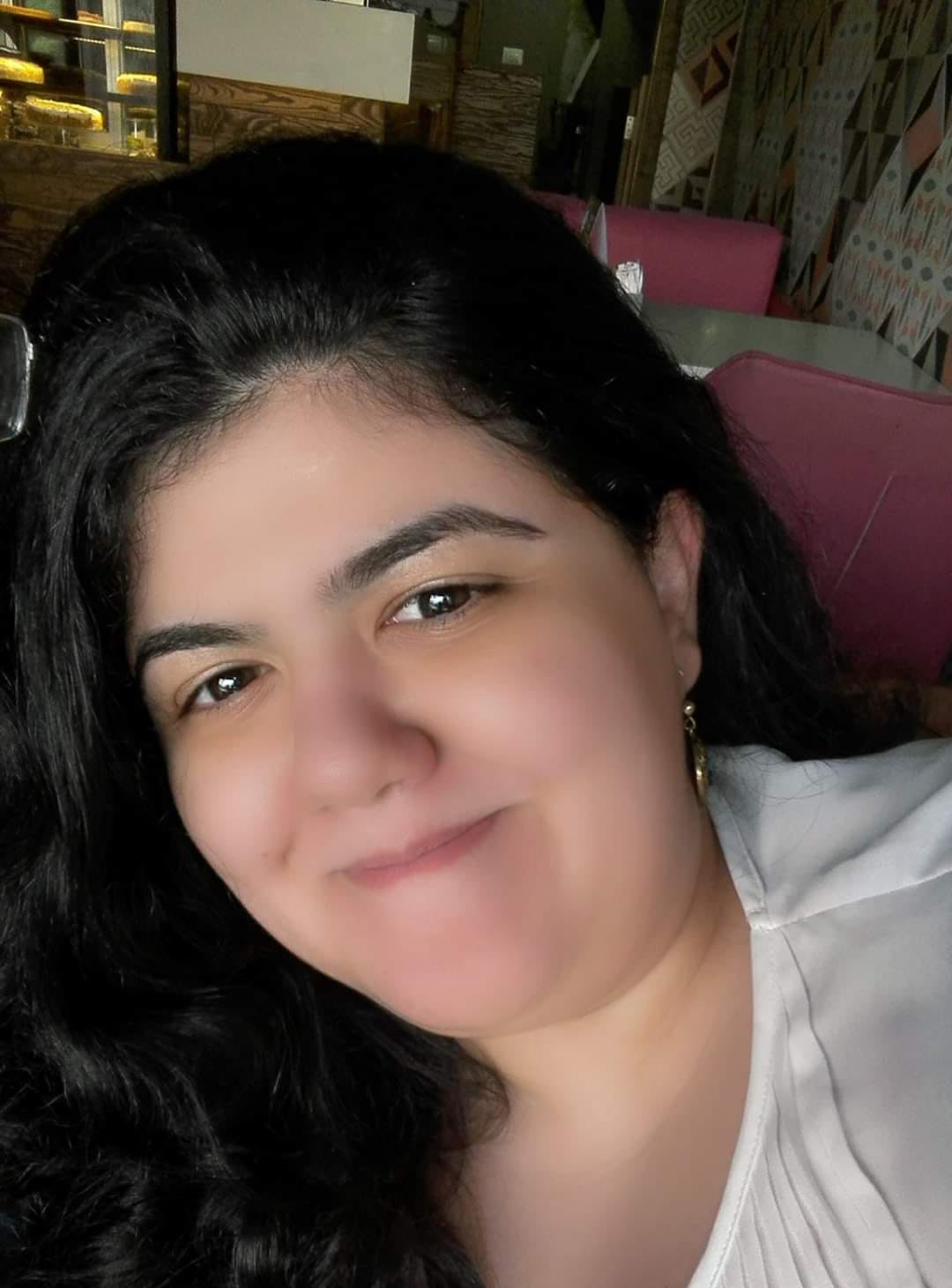
When helping people in need is a crime: The case of Marwa Arafa
Ever since her daughter Marwa Arafa was arrested and imprisoned two years ago, Wafaa Mohamed Hassan has struggled to manage all the new responsibilities thrust on her. Much of the family’s income, including her salary from Al-Azhar University where she teaches literature three times a week, now goes toward supporting her daughter in prison with food, clean clothes and other supplies. She is now also the primary caretaker for her three-and-a-half-year-old granddaughter Wafaa — named after her — splitting the responsibility with the child’s grandfather, aunts and uncles.
“It’s a totally new life,” she tells Mada Masr. “My salary is basically spent on Marwa’s needs in prison, yet there are also Wafaa’s health expenses, as well as our basic needs as a family. Every time I finish visiting Marwa, I start preparing for the next visit. She needs clothes, fresh fruit and vegetables, hot meals, cigarettes and money for the prison canteen. It’s a huge financial burden.”
Arafa, a 29- year-old translator, was arrested by armed security forces on April 20, 2020, from a friend’s house where she had been staying. She was forcibly disappeared and held incommunicado for two weeks at the National Security Agency headquarters in Nasr City before finally appearing before the State Security Prosecution on May 5.
The prosecution ordered her to be held in remand detention on charges of joining and funding a terrorist group. Arafa was taken to two police stations before being transferred to Nasr City First Police Station, where she would spend nearly three months, and finally to Qanater Women’s Prison in July 2020, where she has been imprisoned ever since.
On February 10, in a letter addressed to President Abdel Fattah al-Sisi and the public prosecutor, the Middle East Studies Association, a group of nearly 2,800 scholars and educators, for the third time called for the release of Arafa and Kholoud Said — the head of translation at the prestigious Bibliotheca Alexandria, who was arrested a day after Arafa and is being held in remand detention. “We repeat our call for their immediate release and urge you to take steps to end the detention of all scholars and prisoners of conscience,” they wrote.
The family has communicated with figures who help mediate with authorities on prisoner cases, according to Marwa’s husband Tamer Mowafy, and while they have received assurances that Arafa’s name will be included on lists of those being considered for release, she remains in prison. “I really want to know why she is in prison. We know nothing about the case,” Mowafy says.
According to Arafa’s lawyer Mokhtar Mounir, the one and only time Arafa was interrogated by the prosecution, she was questioned about her family, her childhood, her education, her work as a translator, as well as the main charge — funding a terrorist group — based on accusations that she was financially supporting prisoners. Arafa denied the charge, according to Mounir, and told prosecutors that she was only trying to help people in need, including the families of prisoners who may have lost their sole breadwinners. And even then, she never provided any financial assistance, only supplies such as food and clothing. “Not all assistance is financing,” Mounir says.
“She loves people and doesn’t want anyone to be in need. That’s the reason she is in trouble, for being a generous and helpful person,” Arafa’s mother says. Those sentiments were echoed by her friend, Sara al-Sherif. “Helping people is part of Marwa’s personality,” Sherif tells Mada Masr. “She does this with her friends and acquaintances or anyone needing help, even if this includes the families of prisoners, who have the right to a decent life. Losing their breadwinners to prison places so much responsibility on them. Even people who are being punished should not be deprived of their basic needs. She did nothing wrong.”
Arafa once told her mother during visitation that she believes she is stuck in prison because of the “funding” charge, and that without it, she would have been released by now, as a number of other prominent detainees in pretrial detention have over the last year. “She is frightened her case will be referred to court. Every time someone is sentenced to a harsh prison verdict, she gets scared,” her mother says.
Growing up, Arafa had a wide range of interests. She attended several universities to study dentistry, physical therapy, political science and English literature, though she never graduated. An autodidact, she loved to read and pursue her own intellectual interests, signing up and attending workshops in a variety of fields, according to her mother.
In her professional career, Arafa worked primarily as a freelance translator, according to Mowafy, though she also branched out into other fields, founding an online cultural magazine several years ago. She also worked as a business consultant, partnering in a number of small businesses with people she was trying to help. When her daughter Wafaa was born in June 2018, she scaled back to focus solely on translation jobs in order to have more time to care for her. She also continued her volunteer work for people in need.
It is unclear what triggered Arafa’s arrest in April 2020, but it was a traumatic event for the family. It was around midnight when the doorbell rang at Arafa’s friend’s house where she had been staying. Arafa and her younger sister Toqqa were eating pizza and watching The Walking Dead while baby Wafaa slept. When Arafa opened the door, two plainclothes police officers and five men in uniform entered the apartment, according to Toqqa. “There were other people on the stairs behind the door holding weapons. Marwa quickly told me and the nanny to go wear our headscarves. We did not understand what was happening,” Toqqa tells Mada Masr.
They managed to call their mother and text their lawyer before the security forces confiscated their mobile phones, tablets and some other belongings as they searched the house. “Wafaa woke up scared and started crying, she then began to follow her mother around the house with her shoes in hand, thinking they were going out. The men then asked me, the nanny and Wafaa to stay inside Wafaa’s room, while Marwa came in to get dressed; she hugged us and we all cried, then she went to handle the situation outside.”
Arafa’s parents eventually arrived at the house and tried to reason with the police. Wafaa began to cry, seeing her mother was leaving without her, and Arafa’s mother negotiated to get one of the tablets back to keep her preoccupied. When the police came to handcuff Arafa, she asked the family to take her daughter into her room so she wouldn’t witness the scene. Once handcuffed, she was escorted out the door. “I asked to go with them, but they refused,” Arafa’s mother says. “I even followed them after they took her, but I lost sight of them near the security headquarters in Nasr City. Until this day Wafaa can’t speak because of what happened that night.”
Arafa was first taken to a police station in Fifth Settlement, then to another in Dokki, before being transferred to Nasr City First Police Station, where she was held in harsh conditions. During her three-month-long detention there, she was not allowed any visitors, her mother says. She was detained in an overcrowded, three-square-meter cell. The police at the station would “give her a hard time,” often stealing the food and other supplies her mother would send to her inside. To improve the conditions of her detention, Arafa’s mother would cook for all the detainees in the cell and sometimes also wash their clothes. “It was a tough time for Marwa and for me,” her mother says. “She got pneumonia due to being in an overcrowded cell that lacked ventilation, while I got neuritis. And I was financially drained.”
Arafa’s conditions inside Qanater after her transfer there in July 2020 were reasonable initially, but eventually worsened, according to her mother. An officer who was newly transferred to Qanater in August to supervise the prison appeared to single out a number of detainees for harsher treatment, Arafa among them, according to journalist Solafa Magdy, who was imprisoned in Qanater from late 2019 until her release in April 2021.
In early 2021, prison authorities claimed they found mobile phones inside the ward where Arafa was being held, Magdy tells Mada Masr. Arafa and others were punished by being moved to other wards, where Arafa was placed next to the toilets, made to sleep on the floor, only allowed prison food for several weeks, and banned from communicating with other prisoners.
For the past year, Arafa has not been allowed to speak with anyone other than her mother during visitations, which happen once a month and last for just 20 minutes. Isolated, she is giving all her time to studying law, finishing three university semesters through an open education program.
Arafa’s friend, Sara al-Sherif says that Arafa’s case may also be complicated by her family lineage and her being the granddaughter of Hassan al-Banna, the founder of the Muslim Brotherhood, even though she has no affiliation with the outlawed group. “It is an easy charge, an effortless accusation. She is the granddaughter of Hassan al-Banna, but everyone who knows Marwa is aware that she is not in that place,” Sherif says. “Marwa is a rebel. She chose a different way from her family, and that was so brave and difficult. It isolated her.”
Her husband echoed the sentiment. “Being raised in a Muslim Brotherhood family made her decide to remain apolitical. She doesn’t even like the Muslim Brotherhood,” Mowafy says. “She was only concerned with assisting people, on her own, not as part of any group or collective. She did charity work, helping people no matter where they came from, their backgrounds, or political beliefs; and she did that her entire life, even before the revolution broke out.”
Among the most difficult aspects of Arafa’s imprisonment is the toll it has taken on her daughter, Wafaa. The initial arrest caused a shock to the child that led to delays in speech, and communication problems, Arafa’s mother says. Whenever Wafaa sees a police figure in a cartoon she gets scared. The three-and-a-half-year-old has also suffered from behavioral problems and now attends a nursery that specializes in caring for children with autism.
“After her daughter was born, Marwa gave all her time to Wafaa. She wouldn’t spend a moment without her,” Sherif says. “For Wafaa, Marwa was everything, and suddenly she was taken away from her, traumatizing her at a very early age.”
Arafa’s mother brings Wafaa to the monthly prison visitations. While Wafaa used to cry out of boredom and fatigue, she eventually normalized the experience, inventing games or collecting flowers and going to sit in her favorite red velvet chair in a corner of the prison yard, her grandmother says.
Yet the visitations have not been without their difficulties. One day, as Wafaa ran toward her mother in the visitations hall, a guard chased and yelled at her because she had not been searched, causing Arafa to almost have a nervous breakdown, according to lawyer Mahienour al-Massry, who was imprisoned in Qanater for over 20 months until her release in June 2021.
Arafa’s lawyer, Mounir, has submitted requests to the State Security Prosecution to allow Wafaa to spend the entire day of visitation with her mother at the prison nursery instead of just 20 minutes, but authorities have only allowed Wafaa into the nursery sporadically and for brief periods, according to the lawyer.
In his arguments before the judge at detention renewal sessions, Mounir demands that Arafa be released on a number of legal bases, including that there is no evidence to back up any of the charges and that her daughter needs special care from her mother.
He says, “They should release her on probation for the sake of her child, especially that pretrial detention is a precautionary measure that can be replaced by another measure that takes into account mothers who need to care for toddlers.”
تقارير ذات صلة
Conversations on an empty stomach: The stories of Laila Soueif, part 2
Laila Soueif is 139 days into her hunger strike, unwavering in her demand for Alaa's release.
Egypt prepares to present human rights record to UN Human Rights Council
Egypt is set to present its human rights record for review before the United Nations Human Rights Council (UNHRC) on January 28, amid stark discrepancies between the government's depiction of…
3 acquittals but still behind bars: The trials of Samer al-Desouky
June 18, 2022 In the city of Damietta, straddling the Nile’s eastern distributary, Mohab Mohamed, a 28-year-old National Security Agency officer, writes a report on the results of an investigation…
Your support is the only way to ensure independent, progressive journalism survives.
You have a right to access accurate information, be stimulated by innovative and nuanced reporting, and be moved by compelling storytelling. Subscribe now to become part of the growing community of members who help us maintain our editorial independence.
Join us