
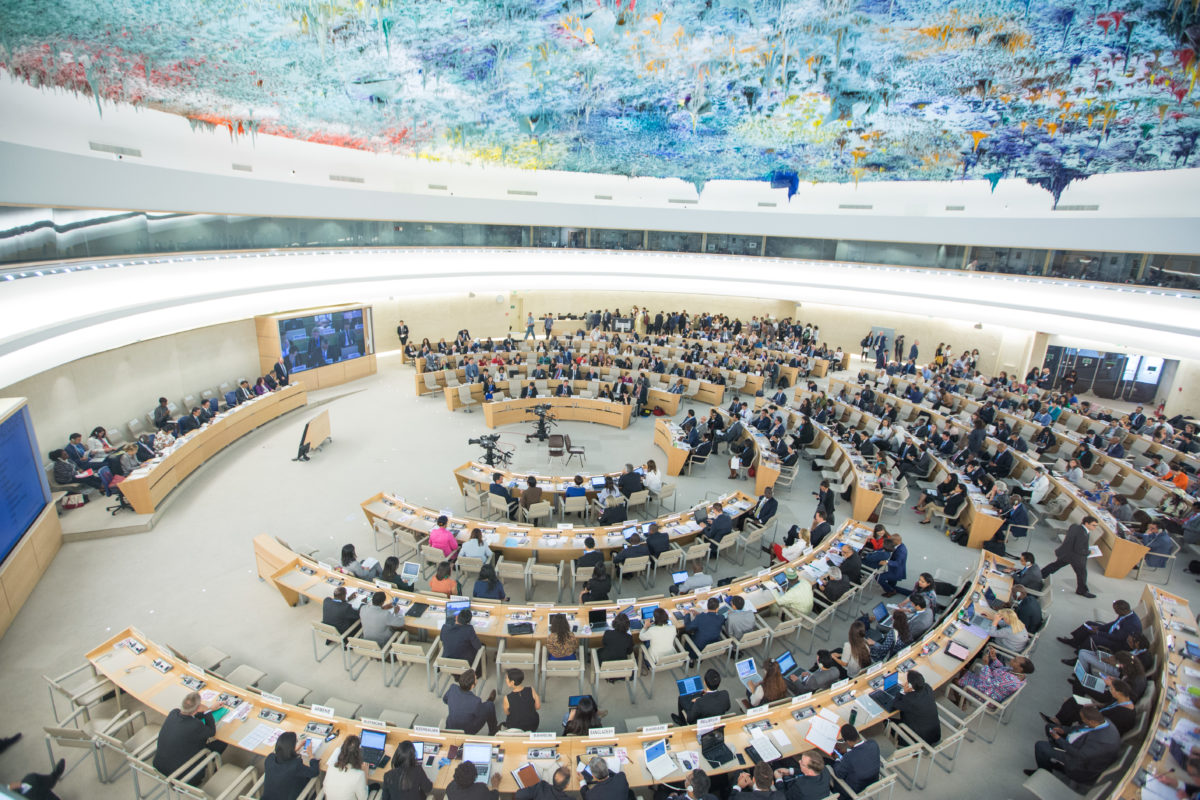
Egypt prepares to present human rights record to UN Human Rights Council
Egypt is set to present its human rights record for review before the United Nations Human Rights Council (UNHRC) on January 28, amid stark discrepancies between the government's depiction of improvements and the realities reported by human rights activists.
This marks Egypt's fourth review under the Universal Periodic Review (UPR) mechanism, established in 2006 to assess the human rights conditions of all 193 UN member states every four and a half years.
Each review allows governments to submit official reports on their human rights records. Egypt submitted its report in October, which included its response to 372 recommendations issued during the third review cycle held in 2019. In the report, the government emphasized its commitment to implementing these recommendations despite challenges in a volatile regional context. Among these mentioned in the report were rising threats from terrorism and transnational organized crime, escalating migration and refugee flows driven by regional turmoil, especially in neighboring countries, the COVID-19 pandemic, surging global food and energy prices, and continued population growth.
On December 5, Egypt sent a delegation to Geneva to discuss its progress in civil and political rights. The delegation was led by Parliamentary and Legal Affairs and Political Communication Minister Mahmoud Fawzy, State Information Service head Diaa Rashwan, and Egypt’s Permanent Representative to the UN, Alaa Hegazy.
Following the visit, the Parliamentary Affairs Ministry issued a statement quoting Fawzy as saying, "Egypt's stability represents stability for the entire region and Europe, and such stability cannot be achieved without both material and human costs." The minister urged international partners to adopt a comprehensive view of Egypt's situation and its surrounding circumstances during the review process, rather than concentrating on a single aspect of the broader context.
Discussing Egypt’s "human rights experience," Fawzy highlighted key developments in civil and political rights, including the new criminal procedures law, amendments to the prison regulation and Egyptian nationality laws, and the preparation of legislation on asylum for foreigners, civil society work, the National Alliance for Civil Development Work, and elderly rights — all of which were in response to recommendations Egypt accepted during the previous UPR cycle, he said.
The criminal procedures law, which the government promotes as one of its major achievements, faces widespread criticism from civil society groups both in Egypt and abroad. Five independent UN special rapporteurs called on Sisi to reject the law, citing its violations of provisions in Egypt's constitution and international agreements, particularly the International Covenant on Civil and Political Rights. The law undermines the balance required in criminal trials, the special rapporteurs said, granting expanded powers to the police, prosecution, and courts at the expense of the defendants. It also fails to address investigative authorities’ flawed practices, such as exceeding the legally permitted remand detention period and the repeated prosecution of detainees on new charges under the same accusations.
The UN special rapporteurs also criticized the new asylum law issued by Sisi on December 17. The law establishes a government committee under the Cabinet to manage refugee and asylum seekers’ matters, a role previously handled by the UNHCR since the 1950s. Human rights organizations both locally and internationally urged Sisi not to issue the law without prior consultation with the UNHCR.
The law grants refugee status and access to asylum rights based on "national security" and "public order" considerations without further clarification. It also requires asylum seekers to immediately report to the police upon arriving in the country and prohibits the provision of humanitarian aid, shelter, or housing to asylum seekers without prior notification of the relevant police department. Noncompliance carries penalties including imprisonment and fines up to LE100,000.
Among initiatives fostering civil and political rights, Fawzy singled out the National Dialogue launched by President Abdel Fattah al-Sisi in April 2022 and the reactivation of the Presidential Pardon Committee on the same date. He also pointed to what the statement described as the “electoral merits” of the past decade, the participation rates of political parties, and citizen involvement in voting both domestically and abroad.
However, Egyptian Initiative for Personal Rights (EIPR) Executive Director Hossam Bahgat, speaking to Mada Masr, points out that the Presidential Pardon Committee, formed in 2017 and reactivated in 2022, has failed to make any new presidential pardon decisions from August 2023 up until the submission of the government’s report in October.
In a joint report submitted to the UNHRC ahead of the review, of which Mada Masr obtained a copy, nine human rights organizations, including the EIPR, the Cairo Institute for Human Rights Studies and the Nadeem Center for the Rehabilitation of Victims of Violence, stated that despite the government's release of 1,700 political prisoners over the past two years, 4,500 others were imprisoned during the same period.
Egypt’s recent elections, particularly the presidential elections held at the end of 2023, also faced widespread criticism from local and international human rights organizations. They were widely regarded as emblematic of the absence of any space for opposition and peaceful change in Egypt, following the arrest of several peaceful opposition figures, including former parliamentarian and presidential hopeful Ahmed Tantawi, who sought to challenge Sisi in the polls.
Cairo Institute for Human Rights Studies Director Mohamed Zaree tells Mada Masr that after the 2019 review session, the government realized that its focus on counterterrorism could no longer shield it from criticism of documented human rights violations. “The end of the ‘war on terrorism’ scarecrow, coupled with the continuing deterioration in human rights conditions,” Zaree says, summarizing Egypt's current human rights record. He adds that the government pursues a policy of improving human rights "by insinuation," rather than addressing the actual practices and violations in various areas. It embraces broad slogans without fulfilling their practical commitments, he says.
Although the government introduced the National Human Rights Strategy, it has not been effectively implemented, Zaree notes. And although the state of emergency law was abolished by the government, it simultaneously continues to apply the anti-terrorism law to non-terrorists, he adds. Similarly, the government conducts a National Dialogue with no follow-up or response to participants' recommendations and releases some prisoners of conscience while simultaneously arresting others.
The National Human Rights Strategy calls for reducing the number of crimes punishable by custodial sentences and exploring alternatives to incarceration for debt arising from contractual relationships. It also encourages the government to review the most severe crimes that carry the death penalty. Regarding remand detention, the strategy only asks state agencies to explore "digitally developed alternatives" to avoid transporting detainees to court when necessary. Additionally, the strategy emphasizes the need to continue modernizing penal facilities and build new prisons, as well as to combat torture and investigate related allegations.
One of the outcomes of these provisions is the expansion of new prisons in the desert, equipped with technological features such as surveillance cameras, remote communication systems with prisoners, and continuous 24-hour lighting.
Twelve human rights organizations submitted a report further documenting the government's failure to meaningfully implement UPR recommendations over the past 14 years, including that of the latest one in 2019. The joint report — submitted to the UN High Commissioner for Human Rights in July 2024 and published in December as part of preparations for the upcoming UPR session — documented the “mounting and severe deterioration of human rights conditions in Egypt,” which contributed to exacerbating ongoing political, economic, and social crises for Egyptian citizens.
For example, the death penalty, for which Egypt accepted 29 recommendations during the previous UPR session to consider suspending its use, is still applicable to 105 crimes under Egyptian law. In 2021, Egypt led globally in the number of death sentences issued, ranking third in executions. Authorities carried out 84 executions in at least 29 cases, while criminal courts sentenced 403 people to death. This trend escalated in 2023, with courts issuing 590 death sentences.
The joint report also addressed forced disappearances, noting that Egypt accepted three recommendations during the previous UPR session to investigate allegations of torture, extrajudicial killing, and forced disappearances. The government pledged to establish an independent body to investigate these crimes. However, it rejected four recommendations related to acceding to the International Convention for the Protection of All Persons from Enforced Disappearance and to ensuring surprise inspections of detention facilities.
The report stated that security authorities are systematically committing the crime of forced disappearance, with the Interior Ministry, through its National Security sector, responsible for "kidnapping citizens and forcibly disappearing them, in addition to associated violations such as psychological and physical torture and coerced confessions within National Security facilities.”
The report said that the Stop Forced Disappearance campaign documented 821 cases of forced disappearance between August 2022 and August 2023, bringing the total number of documented cases since 2015 to around 4,253 people. This figure excludes the many testimonies of torture from victims of forced disappearance inside National Security and intelligence facilities.
Regarding the conditions of prisoners and detention centers, for which the government received 20 recommendations during the previous review, the report stated that over the past four years, authorities have expanded the arbitrary use of prolonged solitary confinement. Prisoners reported that this punishment is often imposed following disputes with prison authorities, strikes or protests over prison conditions. The report also pointed to the suffering of inmates at the Badr and Wadi al-Natrun prisons due to constant harsh lighting inside cells, which caused nervous breakdowns, insomnia, and migraines.
It additionally documented a rise in hunger strikes and suicide attempts in prisons. In August 2021, inmates at Tora Maximum Security Prison attempted suicide. Between February and March 2023, human rights organizations received messages from families of political prisoners reporting a rise in suicide attempts involving hanging, wrist cutting, and overdosing on sedatives. The 12 organizations also documented a hunger strike at the Badr 3 prison protesting poor conditions, visitation bans, and the death of an inmate, Alaa Mohamed al-Salami, 47, after a two-month hunger strike.
The report also addressed medical neglect in prisons, including new ones. The Egyptian Commission for Rights and Freedoms estimated that 31 deaths occurred due to medical neglect between March 2023 and March 2024, including 15 taking place in the Badr and 10th of Ramadan rehabilitation and correction centers.
Regarding violations in new prisons, the report highlighted complaints from female inmates who were transferred from Qanater Prison to the 10th of Ramadan rehabilitation center. They reported the presence of surveillance cameras in some cells, forcing them to wear full clothing, including the hijab, at all times.
The government’s actions, including sending a delegation to Geneva and issuing an executive report on the National Human Rights Strategy, coincided with several significant government and judicial steps. These included visits organized by the Public Prosecution and Interior Ministry to detention facilities in prisons and police stations. On December 10, a team from the Public Prosecution visited and inspected the Helwan police station. The following day, the Interior Ministry announced a visit to Badr prison on the occasion of Human Rights Day by representatives from the human rights committees of both the House of Representatives and the Senate, officials from the ministries of foreign affairs and justice, as well as representatives from the UN and the African Commission on Human and Peoples' Rights.
According to statements from both the Public Prosecution and the Interior Ministry, these visits included questioning prisoners about their living conditions, with prisoners reportedly affirming that they "enjoy all the rights guaranteed by the constitution and the law."
Another judicial measure came on November 23, when the criminal court ruled to remove 716 individuals from terrorist lists. The Public Prosecution explained this decision in a statement as a response to the president's directive to review the legal status of the accused, whether detained or listed as terrorists, and to promptly address them, in line with the National Human Rights Strategy.
The National Council for Human Rights (NCHR), which is scheduled to present its report during the upcoming UPR session in January as a neutral party between the government and independent organizations, has sided with the government. The council’s president and members preemptively asserted in December that the increase in the number of recommendations directed at Egypt does not necessarily reflect a rise in human rights violations but rather growing attention to Egypt. They emphasized that reforms in civil and political rights, while seemingly slow, are ongoing.
NCHR President Moushira Khattab, speaking at a roundtable organized by the Sadat Association for Social Development and Welfare on September 11, said that Egypt has made notable strides in ratifying international human rights agreements. She added that "the concept of human rights for citizens in Egypt differs from that in other countries."
Khattab said that the NCHR is now "closer to the citizens than any previous council," noting that it has recently held meetings with workers, farmers, and union representatives and offers training courses for employees despite its limited budget in an effort to promote “human rights culture.” She also pointed out that some people reduce human rights to freedom of opinion and expression, which she described as the easiest rights to provide, as the state can grant them with no financial cost. In contrast, she said, providing citizens with a decent life is more challenging. "The state should be wiser than that and release those imprisoned in political cases," Khattab said, stressing that she had made significant efforts regarding remand detainees, with the council submitting many lists to the Public Prosecution and various state agencies for the release of dozens.
The NCHR faces the risk of being downgraded to category B status by the Global Alliance of National Human Rights Institutions. The alliance’s Subcommittee on Accreditation recommended this reclassification on November 20, citing doubts about the council’s independence, given its government-appointed members, its failure to issue reports since 2020, and its inadequate response to complaints regarding cases of forced disappearance and arbitrary arrests in Egypt.
EIPR Executive Director Hossam Bahgat says that while the government has shown a lack of seriousness regarding recommendations from the UPR mechanism since Egypt's participation in 2009, the participation itself remains useful, as it forces the government to take steps, even if small or “cosmetic,” to improve the human rights situation. He says that this helps explain recent decisions such as reviewing terrorism lists, releasing some remand detainees, and lifting asset freezes on some human rights activists.
Bahgat also points out that there is growing speculation that Egypt plans to seek a seat on the UN Human Rights Council, competing for one of the 47 African seats next year. Such a bid would require the government to take meaningful steps to address the UPR’s comments in a substantive manner. The government still has the opportunity to improve the human rights situation seriously, Bahgat says, by accelerating the release of remand detainees, immediately releasing all those held beyond the two-year maximum remand detention period, granting presidential pardons to those convicted in political cases, and ceasing to pursue human rights activists, dissenting voices, and others.
Bahgat — who has recently been released on bail following an interrogation at the State Security Prosecution and accusations of aiding and abetting a terrorist organization, funding terrorism, and broadcasting false news for publishing about a recent prison strike due to poor conditions — stresses that the government could implement the recommendations issued by the National Dialogue and acknowledged by Sisi in August, which included reducing the maximum periods for remand detention while maintaining its status as a precautionary measure, introducing alternatives, and providing material and moral compensation and reparation for those wrongfully detained.
Finally, Bahgat sees that the government could also lift the illegal blocking of journalistic websites.

تقارير ذات صلة
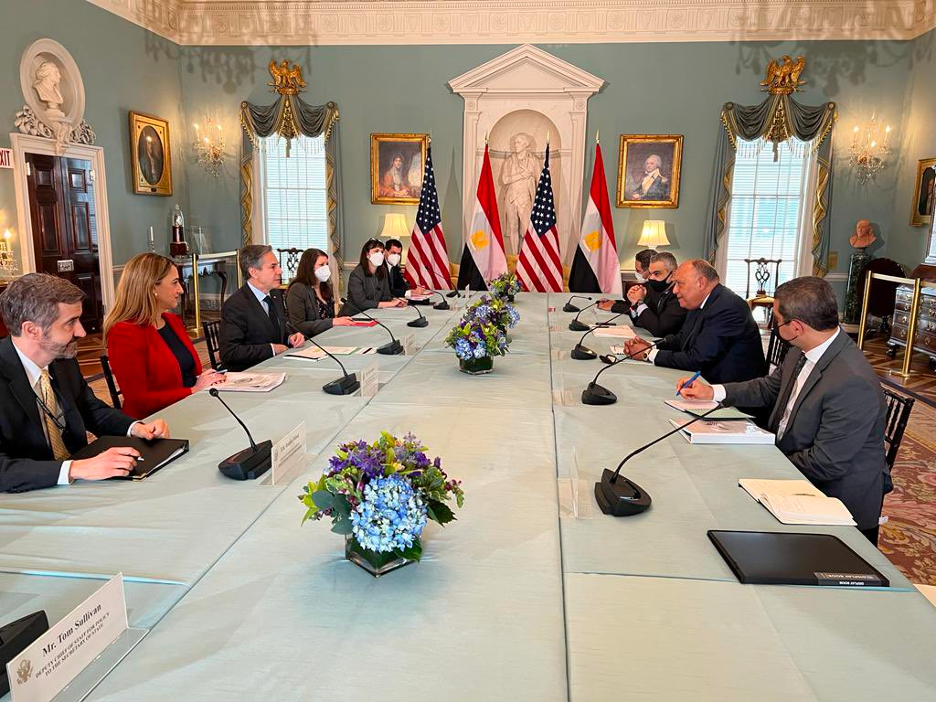
Shoukry’s DC charm offensive complicated by human rights concerns
The foreign minister's visit comes amid concerns in DC over Egypt's ambivalent stance on the Ukraine

UN human development report on Egypt criticized for overlooking human rights concerns
“Our goal was to release the report at any cost and to avoid the fate of the previous one”
Egypt’s new rights image met with skepticism in DC
'We did not come to whitewash the face of the Egyptian government'
Your support is the only way to ensure independent, progressive journalism survives.
You have a right to access accurate information, be stimulated by innovative and nuanced reporting, and be moved by compelling storytelling. Subscribe now to become part of the growing community of members who help us maintain our editorial independence.
Join us