
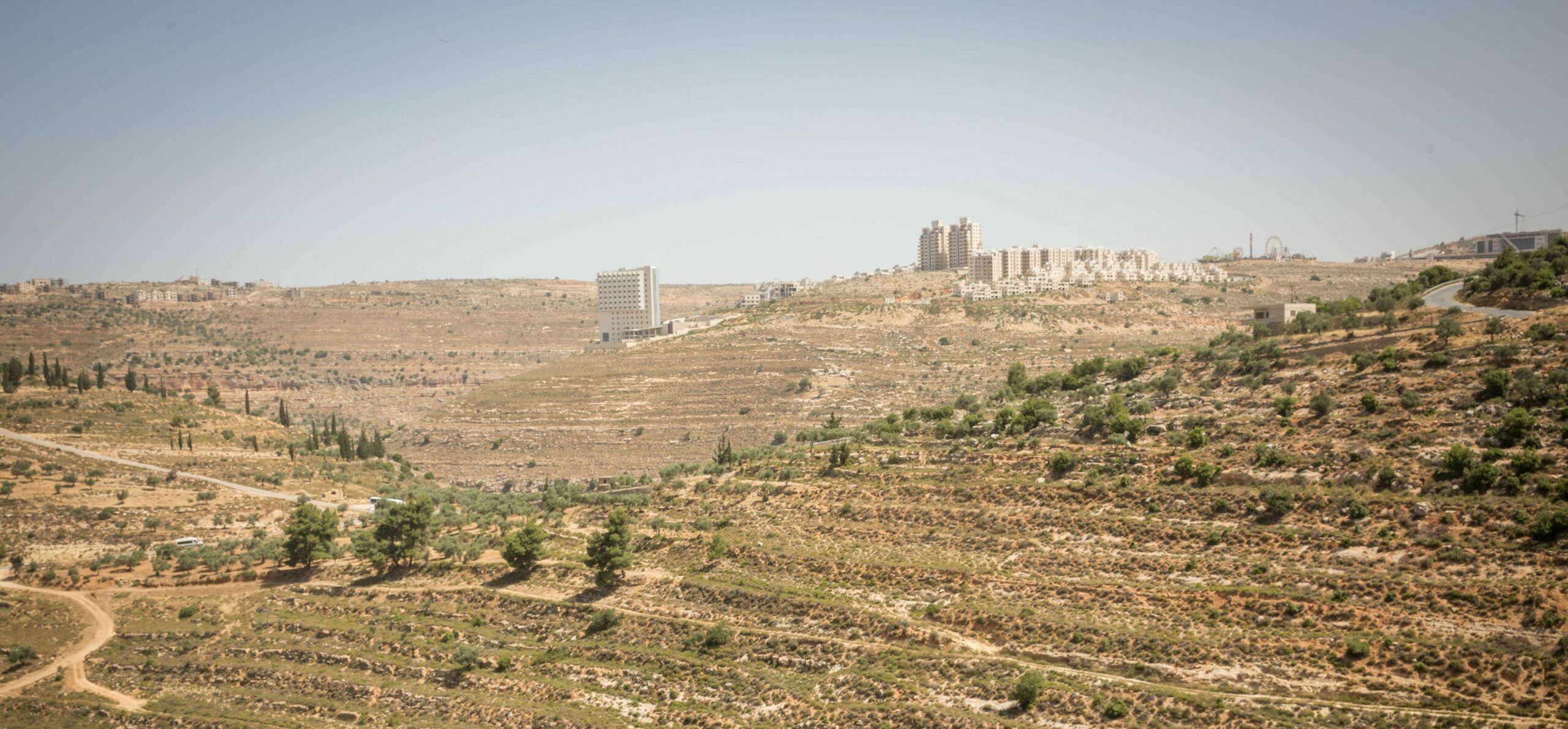
What now? A changed struggle, and motherhood in an uprising
As Israeli airstrikes in Gaza continued for the 9th day on Tuesday, killing at least 227 people, a general strike took great effect across historic Palestine. Shops and businesses were shuttered, and thousands were in the streets for marches and protests throughout the West Bank and in cities captured by Israel in 1948.
As Egypt and other countries pursue political and diplomatic ends to the war on Gaza, it is clear that these weeks mark a unique shift in Palestinian mobilization and resistance. I spoke with Beesan Ramadan, a friend from Nablus currently living in Ramallah, on Wednesday about what has changed, what might come next, and the dynamic between political confrontation and motherhood.
Yasmin El-Rifae: What’s on your mind about the strike, today?
Beesan Ramadan: Tuesday was massive, people from all classes and backgrounds were out in the streets. This morning, in my gym class, women were talking about going to [protest at the settlement of] Beit El, as a family. I think now the question is about momentum, and this time, it’s not only about Gaza. The level of confrontation in the West Bank is shifting. It’s not like people are inventing new methods of confrontation, but the intensity is getting bigger.
I was writing to this activist I’ve known for 10 years who started going to Sheikh Jarrah in 2009 when they started mobilizing against evictions. That movement was taken over by Israeli leftists, and it didn’t have a very strong Palestinian presence. It was a very solidarity-based type of cause, and going to Sheikh Jarrah became a sort of political tourism … go to Jerusalem and “see what’s happening.” Things are changing in a very interesting way and there are a lot of questions to think about, always.
YR: Correct me if I’m wrong, but there is something new in yesterday’s action being called for from areas annexed by Israel in 1948 and the West Bank joining so spontaneously. What has that been like?
BR: It wasn’t just the following up, it was the way it happened. It wasn’t like groups in the West Bank called on people to join. It all started with a call for strike by a very small group inside ‘48 and it was very spontaneous how it grew and spread. In Kafr Aqab — you know it, it’s located between Jerusalem and Ramallah, it’s a Jerusalem district but it’s a ghetto where no one really has jurisdiction, they only invade it to arrest people. During COVID not one business in Kafr Aqab closed.
But yesterday, not a single shop or business was open. Everyone responded individually — and that’s the interesting thing: you have individuals responding to an event on their own behalf, not on behalf of a political party. A big chunk of it, of this passion, was Gaza and the fact that a lot of people in ‘48 are realizing that all these people are settlers, that settlers aren’t just in the West Bank. This is a shift in how we describe things. Like in Lydd, there’s a level of intensity and tension all the time, but it has always been conveyed as police versus second class citizens. Now we’re talking about colonizers versus colonized.
YR: What do you think contributed to this shift in articulation?
BR: I’m still trying to understand, but I think the level of violence by settlers in Jerusalem attacking al-Aqsa played a part. They made a number of stupid moves but they ended up being good for our sake.
You can see the different levels and styles of confrontation. In Haifa there were murals, teach-ins, painting, which is amazing and so important. Each region was organizing their own way. In the West Bank the only language we understand — as long as we can’t confront the Palestinian Authority — is clashing with settlers and Israeli army. People can say that this isn’t smart strategically, but when there’s a huge number of people going to a protest it freaks them out. Yesterday the protesters went and there were only 10 soldiers at Beit El … I think the whole point of the strike is to exhaust the enemy as much as possible, giving them so many points of confrontation is threatening to them.
But the question is, can we keep this up? If we can keep it up for six months I'm not sure what would happen. But the idea of it is becoming possible. That people can go out in masses across all of Palestine, from the river to the sea, which was completely out of the question before. We were used to action in ‘48 being these small demonstrations.
There’s the question of the Palestinian Authority too. It’s hard to know where to go with it. They are the most beneficial asset to the Israelis at the moment. They are keeping Ramallah and the [government headquarters] safe, they’re doing Israel’s job. But if you go out against them now you’ll lose support from a lot of people in Fatah, which no one wants, and also you’ll create a new front of confrontation that is distracting and that you’re maybe not ready for. It’s disappointing but unfortunately it’s the ugly truth. Yesterday the PA forces were patrolling the administrative building, thinking people would actually think of going there ...
YR: But the PA didn’t try to stop anything yesterday?
BR: No, but a few weeks ago they did. There was a march for Sheikh Jarrah before the war in Gaza started … they sent thugs to beat people and attack the demos, prevent people from entering. There were some arrests in the villages too.
YR: In several areas, people blocked the entrances to cities and villages to enforce the strike and stop movement of goods and workers. Did that happen in Ramallah?
BR: In Ramallah there was actually no need because no one was going anywhere anyway. This is all built on historical layers. In 1936, anyone who didn’t commit to the strike was shamed in the papers. In the first intifada they talked to and even threatened workers from going to settlements.
But yesterday there wasn’t even any of that. Usually it would be impossible to make this level of strike succeed in such a short time. It only means that people were ready, thirsty to do anything. The fear is that this was a sort of exhale of anger and will peter out…
YR: I think for a lot of people watching, the question is: once there’s a ceasefire and things calm down in Gaza, will things calm down in ‘48 and the West Bank?
It’s been a time of surprises. Even for the most pessimistic of us, we are able to imagine liberation. This is a first. It’s not about hope, it’s actually just being able to imagine it, not for our children, but for ourselves. And this is coming from the movement in the ‘48 areas. For the first time, the confrontation there is not between police and citizens. The clashes in Akka were insane, seeing communities come together and mobilize … there has been a lot of work in the last few years on changing how we think about this.
I’m very afraid of what will come next. We’re seeing a vicious campaign of arrests. As of today there are 1,500 arrests in Jerusalem and ‘48. In the West Bank, 37 by Israeli police. Yesterday they arrested two guys from Bab al-Amoud [Damascus Gate], usually these would be released the same night or the next morning. But they’re holding these two guys until Friday and they have a whole package of accusations against them. I think this will be the next approach — to intimidate as much as possible, which is easy to do. To make certain people pay a high price, also easy for them to do. There’s a lot happening in the Naqab, in the south, for example, that we don’t know about.
It’s also an economy of effort: the legal groups aren’t going to be able to handle this on their own … we’re being pulled into a new battle. There’s exhaustion. When there’s an operation by Hamas or PFLP, they arrest anyone with any legal question on them, to keep the street empty. And I think that’s what they’re going to try to do now, to empty the streets, and this makes me worried because it’s easy to scare people away.
We’re also in a tough economic reality with COVID. A lot of people are out of work in the West Bank and the banks are flooding people with loans that they can’t afford to pay back.
There are a lot of contradicting feelings, and a lot to think about.
YR: Now that we’re talking about contradicting feelings, let’s talk about navigating all this with motherhood. I was thinking that you must have thought about dealing with political life and confrontation when you were thinking about getting pregnant. How did you imagine it would be, and how has it been different?
BR: I think that no matter how much we consider and analyze the question of having kids, the decision to get pregnant is sort of spontaneous.
The change is very real. My friend Amina was going to a demo on Friday with her husband and her twin girls. They went to Manara and then they sat in the car. She texted a sort of proverb: “Having kids brings cowardliness.” And it’s true, I have to say. There’s the thought of not being present for the person for whom you fear for the most. There’s the thought that, well, my partner could be arrested. There are the gender roles that you keep getting sucked into, in the levels of commitment you put into this creature, that comes into political activism as well.
A week ago, I put Basel to bed and I went to a demo at Beit El. I got there and I suddenly got depressed. I thought, What am I doing here? I mean I wasn’t doing much at demos before anyway, I'd get a face full of gas and maybe call an ambulance when it was needed. I suppose I could feel a little bit useful. But now the thought is about not risking not making it back home.
A friend’s husband was arrested by the Israelis 6 months ago, and a week later she was called for a meeting with [Israeli security]. Her principles were against going to these interrogations. But she couldn’t risk her daughter being without both parents. So the stakes do change.
My son is two, and I always have questions. Am I imposing this on him? Does he know the right language? Am I preparing him? And at the same time it’s never-ending work. There were two weeks when I was barely cooking or playing with him. There’s something mentally exhausting that you have no choice but to eventually overcome.
And there is something totally different in the situation in Gaza, that these are people with no choice about where to be, whether to be in a confrontation or not. After having a kid, the biggest realization I had about this is how illogical, how against reason it is for a parent to lose a child.
Yesterday on the broadcast my son walked past the camera with an onion, because tear gas had reached our house. And I thought, this is too early for him.
I am in a conflict. I want to prepare him for where we are. Psagot [a large Israeli settlement] is right across from my house. He is learning to speak, so he knows the word for enemy, yesterday he learned the word for march. He knows the word for martyr, because he is named for Basel. Did I burden him, by naming him this?
And it makes it harder for me to take this decision [to have a child] again. Iman Mersal’s ghosts of motherhood come out every hour.
YR: It sounds like you have other mothers you speak with.
BR: Thank god. There’s a trend of talking about motherhood in a perfect way … .but it’s far from that. Being a mother can be isolating, I don't have a huge group around me that I align with politically, and on gender. And obviously it’s harder to go out now, you have to work on it. My son’s agenda comes first.
I’m wondering if all this was done outside the institution of marriage, would it be harder? Easier? There’s the social pressure of being inside it, there are obligations you have to meet because you signed up for this thing. At the end, I'm not a big fan of how institutionalized our relationships can be. It can be hard to trace with examples and so on, but it affects your life on a daily basis.
YR: Yesterday you mentioned the need for community/popular institutions for childcare, and how this became so clear during the first intifada. Can you say more?
My mom started working at a kindergarten when I was growing up because my dad was in prison. There weren’t many nurseries or kindergartens around … but there was demand for them. Women also wanted the independence of not having to tell relatives where they’re going, maybe they don’t want it known that they’re going to a meeting or a protest. And of course so many fathers were in jail so women needed these institutions so much more.
Back then the nurseries and centers were more affordable, more community based. Now they can be a huge financial burden. Not everyone can afford this. We’re lacking in community care outside of family boundaries and it does put a lot of pressure on mothers who want to be active. I spent the first two years of motherhood taking Basel everywhere with me. He came with me to Khalil when I was giving workshops there, he came with me to meetings.
YR: Listening to you now I’m reminded that you come from parents who were very politically involved … have you been thinking about how they dealt with some of these questions when you and your siblings were growing up in the 80s and 90s?
There was nowhere for my mom to leave us. I was used to my parents being late to pick me up. I was used to being left alone at home from the age of 6, and we understood that they weren’t at work, they were at meetings.
We either take a step back from how we were brought up, or we reincarnate it. I’m still trying to figure this out as I go.

Yasmin El-Rifae
Yasmin El-Rifae joined Mada Masr’s editorial team in 2019, where she focuses on gender, among other areas. Her first book, Radius, a narrative history of the militant feminist group Operation…
تقارير ذات صلة
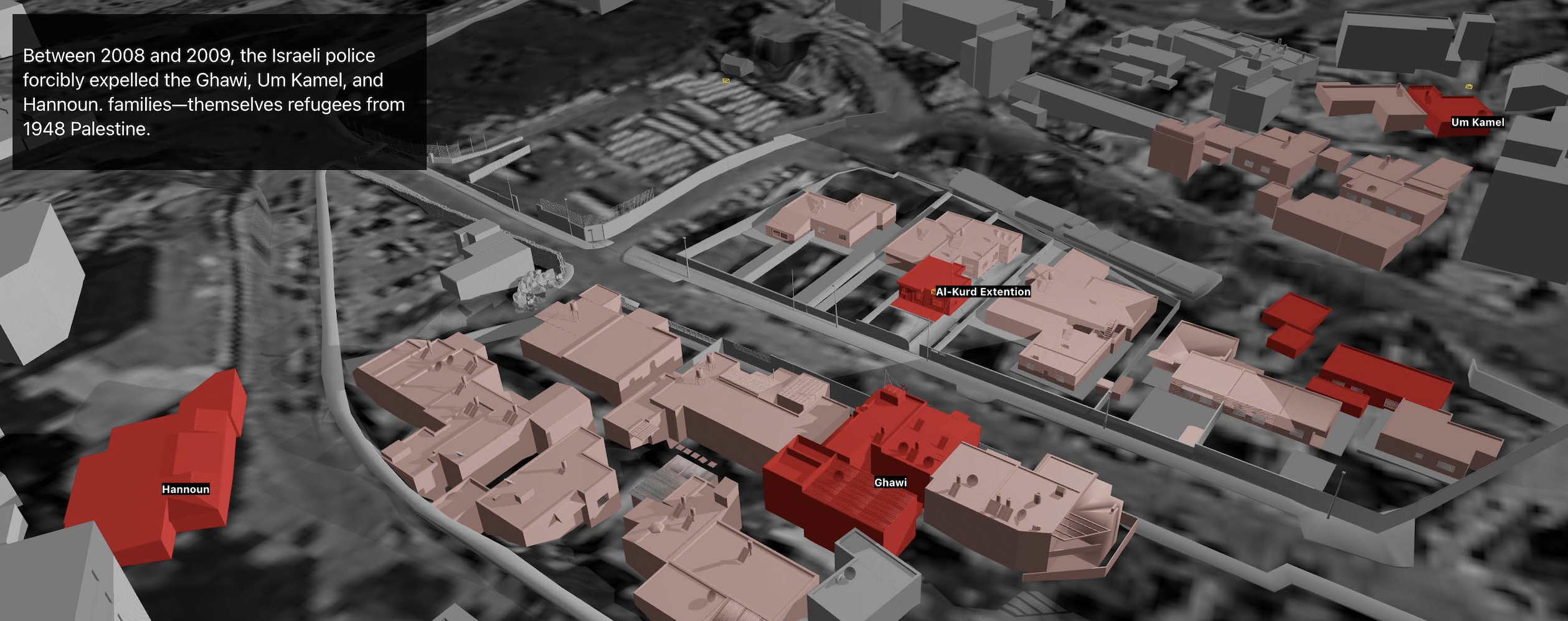
Sheikh Jarrah: Ethnic cleansing in Jerusalem
A single line can be drawn from the Kurd family home in Sheikh Jarrah to every corner of Palestine
Q&A: National Economy Week campaign in Palestine challenges Israeli colonial-economic power
The campaign seeks to challenge monopolistic colonial-economic power
Palestine on strike | Mada live from Gaza
"It’s infuriating to give a child who’s just lost all of their family a rose and ask them to smile"
Your support is the only way to ensure independent, progressive journalism survives.
You have a right to access accurate information, be stimulated by innovative and nuanced reporting, and be moved by compelling storytelling. Subscribe now to become part of the growing community of members who help us maintain our editorial independence.
Join us