
Q&A: National Economy Week campaign in Palestine challenges Israeli colonial-economic power
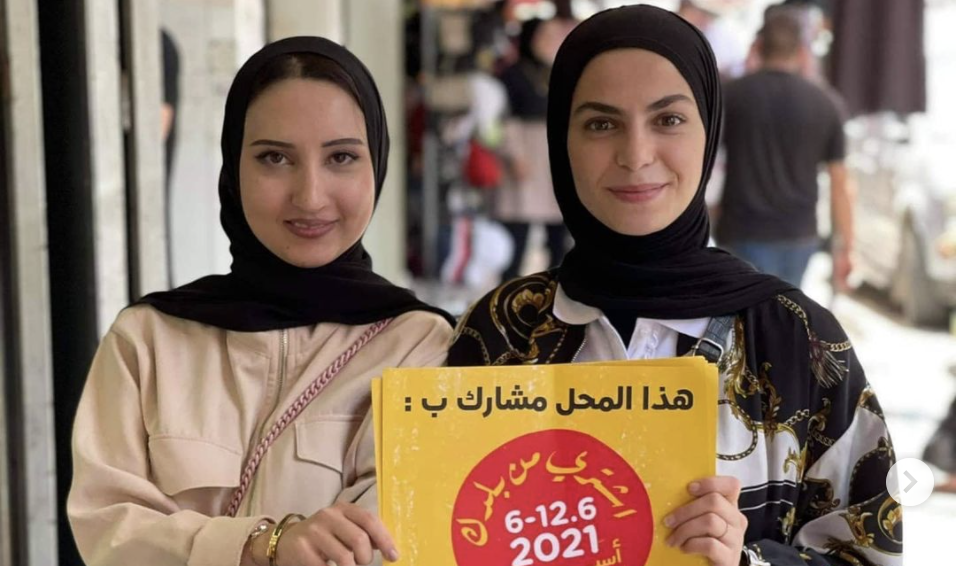
Over the past week, a grassroots campaign encouraging Palestinians to boycott Israeli products and buy Palestinian ones took place across historic Palestine.
Dubbed “National Economy Week” — or “Palestine Economic Week” in English — and officially held between June 6 and June 12, the campaign included events such as bazaars, farmers’ markets and lectures inviting people to support Palestinian products and businesses. On Sunday, Israeli occupation authorities banned a bazaar planned in the Jerusalem neighborhood of Beit Hanina as part of the campaign.
To learn more about the campaign and strategies to decolonize the Palestinian economy, we spoke to Dr. Amal Nazzal, an assistant professor at the Business and Economics Faculty at Birzeit University, Palestine.
Mada Masr: What are the main ideas behind this campaign, how did it come about, who is taking part in it and what is it trying to achieve?
Amal Nazzal: On June 6, Palestinians began the first “National Economic Week” — a campaign to boycott Israel and promote Palestinian businesses. The main ideas behind this campaign, which was mobilized by activists in Palestine, are to boycott the Israeli products and support small Palestinian businesses and local Palestinian production sectors, to challenge monopolistic colonial-economic power. Moreover, for the first time, this campaign of activism is being coordinated and carried out in locations across historic Palestine.
MM: Explain what kind of control Israel has over the Palestinian economy in terms of goods on the market and how a campaign like this works. What kinds of alternative products can be bought?
Israel’s colonization project has been colonizing and dominating Palestinian land, forests, air, and natural resources. Palestinian lands occupied in 1948 are under complete Israeli control, and in the West Bank, Israeli settlements constitute 42 percent of the geographic area, an area that includes 87 percent of the West Bank's natural resources, 90 percent of its forests, and 49 percent of its roads. Moreover, the Palestinian market in the West Bank is the second-largest market for Israeli products after the United States, with exports amounting to more than $4.4 billion annually. It is important to raise awareness to the fact that 53 percent of the Israeli products that we consume in the West Bank can be easily replaced with Palestinian products, such as dairy products, chocolate, ice cream, and other household products.
MM: Explain what the Paris Protocol is and what effect it has had on the Palestinian economy.
AN: The Paris Protocol is an agreement between Israel and the Palestinian Liberation Organization, signed on April 29, 1994, to govern Palestinian economic relations with Israel. Research data shows that the structure of the Palestinian economy has significantly deteriorated over the last 20 years, and one of the major causes is the Paris Protocol. In fact, the economy has been de-industrialized, with the share of the manufacturing sector dropping from 18 percent of economic output in 1995 to 12 percent now. The size of the agricultural sector in Palestine has also been severely affected, with 80 percent of the fruits and vegetables being consumed in the Palestinian market being exported from various Israeli suppliers.
MM: What are the different challenges to this campaign in different areas of Palestine, in 48, 67,and Gaza?
AN: As mentioned above, in the West Bank, Israeli settlements constitute 42 percent of the geographic area of the West Bank, an area that includes 87 percent of the West Bank's natural resources, 90 percent of its forests, and 49 percent of its roads. Therefore, there is a high degree of domination over different resources, in addition to the Paris Protocol and its restrictions on trading, exports, and imports. In Gaza, the siege that began in 2007 and continues to this day — where the Israeli occupation controls the borders and Gaza port — means that all the exports and imports of the Gaza Strip are under strict restrictions and surveillance.
One of the most promising features of this week of activism is the participation of Palestinians within the lands occupied in 1948. It has long been assumed by many that Palestinians living inside the Israeli apartheid system have an inherently weaker capacity or ability to mobilize around and make an impact through economic-political activism. However, such assumptions are now being slowly but steadily undermined. Those Palestinians, who suffer from Israel’s policies of segregation and ethnonational discrimination as second-class citizens, are faced with a particularly challenging context for boycott activism — but it is still possible.
MM: What are the parallels with the Boycott, Divestment and Sanctions (BDS) movement and how can people in solidarity outside Palestine take part?
AN: The BDS calls to boycott Israeli products intersect with National Economic Week for sure. While the core message is not new, what is distinctive here is a campaign of activism that spread in locations across historic Palestine. It has long been assumed that Palestinians living inside the apartheid system have an inherently weaker capacity to mobilize. But National Economic Week is educating Palestinians about the importance, and feasibility, of boycotting Israeli goods from the inside to corrode colonial-economic structures.
People in solidarity outside Palestine could speak about the National Economic Week over social media, to their friends and families, at their universities and communities. Moreover, they can also boycott international companies that support Israel and its military, like HP and Puma.

تقارير ذات صلة
What now? A changed struggle, and motherhood in an uprising
She texted a sort of proverb: “Having kids brings cowardliness.” And it’s true, I have to say.
Palestine on strike | Mada live from Gaza
"It’s infuriating to give a child who’s just lost all of their family a rose and ask them to smile"
Palestine on strike | Mada live from Lydd
"The political leaders within the post-‘48 borders, well, they’re not really leaders"
Your support is the only way to ensure independent, progressive journalism survives.
You have a right to access accurate information, be stimulated by innovative and nuanced reporting, and be moved by compelling storytelling. Subscribe now to become part of the growing community of members who help us maintain our editorial independence.
Join us