
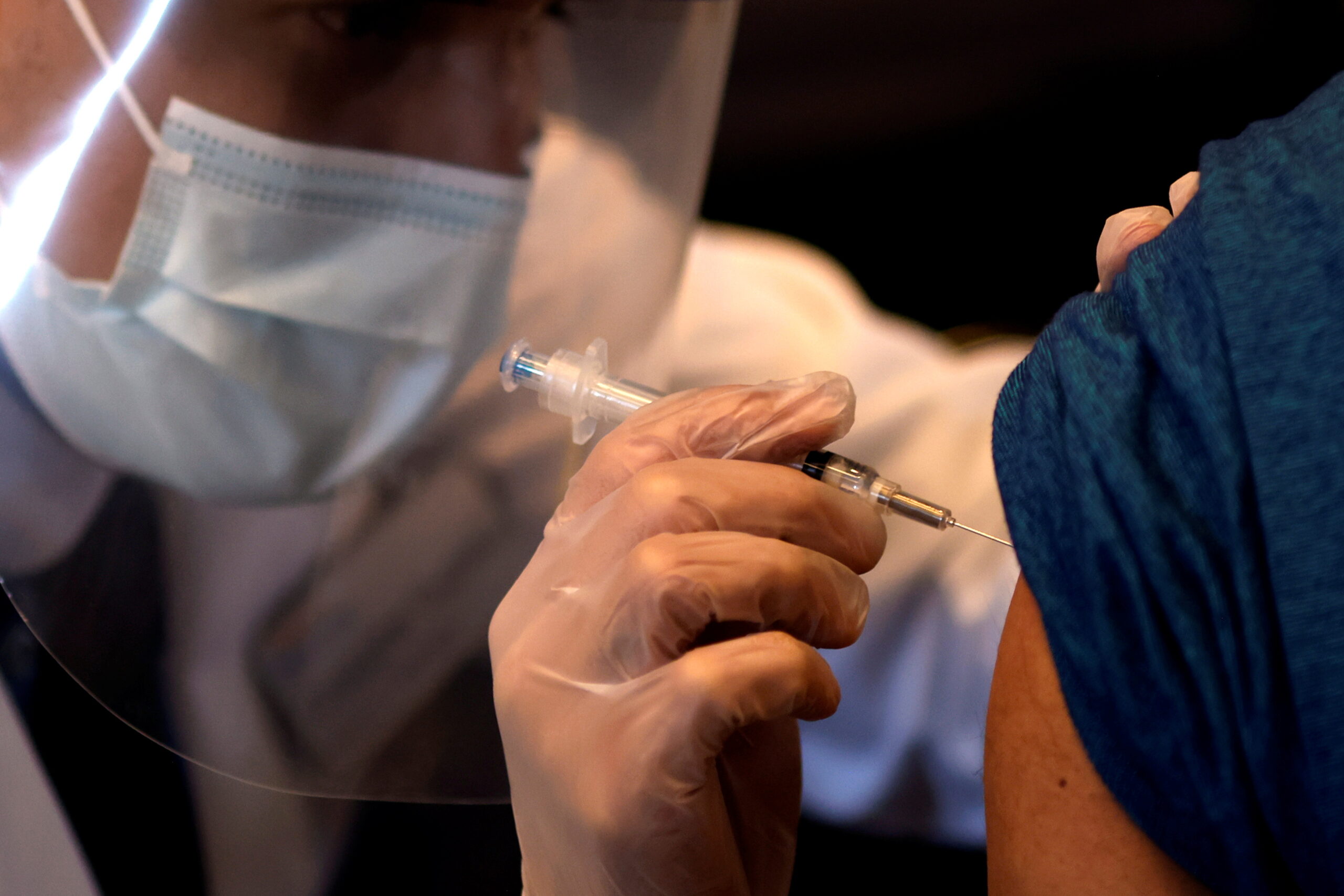
Vaccines and intellectual property: Some things we need to know
We need to have at least 70 percent of the population vaccinated in order to break the chain of the COVID-19 pandemic, according to various estimates. To date, around 24 percent of the world population has been fully vaccinated, but in low-income countries, that number is only 1.3 percent, according to the Our World in Data project at the University of Oxford.
Twenty-five vaccines around the world have reached phase 3 clinical trials, which involve a testing pool of thousands to ensure efficacy. Production of the vaccine is heavily concentrated, making it difficult to scale up, while demand is unmet, causing what was coined by KM Gopakumar, a legal advisor and senior researcher for the Third World Network as an “artificial vaccine famine.”
Here are some questions that Gopakumar and other sources helped us to address in terms of the global barriers to the widespread production of COVID-19 vaccines.
What types of intellectual property protection exists in the pharmaceuticals’ world?
The World Trade Organization’s Agreement on Trade-Related Aspects of Intellectual Property Rights (TRIPS), which has been in place since 1995, is a comprehensive multilateral agreement on intellectual property. It obligates all the member states to provide a minimum standard of protection and enforcement of different types of intellectual property (IP) such as trademarks, copyrights, patents, trade secrets, etc.
Medical products are protected by multiple property rights such as patents, trademarks and trade secrets, which represent the know-how behind the manufacturing of vaccines and bio-therapeutics. All of these would need to be waived by the originator in order for a local producer to be able to manufacture a vaccine.
Obligations on IP protection and enforcement in the trade agreements go beyond the TRIPS to include elements such as long durations of the patents as well as level of data exclusivity. These additional measures have been referred to as TRIPS+.
Compulsory licenses represent an important public interest protection mechanism in TRIPS. How does it work?
A compulsory license gives governments the right to overcome intellectual property barriers and hence to provide the legal freedom for different companies to manufacture a drug if they have the capacity. Specifically, it allows governments to permit a third party to make use of patented inventions. Compulsory licenses represent one of the flexibilities embedded in the TRIPS Agreement.
TRIPS provides the freedom for WTO members to decide the grounds for granting compulsory licenses. Various governments in the past have resorted to compulsory licenses to ensure the availability and affordability of medications, especially those for HIV and tuberculosis. Countries like India have used the lack of reasonably priced medicines as grounds for issuing compulsory licenses.
However, both multinational pharmaceuticals and developed countries put pressure on developing countries not to issue compulsory licenses. For one, compulsory licenses have not been issued by many developing countries during the pandemic.
Further, the issuance of compulsory licenses involves many procedures at the national level. When it comes to vaccines, compulsory licenses of patents alone cannot facilitate availability because marketing approval requires access to the know-how of the originator, which is protected as a trade secret. Currently, there is no compulsory license mechanism in the trade secret laws of most countries. This is why there is a need to go beyond the mainstream understanding of TRIPS flexibilities to provide access to health products during the pandemic.
Technology transfer is particularly key to the local production of a vaccine, as opposed to the waiver of intellectual property rights, since vaccines are different than regular chemical drugs. How so?
As mentioned above, even if there is no patent, when it comes to the manufacturing process of a generic vaccine, there is a burden of proving safety and efficacy. The difference in the manufacturing process of the vaccine may have implications on the efficacy of the generic vaccine. The manufacturing process of the originator’s vaccine is protected as a trade secret. So, even if patents are bypassed, there remains the challenge of trade secrets.
Producing international vaccines locally is different from regular drugs. In the case of vaccines, there is an additional burden of proving safety and efficacy. The regulatory agencies will insist that the generic vaccine producer proves the efficacy of the manufactured vaccine because as a biological product, there are living organisms involved. For regular chemical drugs — unlike vaccines — local manufacturers aren’t asked by the regulators if they followed the originator’s manufacturing process.
Proving the vaccine’s efficacy happens through clinical trials. So, even if the patent is waived, you have to negotiate the barriers of trade secrets, or otherwise produce your own clinical trials. Hence, a company that has technological capabilities cannot copy the vaccine technology unless they have the resources to carry out clinical trials.
There is a lack of clarity with regard to the flexibility mentioned in the TRIPS agreement with regards to trade secrets and whether the trade secrets related to the manufacturing of a vaccine can be shared with a generic company because it is in the public interest.
Isn’t the problem also that universities, like Oxford’s Jen Institute, are licensing their research exclusively to pharmaceutical companies like AstraZeneca, instead of availing it openly? Or that the research isn’t happening in universities in the first place?
The base technology is normally developed within universities or even small-scale research and development companies. This is what happened with the vaccines of Pfizer and Moderna, for example, whose foundational technology was licensed from the University of Pennsylvania, where research and development for mRNA solutions has been happening since 2005. This patent-protected technology is then licensed to big pharmaceuticals as they have the capabilities to further develop the technology and turn it into a product for distribution and consumption. In May, Nature published a network analysis of COVID-19 mRNA vaccine patents, and concluded that while the foundational technology is developed by academic labs, and while its further development and commercialization is made possible through licensing to large pharmaceuticals, the latter’s control through IP patents and trade secrets impedes future and possible research and development.
Egypt has successful experience producing generic cures for the highly prevalent hepatitis C infection. What is it?
Several pharmaceuticals produced generic cures for hepatitis C, in order to avail an alternative to the US-imported and expensive cure, produced by the American pharmaceutical Gilead Sciences, to whom Egypt refused to grant patent protection. For example, the Egyptian pharmaceutical firm Pharco looked into a cure by combining two antivirals, one non-patented and the other licensed through a San Francisco-based pharmaceutical called Presidio. The resulting treatments from local manufacturers succeeded in lowering the price of imported hepatitis C treatments considerably, and together with a national campaign, managed to significantly drop hepatitis C infections, one of the highest in the world. The story has been held as an Egyptian success in countering epidemics.
What about the current vaccines being manufactured locally in Egypt?
The Egyptian pharmaceutical Minapharm, which has developed know-how in biotechnology since 2020, has signed a technological transfer agreement with the manufacturer of the Russian Sputnik V vaccine, which is being marketed for by the Russian Direct Investment Fund. The project consists of a process that should translate to manufacturing the vaccine from the cell line to the finished product, including optimization of some steps.
Egypt has also a "fill and finish agreement" with Chinese manufacturers to avail the COVID-19 vaccine made by the private Chinese firm Sinovac, according to two government health officials who spoke to Mada Masr.
What kind of actions have been initiated to confront the TRIPS and FTAs regimes?
There was a submission by India and South Africa in October 2020 to the WTO, supported by the African group, which Egypt is part of, to waive some of the provisions of the TRIPS agreement. These include patents, trade secrets, copyright and industrial designs. By June 2021, the WTO Council agreed with consensus to embark in negotiations to address the submission. This negotiation has not produced a result till date because three WTO members; namely the European Union, the United Kingdom and Switzerland are challenging a potential resolution. The EU is doing so even after the adoption of a resolution in the EU parliament to support the waiver.
Meanwhile, civil society, locally and internationally, have been making similar calls to waive some of the TRIPS provisions.
What are the ways out?
Invoking compulsory licenses and TRIPS waivers, whereby certain protections are suspended, are agreed upon as an important leeway to spreading out the vaccines manufacturing and distribution. Additionally, and importantly, regulators can lift trade secrets in order to allow technological transfers so that local manufacturers don’t have to reinvent the wheel.
Further, the WHO is expected to accelerate its work to develop and finalize immune correlates of protection (ICPs) for COVID-19 vaccines. ICPs, which define the immune response a vaccine needs to trigger in order to prevent future infection, could remove the need for efficacy trials and could accelerate local production of COVID-19 vaccines.
Additionally, Progressive International, an international organization convening left-wing activists and governments, organized a summit on vaccine internationalism in June and came out with some proposals.
One solution proposed by Progressive International is that different countries share regulatory capacity and evaluation data in order to approve different COVID-19 vaccines.
But besides international vaccine recognition, another solution drafted by Progressive International includes pooling manufacturing capacity to ramp up vaccine production, especially by countries with considerable production capability, such as Argentina, Mexico and Venezuela. Collaboration on technology sharing, clinical trials and licensing between these countries is key, according to the group's report on the summit.
Additionally, the Progressive International summit participants pointed to the importance of availing locally produced vaccines at affordable prices to other countries, especially in light of multinational pharmaceuticals making profits and engaging in price gouging, with countries paying different prices for the same vaccines.

تقارير ذات صلة

Devaluation drama and hot money’s return: What happened with the pound’s historic plummet?
'As long as there is more demand than supply, the price of the pound will continue to decrease.'
Q&A: Egypt’s emissions, the environment, and the relationship between air pollution and COVID-19
The loudest voices in this area are not those of environmental scientists, but of investors

Q&A with anthropology professor Hania Sholkamy | On the need to rethink social spending as crisis response after COVID-19
The pandemic exposed flaws in the way social protection is thought about in Egypt
Your support is the only way to ensure independent, progressive journalism survives.
You have a right to access accurate information, be stimulated by innovative and nuanced reporting, and be moved by compelling storytelling. Subscribe now to become part of the growing community of members who help us maintain our editorial independence.
Join us