
The rise and fall of Egypt’s top pharmaceutical chain
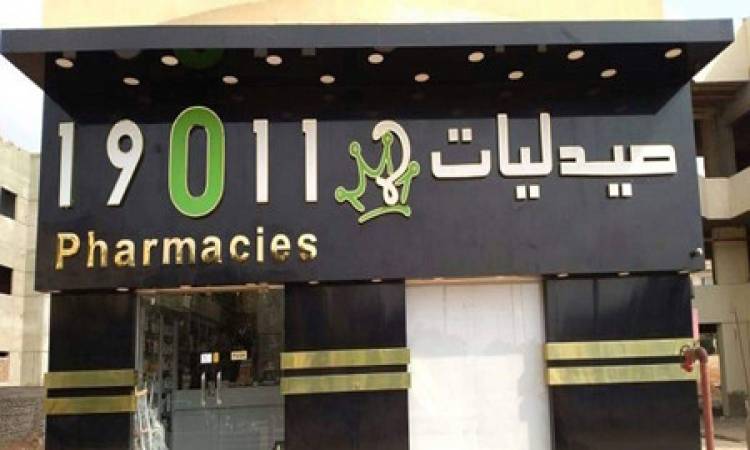
A little over a year ago, a new pharmacy chain became the topic of a national controversy. Named for its hotline, 19011, the pharmacy chain had grown rapidly in a short period of time to become the largest player in the market — yet rumors swirled that the supposedly independent company was in fact backed by the state.
A number of circumstances and conspiracy theories fueled the idea. The military and intelligence services had already become major players in other industries, including media and natural gas, and 19011’s phenomenal success was widely seen as evidence of a state actor’s involvement. More pointedly, as 19011 was expanding, the company’s top two competitors, El Ezaby and Roshdy, were dropped by the Health Ministry as registered pharmacies. To top it off, one of 19011’s owners was named Mahmoud Abdel Fattah al-Sisi — the same exact name as the president’s son — and the company’s name was linked to the president’s birthday, November 19
The rumors prompted the Armed Forces to issue a statement in August 2019 officially denying that it owned any pharmaceutical chains. A month later, the controversy came to a head when prominent talk show host Amr Adib interviewed three of the chain’s owners on his program to address the growing rumors and to explain the reasons for the company’s explosive rise. In the interview, the owners categorically denied any connection to any state body and attributed their success simply to hard work and business acumen. On the show, Adib displayed a copy of the company’s commercial registration along with other paperwork as evidence that 19011 had no affiliation with the state. The owners also told Adib that Sisi would stop signing company checks in an effort to quell the misunderstanding.
The owners painted a simpler picture of the company’s success: smart businessmen determined to enter the pharmaceutical retail market employed a diverse array of marketing strategies — such as the chain’s unusual name, constant product promotions, and fast delivery service — and succeeded in taking the industry by storm in a short amount of time. “This is an Egyptian marvel, the likes of which will be difficult to repeat,” one of the owners told Adib.
Yet less than a year after the televised interview, the entire enterprise began to crumble. 19011’s liquidity dried up, pharmaceutical companies stopped supplying them, they were hounded by creditors, and workers began protesting delays in wage payments.
Mada Masr spoke to multiple sources in the company and the pharmaceutical industry to investigate the spectacular rise and fall of 19011. They describe gross mismanagement practices, overly aggressive expansion and highly risky cash flow maneuvers that have brought the company to the brink of collapse, offering a window into the business environment of a vital sector of the economy.

The pharmaceutical retail market in Egypt is primarily made up of small, individually owned pharmacies. Under the law regulating the pharmaceutical industry, each pharmacist is allowed to own no more than two pharmacies as a way to protect the market against monopolization.
Yet a new pattern has emerged over the past two decades whereby pharmacy chains — most prominently El Ezaby and Roshdy, among others — incorporate themselves as pharmacy management companies. Pharmacists are then contracted to register individual pharmacies under their names in exchange for a fixed monthly sum. (For example, any given El Ezaby store bearing the chain’s brand name is not in fact legally owned by the El Ezaby company.) The Pharmacists’ Syndicate has repeatedly protested this highly controversial practice as nothing more than a technical loophole to sidestep the law. Pharmacy chains argue that they are doing nothing illegal, as their involvement is limited to providing administrative services in exchange for a percentage of profits. Despite several judicial rulings, the issue has yet to be resolved.
This was the climate in which Alpha Pharmaceutical Management Group, which owns the 19011 chain, entered the market. According to records in the commercial register, Alpha was registered in 2016 as a pharmacy management company. The chairman of the board, Ahmed al-Ansary, said in a press interview in late 2019 that the company had first started out as a partnership between seven pharmacists who owned their own pharmacies. The company had a “quiet start,” as Ansary describes it, with just 10 stores in early 2017. By the end of the year, the number of stores had doubled to 20 pharmacies. This was all prior to what Ansary calls the “great growth period.”
Expansion became the company’s primary goal. The turning point came in 2018 when 19011 formulated a growth strategy and put together a series of task forces aimed at expanding into various governorates across the country, according to Ansary.
By early 2019, the chain had grabbed the public’s attention and developed a national brand. 19011 pharmacies were constantly offering promotional deals in the form of discounts and gifts, billboard advertisements flooded the streets of major cities, and TV commercials hosted by celebrities extolled “Egypt’s best pharmacy.”
[wonderplugin_video iframe="https://www.youtube.com/watch?v=9pd27txdC-o" lightbox=0 lightboxsize=1 lightboxwidth=960 lightboxheight=540 autoopen=0 autoopendelay=0 autoclose=0 lightboxtitle="" lightboxgroup="" lightboxshownavigation=0 showimage="" lightboxoptions="" videowidth=800 videoheight=400 keepaspectratio=1 autoplay=0 loop=0 videocss="position:relative;display:block;background-color:#000;overflow:hidden;max-width:100%;margin:0 auto;" playbutton="https://www.madamasr.com/wp-content/plugins/wonderplugin-video-embed/engine/playvideo-64-64-0.png"]
The owners continued on their strategy of aggressive expansion, acquiring another pharmacy chain, AI Image, in March 2019 for an undisclosed amount. This was followed by a massive acquisition in April 2020, when 19011 bought one of its chief rivals, Roshdy, for LE362 million, making it the largest acquisition in the history of the pharmaceutical retail market. 19011 had now established itself as the country’s largest pharmaceutical chain, with over 300 stores.
The company embarked on this aggressive expansion strategy by taking out loans using the newly contracted pharmacies as collateral. The loans are then used to purchase supplies from importers — thus enabling a further round of expansion, according to an employee in the company’s human resources division and a pharmacist who works at one of the branches, both of whom spoke to Mada Masr on condition of anonymity. 19011 was also offering record-high monthly sums to contracted pharmacies in order to grab up branches in prime locations.
However, according to several members of the pharmaceutical industry, the Roshdy deal marked the beginning of the end — primarily because that was when the new chain started “offloading,” a common industry practice, on a large scale.
The president of a rival pharmaceutical chain explained the practice to Mada Masr: A pharmacy chain would purchase goods from a supplier on credit — for example, LE100 million worth of medication, payable in six months. In reality, the chain may not need this much inventory, as its operational needs only amount to LE20 million in goods. What happens to the remaining LE 80 million worth of products? They get “dumped in storage,” meaning they are sold to a pharmaceutical storage facility at a discount.
The chain uses the cash from the sale to fund its operational costs or it invests the money in ventures with a relatively high rate of return, such as the stock market or real estate, to offset the losses from offloading and selling at a discount. When the payment to the supplier is due, the company uses either the profit from investments or simply dumps more product, in an ongoing cycle.
19011 has resorted to offloading both to cover its operational costs and to fund the acquisition of new pharmacies, according to six current and former 19011 employees.
Offloading is a common but highly risky practice in the pharmaceutical market, according to the president of the rival chain, as it creates a precarious cash flow structure. Sources say the practice was one of the primary factors behind 19011’s downfall, particularly following the Roshdy acquisition. But sources unanimously also point to the mismanagement of the chain’s operations, which they say was disorganized and haphazard to an unprecedented degree for a large market player in the pharmaceutical retail industry.
A former senior employee in Roshdy’s warehouse division responsible for procuring shipments from suppliers and allocating inventory based on demand at each location, who went on to work at 19011 following the acquisition, described to Mada Masr how the style of management completely changed after the deal. “My job was to facilitate the transfer of data from Roshdy’s system to 19011’s,” he says. He first met Sisi a few days after the sale was concluded and explained that the transition required no less than four months to complete properly, but Sisi demanded he get it done within one month. The employee tried in vain to stress the importance of the task at hand and the risk of losing millions if the product codes were inaccurately logged, but Sisi dismissed his concerns. “What are you so worked up about?” Sisi reportedly told him. “Nothing can possibly be that catastrophic.”

As soon as he had completed the task two months later, and anticipating an imminent collapse, the senior employee resigned from his post. He says that in the two months he spent working on the transition, he witnessed a haphazard approach to management that he had never seen before in his years-long career in the pharmaceutical industry. Typically, when medications and cosmetic products are delivered to the warehouse, a review and classification process takes place. “A shipment has to be examined to make sure it is in proper condition and the quantities are right. Items are then logged on a digital system. This takes at least five days,” he says. The goods are then distributed to branches based on an analysis prepared by senior warehouse officials based on each location’s sales numbers and an assessment of their inventory needs.
But the situation at 19011 was drastically different. “They were handling the medications and products as if they were a shipment of sand,” he said. Ahmed al-Naggar — a founding member of 19011, the company’s primary legal representative in management and a key member of the team that handled the Roshdy acquisition — decided to have goods distributed to branches around the country on the same day they arrived at the main warehouse, the employee says, leaving senior warehouse employees unable to follow the regular protocols.
Naggar also mandated that deliveries to branches be recorded “manually,” without logging the data and inventories on the company’s system. “He would tell me to jot down the items delivered to each pharmacy on a piece of paper to be sorted and uploaded onto the system sometime later,” the former senior employee said.
He recalls an incident where a new shipment was delivered to the main warehouse in May, shortly before promotions were scheduled for Eid al-Fitr. Naggar called him to object to the weighted distribution of goods, with some branches receiving fewer stocks than others depending on their needs — a standard practice. Instead, he ordered the employee to over-allocate quantities to branches.
“If a given pharmacy typically sells 10 of a certain item, why should I give them 100? This is just money sitting on the shelf. The right thing to do is to send the extra products to a pharmacy with higher sales in order to generate more revenue,” the former senior employee says.
The new policy did in fact end up causing stock to pile up at various locations, prompting management to form a committee to take inventory and clear the extra products after the Ramadan and Eid season. One committee member tells Mada Masr that excess supplies worth LE1.5 million were found at four pharmacies alone.
Similar blunders continued to occur for several months after that. The committee’s latest inventory, conducted on the branch in Cairo Festival City Mall in November before it was shut down, found that LE2.7 million worth of items were in stock, even though there was only LE1.6 million worth recorded on the books. “These could have been easily stolen from the pharmacy and nobody would have been the wiser,” the committee member says.
“The accounting was abysmal,” the former senior employee says. “The way they acted and how careless they were, you never would have thought it was their own money.”
Management’s failures were not confined to issues of finance. Hiring and staff practices were also rife with problems. Several current employees point to overstaffing issues as 19011’s acquisition spree continued, with employees poorly distributed between locations. Issues of nepotism also came into play as family and friends of senior management with little experience were hired, burdening the company with employees paid above average industry wages and placed in unnecessary jobs. “A warehouse that could be run by 15 employees would be staffed with 50 people,” says the former senior employee.
The committee member reports that he started working on inventory immediately after his job interview. “Their last question was, ‘Do you have a suitcase? Good, because you’re going to Alexandria,’” he says, adding that he hadn’t even finished his official paperwork before he began. The warehouse manager says that several people who had been fired from Roshdy for financial misconduct were hired by 19011, with some being appointed to more senior positions than before.
The lack of a robust oversight system also left the company vulnerable to theft and embezzlement by workers at its branches. The committee member says that during a random inventory check on two brands of a particular medicine at a location in Imbaba, he discovered a deficit of LE53,000. “This is a strikingly high figure considering that only two types of items from each category were surveyed. What would we find if we ran a comprehensive inventory of the pharmacy’s entire stock?”
Mada Masr reached out to several of the owners for an interview but received no response. And while the managing director of 19011, Akram al-Zoghby, did reply and repeatedly assured us he would respond to our questions, we had received no comment from him before press time.

Alongside its chaotic management practices, 19011 continued its cycle of offloading, expansion, loans and more expansion — until the coronavirus pandemic brought it all to a standstill.
The president of the rival chain says that the outbreak of the virus in Egypt and the ensuing government-imposed curfew in March 2020 led to a steep decline in sales. The economic downturn and general uncertainty prompted some pharmaceutical storage facilities to put a halt on purchasing additional products until their stocks ran out. As its primary generator of cash flow disappeared, 19011 began to fall behind on its payments to suppliers, prompting suppliers to refuse to provide any more shipments to 19011 until they paid their dues, which led to a severe inventory shortage.
One pharmacist who joined the company early on as a call center representative says that shortages at 19011 branches intensified after the acquisition of Roshdy and the economic downturn brought about by the pandemic. “On the Facebook page and on street billboards, they kept promoting things that weren’t even in stock,” the pharmacist tells Mada Masr.
The combination of poor management, overstaffing, inflated rents and a sudden liquidity crisis threatened to bring down the entire company. According to the employee in the company’s human resources division, management was intent on preventing its new cash flow issues from affecting operations and undermining the company’s reputation. They looked first to cut wages, opting to temporarily withhold salaries to management and administrative staff but to continue paying branch and call center employees on time. However, the move could not cover the deficit for long.
Sara Aly, a pharmacist who worked at the Roshdy call center and remained on with 19011 after the acquisition, says that as the company’s financial situation grew more dire, employees’ salaries were increasingly delayed. Initially, delays were limited to a few days, but by July the company was three months behind. Monthly wage payments were also being made in installments, with up to eight payments per month, according to Aly.
In November, a group of employees staged a small demonstration outside the company headquarters in the Haram district in Giza to protest the wage delays, according to several sources. The discontent has only grown since then. Warehouse employees last month staged a sit-in outside the company headquarters and declared their intention to remain until their overdue wages were paid. Management responded with violence, according to the employee in the human resources division, deploying bodyguards who clashed with the crowd, one of whom threatened the workers with a gun to disperse the sit-in.
With few solutions to 19011’s growing financial troubles, the company was forced to shut down dozens of locations around the country and to downsize employees at its remaining branches as well as some administrative staff. Each branch is now required to cover its own rent and part of its workers' salaries based on sales, according to the human resources employee.
Amid the growing shortage of workers, management held a meeting with administrative staff at its headquarters late last month and called on them to be reassigned to work in a number of understaffed branches, but the employees refused.
Meanwhile, all but one supplier refused to furnish 19011 with new inventory. The only supplier willing to deal with the company is demanding payment on delivery, according to the human resources employee. Some suppliers have also now initiated legal proceedings against 19011 for overdue payments. One supplier, Ramco Pharm, won several court rulings against Naggar — as the company’s legal representative — with sentences totaling 100 years in prison for bouncing checks worth LE50 million, according to a well-informed source within the supplier.
Several sources believe the only way out of the crisis would be for another company with enough liquidity to acquire 19011. According to the news outlet Cairo24, the United Company of Pharmacists has been in talks to acquire 50 percent of 19011, though this was later denied by UCP.
The president of the rival chain tells Mada Masr that he still hopes an acquisition is possible. He fears that 19011’s debt obligations to suppliers — which run to the hundreds of millions — pose a threat to the entire pharmaceutical retail market, as it may hinder suppliers’ ability to purchase from pharmaceutical manufacturers, potentially forcing them to halt their operations.


تقارير ذات صلة

Egypt’s auto market: From liberalization to iron-grip monopolies
The government’s policies and the erratic execution of its decisions have fueled frustration
Splitting the pharmacy pie: How the El Ezaby-sovereign fund deal will usher in new monopolistic player
The move will see El Ezaby, Egypt's largest pharmacy chain, expand twofold within two years
Big fish in a shrinking pond: How an Armed Forces company is building a fish farming monopoly
“My whole family worked in the fish farming field. I was born and raised on this land”
Your support is the only way to ensure independent, progressive journalism survives.
You have a right to access accurate information, be stimulated by innovative and nuanced reporting, and be moved by compelling storytelling. Subscribe now to become part of the growing community of members who help us maintain our editorial independence.
Join us