
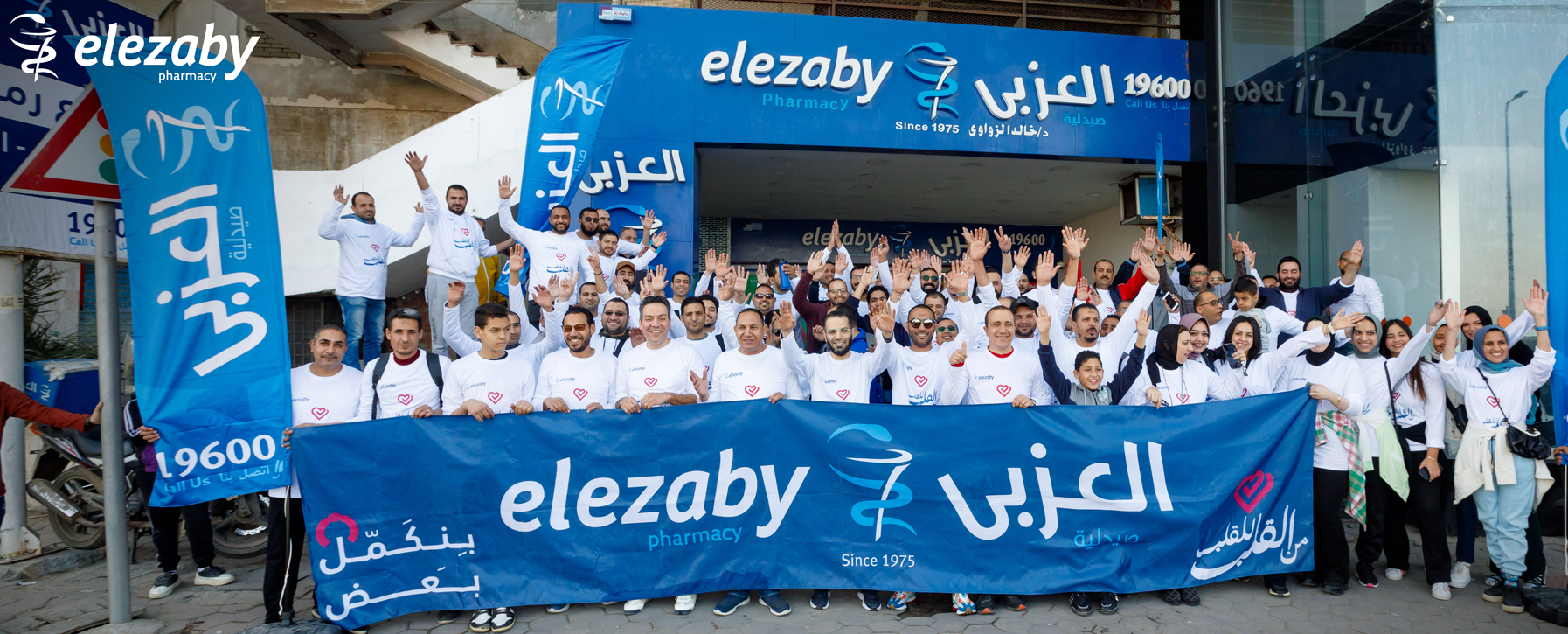
Splitting the pharmacy pie: How the El Ezaby-sovereign fund deal will usher in new monopolistic player
The Sovereign Fund of Egypt announced a partnership with B Investments and El Ezaby Pharmacy on Monday to establish a new pharmaceutical company named EZ International which would “provide logistical and administrative services to pharmaceutical institutions, distribution, and medicinal trade.”
The deal will see El Ezaby’s already sizable footprint in Egypt’s pharmaceutical sector expand twofold, a fact that prompted sources who spoke to Mada Masr to express fear that the deal will increase the "monopolistic" situation of the pharmaceutical sector.
The formal announcement of the agreement did not include many details regarding the government's partnership with El Ezaby, and came somewhat as a surprise especially as it is the first partnership that the sovereign fund has formed with a domestic private company working in the pharmaceutical sector, a sector that was not on the declared list of government priorities.
According to the state’s plan to rearticulate its role in the economy, the government aimed to deepen its investments in the health sector, specifically hospitals, laboratories and healthcare centers. As for medicine, the government expressed an intention to inject massive investments into vaccine manufacturing and the provision of raw chemicals, hardware and medical supplies industries. There was no reference to the pharmaceutical sector.
For Tharwat Haggag, a member of the Pharmacists Syndicate, plenty of ambiguity surrounds the new contract, starting from the sovereign fund’s statement, which did not clarify the company’s ownership structure, the role it will play in the pharmaceutical market, or even the state's primary objective of partnering with the private sector in this vital sector in which the volume of the trade exceeds LE130 billion, according to the official statement announcing the deal.
Part of the ambiguity that Haggag pointed to could be seen on Monday evening during an interview with the owner of the pharmacy chain, Ahmed El Ezaby, on the primetime talk show Al-Hekaya (The Story). During the interview, Ezaby said that the sovereign fund, together with the B Investments, had become a 49 percent shareholder and partner in the new company. Meanwhile, Ezaby was set to own the remaining shares, giving its namesake a majority stake and preserving his role as chairman.
But Ezaby will not, in fact, remain alone in his control of this new venture. A legal adviser to the Sovereign Fund of Egypt who spoke to Mada Masr on condition of anonymity said that the new company’s board of directors will include El Ezaby Pharmacy CEO Ahmed al-Sadati, along with two members of B Investments, Hazem Barakat and Omar al-Labban.
B Investments is an investment fund founded in 2005 and listed on the Egyptian Exchange in 2015. Its ownership structure is spread among individuals and institutions including businessman Samih Sawiris, the European Investment Bank, the Egyptian Endowments Authority and the Emirati Rimco Investments.
"My goal is to leave behind an institutional entity to be inherited by upcoming generations when I die," Ezaby said in his interview, adding that the new company would have a capital of about LE1.2 billion, while the two funds will bring LE500 million into the company's pharmacies, to increase its number to 600 instead of about 300 pharmacies.
Legality
Several sources shared concerns about the legality of El Ezaby partnering with the Egyptian government, in light of a series of criminal charges that have been leveled at the owner of the pharmacy related to the violation of the 2019 pharmacy law and unpaid debt.
Haggag pointed out that the company’s partnership with the state legalizes an already illegal situation, a criticism shared by the director of Right to Medicine Center Mahmoud Fouad, who described the state's partnership with an illegal entity is "fraudulent."
Haggag and Fouad noted that the pharmacy law prevents one pharmacist from owning more than two pharmacies, a limit that they say Ezaby has exceeded through the establishment of a pharmacy management company.
Ezaby was one of the pharmacy chain owners that had their registration with the Health Ministry permanently canceled in 2019. Ezaby’s membership in the Pharmacists Syndicate was also dropped after several court rulings found the company’s position to be in violation of the pharmacy law, as the company had circumvented the cap on pharmacy ownership by buying and operating other pharmacies that continued to operate under their original registration names. The pharmacists who were involved, in turn, had their registration suspended for one year.
Defenders of the chain’s expansion, such as the head of the Federation of Egypt Chamber of Commerce’s pharmaceutical division Ali Auf, argue that “management” is different from “ownership.”
According to Auf, this technicality meant that the syndicate's decision to suspend Ezaby only affected the pharmacies he directly owns, rather than those he manages.
As for the debt issue, rumors swirled in the press last September that Ezaby had been arrested and had been sentenced to 547 years in prison across numerous financial cases involving Multipharma for Pharmaceuticals and Chemicals.
Ezaby appeared on TV acknowledging that he faced legal trouble regarding around LE300 million in debt owed by the company, but denied that any rulings or prison sentences had been issued against him.
These debts will now be settled with the agreement with the sovereign wealth fund. According to the sovereign fund legal adviser, the new partnership guarantees payment of about LE400 million in Ezaby’s debt.
Haggag wonders whether the partnership deal with the sovereign fund is a means of survival for Ezaby. "Government funding means that the state is betting with people’s money on the success of a failing institution,” he says. Ezaby will either find new ways of profiteering or they will lose the state’s money, Haggag adds. And in both cases, the deal will save him, but at the expense of small pharmacies.
Monopoly
Aside from paying off Ezaby’s debts, there are still concerns that the new partnership would protect the company, overshadowing competitors in the Egyptian market.
The deputy head of the pharmacy owners branch of the Federation of Egypt Chambers of Commerce Ahmed al-Saqqa told Mada Masr that pharmacy owners are concerned by the new deal, since the expansion of EZ International to 600 pharmacies means they will face twice the competition from El Ezaby.
"The total number of pharmacies in Egypt is around 80,000, but El Ezaby Pharmacy is the largest chain, having a significant margin over the second largest chain, Misr Pharmacies, which only has about 50 pharmacies, roughly a fifth of El Ezaby pharmacies. This gap will widen when the deal goes into effect"
“When the new company expands, at whose expense will it be?” Haggag asked. “Will the small pharmacies shut down? Or will El Ezaby buy the other chains even as they are already monopolizing 80 percent of the pharmaceutical market?”
Saqqa also expressed concern over whether El Ezaby would be given preferential treatment from the state-owned Egyptian Pharmaceutical Trading Company after the public-private partnership. The state company is responsible for handling the supply of imported subsidized medicine to pharmacies.
Mohammed al-Saudi, a pharmacy owner, explains that El Ezaby was already pressuring small pharmacies through Multipharma, its drug import and distribution arm, which was an exclusive importer of some drugs not subject to the compulsory pricing on the one hand, and "focused distribution on El Ezaby Pharmacy locations, essentially granting the company a monopoly of certain drugs, thus controlling their price."
According to Saudi, this form of monopolistic practice will only expand given the government's additional support.
Insurance System
As information surrounding the future of the partnership is scarce, sources pointed to other means that could contribute to the new company's profitability, namely the universal health insurance system, which could become a lucrative system after it is adopted in all governorates.
A source in the pharmaceutical sector, who spoke to Mada Masr on the condition of anonymity anticipates that the state is looking to enter the pharmaceutical field at this time in order to gain a foothold in the new health insurance system. “If there is a universal health insurance system, is it easier to contract different pharmacies managed in different ways, or to contract one chain with 600 or more pharmacies?”
Ouf shared this expectation, noting that working under the health insurance system is subject to continued adherence to specific regulations and criteria. This applies to the training of pharmacy workers, storage of medicine, and review of sales, which would be easier to do with one company managing hundreds of pharmacies, rather than following up with tens of thousands of individually owned pharmacies.
For Haggag, however, the excuse is worse than the offense.
“If the problem is in the number of pharmacies, then why not help small pharmacies to work in the health insurance system? Small pharmacies in particular are estimated to cover the entirety of Egypt and to reach places that the large pharmacies are not able to reach.”
The first challenge against the deal came from lawyer Hani Sameh. In a report submitted to the Cabinet to stop the deal, Sameh argued that there is lack of access to information about the deal, as he told Mada Masr, referring to the position of the Pharmacists Syndicate, as well as the absence of oversight mechanisms in the sector.
These oversight mechanisms would be further eroded by the adoption of a law guaranteeing the immunization of state contracts from the jurisdiction of the Egyptian Competition Authority, even though the adoption of amendments to the law governing the authority at the end of last year ostensibly aimed to bolster its control over mergers and acquisitions.
According to an expert on the procedures and legislation aimed at protecting competition protection and preventing monopolistic practices who spoke to Mada Masr on condition of anonymity, “The new texts contained in the amendments have so far been disrupted and the implementation of new law regulations have not been issued, which means that the new deal will not be subject to prior examination.”
According to an expert in the procedures of and legislation for anti-monopolistic practices that spoke to Mada Masr on condition of anonymity, the new articles in the amendments to the ECA law have not been implemented until now per the reasoning that the executive regulations have yet to be issued, which would mean that new deal would not be subject to its statutes.
For his part, Haggag sees the state’s ability to arbitrarily choose which laws to implement might help it in guaranteeing the profitability of the company or giving it preferential treatment, pointing to the Egyptian Drug Authority’s role in ensuring pharmacies adhere to standards set out in law.
“If El Ezaby is in violation of the law, where is this going to go?” asks Haggag. “Is there an inspector at the ECA who will be able to inspect a pharmacy if one of its main shareholders is the Sovereign Fund of Egypt?”
Mohamed Ezz
Mohamed Ezz, an Egyptian photographer and engineer, born in Cairo, Egypt where he currently works. He originally graduated from the Faculty of Engineering, Cairo University in 2007.

تقارير ذات صلة

The protection of competition: A suspended verdict
At times the Egyptian Competition Authority has played an active role in curbing monopolistic practices — but not always.

Imminent Uber-Careem merger to come at the expense of consumers
The ECA announced its intention to act against the companies if a deal to merge is struck

A ‘birth certificate’ for every medicine: Egypt launches drug tracking system, yet gaps remain
Egypt has launched a drug tracking system to curb counterfeit medicines, but is it a silver bullet?
Your support is the only way to ensure independent, progressive journalism survives.
You have a right to access accurate information, be stimulated by innovative and nuanced reporting, and be moved by compelling storytelling. Subscribe now to become part of the growing community of members who help us maintain our editorial independence.
Join us