

The Keys to the Kingdom: A conversation with Hassan Khan
This conversation was first published in Arabic on Ma3azef
Rami Abadir: You’ve recently finished a large-scale project titled The Infinite Hip-Hop Song. Before speaking about this in detail, can you give us a basic idea of what that piece was?
Hassan Khan: I had the basic concept for a very long time: a fantasy of a song that keeps going and never ends. The proper context for its production arose when I was preparing for my exhibition The Keys to the Kingdom at the Reina Sofia in Madrid. The show revolved around the current populist moment and how symbols and forms were able to coalesce power and transform it into meanings and emotions that resonated with the wider public. While working on the show and as different works were developing, I felt the need for a work that was connected to a collective voice, a work that spoke a slightly different language than the other works in the show. At that moment, several threads intertwined: hip-hop and the image or the sense of a constantly transforming non-looping endlessness, an unstoppable never-ending stream coming forth, popular forms in opposition to populist forms. What was new for me was using hip-hop as a medium, though the idea of an endless non-looping song was an old obsession of mine.
RA: You became interested in hip-hop the past few years. What attracted your attention to the form? And what was your relationship to it before?
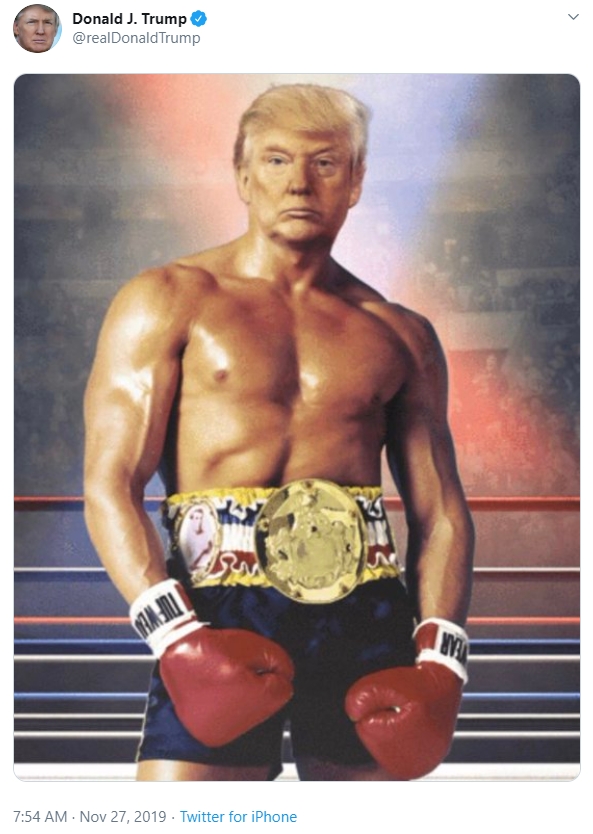
HK: I wasn’t a hip-hop fan in the 1990s when a lot of my friends were; they listened to 2Pac, Biggie and Snoop Dogg. Yes sure, I am all for Fuck Tha Police and all of that but I just wasn’t that into the scene. Of course some stuff resonated, but I wasn’t hanging out listening to hip-hop. However, specifically around 2016–2017, I saw one of Abyusif’s videos that really caught my attention. Though I had heard Abyusif before I hadn’t been very impressed. Generally speaking, the Egyptian rap that I had heard much earlier was super basic and soapy — it was like another form of early 2000s Arab pop. I started listening to Abyusif and something sparked, something had changed and been fixed — so I opened the lens a bit wider and started listening to Dama, who later on became Marwan Pablo, Microscope, Dinho, Karika, Marwan Moussa, Molotof, Shahyn, etc. I suddenly had a hunger for rap, especially Egyptian rap. There are two main reasons for this: first the content was in my mother tongue, Egyptian Arabic, but actually when I think about it’s not just that (English is almost a mother tongue for me) — it was also the context of the city I live in: the language of daily life surrounding me. Secondly, Egyptian rap had really evolved from the days of Omy Mesafra, massive changes had taken place. The music and the attitude had become more sophisticated and with these developments the form also started to lay down roots and became part of the local popular culture. All of that was very attractive to me. Hip-hop itself as a genre sort of makes sense to me now because it mixes many things that surround us and that have impact, power and influence into a potent concise form. For example, Trump's populist touch is not far from the aesthetics of hip-hop. There is savagery and indulgence in pleasures and vulgarity. There is something that connects these modes together. It is no coincidence that these kinds of emotions and desires are so widespread now; this in itself is significant and has a meaning. I also do not just reject certain aesthetics and claim because they're vulgar therefore they're bad. Actually it might hold a lot of meaning and be very significant; the question is more how we deal with it. Despite (or maybe because) of the machismo and vulgarity of some hip-hop, it possesses a certain energy that is congruent to the world we live in. That is part of what attracted me in the first place. I now wanted to work on this without reproducing the same dominant generic aesthetics of hip-hop. The issue is not just cerebral, it’s also emotional. I have a strong response to the form and its connection to the world.
RA: Could you have done a project like this 10 years ago for example?
HK: No! In order for me to do anything I have to have a real interest and attraction to it. For example, The Big One from 2009 was born out of the fact that from around 2004 until the revolution, I was listening to shaabiyat. A lot of things attracted me to that form then. I call it shaabiyat because the term is wider than any one of the different genres such as mahraganat, moulid, mawwal, nabatshi etc. I produced The Big One because I had a real interest, love of, and belief in the form and its ability to present new musical ideas that were relevant to the times and context. Different elements attracted me to the form and I felt it represented an exciting evolution of popular music in Egypt. This maybe changed with time as it became banal, generic and mannered and lost some of its qualities, which is in the end the natural cycle for any popular music style.

Installation shot of The Infinite Hip-Hop Song at MoCa Taipei. The image is courtesy of The Cube Project Space, photographed by Chen-You Wei. The concept, music, lyrics and all content and material generated by and produced through this project are the copyright of Hassan Khan.
RA: How is this project different to your previous musical projects?
HK: There are similarities and differences. A lot of the approach is related to previous works. However, the first major difference is that this project is algorithmic, and potentially generatively infinite. It also allows space for elements that are outside the control of the author and that are shaped by the algorithms of the program. This is a big difference for me, in everything I had done before. Even when working with session musicians, my role as the author and composer is very central. This conception though still has an impact on this project. When I started talking with Olivier Pasquet, the computer music designer who wrote the program for the piece, I highlighted that we want to use algorithms as our tool rather than allowing them to impose their logic on the work. The algorithms are seen as compositional tools rather than a way for the author to evade responsibility and for the program to randomly generate parameters. A basic question at the heart of the piece is how to compose with algorithms and use them themselves as musical instruments? Or, similar to how the piece treats the genre of hip-hop as a medium or raw material, how can we treat the algorithm itself as both a medium and raw material. This approach is related to how I have been dealing with music for a very long time. The little blurb I wrote about tabla dubb (2001) when I premiered it explicitly states that it uses the musical culture itself as a tool or instrument, on the basis that the tabla is an essential and foundational element of Egyptian musical culture. What we have here is an extension of this idea. Although shapes and patterns change from one project to the next, the conceptual approaches are connected. Another difference is that all of the musical elements, such as bass, beats and melodies are made with MIDI. I rarely work with MIDI. And of course this was the first time I worked with rappers.
RA: How did you work with the rappers? How do you generally work with musicians?
HK: A lot of the time I work with session musicians the way a director works with actors. In a sense I don’t deal with a musician as someone coming to play some notes, or you know “do this or that” or “give me a bit more feeling”, but rather as a person who has their own complex fears and desires and I indirectly call on this complete image of the musician to become part of the musical performance. For example, in the recording sessions for The Big One, there is a Nabatshi at the beginning of the first track who was shouting out a stream of incomprehensible words. In order to produce this performance, I had told him to imagine that the music was aimed at a deaf and mute audience. He was supposed to watch me while I enact movements (stabbing myself, collapsing on the floor, etc.) that he then transforms into vocalization. With the rappers it was a little different; I introduced them to the project and the lyrics, we read them together and I answered any questions they had. Then we began rehearsing using the guide beats that were explicitly made for the studio sessions. When a flow had developed and they felt ready, we began recording. I gave them notes after each take; we’d listen together, discuss and then do more takes. I also let them do some free improvs, as well as completely restricted composed sections. Basically, it’s all based on the individual, their abilities and what I feel is possible with them. Some were very limited in their scope and it was better then to focus on their strengths and to bring those out. With Haddie, we just worked on a steady monotonous almost sleepy voice which was the best we could do with her for the project. Infinite Livez, on the other hand, is very agile and flexible with his voice, so I gave him the space and freedom to try many different things out. All the rappers were at first a bit confused by the project because it’s not really standard, but to be honest they were quite open-minded and willing to try a lot of things out.
RA: This project is built on collaboration. How are the roles dispersed?
HK: First I had the basic idea and then I started searching for a computer music designer who could help program it because I had no programming skills. I asked around and Timo Kreuser (director of PHØNIX16) recommended Olivier. When we met, we got along very well and decided to work together. We spent a long period of time, months, talking about the idea and architecture of the program and slowly we developed the logic of the piece. It was very important for that conversation that Olivier is also a musician and composer. Meanwhile, I began looking for a sort of executive producer. Usually I manage my own sessions, finding and hiring the musicians and negotiating with the studio, but I felt in this case that someone else had to do this and manage the operational side of the project. In Berlin, where I had decided to produce the project, I do not have the connections I have in Cairo. I asked Rabih Beaini, the founder and owner of Morphine Records, if he knew someone who would be responsible for finding the rappers, making a contract with the recording studio, controlling the budget and basically organizing the logistics of the production. He expressed interest himself which was of course fantastic, because he has a lot of experience in the field and lives and works in Berlin. So Rabih joined the group and suggested an appropriate and budget-friendly studio to work in. Though the sound engineer Emanuele “Nene” Baratto usually doesn't record hip-hop, he was a big fan and listener of the genre. So, he was excited and I think maybe impressed by the ambition of the project. Rabih made a call for rappers, posted it around and spoke to many people on the scene. We did some virtual auditions and listened to many demos and in the end we selected 11 rappers.
RA: Tell me about the recording process.
HK: At first, I didn't want to do guide tracks. I wanted to only work with a metronome-like I had done many times before with session musicians. For example, in Taraban (2014) everyone was working with a metronome, they don’t hear each other and they don’t hear the other tracks. There is a reason for this that I will discuss later. Rabih thought it was too tough, too cold for the rappers to only work on a click track. They needed something more, even on the basic human level, something that made them a bit comfortable. I found his argument convincing and he asked me to prepare these guiding tracks, but there was something in me that didn’t really want to do them and I wasn’t really sure why. At the end I asked him to do them himself. I told him to do whatever would work as long as we stuck to the specified bpms [beats per minute] and keys. I also with time realized what was keeping me from producing these guide tracks. I think I wanted to make a very clear distinction between the content produced in the studio and the content that is afterwards produced for the main session of the piece. Rabih’s guide beats were totally different to the beats I produced afterward for the work session. The vocals recorded in the studio on the guide beats are then abstracted and extracted, isolated from what they have been recorded on and acquiring different new emotional content when they enter the system of the piece. It is possible for example that Saba Lou is singing in the studio on a dark trip-hoppy beat produced by Rabih but that these same exact vocals would in the session then be laid on a bright beat with major chords. The end result would give us a completely different feeling. This is deeply related to my production method in general. One of my concerns is how musicians end up playing the expected by leaning on each others’ tried and tested methods. For example, session musicians in Egypt especially when playing sharqi (oriental) music love to add a lot of color, and to emphasize the quarter-tone in the scale in a sense to produce an emotionality, to celebrate and completely consume these emotions. It is also a way of showing virtuosity. I try to find ways to drain this charge and get rid of it. In Taraban, I had the session musicians play the same melodic phrase for 20 minutes; the oud player would in a sense forget the mannered touch they are so used to and start performing the melody more as just a series of notes. I want these notes, not an emphatic expression of them. There is a relationship between this approach and the formal act of giving musicians instructions to work with that then gives them information. In this method, the emotional content appears in a way that is related to the logic of the music rather than a mannered preset based on cliched musical gestures.
The Infinite Hip-Hop Song (2019) Algorithmic Hip-Hop generator, musical and lyrical material written and produced by Hassan Khan, recording of vocal performances in the studio with 11 rappers.
RA: What were the steps? How long did it take from writing the lyrics to the beats to the programming and recording?
HK: The first email between Olivier and me was on February 19, 2019. The idea was already percolating in my head way before that, but I guess this is the official start of the project. The exhibition in Madrid opened the same year on October 18 — so eight months of work. I couldn’t write any lyrics for a long time, even though I had a precise, clear idea in my head: the rapping voice that enunciates these words is not the commonly positioned voice of the wounded male self or hero that is so present in rap (and other popular forms of music). But I was stuck and unable to write for some time. At one point, things finally started to flow and I began writing on my phone in public places: in parks, on the U-Bahn, while I was walking. I almost wrote nothing at home sitting on a desk behind my computer. I was writing at weird times in suspect places (laughs). When I began, things happened quickly. The very first bars I wrote were written on the U-Bahn on my way to visit a friend of mine and then I read them to her and got some feedback. Even just from the sense of how someone receives the words, that was productive. So I began with the lyrics, and then I spoke to Olivier, and after that Rabih. When Rabih got involved, I set up a meeting between all of us to coordinate between what Rabih and I produced in the studio and what Olivier would need for the system's algorithms. After that we auditioned the rappers, then studio: recording, editing and mastering all the vocals in 10 straight days. I was working in parallel on my beats, but to be honest the beats were not done till the last few days. I think the architecture of the program that Olivier designed was very successful. He decided to choose a consumer-friendly popular platform, Ableton Live, which I would work on to produce the beats and to use a much more complex system, Max MSP, to control Ableton. Because Ableton is quick and easy, I could work fast and make lots of beats on it which I would send to him to insert into the network that he was designing with Max. If we had tried to do this with a more complex system, itable would have been very difficult to operate at this speed.

Lyrics on the mixing table. Courtesy of Hassan Khan
RA: Exactly, especially as now Ableton is speaking to Max.
HK: Exactly. But Olivier also hacked Ableton in order to allow Max to control the variables in a way that is not usually possible. The limitation that we faced was processor power. We had lots of musical ideas that we did not implement because if we did, we would need a huge processor, and it increases the cost of the work as well as increasing the possibility of the session crashing. So we sacrificed a few ideas, especially at this initial stage. However, we continuously update the project. The project is currently in its fifth generation.
RA: You are interested in writing and have published many texts and books. To what extent did this help you write the lyrics? What are the topics or themes? And how are they different from the usual hip-hop topics, such as ego, patriarchal discourse, the romanticized dream of revolution, disses and other such speech?
HK: Writing has been a major part of what I do since the 1990s, so yes sure it has an effect, but I think what actually had a bigger effect was listening to a lot of hip-hop. I started listening to lots of Egyptian hip-hop a few years ago, and then I slowly shifted to Western hip-hop, mostly Anglo-American. Pusha T, for example, brags all day long “I'm the biggest drug dealer in the world” but there is still a certain lyricism and formal efficacy, even if the content is mostly disses and boasts and the subject ultimately remains the superior male self. There is still a formal power to the use of words and how the bars are put together. This is inspiring; I am not interested in trying to imitate it, but rather to actually utilize it. In my lyrics, I wanted to speak from the position of the voice of a collective self, a voice that is multiple in its gender and class, not merely for the sake of diversity, but rather because we live under common conditions and I am interested in a voice emerging from this common shared condition and reflecting that commonality. This is a condition based on exploitation, the classification of human beings, massive desires, emotional, physical, mental and spiritual desires, great phobias, fear of the future, failure and collapse. It is also based on something that is fluid. I believe that the truth and reality itself are fluid; this is now present in a much more mainstream generalized fashion. All of this together is part of the logic of the lyrics. So, I wanted the subjects’ voice to speak from this perspective, not in a theoretical or abstract way. Words can help express the strong emotions that are part of a life lived under these shared common conditions. I was also attracted to hip-hop because I could see that it is an important medium in the present time; it is a really emotional medium in which very strong emotions are invested even if that is as basic as shouting out "I am the best in the world." The emotions and drives that underlie and shape the form are real and are part of the structure that we all live in, part of the political and economic systems that we are all part of. They are real and important drives, they are our landscape and we should not ignore them and act as if they do not exist, on the contrary, if there is something that I find exciting about art it is exactly this: to deal with existing drives. The words I wrote want to deal with these drives and to take them seriously. They want to take selfishness, lust, love, fear and hatred seriously, but to treat them as drives not products. There is, at least for me, a huge difference between a drive that becomes a form of energy or comes out of an interior obsession and a motivating drive that is sublimated into a commodity. For example, Trump used these drives to produce a commodity, in this case hatred and racism, and all the emotions that Trump trades in all the time, like the myth that the white man is in a state of historical injustice and that he must avenge his honor. But in order to do this, he uses basic and real existing drives, and he has the ability and an understanding of the media's semiotics to exploit this and transform these drives into products. This is one of the foundations of Trump's populism. I am deeply interested in working on the same set of existing drives, but not as products. In hip-hop, however, drives are also transformed into products. For example, reaching the top and becoming Jay-Z, even in conscious hip-hop a certain product still remains. Kendrick Lamar is interested in a specific product and image, for example in a positive idea of community. That’s what he does. I am interested in something else; to let the words create something, but that this thing remains suspended between heaven and earth, a thing that cannot be resolved.
RA: Can you give examples?
HK: Take the ending of the first song for example:
Get ready cause we’re on the prowl
Tiger growl let the kids on the corner howl
Piss in the pit if you and them and them will take a hit
They used to speak the truth out
She let the crows out
He spat these words out
They grew horns and burned the house down
Ok so: They grew horns and burned the house down
But there is no sense in what comes before that this is their aim or goal, this is just what happened. It is not what they want to achieve. Another probably more significant thing in achieving this state of suspension is the way the lyrics were written so that you can take any line from any song and place it before or after any other line from any other song and they will still make sense. That is very important, the constant reassembly of the material creates a meta-poem that is constantly morphing and changing. Every part of it is like a window through which you can glimpse a specific, important and basic thing. Therefore, because of this state of fluidity, it is very difficult to have a sense of resolution. We are constantly in a suspended state.
[wonderplugin_video iframe="https://youtu.be/HSf3LpX0pr4" lightbox=0 lightboxsize=1 lightboxwidth=960 lightboxheight=540 autoopen=0 autoopendelay=0 autoclose=0 lightboxtitle="" lightboxgroup="" lightboxshownavigation=0 showimage="" lightboxoptions="" videowidth=600 videoheight=400 keepaspectratio=1 autoplay=0 loop=0 videocss="position:relative;display:block;background-color:#000;overflow:hidden;max-width:100%;margin:0 auto;" playbutton="https://www.madamasr.com/wp-content/plugins/wonderplugin-video-embed/engine/playvideo-64-64-0.png"]
Muting the guiding track and listening to Onosizo rapping unaccompanied to the lyrics to song #4 in the control room.
As for the meaning, it is also in a state of fluidity, but a precise non-ambiguous one. The lyrics convey specific meanings and emotions even as they are constantly being recontextualized. You can feel tangible, sensed things that are not just abstract. The images are ‘real’, but you cannot connect them to any one fixed thing.
RA: How did you produce the beats? How many beats are there? And what is your inspiration for them?
HK: I worked on Ableton and just very intuitively and smoothly programmed the beats using MIDI, which is different to how I generally do things. The beats are divided into two groups, primary beats and accompanying beats or accessories. The primary beats can cover a segment of the cycle on their own. However accompanying beats function more like ambience, the interaction between the primary and the accompanying beats creates a certain complexity. The kind of beats that usually attract me in hip-hop are edgy like Earl Sweatshirt, Tyler the Creator or Shabazz Palaces. I made over 200 and something beats- a lot! You end up sitting like a machine spewing them out. In my first conversations with Olivier we discussed the idea of putting certain filters using probabilities on the beats but to achieve that you need immense processing power so we dropped it. What I insisted on though is that there must be ways to mute and unmute the different elements of one beat — like the snare, the cymbals, the hi-hats, etc. That was super important as it gives the rhythm a certain variation that is engaging to the ear. If the beats are poor and lack this variation, especially since they run for hours, then after a while, it will be too grating and difficult for the listener. I was trying to not copy any specific style as well as I could. And by the way, I also think that Kanye is a very good producer [laughs].
RA: That’s true
HK: I listened a lot to him and think he’s a genius [laughs].
RA: I want to know more about the program that Olivier designed, the logic used to produce the music and what were the inputs into the program.
HK: So it is a system that works with possibilities and probabilities, and like most algorithms, it is composed of T-branches. Every branch has another T-branch within it. The probabilities are weighed between choosing which branch to follow. If you choose the right branch, something happens and if you choose the left branch, another thing happens. Let's begin with the vocal samples or units because they are the key to the whole system, or that’s how we decided to design this, which I think makes sense since the vocal sample is the variable element. When we recorded the vocals, we encoded information in the title of each sample: the name of the rapper, the key they are singing on, and the BPM they are using. Max then randomly selects one of these vocal units and converts the whole of the Ableton session to its coordinates. For example, if the vocal sample was recorded on 80 BPM, the tempo of the Ableton session would switch to 80 BPM when that sample is used. The second thing that happens is that the vocal sample based on probabilities chooses its own accompaniment. For example, a high-pitched melody has a probability rate of 6 out of 10, while a melody revolving around a medium pitch has a probability rate of 3 out of 10, and the one with a low pitch is 1 out of 10. This is a hypothetical example but it gives you a sense of how the system works. Of course, the 6 out of 10 melody has a higher chance of accompanying this vocal sample than the other two (though that, crucially, does not mean that the 1 out of 10 probability does not sometimes happen). As long as the program is running, the options and the possibilities change with time. What this allows for us is to design a general shape to the material even if it is not completely fixed and continues to change with time. That general shape is still fragile though, because intentionally built into it there is always a possibility that surprise elements can break that form. These were important decisions to help create a non-rigid ‘living’ system that has a certain level of flexibility. Though this is the basic structure, within each element there are always different possible choices. So for example, if we return to the beats we would find that it is possible for two accompanying beats to play together, for one accompanying beat to play with a primary beat, for a primary beat to play alone, and for all three to play together, but never for two primary beats to coexist. This already gives us a certain form. It gives us a musical system that is complex enough to allow listeners a sense of organic diversity and change yet simple enough to have a general form and shape. The same structure is followed with the melodies; there are melodies that are combinable and others that are not. Bass is generally simpler, but there are also bass lines that can be combined.

Screenshot from the Ableton session of The Infinite Hip-Hop Song. Courtesy of Hassan Khan
RA: So how do you move from one section with its own tempo and key to a different one smoothly? How long are the sections? How do they produce variations in such an organic form, especially as no beat is assigned to any specific vocal unit and all the elements are intertwined?
HK: The variables I have talked about do not change arbitrarily; they have a structure. This structure is the structure of the work itself, which is divided into cycles. Each cycle consists of 12 segments and one song. The song is also a segment but I call it a song for aesthetic reasons. Each segment has its own probabilities as well; the minimum length is about two minutes. First, the vocal unit is selected; it formats the session and assembles the rest of the musical material according to its encoded data and this runs for at least two minutes but also possibly longer. It is important to point out that the vocal unit is not the whole segment; a vocal unit could be anything from 20 seconds to five, six minutes. If the selected vocal unit is longer than the minimum time, the section continues till the vocal unit is played to its end and then we move on to another section and the music will change. But if it's shorter than two minutes, another unit with the same data set is chosen. For example, if the unit we are working with is 80 BPM in the key of A, the next sample to be chosen would have these same specifications. Each vocal unit is edited so that it slots in exactly on the beat. As mentioned earlier, the minimum length of a section is two minutes and the maximum length is determined by the remaining duration of the last vocal unit selected before the two-minute mark. So for example, if a vocal unit ends at the one minute and 50-second mark of the segment and pulls out a second unit to continue the segment that is six minutes long, the whole of the six minutes would be played and all of it would be considered part of the same section (which is now seven minutes and 50 seconds long). When a beat changes, it usually means that the section has changed, however (just to add a bit more confusion), it is possible for the beat to change without actually changing. Because of the complex nature of the beats, there is so much possible variation between muting and unmuting elements as well as constructing complex beats on top of each other. After the 12 sections run, the section I call a song is played.
[wonderplugin_video iframe="https://youtu.be/GO1bm2phppM" lightbox=0 lightboxsize=1 lightboxwidth=960 lightboxheight=540 autoopen=0 autoopendelay=0 autoclose=0 lightboxtitle="" lightboxgroup="" lightboxshownavigation=0 showimage="" lightboxoptions="" videowidth=600 videoheight=400 keepaspectratio=1 autoplay=0 loop=0 videocss="position:relative;display:block;background-color:#000;overflow:hidden;max-width:100%;margin:0 auto;" playbutton="https://www.madamasr.com/wp-content/plugins/wonderplugin-video-embed/engine/playvideo-64-64-0.png"]
Saba Lou Khan sings lyrics #2 in song form rather than rapping — this is one complete vocal unit. Accompaniment muted outtake from studio sessions. Courtesy of Hassan Khan.
In the studio, while we were working, I decided to experiment with a few of the rappers singing. We recorded some of the lyrics as songs. This section is considered a complete and independent sub-routine with its own atmosphere; and its own set of beats, melodies, and bass lines that are different from the rest.
RA: How many lines of lyrics?
HK: 351 lines.
RA: What is the probability of any segment being repeated exactly? And how long would it take before this happens?
HK: It is a very very low probability. One in 20 duodecillion, that is 20 followed by 40 zeroes.


Dynamic MaxforLive devices including probabilities of occurrence for each specific instrument. They are controlled by a main conductor providing tempi, durations and other high-level decisions. Courtesy of Hassan Khan.
RA: Where has the piece been shown so far?
HK: First in Madrid, in a solo exhibition called The Keys to the Kingdom at the Reina Sofía Museum. Then it opened a week later in a group exhibition called Soft Power at the San Francisco Museum of Modern Art. It showed end of 2020 in Taipei as part of Liquid Love, and is scheduled next year to be installed at the Centre Pompidou in Paris as part of my solo survey exhibition titled ‘Automatic Is the Voice that Speaks’. I am also working on a performable live version, and have already begun discussing with Olivier developing a system so that I can perform it live as a concert.
RA: A lot of artists and musicians now turn to algorithmic and self-generated music, each has their own style. Possibly the Algorave project is one of the more vivid examples of this approach. What is your relationship to generative art and what are your previous experiences in this?
HK: There is no one definite thing that will resolve everything. It is all, in the end, a series of propositions and attempts, which is something I think is very good. We need more people sitting around and trying things out without claiming that any one thing is the solution to everything. In terms of my own personal relationship to the algorithmic, this is my first usage of algorithmic technology but there are many works that I have produced in the past that use a related logic, such as in Taraban, and even tabla dubb. Let’s take ‘Dom Tak Tak Dom Tak’ (2005) which is not an algorithmic work but is also not a linear piece. The piece is basically a long rectangular white room with lighting from above. In this room you can listen to six tracks of music played on two sub-woofers, four mid-high speakers, and four tweeters. The work was produced in 2005; I took six commercially distributed tracks of popular shaabi music in various styles at the time including a Mawwal by Ahmed Addawwiya, the song If you play me I play you by Ali Salheen, a song by Araby al-Soghayer, and of course Abdel Baset Hammouda; basically all the major stars of classic shaabi. I chose six tracks that I personally loved, that were different to each other and that represented different trends in shaabi music at the time and used them as a starting point. Next I sat with a shaabi kawala player who helped analyze the songs for me, identifying which Maqams and rhythms were being used, till I sort of had a blueprint for these six songs. I then took this equation and worked with it in the studio sessions with shaabi session musicians. I used the blueprint to give them instruction as to what each of them should do; for example you play a Karatch rhythm, and now you play such and such rhythm. We first recorded the rhythm section: dohola, tabla, finger cymbals and a riqq. Then we recorded the rest of the instruments; a trumpet, two keyboards, the kawala, accordion, violin and an electric bass; basically the standard setup of older style shaabi. I recorded each musician on their own without listening to any other musician, and without knowing the original song the blueprint was based on. They only worked with that blueprint I gave them, and the pre-recorded rhythm section. Afterward, I mixed and mastered the six tracks and finally they were broadcast in the room I described earlier. For each song, there was a different light set-up. For example, the Mawwal begins and the lighting immediately moves to 20 percent, the song ends and the lighting moves to 100 percent for 30 seconds and then another song begins and the lighting changes again and so forth. Each song is followed by a 30-second break at 100 percent before another song begins with another light set up. A vinyl text was attached to the wall describing the different steps of the project. I find the logic of Dom Tak to be algorithmic but as applied to human beings. My interest is not technology for the sake of technology. I worked on Dom Tak Tak Dom Tak because I was interested in breaking down a collective cultural product and analyzing it back to its constitutive elements; in this case shaabi music is the collective cultural product being engaged with. At the same time, this produces something new and different from the generic form, but it still, I would argue, contains the obsessions and emotions that exist In this cultural form though it is not ruled by the specific rules of that form. In a sense, I am trying to abstract the cultural form itself, not to reach any kind of essence, but rather to touch the cold structure underlying the piece. In order to come to proximity to a moment that I find of great significance for aesthetics in general, this is the coldest of places and yet, at the same time the most passionate and full of emotionality. In this case the mediated experience is cold because the room is automated and the music is made in a semi-artificial proscribed fashion. The musicians do not listen to each other, and everyone plays alone and so on. But also because of the interference of the author, the insistence (through mixing) to produce an aesthetic and emotional experience. This is the strange thing about this project; it has a very intimate side, but at the same time it is a very cold thing.
RA: The past few years controversy has arisen over the relationship of technology to the arts and music in particular, as well as the role of artists and their possible marginalization through the massive increase in the power of programming and artificial intelligence. Do you have any concerns about that on the music scene in our region and abroad? What are the possibilities offered by technologically advanced projects?
HK: Well — honestly I do not think of technology in those terms. Technology is a tool that offers possibilities; we can use them in both successful and unsuccessful ways. The marginalization of musicians is more of a political issue than a technological one. In Egypt, many musicians are marginalized because the scene is not healthy and is not able to give musicians a suitable sustainable life, nor to have the opportunity to build a deep and productive relationship with the public. They don’t have the chance to perform in a place on a regular basis, so people can listen and critically respond. This, in my opinion, is something that marginalizes musicians more than technology. This is political of course, not that it is necessarily a political decision taken by a specific governing body, but rather political in the sense that it is connected to how the public order is organized, how the market operates, how the socio-economic sphere is built, what kind of margin of freedom is allowed in a society. These are the things that marginalize musicians. I know that some things have declined because of technology, for example the ‘clap’. When I was doing the recording sessions for ‘Live Ammunition’ I searched for clappers and discovered that they had disappeared because the clap is now part of any keyboard or sample library. So yes technology eliminates some things but at the same time it produces new things.
[wonderplugin_video iframe="https://youtu.be/Nf9UfzswiQE" lightbox=0 lightboxsize=1 lightboxwidth=960 lightboxheight=540 autoopen=0 autoopendelay=0 autoclose=0 lightboxtitle="" lightboxgroup="" lightboxshownavigation=0 showimage="" lightboxoptions="" videowidth=600 videoheight=400 keepaspectratio=1 autoplay=0 loop=0 videocss="position:relative;display:block;background-color:#000;overflow:hidden;max-width:100%;margin:0 auto;" playbutton="https://www.madamasr.com/wp-content/plugins/wonderplugin-video-embed/engine/playvideo-64-64-0.png"]
Excerpt from a performance of "Live Ammunition! Music for Clapping, String Quartet and Live Electronics" at SAVVY Berlin 2017.
RA: What is the best way to show and hear the project?
HK: So far, it has been installed in several different ways. In Madrid, it was on loudspeakers and a subwoofer, but it was part of a larger exhibition with various other works and a very special architectural context. The sound had to be contained and couldn’t be too dominant. In San Francisco, it was on headphones accompanied by a text written on the wall explaining the steps of the project as well as a custom-designed logo that is part of the work. In the Pompidou, it will be shown with the logo and on loudspeakers, but it will still be part of a show with other works. The perfect way to display it for me is on its own kind of like in Taipei. Ideally, I want to place it in a large space, a garage for example in which a large sound system can be set up and the logo painted on the wall. One could also design some simple but effective lighting for it. In both Madrid and at the forthcoming show at the Pompidou, a sculptural piece composed of five 50 centimeters long glass rods was presented. They are produced by directly shaping them under high heat; a kind of violence is apparent in the form in which the glass is shaped. I think of The Infinite Hip-Hop Song as a work that is both an artwork and a piece of music, a bit like Composition for a Public Park. Taraban and The Big One I consider just as music pieces.
[wonderplugin_video iframe="https://youtu.be/-8M4BaUhdB0" lightbox=0 lightboxsize=1 lightboxwidth=960 lightboxheight=540 autoopen=0 autoopendelay=0 autoclose=0 lightboxtitle="" lightboxgroup="" lightboxshownavigation=0 showimage="" lightboxoptions="" videowidth=600 videoheight=400 keepaspectratio=1 autoplay=0 loop=0 videocss="position:relative;display:block;background-color:#000;overflow:hidden;max-width:100%;margin:0 auto;" playbutton="https://www.madamasr.com/wp-content/plugins/wonderplugin-video-embed/engine/playvideo-64-64-0.png"]
Excerpt from the premiere of "The Big One" at the first 100 Live Festival at Rawabet, Cairo 2009.
RA: Your previous music work, as you mentioned earlier, is radically different to The Infinite Hip-Hop Song; not just the style but also the sound as well. Let's talk about your works that have a Shaabi or popular character. You began with tabla dubb and developed with time till you reached Superstructure and Taraban. How did you work on that music? Please explain in detail the style and the different workflow of such projects, and what attracted you to shaabi and how do you relate to it?
HK: I can first talk about tabla dubb. In 2001, I was living in Abdeen, working on Pro Tools on an Apple G4. I just came back from a trip to the US with severe jet lag; I couldn’t sleep so I basically worked all night long. I took a few drum samples from CDs or something like that and started playing with them, chopping them up and micro-editing them into new beats. When I finished the first track I did like that — I liked it very much — so I decided that I would make an entire album. I worked very quickly; just a few days and I was done. Afterward, I started thinking about how to perform it live. The premiere was in Beirut, at the very first edition of HomeWorks. Christine Tohme had come to Egypt because she was preparing HomeWorks, and she asked me to do something, so I played her tabla dubb and she loved it, and I decided to go to Beirut to do a concert there. I started thinking practically about how to perform it live. I set it up like a DJ, using two CD-DJ players and a mixer; it also included a live video mix that was done using over 20 VHS tapes with loops that I had shot and edited, two VCRs and a video mixer. My interest at the time was how to use musical culture itself as an instrument and that the work would be able to transcend the generic (and corrupt!) binary of contemporaneity and authenticity. I was always totally against this attitude; tabla dubb doesn’t want to be fusion, nor do I want to be both “old and new.” I am just interested in working with musical culture as an instrument. Then in 2004/2005, I worked with Mahmoud Refat on Ya Leil Ya Basha; in my opinion, a project that had great potential, but I think we didn’t at the time have enough experience to tackle it. Mahmoud and I had been playing together for a couple of years and were doing completely different stuff to Ya Leil Ya Basha. When I first heard Addawiya’s song Ya Leil Ya Basha, I fell in love with it. It was captivating. I spoke with Mahmoud and told him let’s remake this song in our own way. So we did; we had all the melodies of the piece arranged for strings and then recorded them, and we started working with two singers selected via auditions. I guess what we were doing with the singers must have been totally crazy for them. We did not realize what was happening, and they did not understand what we were doing, and when we came to perform live, one of the singers got totally paranoid and stood on stage refusing to sing. Thankfully the other singer stepped up. We performed a concert at the New Arizona Oriental Nightclub in Orabi, downtown. We spoke to the owner Hossam Ali Baba and made a deal with him and managed to bring together a huge crowd. But then the singer did not sing. Unfortunately, this concert was not recorded. We managed to record the second concert at El Geneina Theater with one singer only. The music was strange to them, and I think when the singer found herself singing in a sleazy cabaret, she freaked out. I think we were not aware that this was not “normal” for these singers. We didn’t have the experience to recognize this. If I did this project now, I would do it very differently.

Hassan Khan’s live work table in preparation for his concert at the 2017 edition of the Intonal Music Festival in Malmö. Two systems are being mixed – the pre-composed and pre-recorded material from the studio with the small feedbacking mixer. Most of Khan’s concerts are based on a conversation between order and collapse through this relationship. Courtesy of Hassan Khan..
RA: And then you produced DOM TAK TAK DOM TAK?
HK: Yes in 2005. I think this is a very successful piece, and I am still showing it till now. Also The Big One in 2009, and of course a lot of other music in between that is not related to popular music. We started working on Ya Leil Ya Basha in 2004, and when we went to meet Hossam Ali Baba in New Arizona, the first thing I heard as I entered the club was Heysa by Emad Barour. There was something slightly different about it that caught my attention, and I started from that moment onwards listening to many different things under the rubric of shaabiyat — the range is wide from almost folklore to the beats of the market MCs; all these elements which afterwards became what is now known as ‘Mahraganat’ were in a state of free flow. This was the period of the moulid style which now someone like Ahmed Yunis is returning to. Moulid was so popular in 2005, 2006 and 2007. MCs and producers like Nasser al-Sakran, Abdo al-Rewesh, Ashraf el-Prince, and Sha'ban al-Baghbghan (though both are now much more traditional — El-Prince works with Hakim and Sha'ban is doing more mainstream shaabi stuff). Ashraf El-Prince’s production was of a very high quality; the mastering was well balanced and the texture of the sound was always exciting. All of this attracted my attention to shaabi during that period and I was convinced that as a cultural form in Egypt, it played the role that almost no other format in the Egyptian cultural context did at the time. Official culture in Egypt deeply fears anger. It is as if anger does not exist. There is romanticism, machismo in various forms, and jealousy but no real anger. There is also a social fear of any threat to power and its values, a fear of vulgarity that is not ashamed of itself. Basically all these things were not really allowed in official culture at the time. In my opinion, it had been pushed to the side and repressed since the 1920s. The Mubarak and Gamal Mubarak era of neoliberalism and all of that didn’t really allow for these uncouth emotions to appear. These repressed emotions managed to manifest publicly in two things, in the Friday sermons blasted out of loudspeakers across the whole city, in which anger was expressed very strongly, and in musical styles like moulid, souq, etc. These were two very culturally important forms in that period. The Big One emerged out of that context. I worked in Studio El Araby in Shubra. I had gotten to know the sound engineer, Bassem Shaheen, to whom I explained what I wanted to do, and he told me that he would find me the session musicians. I recorded with them in the same way that I later on did in Taraban. They play the same melody for a very long time, because we can record a single melody being played for 20 minutes, I collect all these recordings and start building and composing them in my own way. Then there was the period of Superstructure, the session from which the two tracks that were released on the EP by the Vinyl Factory came out. These tracks came from the same sessions as the soundtrack to the 2010 piece Jewel. I worked on a mozmar and keyboards. The music was grafted from elements present at the time in the style of El Mouled, it was popular at the time to record the solo instruments from a synthesizer but though the beats were partially inspired by some of the rhythms instead of using keyboards, I used a live mozmar. I produced the beat with a shaabi arranger. We did one long 12-hour session. He had the samples library of oriental percussion instruments that was commercially popular at the time. That was important.
[wonderplugin_video iframe="https://youtu.be/wfQMBGirJ0M?t=3389" lightbox=0 lightboxsize=1 lightboxwidth=960 lightboxheight=540 autoopen=0 autoopendelay=0 autoclose=0 lightboxtitle="" lightboxgroup="" lightboxshownavigation=0 showimage="" lightboxoptions="" videowidth=600 videoheight=400 keepaspectratio=1 autoplay=0 loop=0 videocss="position:relative;display:block;background-color:#000;overflow:hidden;max-width:100%;margin:0 auto;" playbutton="https://www.madamasr.com/wp-content/plugins/wonderplugin-video-embed/engine/playvideo-64-64-0.png"]
"Superstructure", 2012 at the Louvre, Paris 2012.
RA: You also worked on music from completely different cultures, the Gamelan in your piece Club Gamelan. How do you deal with other cultures without falling into the trap of exoticism?
HK: Club Gamelan is connected to the Gamelan orchestra as an instrument, but I am not interested in or claim the Gamelan in terms of it being a musical culture from Bali and Java. I mean, I love the Gamelan as a music and a group of instruments, and I listen a little bit to it, but I do not have any deep knowledge of the subject. I did not use the instrument so that it could give me a tropical feel or a sense of place. I used it because I love the sound of this instrument. It therefore made sense to me to use it as an instrument and to specifically use it to make club music (or to be more accurate my own idiosyncratic idea of club music). I mean it is also club music but it has a specific character related to my sensibility- it’s not just slamming four to the floor beats down. It’s Gamelan and all but I don’t think it feels exotic because it is not interested in this idea. It just uses the specificities of the instrument to produce something I am interested in.
RA: And you worked on pieces based on classic instruments. What are the most important works you produced in this context?
HK: The first piece was Twelve Pieces for Piano and Electronica in 2007. I used QuickScribe, which is a computer compositional tool based on writing a musical score. I then recorded the piece with a Montenegrin pianist who read and played that score, while I adjusted his playing which then was rewritten into the score itself. There it is again! That same relationship between the musician and the composer that I am interested in. This situation is produced because I don’t have a formal musical education so I am always forced into the position of trying to reach something that I don’t have the necessary tools to reach, which means I have to begin from scratch every single time, and find a way to be able to access this thing. These obstacles can actually be very generative because when you begin from scratch, even if you make many mistakes and it takes much longer, you are constantly discovering new things. You are not tied to the presumptions and stereotypes and rules, because you just don’t know them. So contrary to what is usually said to young artists and musicians about the importance of first learning the rules and then breaking them, I would just say do whatever the fuck you want, and then let’s find out what we discover. That’s how I learned music. Actually that’s almost how I learned anything. Afterward there was Composition for a Public Park and Live Ammunition both in 2013 and performing at New Music festivals like Maerz Musik in Berlin and the Ruhr Triennale in Essen. Later on I began working the human voice in Tainted and I saw the world collapse and it was only a word both from 2018. This was when I began working with PHØNIX16 who are an excellent vocal group for contemporary music. In both cases, there was no ready composed music, so I worked with the singers and wrote the piece using specially developed graphic scores while I was working with them. There is also No to nostalgia no to symbols no to icons from 2016. I was commissioned by the European-Egyptian Contemporary Music Ensemble to produce a piece for them. They were putting together an event that celebrated Ahmed Fouad Negm, and I frankly do not care about this figure or this issue or am actually quite critical, hence the name of the piece. It was composed for bassoon, viola, violin, cello, flute, and contrabass. The graphic score in this case gave the musicians a structure, basically to move from note to note using sustain and glissando. Each section has a specific order and a specific duration. I engaged in long conversations with all the musicians about their personal experiences with musical education. We spoke about power and authority in that education and the type of oppression that classical musicians endure within the institution. While the glissando is being performed between each movement and the next, one of the performers stand up and tell their story to the audience- this is repeated three times. In a sense the piece was partially a composition and partially a performance. The interesting thing is that they are classically trained musicians, and so improvisation is not necessarily their biggest strength, but I worked with them on that; how do they hear each other? How to transform the sonic texture in relation to what they are hearing, how to work with suspense, expectation and drama in order to give shape to the whole piece.
RA: One of the most common topics that we deal with is nostalgia which has become a dominant trope, just as is in the title of your composition. How do you deal with the past?
HK: The past in itself is important. The idea is not to just cancel the past. However, the problem is with nostalgic emotions, which is about your relationship to that past. I do have a big problem with the idea of a vague nostalgia for some ambiguous, constructed past. These emotions are usually involved in rewriting the past in order to confirm the dominant values in the present, a dynamic that is constantly used to justify the context in which we are living. So it either justifies the present or it offers an imagined image of the future we aspire to. This is a feature of fascist thinking: the kind of thinking that always brings us back to the tired dichotomy of origins and endings. It is a form of thinking that only offers, whether politically or personally, a closed horizon. It can only imagine human beings caught in a vicious circle between fantastical great origins and a theoretically great telos. This imaginary is unable to conceive of human beings as an open project or as something contradictory. Therefore, from a purely political point of view, it is the kind of logic that is always used to consolidate power in general, regardless of its form or direction — whether political, social or religious. That is why my relationship with nostalgia was always troubled, on the intellectual level, but even on the emotional level. I never really had such strong nostalgic emotions. Perhaps as a teenager, I had a little nostalgia for the 1960s, drugs and hippies, but I don’t think that it was a real nostalgia more a desire for loss. I feel that the nostalgia that wants us to return to the past conceals the most important thing which is the reality that we are actually experiencing.
RA: Do you think there are possibilities latent in the past that can help create art that addresses the present while looking to the future without the problematics of falling into the nostalgic?
HK: Yes of course, not only in the past, but like in everything, in the past in the future, up, down, wherever. As long as the relationship remains real, one does not fall into nostalgia. I am not into canceling the past. That’s stupid. The problem is in the relationship to things. This is the heart of the matter.
تقارير ذات صلة
Podcast | Katalog #3: BLTNM
In this episode, we speak with the founders of BLTNM, a record label based in Palestine.
Podcast | Katalog #2: Dina El Wedidi
When I heard the train, I heard a full band. It was great — there were so many different sounds.
Video | From Planet Kaio: The Synaptik
His debut album featured collaborations with El Rass, Bu Kolthoum, Abyusif, El Far3i and Mehrak.
Your support is the only way to ensure independent, progressive journalism survives.
You have a right to access accurate information, be stimulated by innovative and nuanced reporting, and be moved by compelling storytelling. Subscribe now to become part of the growing community of members who help us maintain our editorial independence.
Join us