
Podcast | Katalog #3: BLTNM
Katalog is a podcast by Mada Masr about the process, production and deeper meaning behind selected works from the contemporary Arab and North African musical landscape. Co-produced and hosted by music journalist and writer Maha ElNabawi, and musician and sound engineer Adham Zidan, the podcast offers behind-the-scenes stories of musicians, their inspiration, and their process through a dynamic sonic experience.
Each episode features a guest musician, and together we break down their tracks to give our listener a more intimate understanding of the complex layers that make up their unique sound.
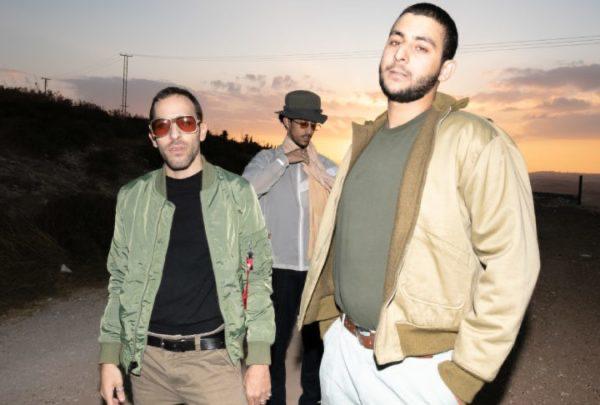
In this episode, we speak with the founders of BLTNM, a record label based in Palestine: music producer Al Nather (Mohammed Masrouji), songwriter and principal performer Shabjdeed (Ady Abbas) and Shabmouri, who plays several roles in the company, the most important of which is art director.
BLTNM was founded in 2015, but the label’s first single wasn’t released until two years later. In 2019, BLTNM launched Sindibad el Ward, Shabjdeed’s debut album, produced by Al Nather.
In a remarkably short period of time, BLTNM managed to build a brand and a large fanbase, becoming a household name on the region’s evolving trap and hip-hop scene.
Here, the founders take us through the process of making their first album, their life before BLTNM, how the company came to be, and how they view their experience working as a group. We also dissect and analyze Shabjdeed and Muqata’a’s “Bansak” (I Forget You), produced by Al Nather.
https://soundcloud.com/mada-masr/katalog-bltnm-shabjdeed-al-nather-shabmouri03/s-SGquC8hTxkj
Al-Nather: I’m Al Nather, a musician and sound engineer.
Shabjdeed: I’m Shabjdeed, a writer and performer.
Shabmouri: I’m Ahmad Zaghmouri, a little bit of everything.
SJ: We started working on the album a little more than a year ago. I was coming and going a lot, spent a lot of time on the road. I often imagined myself as a Sindbad: a traveler. But there are different kinds of Sindbads; there’s Sindbad of the Land, Sindbad of the Sea — you know. So Zaghmouri said, “You can’t be Sindbad without being the Sindbad of something …” So I said: “Sindbad Al-Ward.”
SM: “Ward” is a word we sometimes use when calling out to someone, like yasta [captain, chief, boss].
The first thing we did was pick the songs. Out of a bucket, we chose these 12.
AN: We didn’t know anything yet, but the one thing that was clear was that these were the best 12 tracks we had made and that we’d like to put them all on one compilation. We kept trying to arrange the tracks in different orders, until we reached the current one.
SJ: There was the phase where we were exclusively calling it a trap album, but then that made it difficult because of the drill tracks, so we decided to pass up putting drill songs on a trap album — although it didn’t really end up being a trap album, huh?
AN: We had decided to release an album by Shabjdeed, that was the plan, but then we decided, let’s release singles, like episodes — one song a week. We already had about 20 songs, so we decided to release a single every Saturday, and we continued to make new songs in the meantime. First we were only releasing the singles on SoundCloud, then we opened all the other channels at once, with the rebranding.
SM: We changed all the branding for the company at that time. We changed the logo and made the website, and our Bandcamp account.
AN: We made a big hype around Bandcamp and Spotify, and the overall accessibility of our work.
SM: Al-Nather also has a guru doctrine, in that you have to produce a million songs before you even release one. So he created a million songs, and soon he had an EP (chuckles). When we had made two million songs, then we had an album. So that made everything better, because once we had so much content, it was worth it to drop everything on Bandcamp. Because then we already had a wave, we already had a fanbase, so we could direct everyone to go and buy. If you do it on day one, you have 50 listeners, none of them will buy on Bandcamp. But if you have a constant rapid growth of 20K per track, you will at least have three buyers out of this 20K. So it was a good time to start then.
To give you an overview, a year and a half ago (before the album), I was studying in the UK. Mohammed was returning from college in Jordan. I was studying sound engineering, and Mohammed had graduated and was a very well-established producer, and Ady was working in the hotel. Everyone was in a different place, literally, and the cycle was much simpler. The cycle was Mohammed makes a beat, Ady writes, and we have a song. Afterwards, when we had a bunch of tracks, Mohammed would upload them however he saw fit. Meanwhile we were gathering connections, but ultimately there was no plan what-so-fucking-ever.
AN: Also, for me, regarding the sound, I wasn’t really producing trap at the time; I was producing hip-hop. Then Ady said, “Make me some trap” [laughs] and I said, “Okay, of course I’ll make you some trap.” It was when I got back from college, I made him some trap, but it wasn’t that thought out; it just happened.
SJ: Organic, organic. Like our views.
SM: When we get to the production phase, he [Al Nather] makes it look easy. But he’s a machine. He makes a beat in six minutes. Back then he had never made a trap beat in his life, now he can make any kind of left field hip-hop beat — trap, drill, the bassy ones — in six minutes. You have a privileged rapper here (gestures to Shabjdeed); he goes to the studio and Al Nather asks: “Do you like the beat?” and if Ady says no he just makes him another one. You have a privileged rapper here (laughter). You have a guy that can make you a beat by the time he smokes a cigarette — millions of beats, millions of beats. Beyond that he is so fast at recording. Millions of beats. The best part is, for him, most of them are garbage.
AN: I have no problem going back and starting over because Ady needs to like the beat a lot — not just a little bit, but a lot — and I need to like it a lot. So I have no problem with the idea that if there is something that doesn’t work, we just throw it away and start over. Because I have to deliver, and in return I know that Ady will sit down to write for four hours and come back with something incredible. So I have no problem coming up with something else if he doesn’t like the first beat or the second one. I wait for Ady to come to the studio, to know what his mood is like —
SJ: It’s always obvious from how I look [chuckles].
AN: He’ll tell me a couple of words: I’m tired, I’m fed up, I’m happy … So I try to make a beat that matches his mood.
SJ: This is why he was saying I have to really like the beat, because it’s the beat that first moves me to write.
SM: He writes on the spot every time, he never prepares; he simply writes on the spot, from A to Z.
SJ: Inspiration hits when I enter the studio. I have an active imagination; my mind wanders. I’ll be running around, doing a couple of errands, I come back with a song. I end up singing for someone in my head, or talking to myself, or to the entire population, or cursing someone who doesn’t even exist; who hasn’t done anything because they don’t even exist.
AN: So he just comes to the studio (laughs), inspiration hits, and he writes.
SJ: Yeah, I don’t know about things like internal or “subternal” or whatever, all those technical terms. I never learned those things — they tried to teach me … In 2016 I learned what a “bar” is for the first time, and it stopped there, because I found it all to be too complicated and I already know how to make songs, I don’t really need to know all of that.
AN: He really loves music, that’s all. He’s always listening to music.
SJ: It was Zaghmouri who told me I should rap, I had never thought of that before. After a year, I finally started writing.
SM: Because, do you hear how he speaks? And how he keeps singing the same song that’s stuck in his head, retaining the flow? It’s like he makes a print of it, and every other song he listens to. Ady, how old are you?
SJ: 24.
SM: Okay so for 24 years he’s been doing this reprinting with flow, and storing the copies in his brain. It’s like he has an enzyme that’s not present in the make-up of other human beings. When the information enters his brain, it’s like the enzyme automatically picks up the flow ...
SJ: The main flow comes during writing. Da’ da’ da’, da’ da’ da’ ... But when I write, it sounds really dry, because there’s no music; I just like writing on a piece of paper, you know. But when you start singing, and the auto-tune enters and you have the headphones on you start to feel it; you speed up the flow, slow it down ...
AN: But no one composes the vocals; Ady writes them and does them on the spot, most of the time he doesn’t even know what he’s going to do.
SJ: Then Mohammed adds his input, “do this, don’t do that.”
AN: What I ask for sometimes is for him to go back and add another 16 bars, for example, and sometimes I ask him to make small changes in the lyrics … otherwise I don’t get involved.
SJ: In the end, I tell him why don’t you go sing it yourself [laughs].
SM: And while all this is happening, I’ll be sitting there playing video games, people are hanging out eating KFC, Mohammed is making a beat with the volume up, upset about life, Ady is late and is looking for a pillow to sleep on.. This is what life is like, for real.
AN: But also I’ve never met a writer like Ady; there’s no one like that, no one. He comes to the studio, regardless what kind of mental state he is in, he delivers — he makes you a verse, he betters the beat: you give him a beat, and he gives you a verse better than the beat.
SJ: Sometimes I can’t write, though.
AN: Yeah, but for every time you can’t write there are seven other consecutive times that you can write.
SM: And there’s always leftover mujaddara in the fridge!
AN: Also there’s no one like Ady, because he works all week, and he has only one free day during which we can write and record. So all week long I’d wait for him to tell me which day that will be. See, he used to work in a hotel, and there you get one day off a week that is random — sometimes it’s a Wednesday, sometimes Monday, sometimes Friday … So I’d sit working and waiting for his call to tell me: “Tomorrow.” I’d leave it completely open. And then I’d wait for him to arrive, and we go at it like robots: He drinks something, I finish the beat in an hour or so, then he locks himself in the studio for about 4–5 hours or so, maybe I sleep a bit until he’s done. Then he wakes me when it’s time to record. We record, then we sleep. There’s a lot of energy, it’s not normal.
AN: I make a loop. I try to make a perfect loop that keeps flowing smoothly until the end. Drums, melody, baseline, break, drop ... Afterwards, we record against the perfect loop and split it up depending on the verse. At times if we are really excited about the track and there’s enough energy, we finish it then and there.
SJ: There are songs we recorded and released within 12 hours.
SM: Also he tries out many things, he keeps trying out things. So sometimes he just adds a new verse to the track. He’d tell Ady “See this chorus, there? Perhaps we can put it here instead, but instead of it being sad let’s make it a bit energetic.” He always does that, like magic.
SJ: I can’t count the times that I’ve recorded a chorus that he’d then simply delete and tell me to sing the first verse and half of the second verse and just like that we have another chorus: “Here’s your song, go home.”
AN: Sometimes he’ll come to me saying, “Hey, I wrote this as the chorus for the song,” and I’ll tell him: “No, this isn’t the chorus, here is the chorus.”
SJ: And then he’ll make me write another verse in its place, because, you know, I’m cheap labor [laughs]
SM: Mohamed is a guru in this procedure, he is the one that decides, always. We’re allowed to say what we want, but … [laughter] ... if he says this is the chorus, then this is the chorus.
SJ: It’s all democratic, democratic. But in the end he makes the final decisions.
AN: But I don’t really decide in a conscious way. It just happens. I feel it, and how I feel — not what I think, although I’ve spent a lot of time thinking about it — determines the decision. And sometimes laziness is a factor (laughs). Sometimes, I wake up, look at the song, do the structure a certain way, then I just never go back to it. Because it’s just not necessary; it sounds good, it flows, it’s fine.
[wonderplugin_video iframe="https://www.youtube.com/watch?v=S-yRCNd8GbE" lightbox=0 lightboxsize=1 lightboxwidth=960 lightboxheight=540 autoopen=0 autoopendelay=0 autoclose=0 lightboxtitle="" lightboxgroup="" lightboxshownavigation=0 showimage="" lightboxoptions="" videowidth=600 videoheight=400 keepaspectratio=1 autoplay=0 loop=0 videocss="position:relative;display:block;background-color:#000;overflow:hidden;max-width:100%;margin:0 auto;" playbutton="https://thefuturebegins.today/wp-content/plugins/wonderplugin-video-embed/engine/playvideo-64-64-0.png"]
AN: I’ve known Muqata’a for a long time. I know his taste, we’ve done music together before, and we made beats together, and different projects — we have a super intimate relationship when it comes to production. So he came to the studio, and we decided to make a track together with Ady. I knew that since it was Muqata’a that meant the song had to be dark, harsh, militant, maybe painful, a little unsettling — ultimately it had to be a beat that both Muqata’a and Ady were going to like. At the time, I was still doing a lot of sampling, so most of the synthlines on “Bansak” are sampled, from something Japanese or I don’t know what, I can’t recall it now. We didn’t expect it to be so well received, but it did much better than some tracks we’d imagined would do well. At first I did the loop, then I added the synthlines. See, sometimes I feel that a synthline is needed, so I make it and put it on the side, then I realize this is where it’s needed, and I go ahead and add it — so sometimes I make more lines than I need. With this song I started with the samples, then the guys did their part, then the structure, then the synthline, which I added later.
(Commenting on song): I made that synthline. And this here is a sample.
AN: I’ve listened to a lot of music. Loads and loads and loads. Like all producers. I listen to everything. I wake up and listen to music until I sleep, all day, everyday. So it comes naturally. In the past I used to look for samples, and store them in a library, then I’d get an idea and know which sample I should go back and look for. I stopped sampling because I wanted to challenge myself. I used to compose in the past, and then I was in a hip-hop crew that sampled a lot, so I stopped composing. Now, however, I decided to go back to composing without sampling. I still think about sampling sometimes, but I don’t do it.
AN: I don’t really care about piracy. On the contrary, I’m completely for artistic freedom. I don’t mind people sampling my music at all.
AN (Commenting on song): That’s Ady ad-libbing … We really like for our work to come out of our hearts, without too much thought. We want it to come from a raw place. Sometimes, all the elements are together in the chorus. Usually this is what happens, everything comes together there. But sometimes, the chorus is more minimal, and I guess this is what happened here. We don’t think too much. Regarding the ad-libs, I ask Ady to record some, and he does it on his own, then we put them together really naturally, we don’t even write them. It’s all freestyled.
SJ: I thought the song would have ended there, but Al Nather loves the outros. Turns out Abyusif didn’t diss us, I was kidding …
SM: I’ll explain how I think. Mohamed, I mean Al Nather, I believe he works like an old composer, he’s a Zaki Nassif, Al Nather. He makes you listen to the beat at the end in the outro without any vocals on it, because it’s his, you know? It’s his beat. The vocals are added value anyway, because he is Zaki Nassif. He wants to give you a chance to listen to his beat. The beat, before Shabjdeed comes in, is super long. So he just presses play and puts it on really loudly, so that everyone can hear it — I’m in the kitchen, Ady’s in the studio, someone’s on the couch, and we’re all just listening to it as it loops for nine minutes straight.
SJ: By the time I finish recording my verses, the beat does an outro on its own ...
AN: the rhythm schemes, generally speaking, are similar in all of trap; there are certain guidelines to the rhythms and general emotions, like sad-minor, that’s it.
SJ: [laughs] Sad-minor.
AN: For real. There are about three or four drum kits in trap that everyone in the world uses. But I don’t use any of them, why would I use the same snare? I can make my own, I can experiment. Usually, the bassline in trap is used as rhythm, but I use it melodically. It’s a restriction, but at the same time there’s no end to the music. Even if you put a hundred limitations for yourself, you still have infinite options.
SJ: It’s a restriction but it’s also liberating, you know?
AN: There isn’t anything we’ve released that I’m completely satisfied with. Not one thing. And I feel that’s normal, and that it’s a good thing. I think it’s the same for Ady, that it’s never done; there’s always more room for creativity, to continue polishing, improving, forever. But there is this golden zone — what comes after it is shit, what comes before it is shit, what’s in the middle is okay, you know? But you need to keep releasing music so that people can tell you that this is shit and this is good, so you can have a better picture and acquire enough confidence in yourself. I pull out some of our old work, for example, and I really like it, but at the time I didn’t think it was good; all of us at (hip-hop collective) Saleb Wahed, we always thought we needed to make it better. We had thousands of tracks, but back then we didn’t have a frame of reference, no one else was doing this in town — we didn’t have anyone to ask, anyone we could trust enough when they told us “No, this is shit, remove it,” or “yes, this is great, release it.” So we went with our own opinion, and we weren’t mature, we lacked experience. One needs a certain amount of courage, and confidence.
AN: I guess, with time, your standards keep growing — a track needs to meet a minimum standard for me, if it’s there then I’m fine with it, and the rest is just details.
I go crazy when I can’t make music, or can’t finish something. And they (Shabjdeed and Shabmouri) are the ones who have to deal with the consequences. There’s this tension. I chew off my fingers.
SJ: If that happens we usually take a break. We take a break, or we fight. When you experience that kind of thing all the human insecurities you’ve encountered throughout your life sort of resurface. (To Al Nather) How old are you?
AN: I’m 27.
SJ: 27 years’ worth of insecurities, man. One must lose control. But it’s okay, it passes.
AN: Exactly, one needs to go back and like themselves again. That’s it. Each time you get stuck you have to go back and love yourself. You get stuck because you’re not confident in what you’re listening to, in what you’re doing. I once spent six months not being able to make a beat, I went crazy.
SM: We don’t talk to many people beyond ourselves about our music. The hip-hop scene here in Egypt, it’s big, you’ve got lots of people, it’s a city of 30 million and stuff. So there’s action. We don’t have action; we have each other, the studio, and our work ethic. So we usually work, we judge, we argue, we work more. We make many mixes for each track, we talk a lot about it — I don’t want to say we fight, but we definitely have a lot of discussions. We are our biggest (critics), so when we release something we don’t really care what others say. Most people think we’re full of ourselves, but that’s not true; we just don’t care what people think because we truly give each other hell over this work.
SJ: The idea is, for example, when someone can’t make a beat, and we are all together, we can see that they just can’t, and it’s okay, they don’t have to make a beat at the moment. We understand. We all live together, our parents know each other, our houses are each other’s, so we know when someone is upset and unable to work right now, and if they are that upset, we probably are too.
SM: It’s a collectivist attitude. And after we finish the track, we move on. We have tunnel vision.
AN: At the same time, the vision is not written or spoken about, it’s blind trust. I know Ahmed is good at what he does, he knows I’m good at what I do, we trust each other — things just happen on their own. Ahmed makes artwork, he takes my opinion, when I make a beat, I take his — it’s that simple. At the same time, there is that sub-level understanding ...
SM: Some things are just below standard for our collective eyes and ears. What standard is that? We don’t know, we can’t define the standard, we just know it collectively. There is a beat that you can’t help but cringe when you listen to, for instance.
SJ: It’s like how we started the company [laughter], we were just sitting and talking and we’d spent months listening to music and speaking about it, and we just decided to do something — What? We didn’t know, but we wanted to do it. What were we going to call it? No idea, but it was already there. It was only a few years later that it became a record label, you know. I started rapping after BLTNM had been created — only it wasn’t called BLTNM, it wasn’t even a company back then.
AN: There are also the underlying principles. The freedom to do what we want on the spot without overthinking it. We decided this between ourselves, and we were already doing it, so it’s part of the message, but it happens organically.
SM: That’s because we have a guru that can make a beat in seven minutes.
AN: But also because we have Shabjdeed who is prepared to write at any time.
SJ: Yeah, we have a full team that is capable of working continuously at awesome levels.
AN: We also have Shabmouri who can make artwork, we can’t release our songs without him. And we have Omar, Siko, Ahmed — we have a very strong team.
SJ: It’s more than a team, it’s a company now. BLTNM is an institution, made up of excellent people.
AN: BLTNM is the best investment.
[wonderplugin_video iframe="https://www.youtube.com/watch?v=VhQyLIOD1IE" lightbox=0 lightboxsize=1 lightboxwidth=960 lightboxheight=540 autoopen=0 autoopendelay=0 autoclose=0 lightboxtitle="" lightboxgroup="" lightboxshownavigation=0 showimage="" lightboxoptions="" videowidth=600 videoheight=400 keepaspectratio=1 autoplay=0 loop=0 videocss="position:relative;display:block;background-color:#000;overflow:hidden;max-width:100%;margin:0 auto;" playbutton="https://thefuturebegins.today/wp-content/plugins/wonderplugin-video-embed/engine/playvideo-64-64-0.png"]

Maha ElNabawi
After graduating from the American University in Washington, DC with a Bachelors degree in Business, Maha began her publishing career in NYC with indie pop culture magazines, the likes of…
تقارير ذات صلة

Podcast | Katalog #1: Maurice Louca
Katalog is a podcast about the process, production and meaning behind select works from the region
Mai Serhan imagines Palestine and recounts life after for us
"I have never been to the place where I am from, but I can imagine it for us, Baba, for you and me." This opening line of Mai Serhan's I…
Doha summit: Arab unity in image
Sources tell Mada Masr why the Arab Summit failed to galvanize Arab unity
Your support is the only way to ensure independent, progressive journalism survives.
You have a right to access accurate information, be stimulated by innovative and nuanced reporting, and be moved by compelling storytelling. Subscribe now to become part of the growing community of members who help us maintain our editorial independence.
Join us