
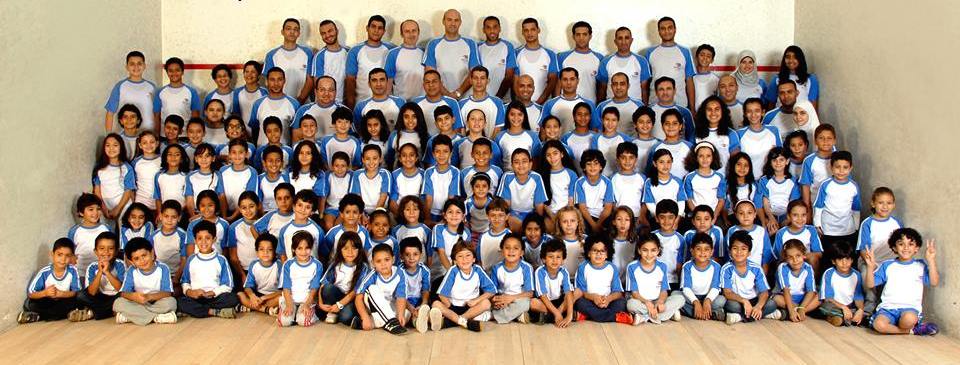
The child champions: Egypt gets a head start at squash
Last week, the UK-based World Squash Federation decided to relocate the World Junior Open (WJO), which was due to be held in Cairo this July, amid security concerns.
Although Egyptian players have dominated the competition for decades, it would have been the first time Egypt hosted it. The last-minute venue change has been crushing for players and fans alike.
“We’re all very upset,” says Ahmed al-Shazly, chairman of the elite squash academy at Alexandria Sporting Club. “They’re giving a bad impression of Egypt and really disappointing the players here.”
Someone who’s less disappointed than most, however, is the current WJO title holder, Habiba Mohammed.
“If I was playing here, I would get a lot more pressure from the country,” explains the 16-year-old.
Mohammed is not only a returning champion, but also defending Egypt’s reputation as the regular victor of the competition. Since 2003 there has only been one non-Egyptian champion of her gender, a record mirrored in the men’s competition as well.
The explanation for Egypt’s success in squash has been the subject of debate in recent years. Ten of the world’s top 20 players are Egyptian, including the men’s number one, making Egypt the largest exporter of squash champions globally.
For Mohammed, the answer is simple: “Egyptians have the best fighting spirit in the world. All Egyptians play to win, not just play to enjoy. Most people in the Juniors are just playing for fun, but here they want to be the champions.”
Being a champion in squash is a more realistic possibility than in other sports here. Since the game was introduced to Egypt – and other colonized countries – by British military officers, there have always been high-ranking players for youngsters to aspire to.

Egyptians began leading the game in 1933, when a diplomat and amateur player called Abdelfattah Amr won the British Men’s Opens and continued to do so until 1938.
“He set the standard for all the other players,” says Shazly. “Champions breed champions.”
“When I was younger I had people to look up to,” explains 21-year-old Marwan Shorbagy, who’s ranked 15 in the world himself and mentions recent champions such as Ramy Ashour, Karim Darwish, and Amr Shabana.
Nowadays, he and his brother Mohammed Shorbagy – at 24, the current world champion – are among those the youngsters seek to emulate. “We’re all really young,” he says, “and the kids can look up to us.”
Egyptian players win competitions and train professionally at a younger age than their international competitors. Habiba Mohammed is ranked 23rd in the world overall, having won the WJO aged 15, and first for under-19s. The youngest player to have won the title was another Egyptian, Nour El Sherbini, who took first place in 2009 when she was just 13.
“I started playing at five years old, and that’s normal in Egypt,” says Alaa al-Tourky, a coach at Alexandria Sporting Club. “Here in the club we begin accepting players to the academy around the ages of five, six, or seven. When they are this age they will be training three times a week.”
The ElBorolossy Squash Academy, a chain of training centers based in Cairo, accepts even younger players, encouraging four-year-olds to begin training twice a week. Once they move up to “competition age” – around 10 years old – they are expected to attend eight weekly sessions.
The under-11s competition category, which does not exist in most countries, is highly competitive.
“If you go to an under-13s competition in the UK, you might find a dozen players,” says Shorbagy. “For an under-11s tournament in Egypt there will be 200.”
So by the time Egyptian players reach the under-19s, they have many years of experience.
Squash can offer significant opportunities to young players, and they will not having to choose between a sporting and an academic career. Seeded players find lucrative sponsorship deals from sports clothing and equipment companies such as Technofibre and Head, regularly travel worldwide to competitions and, most notably, receive great interest from US Ivy League and European universities.
Many parents see squash as a good hobby for their children, an appeal no doubt added to by the prospect of international seeding. Parents of young players are also aware that professional Egyptian squash players are currently studying with scholarships in Harvard and Yale.
“Everyone thinks their child will become the next champion,” says Shazly.
“Part of it is a bit greedy,” says Omar El Borolossy, founder of ElBorolossy Squash Academy. “The parents want to decide which sport to play, and they say ‘if we’re in Egypt we will play squash,’ because then they have the possibility to be a world champion.”
Young players’ good performance is also tied with membership to a club, an attractive prospect in itself. Exclusive institutions, such as Alexandria Sporting and Cairo’s Gezira Club, are frequented by Egypt’s upper-middle classes. Membership is associated with affluence and high status.
“We’re like a family here,” says Shazly, “and the squash family is one of the nicest families, a very different crowd to other sports, like football.”
Indeed, unlike football, squash is a sport of choice for Egypt’s upper-middle classes – just as it is elsewhere. For membership of Sporting, families pay upwards of LE150,000, not including subscription to the youth academy.
“In countries like Egypt, people need things to feel special,” elaborates Borolossy. “The players identify themselves with their ranking and this is a big deal to people here. Nowadays more lower middle-class people are getting involved and it is a way to elevate their own status.”
Squash’s popularity is thus increasing: Both Alexandria Sporting and El Borolossy have long waiting lists on top of their already extensive membership register, and they are building new training centers to keep up with demand.
But while the record of young Egyptian players speaks for itself, Shazly has his doubts.
“They begin too early here,” he says. “If you look at the British Opens it all starts at 13, that’s the standard. We don’t need under-11s, and I think it’s wrong. At 10, children are not really ready for competition. Their nervous and mental systems are not strong enough to cope with the pressure of the game. The pressure which is put on them at a young age, they feel it later on.”
Young players have to balance school life and the pressures of growing up with intense daily training schedules. The drive to improve and rise through the ranks can be all-encompassing. But for players like Mohammed, this is of little concern.
“I suppose I’m sorry I haven’t been able to hang out with my friends so much,” she says, “but being a world champion feels much better.”

Edmund Bower
Edmund Bower is a British journalist based in Cairo. His main focus is on lifestyle and culture, but he has also written on politics and the environment.His work can be…
تقارير ذات صلة
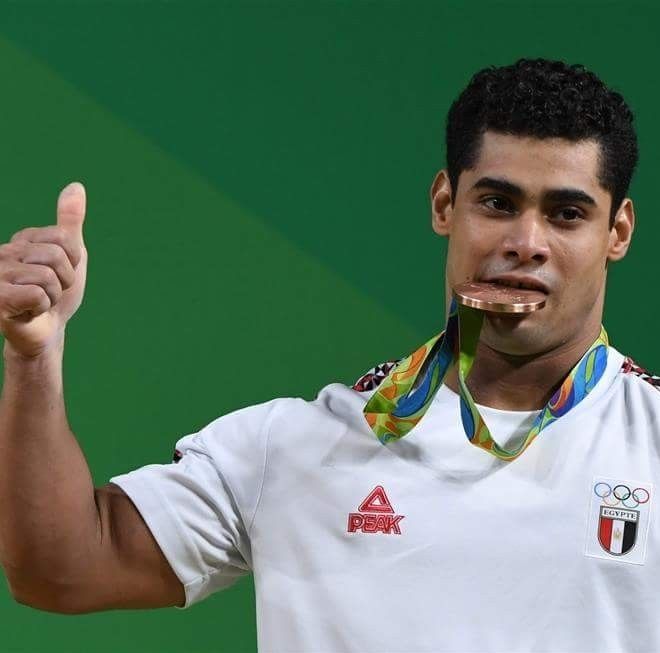
The stories behind Egypt’s Olympic champions
Egyptian weightlifters Sara Samir and Mohamed Ehab won Egypt’s first two bronze medals at the Rio 2016 Olympics, but the years of struggle without state support that preceded their success…
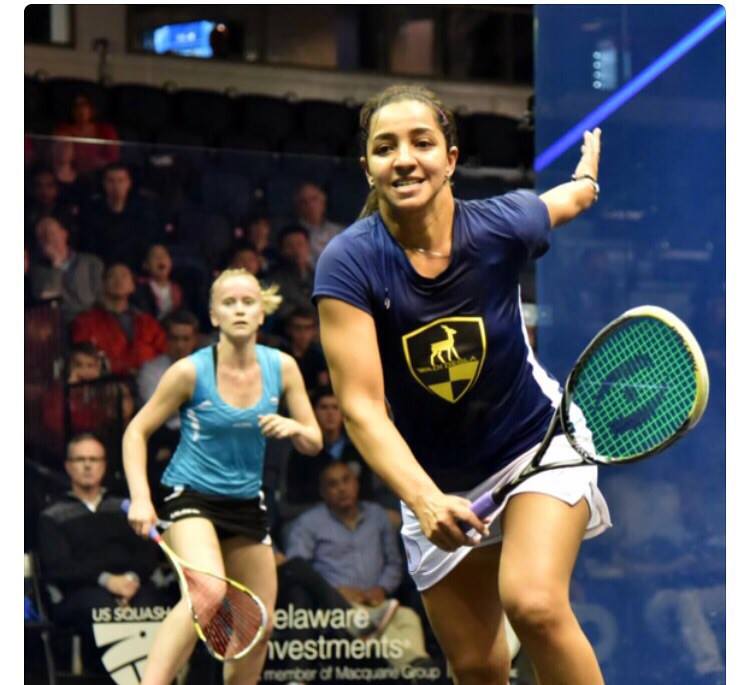
Dominating the courts: Egypt’s first female number one squash champion
Mohamed al-Shorbagy, an Egyptian squash champion, posted a picture with Raneem al-Welily after she made history by becoming Egypt’s first-ever female world number one in squash last September. “How many…
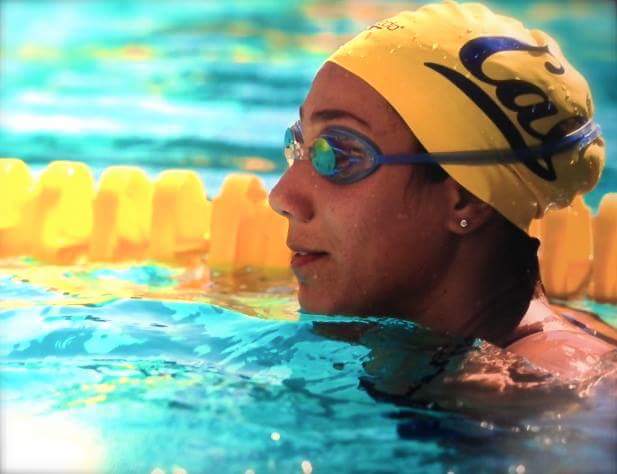
Egyptian swimmers make waves in international competition
A nine-person-strong swim squad walked away from the World Aquatics Championships in Kazan, Russia this week, with the best records ever achieved for Egypt on the international stage. The Egyptian…
Your support is the only way to ensure independent, progressive journalism survives.
You have a right to access accurate information, be stimulated by innovative and nuanced reporting, and be moved by compelling storytelling. Subscribe now to become part of the growing community of members who help us maintain our editorial independence.
Join us