
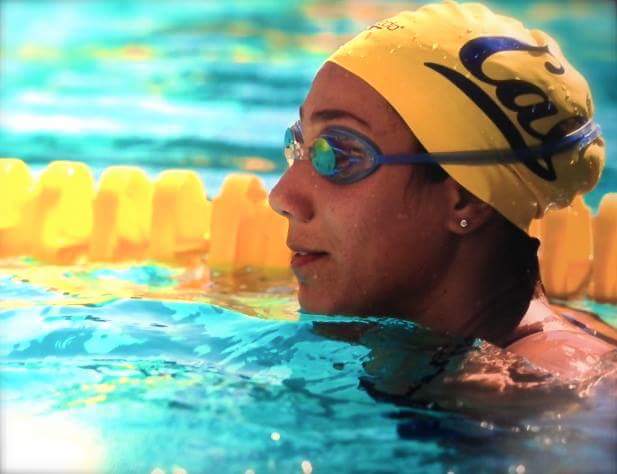
Egyptian swimmers make waves in international competition
A nine-person-strong swim squad walked away from the World Aquatics Championships in Kazan, Russia this week, with the best records ever achieved for Egypt on the international stage.
The Egyptian swimmers turned heads in Russia, as they smashed over 10 national records during the meet, which saw Ahmed Akram claim fourth place in the 1500m freestyle final and Farida Osman place an impressive fifth in the 50m butterfly.
Only the top eight in the world feature in the swimming final. To qualify, swimmers first have to make it through a number of gruelling heats, which can include more than 100 swimmers for some distances.
The results are undisputedly Egypt’s most impressive show at such a monumental meet, and it was recognized worldwide.
“People here are all saying, ‘this is the first time we’ve seen the Egyptian national team look and perform like that’,” says Egyptian national team head coach Sherif Habib.
“After Farida Osman won gold in the Junior Worlds a few years ago, and more recently Ahmed Akram’s medal at the Youth Olympics in Nanjing last year, they have given us extra hope that our young swimmers can really compete on the world stage,” Habib says. He adds, “One of the things that has caused this development is that our swimmers are getting more ambitious, they’re setting higher goals for themselves.”
“They’ve seen that one of our own (Akram), has been training in Egypt all his life, with an Egyptian coach, and he now has a youth Olympic gold medal and that means that we have a system, and if the swimmers believe in themselves just a little bit more and make long-term plans, then they can achieve the same.”
The Egyptian Swimming Federation responded to the high standard by providing for the needs of the team in Kazan, a rarity from a national association in Egypt.
“This is the first time we travel with our very own physiotherapist, our own massage therapist and massage tables … we did it the right way and the professional way, like all the big teams. That gave everyone a strong impression of us, not to mention, our US-based swimmers are quite well known now. So all in all, we managed to stand out during the championships,” adds Habib.
Several members of the team went to the United States for college at 17 or 18 years old. The whole squad of swimmers based in Egypt and the US then got together for a closed camp in Hungary before competing, which Habib says improved team spirit.
Osman, 20, made history at the Barcelona Worlds two years ago, becoming the first ever Egyptian to reach a world championship final, finishing seventh in the 50 fly, with a time of 26.17 seconds.
The world junior champion outdid herself last weekend in Kazan, shattering her own African record twice, to end up in fifth place in the final with a time of 25.78 seconds.
In the semi-finals the night before, Osman had gone under 26 seconds for the first time in her career, clocking 25.88 and 24 hours later she swam even faster in the final.
But she wasn’t the only Egyptian making waves. Akram, who last August became Egypt’s first swimmer to win an Olympic gold — when he won the 800m free at the Youth Olympics in Nanjing — became the country’s highest ever finisher in a world championship final by claiming fourth position in the 1500m free.
The list doesn’t end there. Mohamed Khaled Hussein qualified for the semi-finals in the 200m individual medley, before placing 16th overall, Akram was ninth in the 800m free — missing out on the final by 0.13 seconds — while Marwan al-Kamash fell just short of the 200m freestyle semi-finals, claiming 17th place, with only the top 16 advancing.
Hussein’s biggest feat was qualifying to next year’s Rio Olympic Games, where he will join Osman, Akram and Kamash.
These aren’t just isolated results. Since Osman won an unprecedented gold medal at the World Junior Championships in Lima, Peru, in 2011, a spark seems to have been lit that is showing no signs of letting up.
Egypt’s most notable achievement in swimming came in open water some 60 years ago, when the late Abdellatif Abouheif was crossing the English channel, making a name for himself as a sensational marathon swimmer.
More recently, Rania Elwani became the poster girl for the sport in Egypt, but even on her best of days, the farthest she got was to a couple of semi-finals at the worlds.
Many of the swimmers have gone to the United States to attend university and swim in the NCAA (college league in the US) and had already impressed in the build-up to the World Championships.
Akram, who swims for the University of South Carolina with Kamash, headed to Kazan ranked eighth in the world in the 800m, while Osman had taken the NCAAs by storm in her sophomore year at Berkeley, where she trains alongside four-time Olympic gold medalist Missy Franklin, who calls her “the most competitive person I’ve ever met.”
Kamash, who studies political science and business at the University of South Carolina, believes going abroad has been critical to his progress in the pool. “Just the environment in general and how the school helps me do both — studying and swimming — unlike schools in Egypt,” the 21-year-old explains.
Although Akram says the training methods aren’t that different in the US to what he’s used to under coach Habib in Cairo, he says being able to balance studying and swimming makes being based overseas worthwhile.
“The only difference between practicing in Egypt and in the States is the team,” says the 19-year-old. “The meaning of the team in the university is very important and that makes me so happy and makes me want to work hard every day, not for myself, but for my team.”
It is this team spirit, which study-abroad students brought to the Egyptian squad, that made such a difference recently, Kamash asserts. “This is the closest bond we’ve ever felt on the national team at a world championship,” he adds.
Coach Habib says the Egyptian Swimming Federation has been taking several steps towards boosting the sport in the country, but he explains that when swimmers graduate from high school in Egypt and go to university, they find it hard to continue their training.
Osman, who trains under acclaimed coach Teri McKeever in Berkeley, feels she has evolved in many ways during her two years there so far.
“I feel stronger as a swimmer. Before Berkeley my practices weren’t as strong, so I feel stronger in the water and I feel I’m more efficient in my stroke. In Egypt, I may have swum a closer time, but not efficiently, and I would get tired quicker. Now I can swim faster in a more efficient way to save my energy,” she says.
“I’m mentally stronger as well. They always teach us at university not to be afraid, just to go for your race without thinking. So I practiced this for the past year or so and I feel I’ve been doing better in that area. In my mind, I’m just trying to be mentally tough.”
The success achieved by Egyptian swimmers is also inspiring others in the region.
“In the States, I travel to a lot of competitions,” Osman explains, “and I get to meet many Arabs who come to watch me and they come up to me and talk to me, so I started feeling I am impacting Arabs in the world of swimming.”
“There are three of us — Marwan, Akram and myself — who are kind of putting Egypt on the map, globally. People are more aware of Egypt in swimming now.”
All this bodes well for Rio next year. Four Egyptians have officially qualified and more could catch up over the next 10 months. The continued progress of these swimmers implies that they are all true champions in the making, and having an Egyptian on the Olympic podium next summer is a real possibility.
“This is a huge experience for Rio next year,” says Akram, after placing fourth in the 1500m in Kazan on Sunday.
One thing is for sure, in 12 months time, Egypt should be watching when this extraordinary quartet dives into the water in Brazil.
تقارير ذات صلة
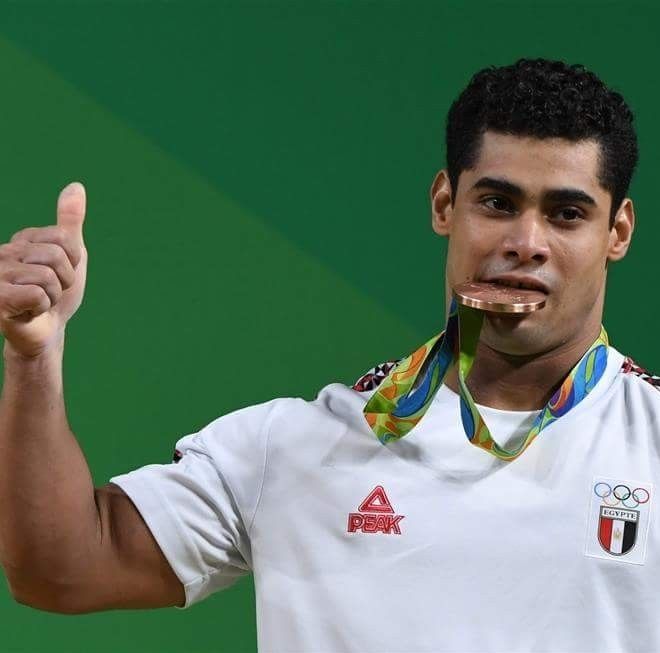
The stories behind Egypt’s Olympic champions
Egyptian weightlifters Sara Samir and Mohamed Ehab won Egypt’s first two bronze medals at the Rio 2016 Olympics, but the years of struggle without state support that preceded their success…
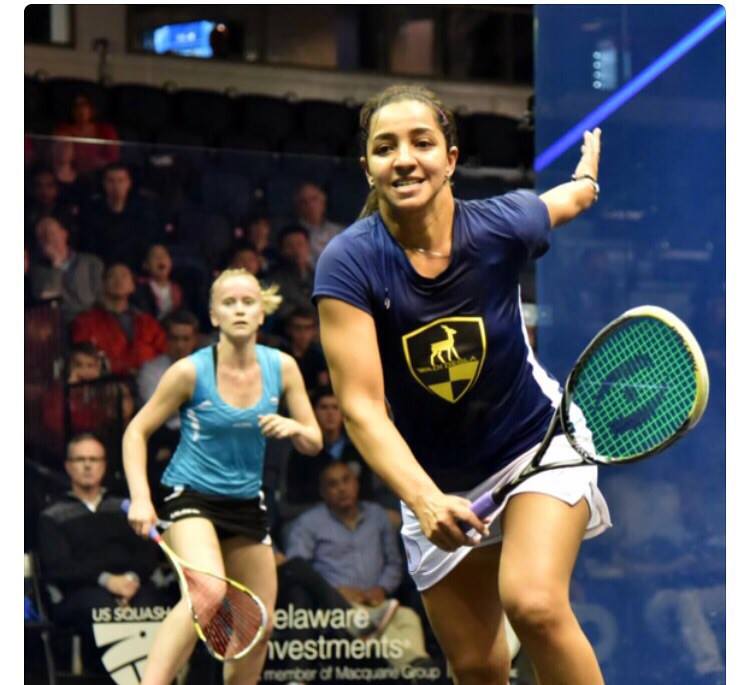
Dominating the courts: Egypt’s first female number one squash champion
Mohamed al-Shorbagy, an Egyptian squash champion, posted a picture with Raneem al-Welily after she made history by becoming Egypt’s first-ever female world number one in squash last September. “How many…
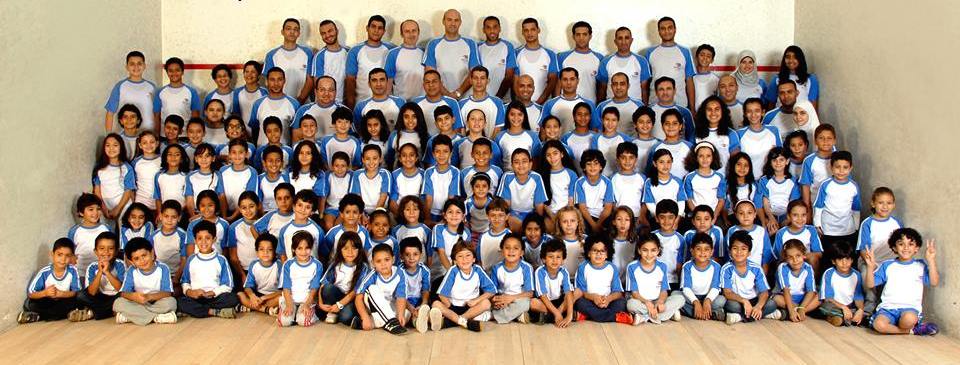
The child champions: Egypt gets a head start at squash
Squash is dominated internationally by young Egyptian players. With thousands on the waiting lists for expensive training academies, we ask why are so many attracted to this niche sport.
Your support is the only way to ensure independent, progressive journalism survives.
You have a right to access accurate information, be stimulated by innovative and nuanced reporting, and be moved by compelling storytelling. Subscribe now to become part of the growing community of members who help us maintain our editorial independence.
Join us