
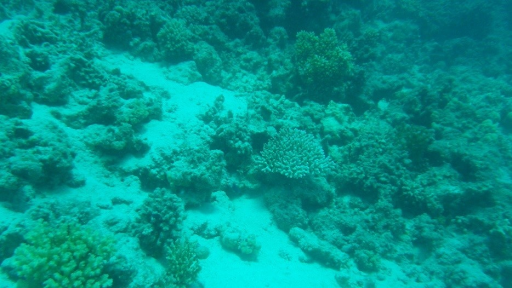
Q&A: The IPCC report and climate change in Egypt
The deadly heat waves, fires, hurricanes and other extreme weather events that have dominated headlines in recent years will only become more frequent in the coming decades, according to a United Nations report on climate change released last week.
In its sixth assessment report, the UN’s Intergovernmental Panel on Climate Change (IPCC) called human-induced changes to global climate systems unprecedented “in thousands, if not hundreds of thousands of years, and some of the changes already set in motion — such as the continued sea level rise — are irreversible over hundreds to thousands of years.”
While the report calls for drastic cuts to the global emission of greenhouse gases, much of the effects of climate change are already locked in until 2060, with global surface temperature expected to reach 1.6 degrees Celsius higher than pre-industrial levels, exceeding the 1.5 degrees critical benchmark, even if the most optimistic scenario of net-zero emissions is met.
“Unless there are immediate, rapid and large-scale reductions in greenhouse gas emissions, limiting warming to close to 1.5 or even 2 degrees Celsius will be beyond reach,” the IPCC press release states.
To make sense of the report and to speak about how the IPCC assessment impacts environmentally vulnerable areas in Egypt, Mada Masr sat down with Ahmed El-Adawy, an environmental researcher and physical oceanographer.
Adawy is a postdoctoral fellow at the School of Environment and Society at the Tokyo Institute of Technology, where his main focus is on studying the Red Sea environment. In his research, Adawy has worked to develop high-resolution models to simulate the physics of the Red Sea, a tool that can be applied to gain better understandings of the impacts of potential oil spills, produce climate change impact assessments, and do heat stress analysis on the Red Sea’s natural resources, including coral reefs.
In the course of this interview, Adawy unpacks the IPCC findings, discusses how global and local anthropogenic forces are affecting Egypt’s climate future, and how mitigation measures will impact and be financed in developing countries.
Mada Masr: Perhaps we can start with what the IPCC report is, as it is a massive document. But it is also one that is building on a lot of existing scientific research, no? Can you tell us a little about the history of the IPCC, the work it has done?
Ahmed El-Adawy: The IPCC and their main three working groups focused on the physics of climate systems, the vulnerability of socio-economic and natural systems along and mitigation strategies are considered the most credible sources of climate change data in the world. Their optimum goal is to deliver the most crucial findings from up-to-date and highly credible climate studies to policymakers. The first group just published their findings last week as a part of the sixth assessment report, covering scientific literature accepted for publication by January 2021. It is a massive report, highlighting the main findings by all the world institutions working in the field of climate studies. At least three papers by Egyptian scholars are cited in the report, mostly related to trends of temperature and precipitation as well as a study of the urban climate in Cairo.
The fifth assessment report was published in 2014 and served as the basis for local research into the potential impacts of climate change and possible mitigation and adaptation measures in countries across the world. In my view, the results outlined in the IPCC’s reports can be dealt with as facts, considering how high the level of confidence is. Their results aren’t exaggerated and the scenarios they are considering are realistic, ranging from adapting “possible” mitigation to “business as usual” policies.
MM: I want to unpack the term “climate change,” which can be a vague concept that circulates a lot but sometimes lacks definitional clarity. The IPCC report outlines several key features of climate change. Can you give us a brief definition that goes beyond the simple understanding of hotter days, highlighting some of the key aspects outlined in the IPCC report? What does the report have to say about the frequency of extreme events, like drought and flood and severe heat waves, about the difference between natural variability and human-caused climate shifts?
AA: Simply speaking, Earth’s climate is dependent on daily and seasonal natural cycles as well as ocean circulation patterns, solar and volcanic drivers. Millions of years ago, the earth's climate was definitely different. The problem is that, according to real observations laid out in the IPCC report, the warming we have seen between 1850 and 2020 is unprecedented in more than 2,000 years, and it is the warmest multi-century period in over 100,000 years. At the start of August, it was announced that we just experienced the hottest July ever recorded.
These facts have pushed scientists across the world to make hundreds of studies to simulate the near past, present and the future of the earth based on different scenarios. And based on the data collected in the report, it is “unequivocal that human influence has warmed the atmosphere, ocean and land,” providing data to rebuke climate deniers who argue that natural climate cycles are responsible for observed temperature increases.
The report outlines five scenarios based on greenhouse gas emissions, indexing their consequences in the short, medium and long term. In the most extreme scenario, we will reach a 2.5 degrees Celsius increase from 2041–2060 over industrial baselines, temperatures last seen over 3 million years ago. This might come with irreversible changes to the ocean, ice sheets and global sea level, as well as an increase in the more crucial extreme events like floods, droughts, heat waves and hurricanes on global and regional scales. It is a little bit terrifying.

MM: Can you explain a bit more about the five potential scenarios that the IPCC outlines based on greenhouse gas emissions going forward, which it terms as a shared socio-economic pathway. Can you explain the five scenarios in brief and discuss what a “shared socioeconomic pathway” is?
AA: The last IPCC’s fifth report was focused more on direct Representative Concentration Pathways (RCPs) to examine CO2 emissions pathways based on human activities. The sixth report has opted for more holistic language, as mitigation measures and pollution control policies are more accurately included in their calculations, and has presented five scenarios based on “shared socioeconomic pathways.” Each scenario is based on emissions that vary depending on socio-economic assumptions as well as levels of climate change mitigation and pollution controls. These scenarios start with the most optimistic SSP1-1.9 and SSP1-2.6, where we have net negative CO2 emissions — where anthropogenic removals of CO2 exceed anthropogenic emissions — to high and very high greenhouse gas emissions (SSP3-7.0 and SSP5-8.5) where emissions are projected to double from current levels by 2050 and 2100. To put this in context, in the last report, the starkest scenario projected that we could have an average increase of 3 degrees Celsius in 2100. In the current report, this could happen in 2060 if business continues as usual.
The most optimistic scenario they present still has a 1.5 degrees Celsius increase in the short term, 1.6 degrees from 2040 to 2060, while by 2100 we fortunately could reach a first decrease by 0.2 degrees, which would mean we would end up with 1.4 degrees Celsius increase in temperature compared to the average temperature of the period 1850-1900. These optimistic scenarios aren’t only related to advancing technologies and tremendous changes in the current policies. They may also come with impacts on people’s welfare. For example, we might be forced to accept instabilities in power generation with the move to more “natural” resources like solar and wind energy, profound change in our daily diets, much fewer cars including “sustainable and green” electric cars. It will not be seminars and public awareness campaigns!
Otherwise, we will be more likely on our way to the SSP3-7.0 or SSP5-8.5 scenarios. And in that scenario, as in all non-negative emission scenarios, our oceans and forests will be much less effective as a carbon sink.
All of the report’s expectations will only hold as long as there doesn’t come to pass an admittedly less likely event like the collapse of major ice sheets or massive changes in ocean circulation patterns, catastrophes that are beyond management or mitigation.
MM: How shared can a climate-focused socio-economic pathway be, especially considering that countries’ contributions to greenhouse gas emissions and their ability to pay for climate mitigation efforts will be highly varied? Who will pay for the impacts of climate change in a country like Egypt, for example?
AA: While the report doesn’t discuss the greenhouse gas contribution of each country in depth, the data is everywhere! Climate justice, as a concept, focuses on the historical responsibilities of countries, and several books have taken up the subject.
The IPCC report stated that every 1,000 gigatons of CO2 emissions is assessed to likely cause an increase of 0.45 degrees Celsius increase in global surface temperatures. According to Worldometer, China emitted 27 percent of total greenhouse gases in 2019, surpassing the share of all developed countries. China emitted 10.6 gigatons of CO2 in 2018, while the USA put out 5.41 gigatons, followed by other developed countries. You can see climate injustice even at a regional level. In the Middle East, we can see most of the Gulf countries are among the top 10 highest emitting nations per capita, with Qatar being the highest worldwide. In 2016, the UAE’s total emissions were equal to Egypt, which had a population 10 times larger. Saudi Arabia emits twice as much as Egypt does, with one third of the population.
While they have small contributions to global emissions, developing countries are the most vulnerable to climate change and may even see significant reversals in their development gains due to the impacts of climate change, according to a recent report by the Canadian government. According to the World Health Organization, by 2030 climate change could cause 250,000 additional deaths per year from malaria, heat waves and drought-induced malnutrition.
While there are global impacts of climate change, we have climate vulnerable areas in Egypt, specifically in the Nile Delta, which is threatened by rising sea levels, and the Red Sea, whose natural resources are threatened by warming waters and ocean acidification, in addition to a potential nationwide impact on agriculture, due to changing temperatures and even possible seasonal shifts, as we saw when a heatwave ruined 50–80 percent of this year’s mango crop in Ismailia. Who will pay for climate change impacts in Egypt is an extremely challenging question! The Environment Ministry is dependent on external funds, according to a former minister. While there is clear climate injustice in the way impacts are distributed across countries, in Egypt, we face a similar distribution of justice or injustice. The distribution of climate change adaptation projects funded locally, and even with external funds, does not always track onto the areas that will be most impacted. During our past research, we noticed that funding is always directed to low-level coastal areas where there is possible inundation, along with areas with erosion based on the past unsustainable practices of coastal development and the drastic changes in the water system in Egypt after the Aswan High Dam. But the priorities and mitigation techniques of these projects are questionable and lack enough open technical or public debate to decide on, among other things, more environmentally friendly interventions!
But when it comes to agriculture activities threatened by climate change, there is a limited focus. For example, agriculture in the Nile Delta is experiencing increasing levels of soil salinity due to combined factors of saltwater intrusion in coastal aquifers due to the excessive pumping to overcome water shortages, sea level rise and unfortunately confirmed observations of Nile Delta land subsidence.
MM: You have done a lot of work modeling the complex climate dynamics in the Red Sea and the Gulf of Suez, which you describe as lacking conclusive research to understand the way in which different factors — water currents, temperature, atmospheric pressure, evaporation — interact. Can you explain what you have done on this front and why building out models like the one you have constructed are important for thinking about and planning to address climate change?

AA: The study aimed to develop an approach toward integrated remote sensing and mathematical modeling in order to investigate the atmospheric-hydrodynamic features of the northern Red Sea and Gulf of Suez.
Currently, the main pressures on the marine environment of the Red Sea are mostly linked to land-based activities: massive tourism development, such as landfills and inland coastal lagoons; severe interference with the natural shoreline; flash floods; dam construction; and wastewater treatment plants. They can also, however, be impacted by the effects of climate change on the marine resources of the Red Sea. I alongside a team of researchers are now finalizing a manuscript about the thermal stresses in the Red Sea and you can easily witness the recent stresses for the corals.

The coastline along the Egyptian Red Sea has been subject to massive tourism developments over the last 30 years. Unregulated tourism development has already caused significant losses to inshore reefs, sediment transport imbalance and disturbances to the natural hydrodynamic system. Developing “accurate” models of environmental phenomena is a great non-destructive tool to explore the present and future status of the system. There are many Egyptian scholars in climate research but we still lack decent interdisciplinary research that can reveal the real impacts of climate change on different sectors in a very complicated setting. This complicated situation needs easy access and clear data-sharing policies to develop decent models that can ultimately support the decision-making process. Without in-depth investigation of the present situation and multidisciplinary research, we not only face significant risks to our natural resources but less efficient distribution of the limited public and foreign funding to adapt to climate challenges.
MM: In a paper you co-authored focused on coral bleaching events in the Red Sea, you cite a 2012 economic study on the impacts that tourism sector has on the Red Sea, which puts the estimated losses due to unregulated tourism activities at US$262.6 to $267.3 million per year. This brings us back to the economic impacts of climate change on Egypt and developing countries. Environmentalism then is not only about protecting nature for the sake of nature, but it is also about economics and broader pathways to economic development, no? How can a country like Egypt approach development without eroding its natural capital?
AA: The numbers have been updated now. Before the pandemic, Egypt, the world’s largest reef tourism economy, was generating about $7 billion a year from diving and snorkeling-related activities. The World Resource Institute stated that by 2100, Egypt could be losing $5.6 billion in revenue compared to 2019 under the starkest climate projections. This assessment was based on the IPCC fifth report.
Currently, the stress on Egypt’s coral reefs is linked to direct human interventions more than global climate change. There is some rare good news here, however, as the coral in the northern Red Sea has shown exciting heat tolerance when compared with the central and southern Red Sea under similar or even greater heat stress. Several influential journal studies have concluded, optimistically, that the special genetic characteristics and cooling mechanisms of the gulfs of Suez and Aqba will allow them to survive in some scenarios outlined in the fifth IPCC report, scenarios in which the Great Barrier Reef did not fare as well.
However, in the most recent IPCC report, we have to be much less optimistic about the resilience of Egypt’s coral reefs at the global level, as the climate change models show a mostly irreversible warming. But we can focus on local policies to limit direct human impact on coral. Although landfills are now illegal and extremely limited, previous poor material sediments still threaten coral reefs. A remote sensing analysis study shows that a 6.55/km2 portion of the fringing reef stretching from Safaga, Sokhna and Hurghada has been destroyed since 1984 due to the poor materials used in landfills. Our recent study shows that the rate of changes in Hurghada’s shoreline has decreased since landfills became illegal but we still saw unusual eroded areas, especially in the southern parts of Hurghada due to seafront interventions and small jetties. Stopping tourism development and construction is not a realistic solution here, but we must move toward more real environmentally friendly projects that go beyond green sloganeering, accurate environmental impact assessment studies, and the government should have stricter policies that accurately rank regions based on ecological vulnerability to multiple stresses.

MM: To move away from the Red Sea toward the other environmentally vulnerable space, there is increasing public concern about drought in the Nile Basin. Under the different scenarios outlined in the IPCC report, what will precipitation look like in the Mediterranean and East Africa going forward?
AA: The IPCC report documents many findings that are closely related to the water challenges in Egypt. To start with, there is more very rare good news. With all the unavoidable uncertainty in regional models of the Blue Nile, the IPCC reports with medium confidence that East Africa can have up to 10–40 percent more precipitation (according to the scenario we are heading toward) due to the intensification of the global water cycle. Simply speaking, we will definitely have more precipitation in upstream Nile Basin countries. So, in the long term, the average flow of the Nile should be larger.
However, we should not ignore the fact that there will also likely be higher variability, which means that Nile basin countries could face more severe droughts. Thus, without extremely accurate management and cooperation of Nile resources for the sake of the people of the Nile countries, we could face more severe floods and waste — engineeringly speaking — water.
The situation is less optimistic in northern Egypt. The IPCC concludes that the world will generally have much more precipitation except for certain areas, including the broader Mediterranean, including northern Egypt. This could have significant impacts on agriculture, increasing the already heavy dependency on Nile water for irrigation. Further, soil salinity levels will increase with sea water intrusion caused by rising sea levels and excessive groundwater pumping in northern Egypt. The IPCC report states that the rate of relative sea level rise around Africa was higher than the global average, prompting an intensifying retreat of shorelines of up to one meter per year throughout the continent with the exception of its southern coasts.


تقارير ذات صلة
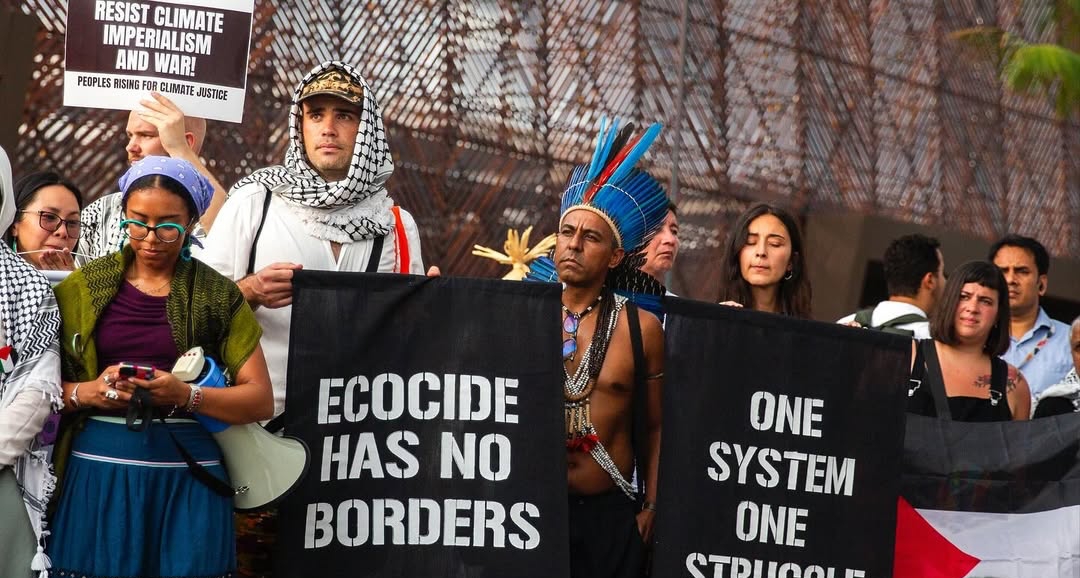
Climate goals flounder in headwind from militarization, competition, AI
COP30 kicked off in Belem, Brazil earlier this week. Delegates from 200 countries are attending. The Climate Action Tracker report released on November 13 shows that the planet is on…
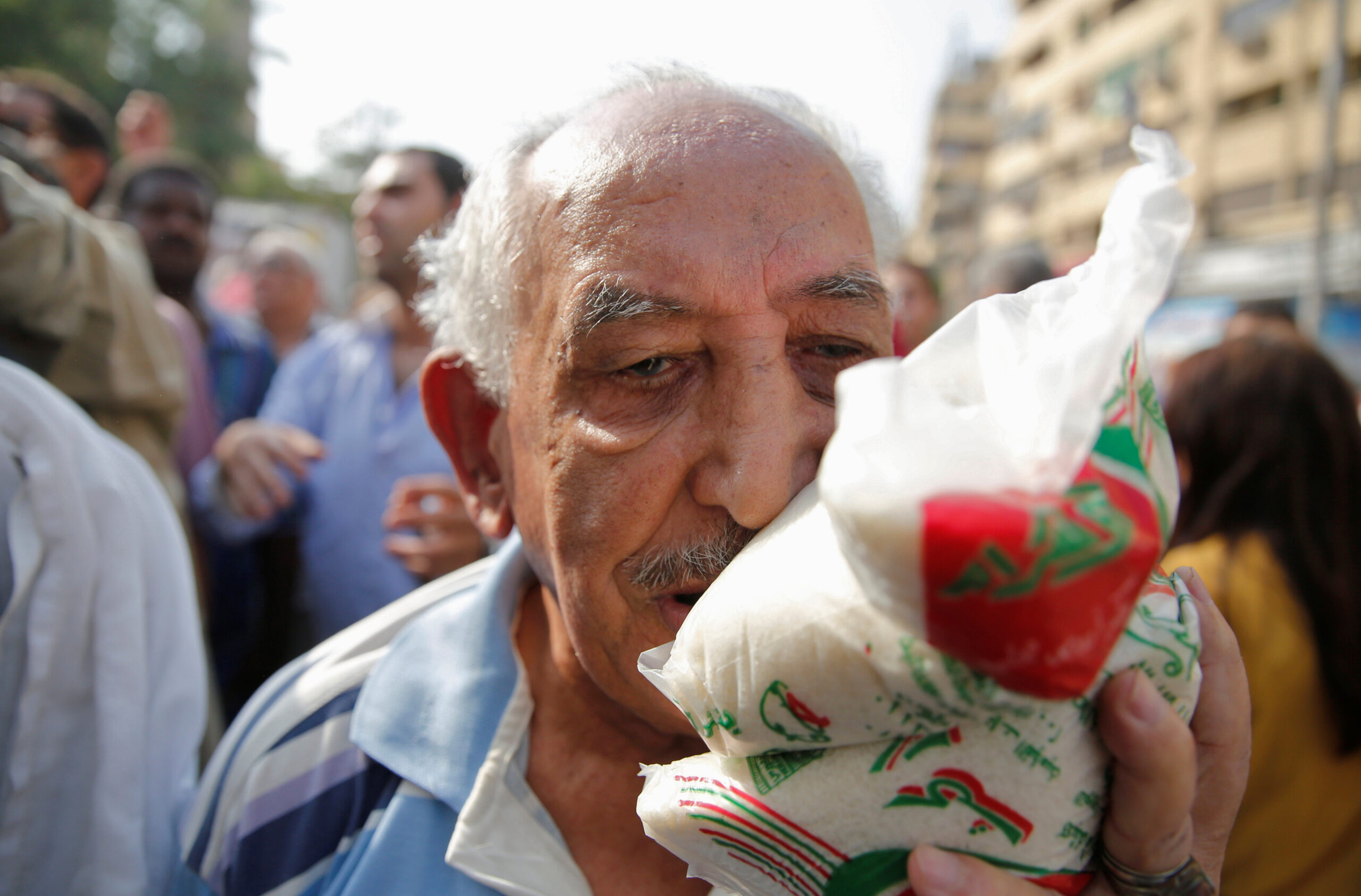
Unsweetened days: How the sugar crisis was stirred by government policy missteps
Another sugar crisis spells out longer queues and shortages as government rushes to address problem.
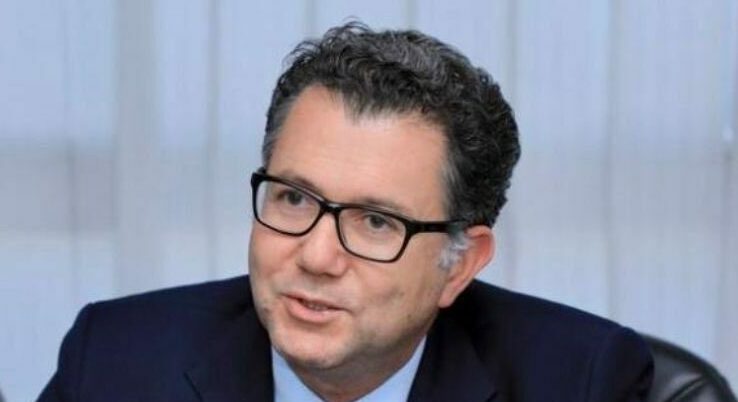
What can we expect from this year’s COP28?
Interview on COP28 with lead Egyptian climate financing negotiator Mohamed Nasr.
Your support is the only way to ensure independent, progressive journalism survives.
You have a right to access accurate information, be stimulated by innovative and nuanced reporting, and be moved by compelling storytelling. Subscribe now to become part of the growing community of members who help us maintain our editorial independence.
Join us