
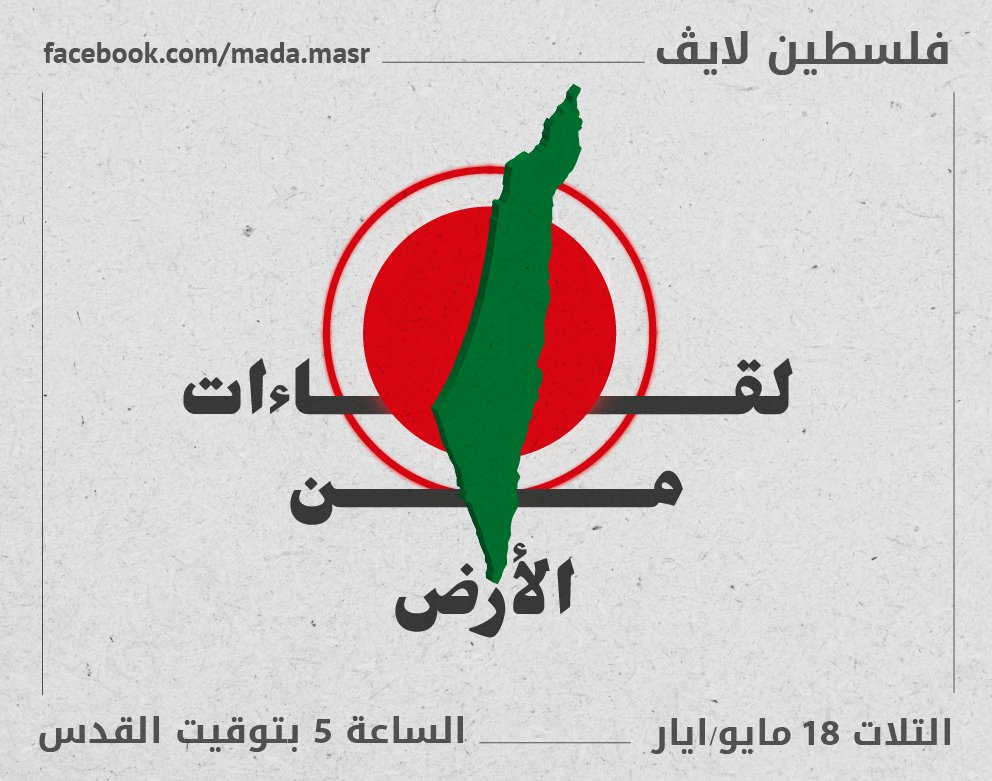
Palestine on strike | Mada live from Lydd
As tens of thousands of Palestinians went on strike against the Israeli occupation on Tuesday, both in areas that Israel annexed in 1948 and in the occupied West Bank, Mada Masr invited activists and journalists from across historic Palestine to participate in a roundtable discussion as an attempt to document some of what is happening.
The discussion, which focused on several cities across Palestine, took place as over 64,000 Palestinian construction workers went on strike, according to Israeli news sources, which noted that for every day the construction sector is shut down, Israel loses 130 million Israeli shekels (around USD$39.8 million). Rights organizations identified at least 48 West Bank residents who were fired from their jobs for participating in the strike.
The strike was paired with demonstrations across several cities, which were met with violence by Israeli security forces. At least four Palestinians were killed in Ramallah and Khalil, where Israeli security forces opened fire at protesters using live ammunition as well as rubber bullets and tear gas.
Yesterday’s casualties brought the total number of those killed in the West Bank since clashes began two weeks ago up to 26, with at least 5,164 injured, according to the Health Ministry in Ramallah.
In the ‘48 areas, at least 58 Palestinian citizens of Israel were arrested, while at least 23 Palestinians were arrested across Ramallah, Khalil, Bethlehem, Nablus and Tubas.
Before the protests were over on Tuesday, Yasmeen Daher from Febrayer and Lina Attalah, Mada Masr’s editor in chief, spoke with journalist Rami Younes from Lydd.
Yasmeen Daher: Rami Younes is a Palestinian journalist and activist living in Lydd. In the last few weeks, there has been a lot of talk and questions about “mixed cities” and Lydd was mentioned repeatedly in several media outlets. Now, as we move from one city to another, we try to look at the events of this intifada. Let’s talk in a spontaneous way about what is happening in Lydd, the protests and so on. Give us a general picture.
[wonderplugin_video iframe="https://www.youtube.com/watch?v=dvXZ-vtdHQ0" lightbox=0 lightboxsize=1 lightboxwidth=960 lightboxheight=540 autoopen=0 autoopendelay=0 autoclose=0 lightboxtitle="" lightboxgroup="" lightboxshownavigation=0 showimage="" lightboxoptions="" videowidth=600 videoheight=400 keepaspectratio=1 autoplay=0 loop=0 videocss="position:relative;display:block;background-color:#000;overflow:hidden;max-width:100%;margin:0 auto;" playbutton="https://www.madamasr.com/wp-content/plugins/wonderplugin-video-embed/engine/playvideo-64-64-0.png"]
Rami Younes: Thanks for hosting me. Before giving a general picture, let me give a quick background on what Lydd is and why we are seeing what is happening now in the city, why Lydd is resisting in the way that it is. We need to understand this because what happened in Lydd will happen in other places in historic Palestine.
Lydd was occupied in 1948. It witnessed ethnic cleansing and massacres, such as the Dahmesh Mosque Massacre. Its history is tough and bloody. After the Nakba, 58,000 Palestinians remained in Lydd. Later on, Palestinians came as refugees from other areas in Palestine.
Palestinian areas were always poor, very poor. In the 1980s, we talked about poverty. In the 1990s, we talked about crime and drugs. Later on, when they emptied the settlements around Gaza, the settlers came and settled in Lydd. The goal of this settlement, as publicly announced, is the Judaization of the city, as in other places.
They built infrastructure for settlers on Palestinian land. They began to exploit problems, social and economic issues that people were suffering from. They started entering Palestinian areas. And it was not like they were buying houses from Palestinians and that’s it. When a settler comes to the city, he initially suffers. There are no schools, no public services outlets, no nurseries to put your kid in when you go to work, that is, if they actually have work. All these social problems, and the shortage in public services, which we suffer from, are solved for the settler when he arrives. All these services are built for him. Not only that, they are built for him by the same academy that prepares the settlers for service in the army.
The people in this academy used to go out jogging and exercising in the streets with maps and M16s. Can you imagine the scene? We have always faced home demolitions in Lydd. Most of the homes were built illegally, as the state never approves any planning for Palestinian areas. So they can demolish the home at any time. They use this as a political tool.
It is important to highlight how settlers have been creating problems and tension for a very long time between Palestinians and Israelis. Even the old Israelis of Lydd, who are poor and living in poor areas usually alongside Palestinians, do not have access to the new services built for the settlers. So even poor Israelis are complaining: Why are new settlers getting lots of privileges? Why am I here in the alley among Palestinians and not able to access these services?
What is happening is even more. The head of city council, a member of Netanyahu’s Likud party, publicly takes pride in his relations with the religious Zionist party members in the Knesset, whom I openly call English Jewish supremacists, those that believe in ethnic cleansing. They want to subject each and every town in Palestine to Judaization. The head of the city council cooperates with them and publicly takes pride in it.
I remember, in 2014, we held a protest in solidarity with Gaza. The guy came out to insult us. He attempted to assault us and me personally, calling for the police to attack us and mobilized settlers to counter-protest in front of us. This was seven years ago. So where we are at now did not come out of a vacuum. So when the Lydd youth came out to revolt, it was for Sheikh Jarrah, Al-Aqsa Mosque, but more importantly, it was for their own dignity and right to a dignified living.
What we saw in Lydd, these protests with big, unprecedented numbers, with Palestinian flags — I am a son of Lydd — we have spent years working on the issue of Palestinian identity with the youth and to see all of those people coming out to protest, chanting Palestinian chants and taking down the Israeli flag and raising Palestinian flags, these things do not happen in Lydd. It was a shock for Israeli institutions, Israeli police and even the media. In the last few days, we saw the Israeli police, a very dangerous institution, attacking Palestinians homes alongside settlers. There are videos documenting this. There is a video from +972 Magazine, where the police alongside settlers are attacking Great Omari Mosque in Lydd. In the video, you can hear the imam of a mosque calling for people to come to protect their homes and the mosque. The video terrified me. Everyone is against us. Settlers, armed settlers, attack us. The media attacks us. The head of the city council attacks us, and even the police, the ones who are supposed to be protecting the law, are against us publicly. On Saturday I did an interview on the BBC attacking the police service. After the interview, the police spokesperson came out and called me a liar! We have documentation of the police practices, and it is not only in Lydd. It is in Haifa, Nassera, Jerusalem, and other places, as well.
YD: A while ago, we had the young woman from Yafa talking about how this moment is exposing the apartheid regime in the interior and in the West Bank. It is not only a moment for a sense of unity but also a moment for political consciousness of what this regime is like, its apartheid nature.
Lina Attalah: Also, I wonder whether there is a crisis of legitimacy for this regime and its project, not only before you, as Palestinians, which is of course a definite thing, but also in the eyes of the rest of the world or for other people internally.
[wonderplugin_video iframe="https://www.youtube.com/watch?v=1k484yBf5Mg" lightbox=0 lightboxsize=1 lightboxwidth=960 lightboxheight=540 autoopen=0 autoopendelay=0 autoclose=0 lightboxtitle="" lightboxgroup="" lightboxshownavigation=0 showimage="" lightboxoptions="" videowidth=600 videoheight=400 keepaspectratio=1 autoplay=0 loop=0 videocss="position:relative;display:block;background-color:#000;overflow:hidden;max-width:100%;margin:0 auto;" playbutton="https://www.madamasr.com/wp-content/plugins/wonderplugin-video-embed/engine/playvideo-64-64-0.png"]
RY: It is now clear that we are living under apartheid. It is done. Everything's out in the open now. We have settlers marking the homes of Palestinians. As a person working in media whose role it is to tell the world what is happening, I am noticing a significant change globally. The mainstream media now wants to listen to us. It is harder to lie to a younger generation. They want the truth. Not only the Palestinian youth but the youth all over the world. Friends in America are telling us ‘we have never seen this much support for Palestinians.’ At the moment, it is not only that we are protesting, we are living a dangerous moment where the priority is to protect our homes from being taken away from us. Now, even those among Palestinians of the interior who call themselves Israeli Arabs not Palestinians, cannot stand behind Israeli state practices. Palestinians who used to serve in the Israeli police are now resigning and posting their resignations online. These incidents are shaking mainstream conceptions.
We are living in a historical moment. Things are changing radically. All the givens are now being shaken. I remember last December, I was in Haifa with a friend, sitting on the balcony feeling devastated after the push toward the “Deal of the Century” and the normalization agreements. He told me, my friend, it is over. There is no point in fighting or writing.
I could not debate him. I did not know what to say. Here we are, now, in May. We proved to the whole world, and more importantly to ourselves, that the cause is alive and kicking even among the younger generation, 15-year-olds, about whom we were worried about losing hope and interest in the cause. Earlier last week, during protests in Haifa, young Israeli women and girls were protesting alongside us. They came alongside their Palestinian friends. Usually, they are also coming from the poor areas and living alongside Palestinians. We have never seen such things before. It is a positive change that is going to remain.
YD: I want to ask you about the narrative on the leadership and how they’ve failed politically. It seems to me that there’s been a change of direction from traditional forms and faces in the political leadership. There seems to be more young men and women who are leading now and with a completely different spirit. How prevalent is this in Lydd and more generally all over Palestine? Do you feel like we’re heading in a different direction?
RY: This is indeed the case, and not just in Lydd and not just in Haifa. The first model for this was the youth of Jerusalem, who rose up in protest throughout Ramadan, near the Damascus Gate. This was simply the youth. What kind of leadership is present in Jerusalem? I’ve lived in Jerusalem for four years. There isn’t any kind of Palestinian political leadership in Jerusalem. The street dictates the mood there. Young men and women from Jerusalem have dictated the protests. It’s a popular youth uprising. This is what’s been incredible about the protests there. Not just in Sheikh Jarrah. I studied at Hebrew University in Jerusalem and I was politically active in the Sheikh Jarrah case, which has been going on for more than 12 years, when they started displacing Palestinian families from the neighborhood. There was media coverage of the events and we used to beg our fellow Palestinian students at Hebrew University to join us in solidarity with the people of Sheikh Jarrah. It was difficult to convince people to join in protests or sit-ins. But this Ramadan, there’s been a stream of buses going in and out of the neighborhood, carrying Palestinians from the north who live within the post-‘48 territories. This was not organized by the political elite. They weren’t the ones to say let’s get buses and organize ourselves. It was just regular people. Something has moved people to act. What happened in Sheikh Jarrah, what happened in Al-Aqsa has pushed people to act in solidarity.
If you look at the street protests, look at how angry these young people are. The political leaders within the post-‘48 borders, well, they’re not really leaders. They themselves were unaware that the Palestinian street had such will to resist.
So you are correct in a way, that there’s been a shift in terms of leadership. I mean, what leadership? There’s something unifying. I live in Occupied Palestine, so I want to talk a bit about the Joint Arab List. There’s a problem with the narrative regarding the joint list, particularly these days. If I, as a son of Lydd and resident of the neighborhood, talk among my friends about the fear of going outside to buy some milk in areas heavily populated by settlers, how can those Palestinian members of the Knesset go out on Israeli media outlets and address Palestinian youth in Arabic to tell them to stop the violence?
What violence are they talking about? We are just trying to protect our homes over here.
Which violence are you talking about exactly? Which violence?
They’re shooting us in the street! Who killed Moussa Hassouneh in Lydd? Settlers! And they’re roaming free, not in jail or under arrest or anything.
We are just trying to protect our homes. The lies perpetuated by the Israeli police that we, as Palestinians, are the ones who start attacking Israeli Jews then why is all the violence happening in Arab neighborhoods? If we were, as they claim, attacking Jews, would we find them in Arab neighborhoods? No. We are trying to defend our homes. Anyone who lives in a mixed city knows this. And we are facing violence from the cops, who come and attack us along with the settlers and who always side with the perpetrators.
So who among them is talking about this? Not a word on these incidents.
So for Palestinian youth, they feel like these people don’t represent them and do not speak for them because they are completely divorced from what Palestinian youth face in their neighborhoods every day. We see what is happening in Gaza. We see what is happening in Jerusalem, and, no, we don’t feel like these politicians are delivering the right message.

تقارير ذات صلة

‘The camp has grown tighter around us’: Palestinian refugees in Lebanon between war and internal restrictions
In the early hours of Thursday, March 5, an Israeli aircraft struck an apartment near the Khalil al-Rahman Mosque in the Beddawi Palestinian refugee camp in northern Lebanon. The attack…

The quiet power of Gaza’s One More Show
An intimate portrait of Gaza's only circus troupe and their resilience amid Israel's genocide
Your support is the only way to ensure independent, progressive journalism survives.
You have a right to access accurate information, be stimulated by innovative and nuanced reporting, and be moved by compelling storytelling. Subscribe now to become part of the growing community of members who help us maintain our editorial independence.
Join us