
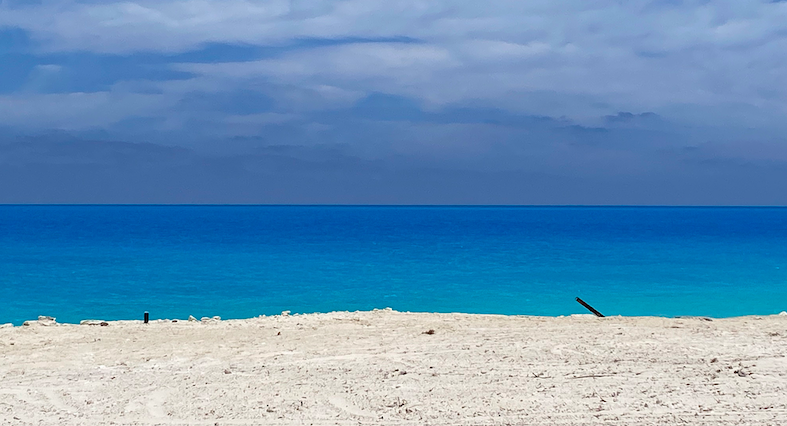
While spending his annual vacation in summer 2020 at his beachside home on the North Coast, Salah Hafez, an environment expert and the former head of the Egyptian Environmental Affairs Agency, noticed something strange.
As he waded deeper into the waters, it appeared to him as if the sea had parted, foretelling the impending construction of a yacht marina that would effectively part the turquoise waters to the west of the Sidi Abdel Rahman Bay, which lies in the western region of the North Coast. Hafez began to worry about what would happen were the construction of this marina to go ahead.
Two years later, Hafez returned to his seaside home only to find the same beach had shrunk. The white sand had largely eroded, revealing underlying rocky formations.
He is not the only one to notice the appearance of these rocky formations; hundreds of people have taken to social media to express their anger about the coastal erosion in the Sidi Abdel Rahman area.
After weeks of inaction, the Environment Ministry released a statement on July 24 ordering the halt of all dredging activities related to the construction of the Marassi Marina, said to be responsible for the coastal erosion, as well as announcing the formation of a committee to investigate the negative environmental impact of the project.
In their statement, the ministry asserted that the responsibility for protecting Egyptian shores lies with the Water Resources and Irrigation Ministry. However, the Environment Ministry’s statement overlooked its own responsibility and that of its subsidiary, the EEAA, in giving the company the green light to go ahead with initial project plans. These plans included several environmental impact studies, experts say, that either minimized or completely ignored any inconvenient information.
The initial construction plans for the Marassi resort included plans to unveil one of the largest yacht marinas in the Mediterranean with space to dock 236 boats of different sizes, as per their website. This appears to be part of recent efforts to revitalize yacht tourism in Egypt.
For decades, resorts and tourist towns in Egypt have set up marinas for small yachts, allowing boat owners to safely dock in small ports that offer services such as maintenance and fuel stops, allowing them to use the yachts seasonally or for day trips, as is common in Sharm el-Sheikh.
More recently, both private developers and the Egyptian government have directed their attention towards megayacht tourism, which services larger luxury yachts owned by global elites who usually embark on longer voyages that include sailing and docking in multiple destinations. The construction of marinas that can accommodate these super yachts would then create demand for coastside properties and attract international buyers to the Egyptian real estate market.
Emaar Misr, the real estate development company behind Marassi that is almost entirely owned by the Emirati giant Emaar, is one of the companies that have set their sights on attracting foreign mega yacht owners. Herein lies the problem: “small yachts can park with their backs to the marina, while bigger yachts need to be parked sideways and thus take up the same space that could accommodate three or four of the smaller yachts at a minimum,” says Hafez. In addition to that, the depth of the port as stated in the company’s initial plans could not safely accommodate larger yachts, he adds.
In an attempt to circumvent the issue, the company decided to construct another marina by extending a jetty deep into the sea, which represented a significant deviation from the initial construction plans submitted to and approved by the relevant government bodies.
Any changes to construction plans should be subject to another round of approvals from the relevant administrative bodies, including the Egyptian Public Authority for Shore Protection under the Irrigation Ministry, in coordination with the EEAA. Yet it seems that the company ignored due procedure, Hafez adds, and went ahead with construction without notifying the relevant authorities of the changes.
Toward the end of 2020, the company went ahead with its plans to construct Marassi Marina by extending a jetty into the sea, blatantly deviating from the approved layout and construction specifications submitted at the outset of the project, says Hafez. In the summer of 2021, the Egyptian government ordered the company to halt construction because of their deviation from the approved layout, in addition to their violation of several laws and procedures related to coastal protection. However, according to Hafez, the company ignored the government order and proceeded with ongoing construction.
With the construction of the new marina well underway, it’s becoming apparent how much of a threat it poses to the bay’s ecosystem, which relies on a continuous process of erosion and deposition to maintain sandy dunes. The new jetty, which extends more than a half kilometer into the sea, has interrupted the flow of winds and tidal currents that carry sand from the northwest of the bay toward the southeast in the direction of Alexandria, affecting all the beaches surrounding the marina, including some of Marassi’s own beaches.
However the beaches most damaged by the construction of the Marina have been the ones to its east, like Diplomats Village and Stella Di Mare resorts. Both beaches have lost access to replenishable sand, eroding the formerly sandy beaches and revealing underlying rocky sediments. Furthermore, on account of the ongoing construction, huge amounts of cement have leached from the marina into the neighboring beaches. "What was once a paradise is now a swamp," laments Hafez.
The new developments have proved a major disruption to this delicate ecosystem. Sidi Abdel Rahman Bay lies to the west of the North Coast. To the northwest of the bay is a rocky inlet covered in sand dunes; this soft white sand comes from the Mediterranean and has been deposited gradually over the span of hundreds of years. Winds coming from the north circulate in the bay in the direction of the south then return to the same inlet which extends into the Mediterranean forming a small peninsula known as Ras Gbeis.
Underwater currents move sediment sand from the deepest part of the bay in front of Ras Gbeis and carry it to the east, thus replenishing the beach with sand in lieu of the sandy cover lost during the storm season in winter. This process occurs naturally and is referred to as sediment transport. It includes a cycle of erosion and deposition controlled by tides and currents and is responsible for the clean, sandy beaches and crystal clear waters that greet the bay’s visitors every summer. The ecosystem of the bay is particularly vulnerable to the butterfly effect, wherein the smallest changes can instigate a much larger variation in the system.

This ecosystem seemed to exist in an eternal equilibrium. However, in the 1970s, the Housing Ministry commissioned a Dutch consulting firm and an Egyptian design consultant to draw up a plan for the development of the northwest coast. This plan sought to move some 750,000 citizens to the coast by the year 2000 after it was developed economically. The north coast’s beach was originally planned to be dedicated to resort tourism, while the inland areas were to be developed for agriculture, industry and housing.
Summer holiday homes were explicitly not to be encouraged, since these generated almost no permanent employment or spin-off industries and, thus, would not contribute to a natural development of the region further inland.
However, things did not go according to plan.
The Housing Ministry under Hassaballah al-Kafrawy (minister from 1977 to 1993), who could be viewed as a kind of godfather of the modern North Coast, spearheaded the creation of two of the oldest Sahel compounds, Marakia and Marabella.
It was then that the ministry realized that the real demand was for holiday homes for Egyptians — owing to the increase in incomes of middle-class Egyptians who traveled to the Gulf in the 1970s, the rising elite associated with President Anwar Sadat’s open door economic policies, and the expansion of capital markets through newly available investments from neighboring Arab countries.
All these factors fueled the “development” of the North Coast from Alexandria to Matrouh, where real estate developers bought land from regional Arab tribes and the state at low prices and then developed and sold them as exclusive holiday homes.
This boom in real estate development coincided with the implementation of the environmental protection law in 1994. According to the legislation, all investors must submit “environmental impact assessment” studies when applying for construction licenses. At the time, Hafez headed the Egyptian Environmental Affairs Agency, which was operating under the prime minister’s office and was one of the most important actors in drafting and passing the legislation.
The law classified construction projects into three different categories, all of which had to obtain a permit from the Egyptian Environmental Affairs Agency before commencing any construction work. The classification rests on the extent to which the project at hand is expected to have an impact on the environment. For example, a grocery store would have to complete a Category A environmental assessment form, while a fertilizer plant would have to conduct a complete environmental impact study under Category C.
According to Hafez, the underlying logic of the law was to put in place a regulatory framework for commercial activities that are known for having a negative impact on the environment. “I would not refuse a licensing request for establishing a fertilizer plant in Downtown, for example, but I would put certain regulations in place to ensure that the plant would have no negative impact on its surroundings. But this would make the cost of setting up a plant in [a regulated area like] downtown more expensive and thus less economically viable for investors, as opposed to setting up a plant in a more remote area in the desert.”
Article 73 of the law prohibits licensing any construction work on beaches within 200 meters of the coastline except after obtaining permits from the shore protection authority in coordination with the EEAA. Along with their licensing request, developers are required to submit a comprehensive environmental impact assessment study of their intended project, including its impact on the local ecosystem of the coastal area and the shoreline, with special emphasis on erosion, deposition, currents, and projected pollution to the area.
In addition to that, Article 74 of the same law prohibits any activities that would affect the natural coast line or alter its configuration either inwards or outwards, without the agreement of the environment agency and the competent authorities. Applicants must submit long-term environmental impact assessment studies that can demonstrate that any undertaken construction will not cause erosion or accretion of the shore. In principle, the law also prohibits any damaging drilling or landfill activities in the sea.
With the real estate development boom in the 1990s, there was a parallel rise in companies that offered environmental impact assessment studies for different projects. The sprawl of urban development extended from the east of Alexandria to its west, with resorts cropping up from Agami towards Marina year after year. According to the environmental lawyer Ahmed al-Saeedy, to meet the increasing demand for construction permits, these same companies became experts in submitting environmental impact paperwork that would get their clients the approval they needed from the authorities without necessarily presenting the most accurate information.
“It is in the interest of companies that offer environmental impact assessment services to retain their clients. At the same time, any consultant working for a real estate development firm cannot go against the firm’s interests by releasing a report that would demonstrate the negative impact of an intended project on the environment. Thus all the studies and reports submitted show only the positive aspects of an intended project, or at the very least, greatly downplay any negative impacts on the environment. The company could then secure the necessary approvals from the environmental agency after paying a small fee, negligible in comparison to the scale of the project and the actual long term impact on the environment,” Saeedy says.
The most important study required to obtain construction permits for these coastside projects is the shoreline change modeling study, a manager at one of the environmental impact assessment companies accredited by the Environment Ministry tells Mada Masr on condition of anonymity. This study is concerned with assessing the impact of construction projects on the evolution of the shoreline while taking into consideration a number of variables, including the nature of the shore, seabed, tides, and currents. The study offers an assessment of the short, medium, and long-term impact of the project on the shoreline for a period of up to 10 years. But most of these studies still do not reflect reality.
“Most of these studies are not conducted using data gathered from the field but with data gathered on the internet. At best, they look at previously published master's or PhD theses, but the data in those studies is usually dated, especially given the current accelerated rate of climate change,” the company source says. “And even if all the data is up to date and accurate, the most minor climate changes can induce larger variations, which the project is supposed to take into consideration.”

In the case of Marassi, the problem was neither unexpected nor unprecedented, it’s not the first project of its type in the North Coast to negatively impact adjacent shores.
Marina al-Alamein Resort was constructed in the late 1980s and early 1990s. In 1987, the Suez Canal Authority designed the preliminary engineering layouts for the lagoon inlet jetties. However, no environmental impact assessment studies were conducted prior to the completion of the project.
In 2000, Dutch engineering firm Delft Hydraulics recommended adding short groins combined with sand nourishment to counter the erosion that occurred after constructing the jetties.
Sand from the desert was deposited on the beach, and groins (hydraulic structures built perpendicular to the shore used to maintain updrift beaches and limit sediment movement) were constructed in a bid to restore the shore’s ecosystem and maintain the sandy beaches.
"In the 1990s, Marina redesigned some of their beaches, which resulted in coastal erosion in the village of Ahlam to its east. Ahlam’s administration decided to remedy this by constructing their own groins to encourage sand deposition, which in turn caused coastal erosion in Teatro Beach to its east and so on,” says the company source.
This chain reaction of erosion was detailed in a study published in 2008. The study attributes the improper design of the coastal engineering structures along the site to a misunderstanding of the prevailing coastal processes. According to another study published in 2012 , “annual sand nourishment operations undertaken down the coast of these structures between 1989 and 2009 were unsuccessful in maintaining stability of this eroded sector because of its steeply sloped beachface and incompatibility of borrowed sand for nourishment.”
A 2020 study conducted a comprehensive historical shoreline analysis for the Marina al-Alamein coast between 1987 and 2017 to quantitatively describe the effects of urban development on the shoreline. The study recommended conducting strategic environmental monitoring programs coupled with long-term considerations when developing coastal engineering structures to ensure the sustainability of available natural resources.
Accordingly both the source at the environmental impact assessment company and Hafez seem to agree that any short-term solutions proposed and implemented by Emaar will only outsource the problem to the neighboring beaches to the east.
The coastal engineering projects carried out in Marina al-Alamein have led to major morphological changes to the shoreline, as the changes in accretion rates have led to the creation of new beaches. The concurrent changes in currents and interference in sand dynamics created a small peninsula or spit on the coastline of the resort, which was later named Devil’s Island.
Although tourists and visitors seem to be enjoying these new beaches, the 2020 study is less optimistic about the area’s future. “If this progressive accretion along the evolving spit continued, the lagoon’s first inlet would probably suffer sedimentation that could cause its closure and deteriorate the lagoon’s water quality.” One of the finest beaches on the Mediterranean would soon morph into a semi closed-off lake with rapidly deteriorating water quality.
Taking all of this into account, Saeedy points to the exceedingly modest capacity of the Egyptian Environmental Affairs Agency in relation to its growing responsibilities. “The number of experts appointed by the agency is very low in relation to the massive workload they are tasked with. On the one hand, it is their responsibility to go through every environmental impact assessment study for every new company or factory applying for a permit. On the other hand, they are also meant to be independently monitoring all projects that have successfully obtained permits, documenting any violations, and imposing penalties, as they are also the law enforcement unit overseeing environmental law violations,” he continues. This leaves experts working for the authority with a herculean task.

In any case, while the private sector claims to at least “conduct impact assessment studies,” according to two other sources working in the environment sector, “national mega projects don’t even bother with conducting studies.”
A few kilometers away from the Marassi resort, the government is in a race against time and an increasingly dire economic situation to establish the city of New Alaimein. According to the same two sources, most of the planned construction in the new city will have catastrophic effects on the coast, considering the absence of any studies on its environmental impact. The government is marketing New Alaimein as a smart "green" city. However, the coastline has been majorly altered through land reclamation from the sea and the digging of artificial lakes, both of which pose a huge threat to the local ecosystem.
“The government only seeks out studies when it’s applying for foreign funding in order to meet the conditions set by donor agencies, but on the ground it’s a completely different story,” says one of the sources, adding that “one official has revealed that the Alamein Towers did actually conduct an environmental impact assessment study, but the government did not publish its results.”
تقارير ذات صلة
What can we expect from this year’s COP28?
Interview on COP28 with lead Egyptian climate financing negotiator Mohamed Nasr.
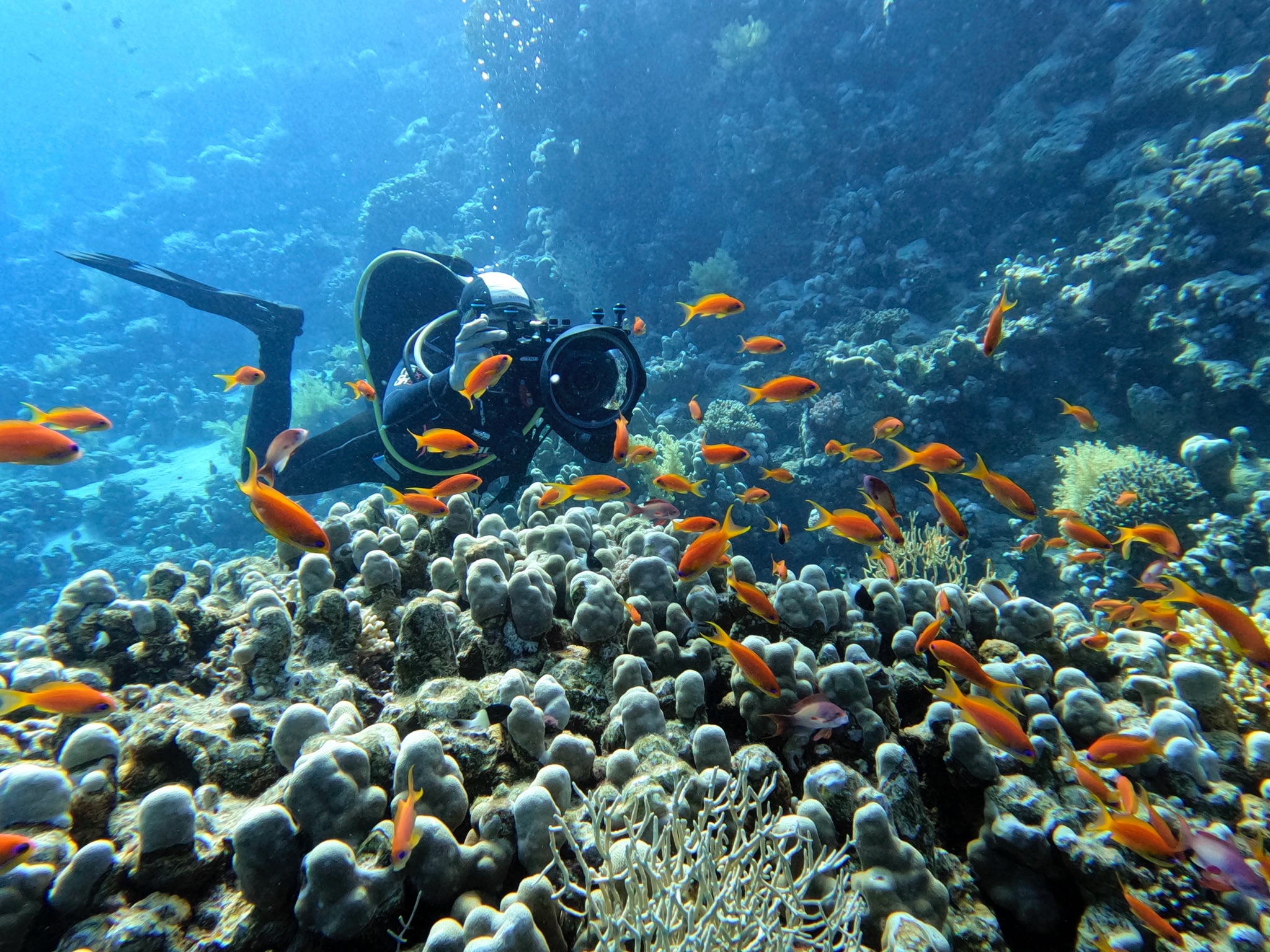
Welcome to Sharm el-Sheikh: President’s City, City of Peace, City of COP27
Beneath the mask the city’s donned for COP27 are the marks of years of uncalculated redevelopment
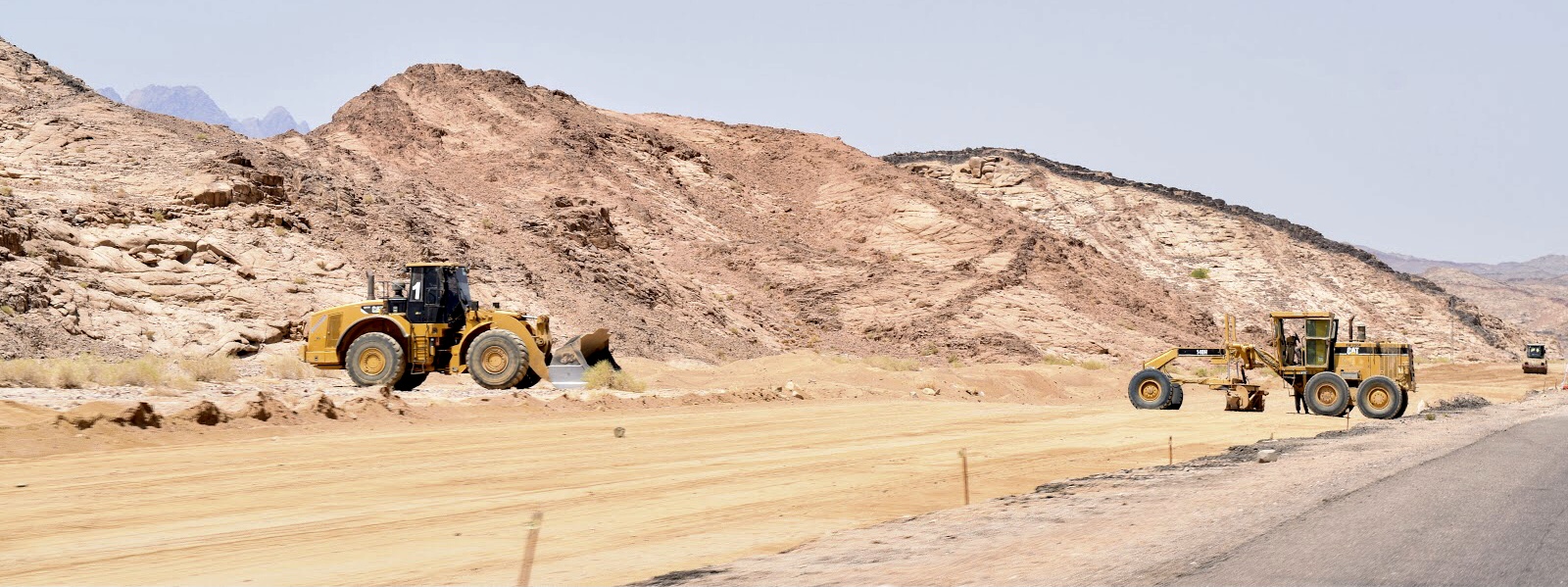
Development threatens residents, environment of historic St. Catherine area
“We woke up one day and there were suddenly 3,000 workers, bulldozers and cars destroying everything. It felt like the end of days,” says Saad,* a resident of St. Catherine…
Your support is the only way to ensure independent, progressive journalism survives.
You have a right to access accurate information, be stimulated by innovative and nuanced reporting, and be moved by compelling storytelling. Subscribe now to become part of the growing community of members who help us maintain our editorial independence.
Join us