
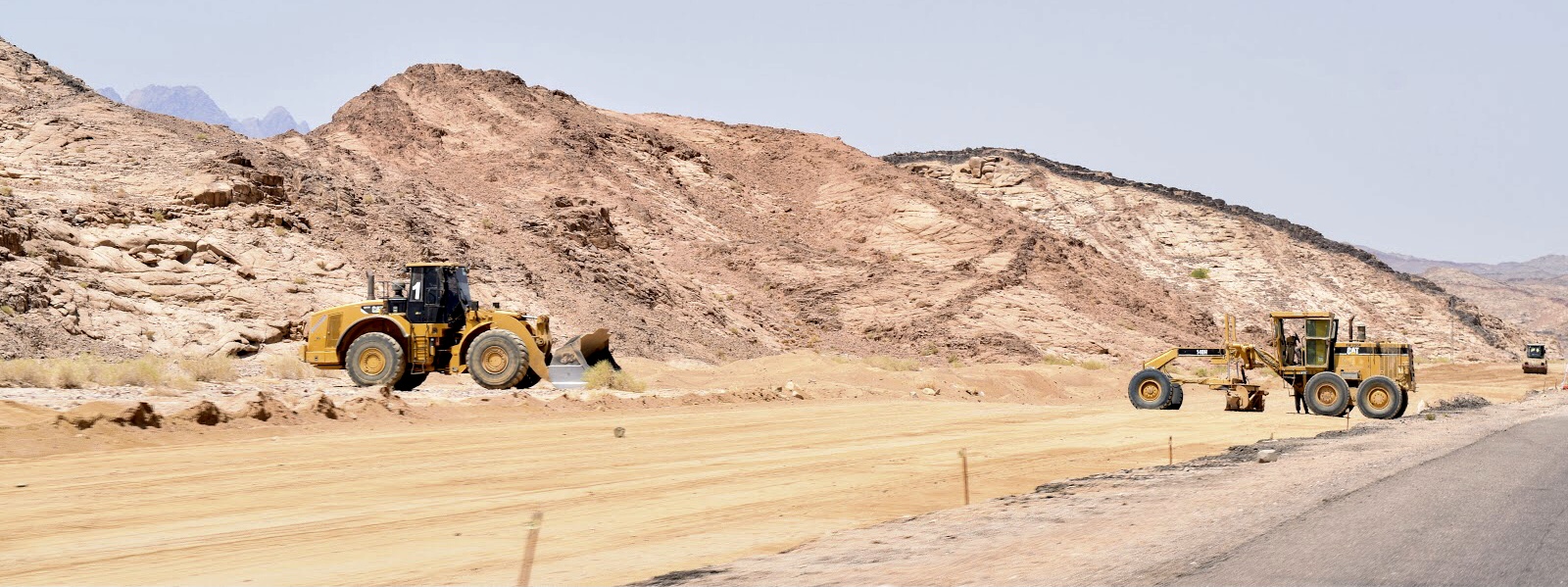
Development threatens residents, environment of historic St. Catherine area
“We woke up one day and there were suddenly 3,000 workers, bulldozers and cars destroying everything. It felt like the end of days,” says Saad,* a resident of St. Catherine in South Sinai.
While Saad describes that day as apocalyptic, officials describe it as a “historic day” that marked the beginning of construction for the development of the city and protectorate of St. Catherine, spurred by President Abdel Fattah al-Sisi’s directive to the government last year to begin work on a project dubbed the “Great Transfiguration on the Land of Peace.”
While the Housing Ministry is implementing the project through the Central Agency for Reconstruction, the Sinai Reconstruction Agency and South Sinai Governorate, a number of private companies have been contracted. The largest of these include Hassan Allam Holding and Abnaa Sinai for Construction and Building — a subsidiary of Organi Group, owned by Ibrahim al-Organi, a prominent businessman from the Tarabin, an influential tribe in North Sinai that works closely with the state and Armed Forces.
“What is happening in St. Catherine is part of what is happening across all of Egypt: a fast train of development running without research, knowledge or understanding, and no one can stand in its way,” says Hakim*, an environmental researcher and former employee of the St. Catherine Protectorate.

Stretching over an area of about 6,000 square kilometers, the St. Catherine Protectorate is home to Egypt’s highest mountains and sites of religious significance, including Mount Sinai and Mount Catherine. Mount Sinai is where, according to scripture, Moses saw God and received the 10 commandments. At the foot of the other peak, lies Mount Catherine, a Christian holy site where, according to tradition, angels descended to rest the body of St. Catherine.
About 1,400 years ago, Roman Emperor Justinian built a monastery named after Catherine to preserve the saint’s memory. To protect the monastery, Justinian fortified it with high walls, protected by guards who came from Egypt and the Black Sea to serve its monks. The descendants of the monastery’s guards who settled in the area, and who later became known as the Gabaleya tribe, still reside on the mountain today. Despite their conversion to Islam, some members of the tribe still work in the monastery.
In addition to its heritage and historical significance, the protectorate is home to rare birds such as the pink sparrow, as well as rare plant species, over 120 of which are medicinal. These plants are rooted in rock formations that are over 800 million years old, providing pasture and habitat for dozens of endangered animals, such as the Nubian ibex and the Sinai leopard.
In 1989, the government declared the area a natural reserve after environmental specialists conducted a European-financed study on the area and its ecosystem, according to Nature Conservation Egypt head Sharif Bahaa Eddin. Given its distinguished cultural and historical wealth, UNESCO named the central area of St. Catherine a World Heritage Site in 2002. This area is home to both St. Catherine’s Monastery — which stands as the world’s oldest monastery still in use — and Mount Sinai.
In the years since this designation, and while the rest of Sinai was swept by the fever of development and reconstruction, St. Catherine managed to preserve its nature, with development slow and limited to electrification projects and the construction of a hospital and some schools.

But the advent of the Great Transfiguration project has already begun to transform the landscape, with the stated goal of replanning the city entirely at an initial cost of over LE4 billion.
According to the project plan, which Mada Masr reviewed, two hotels will be constructed, one near the mountain, and the other, an “eco-resort” with a total of 366 rooms, around 1,500 chalets and villas, a conference hall, an events hall, a theater and a museum. Other plans include building new residential and tourist areas as well as the development of old areas and improving roads and flood drains. Additionally, a proposal has been put forward to replace asphalt with interlocks and strong lighting with dimmer alternatives in an attempt to transform the city’s infrastructure into one that accommodates pedestrians, cyclists and electric cars.
Given that the area is subject to the 1994 environment law and the 1982 natural protectorates law, this full-scale change requires regulatory approvals. Environment Minister Yasmine Fouad had stated that the ministry gave directives to facilitate scientist-led environmental impact assessment studies, stressing that the project would take into account the environmental, social and cultural dimensions of the area to ensure that it is implemented in line with international environmental standards.
However, according to two sources working in nature reserves who spoke to Mada Masr on condition of anonymity, the government started implementing the project without submitting the required environmental impact assessment reports. “They planned the project, and only then did they begin to consider the importance of the reports,” one source says. He explains that over time, environmental impact reports have become mere formalities that are filed alongside other application paperwork without any real impact evaluation.
Moreover, although the environment law requires similar projects to conduct lengthy discussions with the community affected by the project, the city’s residents were not informed about it before implementation began.
Community leaders were only notified shortly before the project began, says Saad, a member of the Gabaleya tribe: “Community leaders were not consulted or asked to share their concerns about the project and how it might affect us.”
As development plans became clear, Saad says, the bit of hope some had about useful development in the area vanished. He describes potholes, cement and construction steel strewn everywhere, heritage cemeteries among other landmarks demolished, massive concrete buildings making the city’s homes look small and foreign and new roads piercing through nature.
“We thought the plan was to upgrade the hospital and bring teachers, or to facilitate access to water,” he says.
According to the city’s residents, there is one hospital which, despite being renovated more than once, is only equipped to treat minor cases. The city also has two health units, which, likewise suffer from a shortage of doctors and equipment, as is the case in areas overlooked by the government. Similarly, the region's sparse schools — four primary schools, two middle schools and just one secondary school — also suffer from a severe deficit of teachers.
The development project also aims to increase St. Catherine’s current population of around 8,000 to 12,000. But existing plans do not include water infrastructure projects to meet the demand of the target population. The city's residents currently rely on underground wells or water from the nearby city of Al-Tor, transported periodically by truck to fill up their local water tanks.
“Where will you get water for those employed in hotels, chalets and homes? They’re building swimming pools while people still wait for the water trucks once a week,” says Adel,* a resident of the city.
Such a lack of planned solutions poses risks to the protectorate.
“Dealing with protectorates is very sensitive. Change can be dangerous and every step counts,” says Hakim. “This conflict has existed from the beginning. The city council saw the introduction of street lights in the 1990s as a major success, but for us in protectorate management, success is keeping the area dark in order to reduce light pollution.”
Tourism is also a major focus of the project, with the city’s administrator Major General Talaat Anany previously stating that the development plan seeks to accommodate 20,000 tourists daily through a global marketing campaign that presents the city as a prime destination for spiritual tourism. According to Anany, a spiritual shrine will be established on the mountains surrounding the Holy Valley, and the region will be developed into “a place worthy of its religious value, presented to humanity and the peoples of the world in an optimal way.” The project also aims to link the city with the rest of the coastal area between Al-Tor, Sharm el-Sheikh and Dahab.
However, according to the sources who spoke to Mada Masr, the development plan is economically impractical and overlooks the nature of tourism in the city.
Tourism in St. Catherine can be categorized into three types: Religious tourism to the monastery and Mount Sinai; “one-day” tourism, where tourists pass through the city within a larger tour of South Sinai; and hiking tourism, the most prevalent type, with visitors hiking through the mountains, valleys and hills of St. Catherine on trips that sometimes last days. Within the latter group, visitors often camp in the open or sleep in simple accommodations and guest houses.
According to Raef,* an environmental researcher who spoke to Mada Masr on condition of anonymity, the hotel occupancy rate in St. Catherine currently sits under 2 percent, which points to the futility of the proposed number of hotels and rooms. At the same time, local hotel owners will lose out on their sole source of income.
“Most tourists that come here look for tranquility and nature. When it starts becoming crowded and packed with buildings, activities and visitors, those seeking calm will begin to look elsewhere,” Raef adds.
But the project being implemented now is a revised version of a previous plan.

According to Fouad,* an environmentalist who reviewed the original plan before its implementation, UN-Habitat commissioned specialized companies to conduct a strategic environmental study of the project as outlined in the government plans. Fouad explains that the original project included a plan to construct a mountain railway and cable car atop Mount Sinai and Mount St. Catherine, as well as a motorcycle racetrack near the monastery and a wall surrounding the city. None of this appears in the latest plan.
At the same time, however, the implementing bodies ignored the recommendations of the UN-commissioned study, according to the source. The recommendations called for reducing the number of hotels and chalets, designating construction-free zones and prohibiting the implementation of a shortcut road between Al-Tor and St. Catherine.
The new road aims to shorten the traveling distance between the two cities by half an hour — but this convenience will have a lasting impact on the region’s natural environment and biodiversity.
“The reserve's flat, contiguous and barrierless terrain allows the rare animals that live there to roam freely for food and mating,” Hakim explains. “What will happen if you divide the flat terrain in two? How can the animals move freely to find food?”
According to Hakim, the protectorate’s administration had already rejected the Al-Tor-St. Catherine road project twice in the 1990s and early 2000s due to the devastating impact it would have on the surrounding environment.
The project not only threatens wildlife but the people who live in the region as well. At the end of the Hebran Valley, and a few kilometers away from the city, lies the Abu Sila area, where computer engineer Mai Abdel Razek has lived since 2015, in a house she built herself in search of peace and comfort she had struggled to find elsewhere in Egypt.
Similar to the rest of the residents, Abdel Razek was taken aback by the construction in the city, later learning through a friend who examined the road plans that her house, which cost over LE800,000 to build, is located near the planned shortcut road linking Al-Tor to St. Catherine. From Abdel Razek’s balcony, the road, which is being paved, appears as a narrow, unfinished strip.
Paving and opening these new roads will also narrow the paths along which Bedouin women herd their livestock. In St. Catherine, women do not walk on main roads or asphalt, but rather have their own carefully chosen paths, which are not frequented by pedestrians or cars and are scattered with plants on which sheep and camels graze.
But the pavement process halted in February as suddenly as it had begun. The fate of Abdel Razek’s home remains unknown to both her and city council employees, she tells Mada Masr.
Fouad tells Mada Masr that the Armed Forces Engineering Authority had already begun paving the road when the protectorate administration objected and confronted it, leading to a temporary halt of operations.
Abdel Razek, on the other hand, was told that roadworks had stopped for a different reason. “I recently learned that this road scheme is obstructed by a police station that they recently built as part of the development plan. What I understood is that there is no coordination between the companies designing the project and those implementing it. The plan is constantly changing, to the extent that they are rebuilding the school in Abu Sila even though they recently renovated it,” says Abdel Razek.
Abdel Razek plans to return to Cairo if her home is removed. But where will the locals with no alternative housing go?
Bedouin houses are normally site-specific. They are often isolated and low-lying with only one floor and a garden. But the houses that the government is building for the local residents — some of which have already been built and house relocated residents — are vastly different: multi-story residential buildings with several apartments on each floor.
According to the city’s residents, and based on what Mada Masr discerned from the current works, the construction methods will only place further stress on the local ecosystem. The use of cement bricks means the buildings are “very cold in the winter and very hot in the summer, so air conditioning will definitely be installed,” says Adel. “But how will these air conditioners not affect the environment, the atmosphere of the place and even noise levels in the area?”
“These do not look like our homes nor do they align with our customs. We would not know how to live comfortably. But when they relocate us, we will have no other choice,” Mostafa Arabawy, a city resident and driver, says.
According to several sources residing in the city, most of the residents whose homes were removed from the nearby residential area of Zaytuna, to make way for the construction of a new residential area, were compensated with money or other apartments. Mada Masr was unable to reach any residents to confirm this.

After over a year of fast-paced construction, some areas of the project have taken a relatively slower turn in their implementation, which sources attribute to the withdrawal of workers and companies in the absence of payments for their work. The government's inability to cover its project’s costs comes in light of a wave of economic distress that was brought about by both local and global factors, leading to the flight of billions of dollars.
Meanwhile, reversing the damage will not be as simple as removing what has already been implemented since that would further the environmental damage, Adel argues. The government should be satisfied with what it has built so far and work on organizing the city’s administration and tightening controls to preserve the environment, which is turning into a challenge with the increasing number of houses and hotels.
“No one is against development,” says Adel. “In other words, no one will be opposed to a new sewage system, a hospital, or teachers for schools that are facing shortages. If you want to develop tourism, develop the town for its inhabitants first. Take their opinion, involve them in the plan and make sure that what happens will not marginalize them or alter their lifestyle. At the same time, take into account the uniqueness of the place and its environmental and cultural significance, and preserve it.”
*Pseudonyms

تقارير ذات صلة
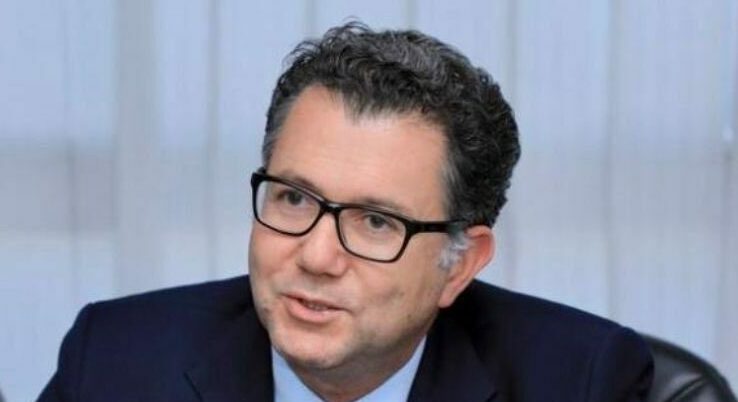
What can we expect from this year’s COP28?
Interview on COP28 with lead Egyptian climate financing negotiator Mohamed Nasr.
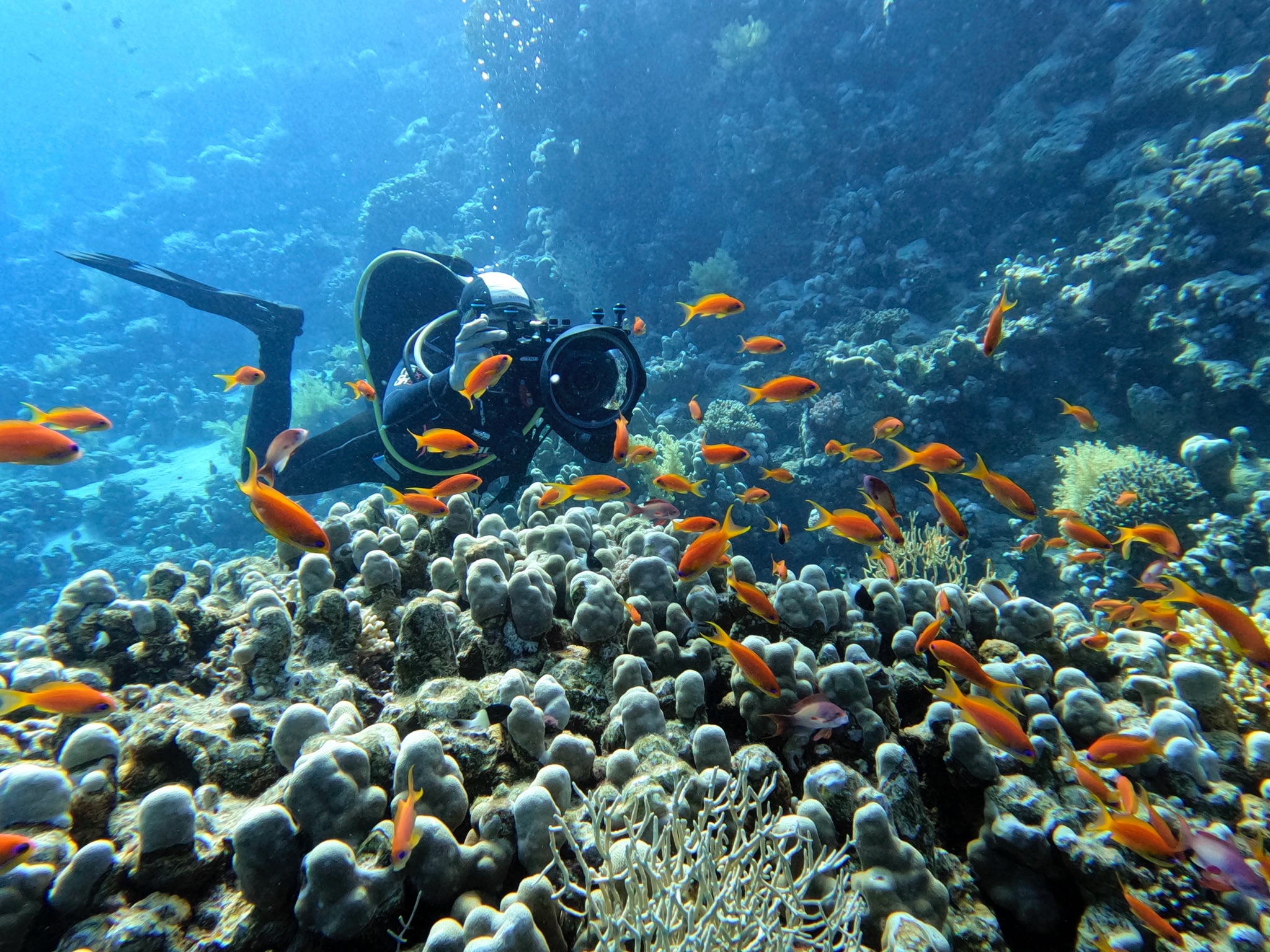
Welcome to Sharm el-Sheikh: President’s City, City of Peace, City of COP27
Beneath the mask the city’s donned for COP27 are the marks of years of uncalculated redevelopment

Cashing in on greenwashing? Egyptian solar companies sell carbon certificates to Global North
Some note that carbon trading does little to reduce the net production of harmful emissions.
Your support is the only way to ensure independent, progressive journalism survives.
You have a right to access accurate information, be stimulated by innovative and nuanced reporting, and be moved by compelling storytelling. Subscribe now to become part of the growing community of members who help us maintain our editorial independence.
Join us