
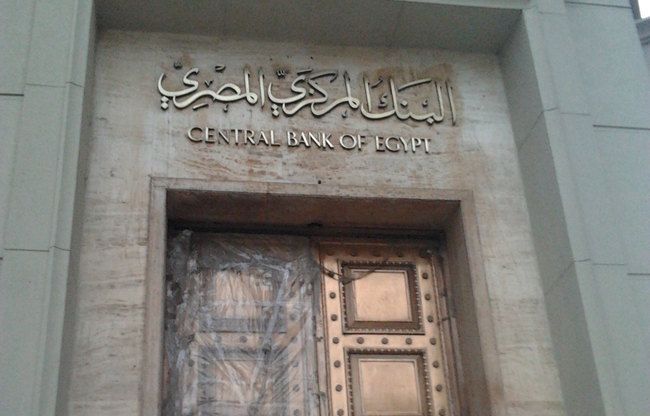
How is Egypt navigating the twin threats of high global inflation and capital flight from emerging markets?
Over March, the government and central bank took action against two specters that loom over Egypt’s economic horizon.
The first is a still-mounting global wave of inflation driving up the cost of living for the public and expenditure for the government.
The second is a dearth of foreign currency reserves — the main fiscal resource needed to maintain liquidity in the national current account.
These issues, both latent over the last six months, were compounded at the end of February by Russia’s invasion of Ukraine.
Amid a prevailing global wind of economic uncertainty in the wake of two years of the pandemic, and anticipation of the first hike to US interest rates in four years, a steady stream of investors began to check out of Egypt’s bond markets, with a total of US$5 billion in outflows in the last four months of 2021, according to a March release from Fitch Ratings agency.
But the outbreak of war spooked investors even further. Net foreign assets in the Egyptian banking system were down in February by more than LE60 billion from January, dropping into the red by more than LE50 billion, new Central Bank of Egypt data showed on Monday.
At least the same amount again exited the bond markets as shockwaves from the war continued throughout March. CI Capital acquired projections from banking sources suggesting around $4–7 billion in capital flight left Egypt over March, said Sara Saada, a macroeconomic analyst with the financial services group
The war also exacerbated the stress exerted by the pandemic on interconnected global supply chains and drove up the prices of key commodities that Egypt’s government imports — energy, wheat and other grains chief among them. The finance minister estimated in March that soaring wheat prices alone would incur additional costs of as much as LE15 billion (around $955 million at the time) to the year’s budget.
With extra strain on the import bill and a foreign currency exodus, the reserves of foreign currency that the government was able to draw upon to meet its foreign currency commitments were fast diminishing.
It was under this growing pressure that the central bank acted nearly a month after the outbreak of the war to try and increase the attractiveness of its bond markets in the global arena.
On March 21, the bank’s monetary policy committee decided in an extraordinary meeting two days earlier than scheduled to raise interest rates by 1 percent across the board.
At the same time, a decision was taken to remove a de facto currency peg that has been propping up the value of the Egyptian pound since the first flotation in 2016, with the central bank announcing that it believes in “exchange rate flexibility.”
The effects rippled immediately through the domestic banking sector, where the pound plunged in value by around 17 percent over the course of the day, and dropping to LE18.24 to US$1 at the time of publication.
According to diagnostics from ratings agencies and the opinions of analysts from equity and investment firms with expertise on Egypt’s economic environment who spoke to Mada Masr, March’s measures might help stem the flow of foreign capital draining from the country, and could attract some liquidity back to the bond market.
However, most noted that Cairo has still been obliged to seek further ballast to boost its foreign asset holdings, with most mulling the potential of another loan from either the International Monetary Fund, to which Egypt submitted an official request for policy and/or financing support on March 23.
Others pointed to the pattern of Gulf investments pouring in over recent weeks as a signal that Egypt has sought sources other than the volatile bond market to bolster its foreign currency solvency.
But, observers also note that the steps taken last week can do little to relieve and even compound the impact of global inflationary pressure on the public, who can expect to feel the effects of a continued increase to the cost of living for some time to come. They also noted that an IMF-recommended policy of public austerity could place still further pressure on households across the country.
March’s measures: Monetary tools to reposition Egypt on the global stage
Egypt’s government is dependent on foreign capital investments in its debt market to supply the liquidity it needs for its current account.
By the end of 2021, non-resident investments in Egypt’s bond market — denominated in dollars, euros and Egyptian pounds — represented about $28.8 billion, or 56 percent of the foreign exchange reserves and other foreign exchange assets held by the central bank, according to Fitch.

As such, Egypt has an incentive to keep interest rates high in the hopes of attracting to its bond market the highest possible amount of investment capital; money borrowed from developed markets and pumped into emerging markets like Egypt’s to profit from the best possible interest rates (the carry trade).
Egypt’s strategy to keep its bond market tempting to interest rate shoppers was effective, piquing interest in the country where investors could buy up government bonds in dollars and receive rates of return averaging as high as 13.5 percent before tax.
A currency peg was also in place in order to attract investors. After a temporary free flotation of Egypt’s currency on global markets in 2016, a de facto peg has more or less held the value of the Egyptian pound at a value of LE15.7 to the US dollar in recent years, with a small drop its value allowed in the early months of the pandemic.
A pound with a fixed value was an attractive prospect: investors could buy in with their dollars or euros, receiving back the payment of the principal and interest in Egyptian pounds, but remain confident, thanks to the de facto peg, that they would ultimately be able to switch their takings back into dollars at an exchange rate very likely to be the same as it was when they first bought in.
But it was increasingly costly for the government to prop up the pound. For example, in the two months after COVID-19 broke out in earnest in 2020, $8 billion was drained from Egypt’s foreign reserves, as the central bank sucked in foreign currency from banks’ balance sheets to push up the value of the pound, and by early 2022, Fitch noted that Egypt’s ability to meet its debt payment schedule could be affected if foreign asset holdings continued to dwindle.
The trend held the potential to alarm investors, who might worry that the central bank could suddenly be obliged to step back from propping up the pound, entailing a sharp, sudden drop in the pound’s value and therefore in the value of any existing Egyptian debt securities held by foreign investors.
The best scenario to placate investors, then, was to facilitate a relatively low value for the pound based as much as possible on normal supply and demand factors. With the pound’s value in constant flux in sync with global markets, investors would be able to buy debt securities at relatively low prices and to predict how much they’ll be worth whenever they want to sell or exit Egypt, while investors can also use their stronger currencies to buy securitized Egyptian debt at lower costs.
A hike to the interest rates also provides an extra incentive to foreign investors, in theory.
Manipulating the value of the pound and tweaking interest rates were the available tools in the monetary policy arsenal of the central bank intended to increase the relative attractions of Egyptian debt securities within the emerging markets sphere as much as possible.
The limits of monetary policy in a globalized world
But such an overwhelming dependency on foreign investors inevitably makes the country vulnerable to events on the global stage, and how these affect investor sentiment.
Interest rate shoppers, often funds rather than individuals, “make decisions regarding the distribution of their investments in debt markets based on the relative weight given to different types of market,” said Sara Saada, the macroeconomist at CI Capital, meaning that while Egypt can incentivize investment in its bond markets, it remains limited by its categorization as an emerging market. “What’s currently happening is a significant reduction in the overall relative weight of emerging markets,” said Saada.
“Investors in Egyptian debt are not leaving for reasons related to this market itself,” said one macroeconomic analyst at a prominent financial group, who spoke to Mada Masr on condition of anonymity.
It’s typical of investors who have funds in emerging markets to strategically withdraw to safer havens in times of crisis, no matter how attractive the emerging market is, the source said.
Safer havens presented themselves this March in the form of the United States, with the Federal Reserve deciding in March to raise interest rates by 0.5 percent for the first time since 2018 and penciling in another six hikes over the course of 2022, ultimately making US debt securities more attractive.
On the whole, experts agree, the foreign capital flight was impelled by global conditions, and is not an issue that can be addressed locally.
How effective are the decisions?
As such, the impact of the March 21 decisions may well have done something to staunch the outflows, but Egypt remains at the mercy of surging global inflation and the consequent investor sentiment.
The decision to raise the interest rate and float the pound is likely to have led to a stop in the outflows, which had begun to slow down in mid-March, said Saada. “But foreign capital has not yet resumed its flow into the government debt market, and it is still too early to talk about that.”
While propping up the pound will no longer eat into the foreign asset holdings, high rates of inflation in global commodity markets continue to present a drain.
The drop in the pound’s value has the potential to push prices up for consumers in Egypt — though the March 22 introduction of a new customs dollar value should mitigate price hikes on imported products. But this is much less substantial of an inflationary factor than the rise in global commodity prices, said Radwa al-Sweify, head of research at Pharos Holding for Financial Investments. While the value of the pound dropped by about 17 percent as a result of the currency re-flotation, the costs of certain commodities have risen by as much as 50–200 percent, said Sweify.
Raising the interest rate is also bound to leave an impact on the government’s budget planning and spending. As economist Amr Adly noted to Mada Masr, while an increased interest rate may draw in foreign debt investors, it represents additional costs for local borrowers from Egyptian banks, the biggest of whom is the government itself.
The government has taken other steps to mitigate the effects of rising inflation and pound devaluation on citizens, including setting a pegged customs dollar exchange — at LE16 to $1 — for imports of basic goods and raw materials, including wheat. More generally, the government has been implementing social support programs that target the poorest sections of the population, one of the tools proposed by international financial institutions in recent years to minimize the social cost of inflation and austerity policies, Adly noted.
He pointed out, however, that such programs do not address the effects of these economic policies on other parts of the population who have still to grapple with increasing prices and devalued incomes as a result.
What’s next: Seeking ballast from abroad
In the meantime, the most viable options for Egypt to shore up its foreign asset holdings are turning to the International Monetary Fund and to “strategic partners in the Gulf,” said Mona Bedir, chief economist at Prime Securities.
US$12 billion of the central bank’s holdings at the end of September 2021, or around 23 percent of foreign asset holdings at the time, were made up of deposits from countries of the Gulf Cooperation Council according to a central bank report on the Egyptian economy’s external situation, with $5.7 billion from the UAE, $4 billion from Kuwait and $2.3 billion from Saudi Arabia.
Over the past two weeks, Egypt has secured around $22 billion from countries in the Gulf.
Saudi Arabia announced on March 30 an additional $5 billion deposit, as well as an investment platform worth up to $10 billion that could see Riyadh claim assets including part of the Benban Solar Park, according to recent comments from Ayman Soliman, the head of Egypt’s sovereign wealth fund, which manages various state-owned.
Saudi Arabia also acted just a few days after the outbreak of the Russian war on Ukraine to extend the term of an existing $2.3 billion deposit until 2026, in sync with a visit paid by President Abdel Fattah al-Sisi to the kingdom.
As for the UAE, Abu Dhabi’s sovereign fund also pledged $2 billion, some of which will reportedly go into Egyptian state-owned assets including Abu Qir Fertilizers, Misr Fertilizers, and Alexandria Container & Cargo Handling Company, an anonymous source close to the deal told Bloomberg.
Qatar and Egypt also agreed to sign investment deals worth $5 billion, according to an Egyptian Cabinet statement released the day after Qatari Foreign Minister Mohammed bin Abdulrahman Al Thani paid a visit to Cairo.
Yet, experts told Mada Masr previously that Egypt is less able to depend on the generosity of Gulf neighbors than it has been previously, while analysts speaking to Reuters have noted that Gulf countries seem to be toughening conditions by seeking hard assets in addition to central bank deposits.
The Gulf investments could act as a guarantee of confidence for further investments from the IMF, however. The government was already mulling a new loan even before the war in Ukraine, with sources telling Mada Masr in late January that in pursuit of loan financing with relatively low interest rates the government was already in talks with the IMF regarding the possibility of another funding facility, likely another of the stand-by agreements, such as the one it took out in 2020.
Sources speaking to Mada Masr in January about preliminary talks between the international lender and Egypt said that liberalizing the exchange rate would be a key prerequisite to a deal.
On March 23, two days after it refloated the currency, the IMF released a statement noting that Cairo had requested support, with an Egyptian Cabinet statement released hours later saying the program “could include additional financing.”
The new program, if it includes a loan, would be Egypt’s fourth since 2016, when it undertook a three-year structural adjustment program along with a $12 billion loan that entailed a major austerity program, over which poverty rates rose by nearly five percentage points between 2015 and 2018.
During the first year of the pandemic, Egypt also took out two further loans, one a follow-up facility to the 2016 program worth $5.4 billion over 12 months, and a second emergency facility worth about $2.8 billion to help cover costs during the pandemic-induced global crisis.
تقارير ذات صلة

Govt’s launch of ‘Citizen Bonds’ challenges domestic banks, sources say
The Finance Ministry’s new “Citizen Bond” is being rolled out today, available for individuals exclusively through Egypt Post branches. The 18-month savings and investment instrument offers a fixed annual return…
Queuing for gold
Gold remains a trusted option for people looking to invest their savings despite a volatile market
A day afloat
Egypt will be getting another US$5 billion in loans from the International Monetary Fund as an increase to the 2022 $3 billion loan, IMF representative in Egypt Ivanna Vladkova Hollar…
Your support is the only way to ensure independent, progressive journalism survives.
You have a right to access accurate information, be stimulated by innovative and nuanced reporting, and be moved by compelling storytelling. Subscribe now to become part of the growing community of members who help us maintain our editorial independence.
Join us