
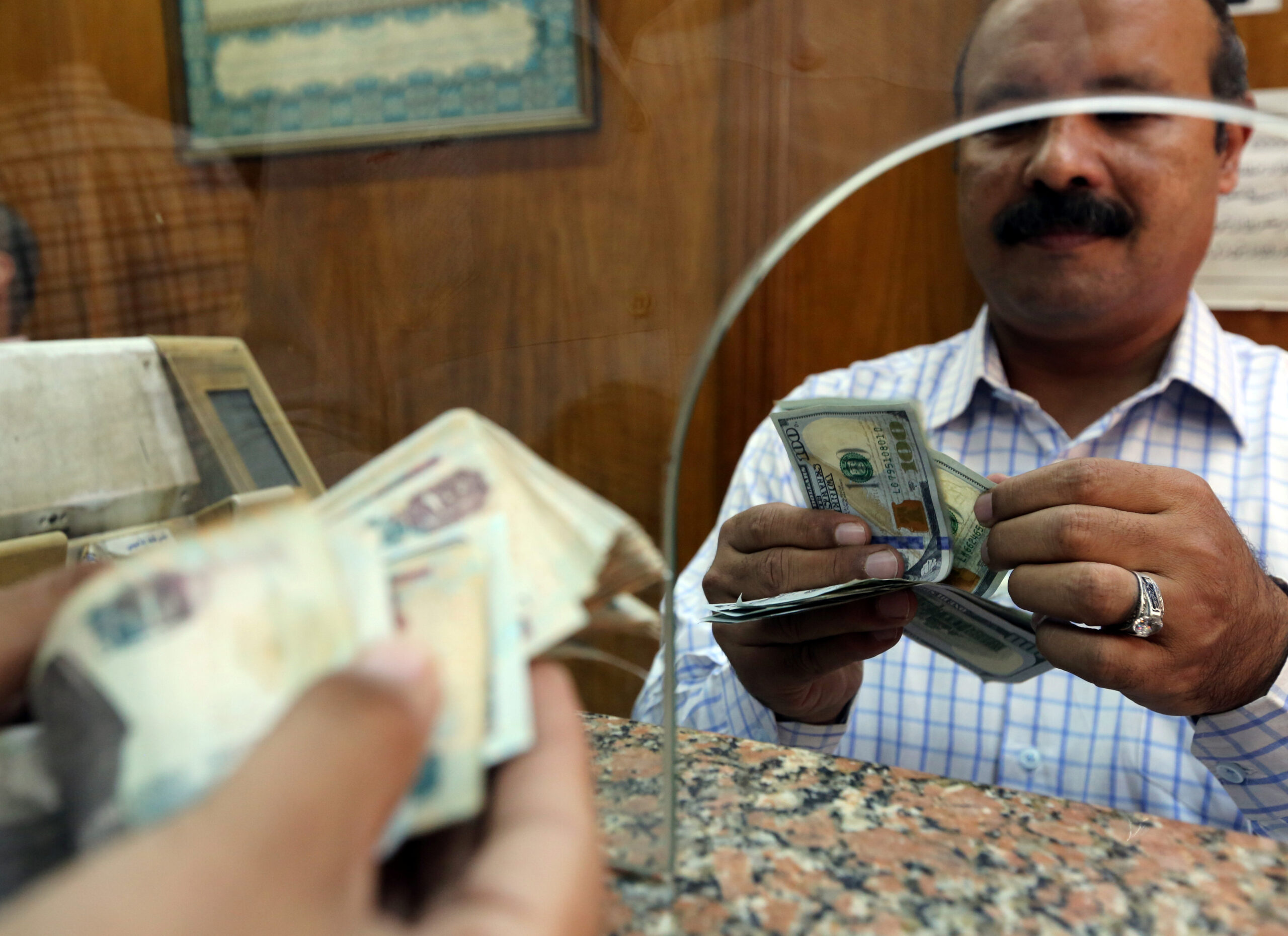
Egypt will be getting another US$5 billion in loans from the International Monetary Fund as an increase to the 2022 $3 billion loan, IMF representative in Egypt Ivanna Vladkova Hollar said on Wednesday.
The new agreement, announced in a press conference that took place during the weekly Cabinet meeting, came hours after the government’s decisions to float the pound — causing a significant fall in the value of the national currency — and to raise interest rates by an unprecedented 6 percent.
The staff-level agreement still needs to be finalized by the bank’s executive board at the end of March, Hollar said.
During the presser, Prime Minister Mostafa Madbuly announced that Egypt will apply for another loan with the international lender to the tune of $1-1.2 billion under the Resilience and Sustainability Facility program.
Hollar noted that the new agreement includes “liberalizing the exchange rate, tightening monetary policy, reforming public finances by rationalizing tax exemptions for government agencies and reducing public investments in infrastructure and social support spending.”
This will translate to slowing down spending on infrastructure projects, including ones “that have until now been operating outside the scope of normal financial supervision,” Hollar said, adding that “the authorities agree” on the necessity of providing adequate levels of social spending to protect vulnerable groups. This, she said, will be accomplished by expanding cash transfers for the Takaful and Karama programs and the LE180 million social protection package approved last month by President Abdel Fattah al-Sisi.
Disbursals of the 2022 loan had been withheld as the IMF’s planned reviews were delayed indefinitely and Egypt did not implement the terms of economic reform entailed in the initial agreement.
IMF Managing Director Kristalina Georgieva said last month that negotiations with Egypt were nearing completion, but she insisted on the need for Egyptian decision-makers to prioritize managing inflation rates and work toward achieving a flexible exchange rate — a matter that Sisi had previously rejected.
In June of last year, Sisi said that Egypt enjoys exchange rate flexibility. “But when it comes to Egypt's national security and the Egyptian people, it's a different matter. When the exchange rate impact affects Egyptians' lives and could harm them, we won't sit still.”
Nevertheless, the signing came just hours after the central bank signaled that a 6 percent interest rate hike was part of a policy move to float the Egyptian pound.
As the first day of the flotation draws to a close, the Egyptian pound’s value has dropped by approximately 60 percent from LE31 to the dollar compared to the day before, settling at LE49.56 in the central bank and averaging LE49.57 in regular banks, according to central bank data.
Mada Masr spoke to analysts and sources in a variety of sectors whose work is connected to the dollar price to understand the impact of today’s decision.
Gold
Wasfy Amin, the former head of the Gold Division at the Federation of Egyptian Chambers of Commerce, tells Mada Masr that today’s depreciation has led to a halt in trading in the gold market, as uncertainties surrounding the dollar rate — the benchmark for gold pricing — have led to confusion.
“Generally, gold traders believe that determining the price per gram of gold necessitates a degree of stability in the pound’s value to ensure that selling a gram at a specific price will enable them to purchase another gold gram later on,” Amin says. “This sentiment has organically permeated the market without any central directive from the Gold Division.”
Moreover, Amin notes that “under normal circumstances, the price of gold is generally adversely affected by interest rates, for an obvious reason, which is that many savers, particularly those with limited savings, tend to opt for bank deposits over gold, especially if they seek regular returns.”
“The impact of the interest rate hike [followed by the introduction of high-yield certificates of deposit] has yet to manifest fully, as it is counteracting another effect, which is the rise in the dollar’s price and the suspension of transactions until the price stabilizes,” Amin says.
Stock market
The Egyptian Stock Exchange incurred significant losses today, as market capitalization dropped by LE48 billion during trading to close at LE2.079 trillion. The market shed around LE130 billion in the second half of the trading session, following notable gains at the beginning of the day driven by pressure from local institutions that recorded net sales of LE425 million.
Speaking on condition of anonymity, an analyst in the research department of a brokerage firm tells Mada Masr that the sharp decline in the stock market’s performance was directly influenced by the decision to raise interest rates and the announcement of high-yield savings instruments by Banque Misr and the National Bank of Egypt.
The source says that “raising the interest rate by this historic percentage — 6 percent — also indicates a record increase in interest rates on investment loans, which is a significantly negative indicator for companies and, consequently, their stocks.”
Regarding the high-yield certificates of deposit, the source says that “their impact is also highly negative as it shifts liquidity away from the money market toward bank deposits.”
The source says that the significant depreciation did not lead to the expected surge in foreign currency purchases, as foreign investors appear to be waiting for the currency to stabilize before making investment decisions amid declining stock prices for foreign currency holders.
Pieter Du Preez, an economic expert at Oxford Economics, tells Mada Masr that an interest rate hike of this magnitude will have “significant economic impacts” in the short term, especially since the central bank had previously raised interest rates by 2 percent in February, bringing the total increase to 8 percent in two months.
Nevertheless, Preez notes that this increase reflects the central bank's focus on targeting inflation reduction by withdrawing liquidity from the market, especially in tandem with the currency devaluation. While this devaluation may provide economic benefits, it also carries the risk of exacerbating inflation, he adds.
Farouk Soussa, a strategic analyst at Goldman Sachs, stated less than a month ago that Egyptian authorities have set three main objectives for the flotation decision: unifying the exchange rate to eliminate the black market, minimizing the extent of any devaluation and ensuring currency stability in the medium term.
To achieve this, two conditions must be met, Soussa added. The first is ensuring a balance between foreign currency supply and demand, regardless of the required devaluation level. The second is ensuring the availability of sufficient foreign currency reserves to meet demand without deviating from the “targeted exchange rate range.”
The pound's decline today occurred despite no increase in demand for hard currency, as importers, traders and bank sources stated that dollar allocations barely changed compared to previous days.
“I can't even talk to a client about opening a documentary credit when the rate changes every minute,” says a banking source who spoke to Mada Masr today.
Customs clearances
Despite Prime Minister Mostafa Madbuly's directive on February 25 to release some of the $1.3 billion worth of strategic goods accumulated at ports, the decision has yet to be implemented.
Consequently, Madbuly returned to issue a similar directive earlier this week for the immediate release of goods from customs. And today, he announced that he will visit the Alexandria port tomorrow to oversee the release of goods, in compliance with Sisi's directives.
The $1.3 billion in strategic goods is in addition to many "non-essential" imports, valued at $5-$14 billion, awaiting the availability of hard currency for their release.
Ashraf al-Qadi, the head of United Bank, tells Mada Masr that the bank initiated significant dollar arrangements today.
Mohamed al-Bahi, a board member of the Federation of Egyptian Industries, tells Mada Masr that some banks have already initiated communication with their clients today to begin the process of providing foreign currency to importers of strategic and essential goods, such as feed, medical supplies and essential production inputs. He anticipates that this will be followed by the release of the remaining goods piled up at the ports, ultimately restoring normal import procedures.
“However, this will require a significant amount of time and effort from the government, not only in terms of procedures but also in sustaining the supply of foreign currency,” Bahi adds.
Bahi points out that companies engaging with banks to secure foreign currency are facing rapid changes in their plans, outpacing their ability to adapt.
“The bank contacts the client at 10 am to secure dollars at, say, LE33. By the time the client gets prepared and arrives at the bank at 12pm, the rate has increased to LE45,” Bahi says.
This proves even more challenging for companies in sectors of products subject to price controls.
Pharma
In the pharmaceutical sector, Ali Ouf, the head of the Pharmaceutical Division at the Federation of Egyptian Chambers of Commerce, tells Mada Masr that banks have contacted companies for dollars to release medicines from Egyptian ports.
However, the crisis lies in the fact that shipments that were supposed to exit at a rate of LE31 will now exit at approximately LE52 following today’s flotation. This price difference will inevitably increase the cost of medicines for consumers, according to Ouf.
Ouf adds that the total value of pharmaceutical products in Egyptian ports is estimated at $80 million, and 90 percent of medicine components are imported in hard currency. He adds that after the 2023 flotation, which saw the dollar surge from LE15 to LE31, medicine prices rose by an average of 12 percent. Ouf explains that medicines are subject to price controls, and that the Egyptian Drug Authority is responsible for pricing them. Companies must submit requests for price increases, which are then reviewed by the authority, even though there has been significant price control evasion as pharma companies have resorted to a competing authority, as Mada Masr showed in an investigation.
Credit cards
The central bank also directed local banks to increase the limit of foreign currency transactions on credit cards.
However, Mohamed al-Etreby, the head of Banque Misr and the Federation of Egyptian Banks, tells Mada Masr that the directives have not been universally implemented in all banks yet. This will depend on each bank’s capabilities and unique circumstances, given the challenging economic conditions, according to Etreby. “We are currently in a state of emergency, with releases of backlogged goods and exchange rate liberalization. We can’t overlook all of this and focus on cards. Not just yet,” Etreby says.
The central bank restricted the use of credit cards last year, setting a monthly limit of $250 for clients using cards in foreign currency transactions while in Egypt. Some banks subsequently implemented larger reductions for card use both within Egypt and abroad.The devaluation should unlock further dollar inflows, pending the IMF’s final approval and disbursement of the first tranche of the loans.
Government officials have said that Egypt secured $10 billion from the UAE at the close of last month, in what was framed as the first installment in a still opaque $35 billion luxury tourism project in Ras al-Hikma.
However, the cash inflow has not been reflected on the foreign currency reserves at the central bank, which saw a modest increase of only $6 million in February.
While Preez views today’s developments as positive, he tells Mada Masr that "we must remain cautious about long-term expectations," adding that the real change will be seen in the amendment of the other policies that have brought the Egyptian economy to this stage, with excessive borrowing at the forefront.
"We still need to see the financial discipline that will reassure us so that the Egyptian government does not find itself in a similar position again in the future," he says.
Even with increased dollar inflows, Egypt’s heavy reliance on borrowing is still a significant hurdle, as it is slated to pay $42 billion in debt over the course of this year alone.
تقارير ذات صلة
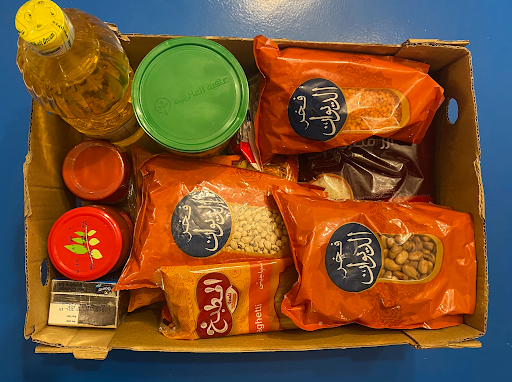
Generosity knocked out of the box: How economic crisis has shrunk Ramadan food donations
Every year, millions of donated food boxes, known as "Ramadan cartons," are distributed across Egypt throughout the month, circulated from individuals to small charitable organizations to large entities, including government…
Understanding the implications of devaluation
Mada Masr explores the impacts of the anticipated devaluation on market prices and external debt.
Egypt and the IMF’s economic dilemma: To review, or not to review, that is the question
Egypt is struggling to make progress on IMF recommendations amid a dollar crunch
Your support is the only way to ensure independent, progressive journalism survives.
You have a right to access accurate information, be stimulated by innovative and nuanced reporting, and be moved by compelling storytelling. Subscribe now to become part of the growing community of members who help us maintain our editorial independence.
Join us