

Govt’s launch of ‘Citizen Bonds’ challenges domestic banks, sources say
The Finance Ministry’s new “Citizen Bond” is being rolled out today, available for individuals exclusively through Egypt Post branches. The 18-month savings and investment instrument offers a fixed annual return of 17.75 percent, with monthly payouts.
The share price is a nominal LE1,000 but subscription begins at a minimum spend of LE10,000, or a purchase of 10 shares, with no maximum cap.
Buyers are required to open a non-interest bearing current account at Egypt Post, with a minimum deposit of around LE300 and a LE200 administrative fee, with purchases to be made strictly in cash, an information officer at a Cairo post office told Mada Masr.
Finance Minister Ahmed Kouchouk said on Thursday that the issuance is part of a broader effort to diversify government funding tools and expand the investor base by offering secure savings and investment options to citizens.
While it is a “bond” in name, the Citizen Bond differs from the traditional treasury bonds the government sells to fundraise for its borrowing. Although its yield is comparable to the post-tax earnings on treasury bonds and bills, it is designed to resemble a savings vehicle like the savings certificates issued by banks in recent years — though with higher returns and shorter maturities.
But according to MP Mohamed Fouad, the Citizen Bonds also serve the dual purpose of supplying the government with a route to a lower-cost source of borrowing, and in turn, exerting pressure on domestic banks to reduce the yields they demand to purchase government debt instruments.
Government bonds and treasury bills are debt instruments issued through weekly auctions conducted by the Central Bank of Egypt to banks and institutions. Their yields fluctuate depending on subscription demand. Bonds are long-term instruments, ranging from one to 30 years, while T-Bills mature between three months and one year.
T-Bills typically carry higher yields than bonds, with returns peaking at 31 percent by the end of 2024, according to CBE data.
Both instruments can be bought and sold in secondary markets — through the stock exchange, capital markets or banks that allow their customers to trade them — and returns earned on the instruments are subject to an automatic 20 percent tax rate. Tax revenues from these instruments reached LE302 billion at the end of the last fiscal year.
The Citizen Bond’s 17.75 percent return is fixed and does not fluctuate with each issuance, differentiating it from treasury instruments. In this sense, it resembles conventional bank certificates.
The distinction lies in the bond’s higher yield and shorter, 18-month term to maturity compared to the three-year certificates currently available.
At the peak of Egypt’s economic crisis four years ago, at which point inflation began to rise, the central bank embarked on a belt of monetary tightening policies that pushed interest rates above 28 percent.
Accordingly, state owned banks — notably Banque Misr and the National Bank of Egypt (NBE) — launched one-year savings vessels offering unprecedented returns starting at 18 percent and reaching as high as 27 percent in early 2024.
The certificate sales, which gathered liquidity worth around LE0.5 trillion, were suspended in April 2025.
Once the height of the economic crisis subsided and inflation began to recede, the CBE started a cycle of monetary easing in April.
Along with suspending the issuance or sale of the 27-percent certificates, the CBE cut interest rates successively, bringing current rates to between 19 and 20 percent.
Banque Misr and the NBE, among others, subsequently reverted to offering only the three-year certificates, with an average annual return of around 16 percent, according to a Banque Misr branch manager as well as announcements from both banks.
According to the banking and fiscal policy sources who spoke to Mada Masr, launching the Citizen Bond at post offices aims to attract a new segment of savers who do not necessarily have a relationship to the banking system, particularly in rural governorates and Upper Egypt, where postal branches are more prevalent. Egypt Post operates more than 4,700 branches nationwide, according to a CBE report.
The postal branches serve as “shadow banks,” in the words of former parliamentary Planning and Budget Committee head Fakhry al-Fiky, describing their role in the financial landscape to Mada Masr.
Finance and Economics Professor Hassan al-Sady told Mada Masr that the turn to the post office reflects a government drive to tap small savers. “The government is now going after every piaster,” he said, pointing out that lower income pensioners and families, such as those who benefit from the Social Solidarity Ministry’s Takaful and Karama cash transfer program, are among those closely linked to the postal network.
Sady expressed doubt that the issuance would generate proceeds comparable to those of previous high-yield savings certificates.
Postal savings represent just one percent of total individual savings nationwide, compared to the 89 percent captured by banks.
The remainder of savings are distributed between Nasser Social Bank and the National Organization for Social Insurance, according to the latest individual savings statistics issued by the Central Agency for Public Mobilization and Statistics for fiscal year 2022/23.
Yet the Citizen Bond remains a relatively high-income option, despite the government’s pitching it as a popular savings vehicle.
The LE10,000 minimum subscription fee, for example, comes in at eight to 20 times higher than the minimum required for savings certificates at Banque Misr and the NBE, which range between LE500 and LE1,200 — undermining the notion that the instrument is aimed solely at small savers.
The CBE could also have made the bond available at state-owned banks as well as at postal branches. Limiting its sales to Egypt Post, and potentially drawing segments of savers away from banks, indicates an additional motive behind the Citizen Bonds’ rollout, sources said.
MP Mohamed Fouad argues that the government’s launch of the Citizen Bond is intended as a method to strike a balance in its borrowing. While its final yield after tax is lower than that of government bonds, its minimum subscription is below the LE25,000 required for government bonds, enhancing its appeal.
According to Fouad, the instrument therefore offers the government a cheaper financing tool than government bonds sales, at which the banks — the main buyers of government debt instruments — tend to demand higher yields.
In his view, the move amounts to an attempt to pressure banks to lower the returns they seek. “One percent less saves the government billions of pounds,” he told Mada Masr.
Government debt instruments represent banks’ main source of profits. When banks’ investments in such instruments declined from 36.4 percent in 2023 to 32.2 percent in 2024 — due to the return of foreign investors to government debts — the growth rate of banking sector profits fell from 116 percent to 89 percent, according to the CBE’s financial stability report issued in March 2025.
How banks intend to respond to the move will become clear in the coming days and weeks.
تقارير ذات صلة
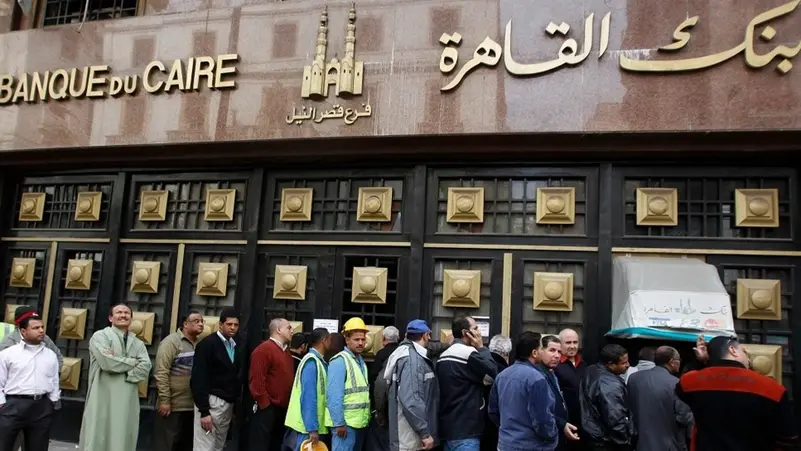
A little for the public, a lot for the state: PM launches small social spending package prioritizing ‘fiscal wisdom’
The new government launched a new social support package worth LE40 billion during a televised press conference on Sunday. Of the total, LE15 billion will go to the Haya Karima…

Queuing for gold
Gold remains a trusted option for people looking to invest their savings despite a volatile market
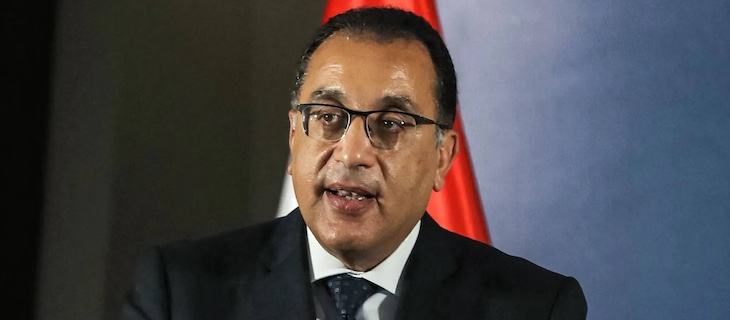
Trade-off: Madbuly’s big debt target and even bigger debt problem
A grand debt-swap proposal is gaining government and media traction
Your support is the only way to ensure independent, progressive journalism survives.
You have a right to access accurate information, be stimulated by innovative and nuanced reporting, and be moved by compelling storytelling. Subscribe now to become part of the growing community of members who help us maintain our editorial independence.
Join us