
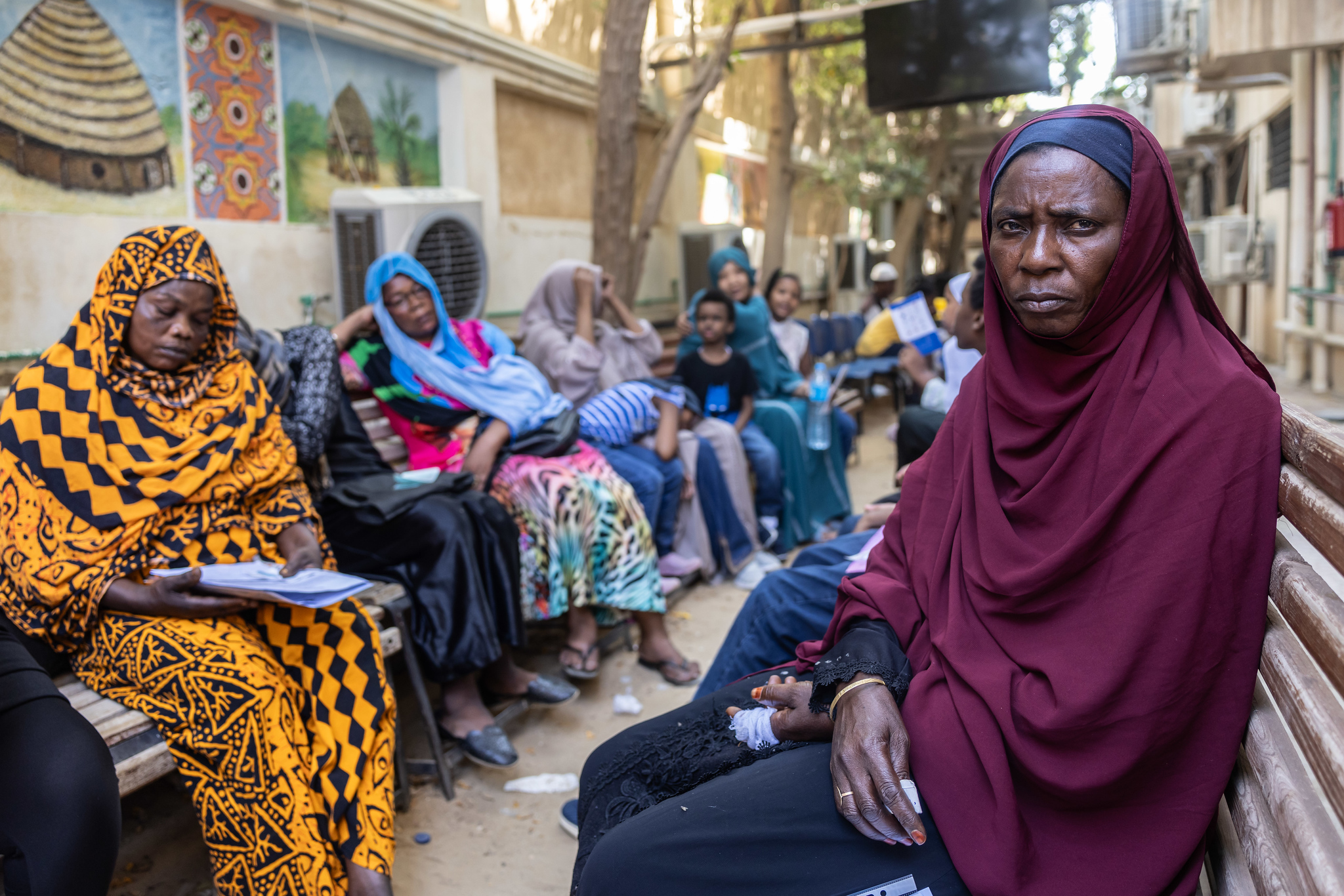
Govt says it’s revising expenditure on hosting ‘guests’ as anti-migration sentiment rises
Last week, government officials revising policy on migration into Egypt took stock of the number of “guests” that currently reside in the country and estimated their impact on annual state expenditure.
The stock-taking came as an apparent harbinger to changes. Egypt is set to receive around 20 million euros from the European Union in return for hosting Sudanese nationals. The Cabinet spokesperson also told television audiences last week that there will be new identity cards for the foreign “guests” and mentioned changes to the fees required for the legalization of their residential status.
Discriminatory sentiment is spreading on social media at the same time, calling for the expulsion of refugees from Egyptian territories. These calls have also demanded a boycott of refugee-owned businesses, citing perceived burdens on Egypt’s economy.
But who are the “guests” in question? And what funds does the state really allocate to them?
In a Cabinet briefing last week, Health Minister Khaled Abdel Ghaffar said Egypt is currently home to 9 million “guests” or “refugees” from around 133 countries, of whom a majority are long-term residents.
These people have access to national services such as health, including vaccination programs, as well as education, Abdel Ghaffar said. Other ministers presented reports on the financial impact of serving “guests.”
Prime Minister Mostafa Madbuly underlined the “importance of verifying these figures” and of “documenting and compiling the expenses incurred by the government in exchange for the services provided across various sectors to Egypt’s guests, who are entitled to receive them on par with the Egyptians,” as well as “documenting the government’s diverse efforts in caring for these millions.”
But, in fact, there are only around 473,000 people registered as refugees in Egypt.
The rest of the nine million people mentioned by the health minister are in Egypt as foreign migrants, much like any other non-native resident, said lawyer Mohamed Farahat, programs director at the Egyptian Foundation for Refugee Rights.
As for these 8.5 million or so foreign migrants, said Farahat, the government does not allocate particular funds to accommodating them. These individuals shoulder the full cost of living in Egypt, including housing, water, electricity, gas, education, healthcare, and other services, without receiving any form of special assistance, he said.
Rayan Farah, a Sudanese mother of two, is a good example. She fled to Egypt in March 2023 after war broke out between the Sudanese Armed Forces and the Rapid Support Forces, planning to stay in the country for some time before heading to Canada or the United States, she says. She chose not to register as a refugee with the UNHCR because she thought it would make it difficult for her to have her migration request accepted at a destination country.
As such, she pays for schooling, healthcare and rent without any support from the Egyptian government, a major challenge given that prices are rising in Egypt’s markets. "The situation has become very difficult for us," she said. "The cost of breakfast for my children ranges from LE10 to LE20 for each child per day, which is a significant amount that I cannot afford, along with school expenses... I haven't been able to pay this year's school fees yet, and we don't know what to do."
She also had to pay for a residence permit from the Interior Ministry’s General Directorate of Passports, Immigration and Nationality in Abbasiya, for which she paid LE600. The fee has now increased to LE770, payable only in US dollars (US$25).
This bureaucratic process, says Farahat, allows the government to collect cash from foreign nationals in the form of residence fees payable by people who have migrated to Egypt. He suggested that the bureaucracy would be better oriented to support foreign nationals getting work permits, for example.
As for those classified as refugees, they do not interact with Egyptian authorities to establish their refugee status, said a former official at the United Nations High Commissioner for Refugees (UNHCR) Egypt office, speaking to Mada Masr on condition of anonymity. "Anyone who illegally enters Egypt with the intention of seeking refugee status must register with the UNHCR,” they said.
The refugee goes to one of the UNHCR’s offices and clarifies the grounds for their asylum claim. The UNHCR then examines the case to determine their status. “One of the main conditions for acceptance as a refugee is being subjected to persecution based on race, color, gender, or due to armed conflicts in their country of origin," said the source.
Of the nearly half a million currently registered in Egypt, most are Sudanese, followed by Syrians, and then smaller numbers from South Sudan, Eritrea, Ethiopia, Yemen, Somalia, and Iraq.
The UNHCR interviews applicants at their office, said Farahat, and then determines if they are eligible for refugee status. Once recognized as refugees, they can claim support from the UNHCR in the form of financial assistance or healthcare and education services.
But the assistance is determined by the refugee's specific circumstances. Those unable to work due to illness may receive particular benefits, or those who are sick may get support for medical services.
Amir*, a Sudanese refugee, told Mada Masr that the financial assistance he receives from the UNHCR ranges between LE1500 and LE2000, and that this is not extended to all refugees but only to those deemed eligible by the UNHCR’s criteria. “In addition to being irregularly disbursed, we have to visit the UNHCR’s headquarters multiple times to inquire about it, as it is not enough to cover basic necessities such as food and drink,” says Amir.
Hasnaa* arrived in Cairo with her husband and five children in December, taking up residence in an apartment on Faisal street in Giza with several Sudanese families. The family then obtained an asylum-seeker registration card from the UNHCR.
"The UNHCR provided us with contact numbers of civil organizations affiliated with them that are supposed to assist all refugees in Egypt with housing, education, and healthcare. We tried to contact them, but they did not respond," says Hasnaa.
"We need money to be able to move around Egypt and to have a private shelter for our family. The UNHCR told us that there are food assistance programs offered by their affiliated organizations, but they haven't responded to us either."
A former official at the UNHCR states that the agency tries to support the most vulnerable refugees in terms of health and education. Nevertheless, due to funding shortages, it is unable to extend support to all individuals in need.
تقارير ذات صلة
A little for the public, a lot for the state: PM launches small social spending package prioritizing ‘fiscal wisdom’
The new government launched a new social support package worth LE40 billion during a televised press conference on Sunday. Of the total, LE15 billion will go to the Haya Karima…

An inferno of austerity or drowning in debt: Egypt’s choices in talks with the IMF
Conditions of the loan have made state institutions wary, but the extent of the currency crisis may make it inevitable

Living outside the city walls: The process of transferring civil servants to the new capital
Since early March, Hatem,* a senior Planning Ministry official, has been anxiously waiting for a text message confirming an appointment to sign a contract for an apartment in Badr City,…
Your support is the only way to ensure independent, progressive journalism survives.
You have a right to access accurate information, be stimulated by innovative and nuanced reporting, and be moved by compelling storytelling. Subscribe now to become part of the growing community of members who help us maintain our editorial independence.
Join us