
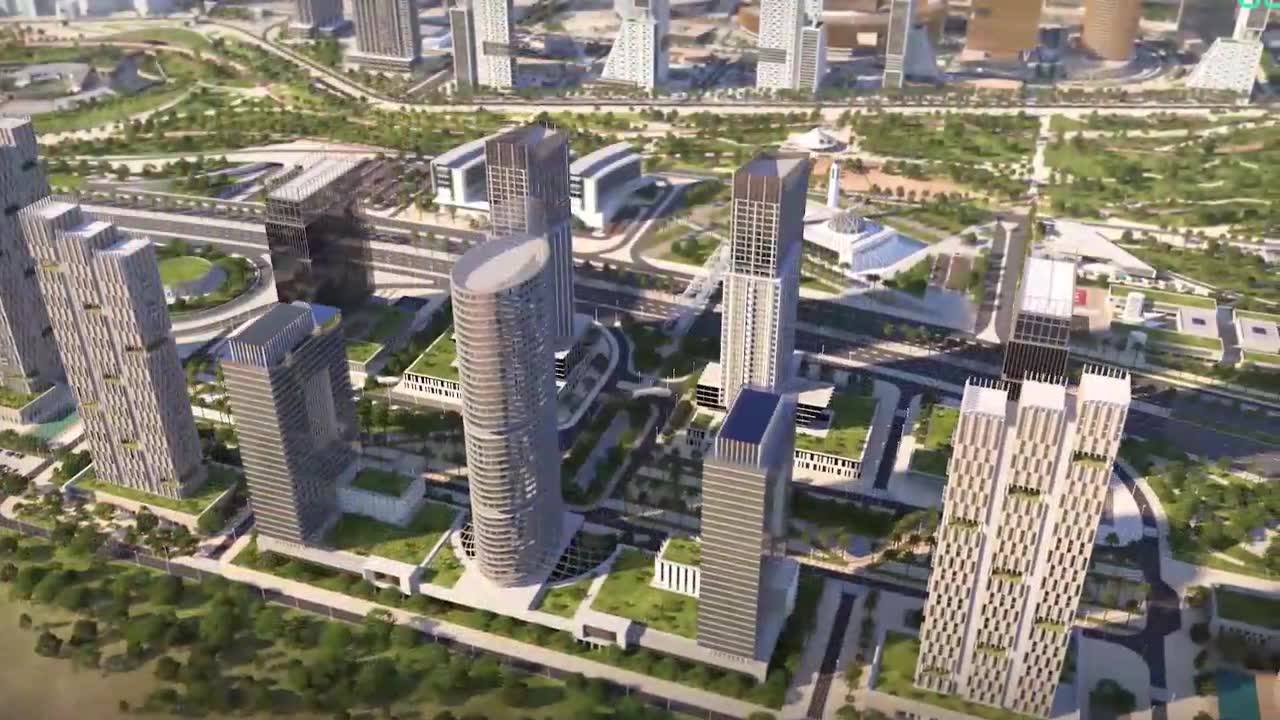
Living outside the city walls: The process of transferring civil servants to the new capital
Since early March, Hatem,* a senior Planning Ministry official, has been anxiously waiting for a text message confirming an appointment to sign a contract for an apartment in Badr City, a residential complex just outside of the new administrative capital built for government employees transferring to work in the sprawling new city. Hatem aspires to be among the first state bureaucrats to live in an area close to the ruling elite and become a part of what President Abdel Fattah al-Sisi has called “the new republic.”
“Pick fortunate neighbors,” he says repeating an Arabic proverb with a smile, “and fortune shall favor you.”
Hatem is one of over 71,000 civil servants who have been selected to be transferred and begin work in the government district of the new capital by June 30. The handpicking of these government employees is part of a larger push to populate the massive 714 sq km city under construction in the desert, halfway between Cairo and Suez. President Abdel Fattah al-Sisi himself is set to relocate there, along with senior members of the security apparatus, ministers, diplomats and high-ranking officers.
The new capital is also being marketed to Egyptian expats, wealthy elites in the Gulf as well as high-income residents of governorates outside of Cairo — who are the most eager to buy properties in the development, several realtors told Mada Masr. Lastly, there are the state bureaucrats who will staff the new capital, most of whom will be allowed to live nearby, primarily in Badr City.
The government’s decisions around who gets selected to be transferred to the new capital and where they are expected to live is a closely monitored security process that also raises issues around class dynamics in urban planning. Lower-level civil servants who will serve the new capital can receive government-subsidized housing yet are essentially priced out of living within the walls of the new city.
Within the Planning Ministry, the selection process began with minister Hala al-Saeed assigning a committee tasked with determining which employees are to be transferred to the ministry’s headquarters in the new capital. Those who preferred not to move could transfer to affiliated agencies that would remain in Cairo, such as the National Planning Institute or the National Institute for Governance and Sustainable Development.
After undergoing a series of security checks, those selected were put through a “training program” that ran from August 2019 until February 2022. According to Hatem, the program primarily revolved around security issues. Employees were reminded of the government’s official code of conduct, which bars them from expressing negative views of the agencies they work for on social media, disclosing work-related information to friends and relatives, or speaking to the media without authorization. The instructors, who were often police generals, questioned participants on hypothetical scenarios such as: “Say you’re at a cafe with your friend. He starts complaining about the general conditions in the country. Do you chime in or stay quiet and listen?” Or: “If you meet important government figures in the context of your job, would you flaunt their pictures on social media?” The correct answer was always “no,” according to Hatem; otherwise, the employee could be rejected for a transfer and suspended.
“They even brought in people from the Administrative Control Authority to teach employees the national anthem,” Hatem says.
Employees who successfully completed the training program are now eligible to work in the new capital by July. They are presented with two options: stay in their homes and receive a monthly transportation allowance of LE2,000 for employees and up to LE2,500 for managers; or purchase an apartment in Badr City or the new capital’s residential quarter. The option to purchase an apartment comes with monthly financial assistance for the installments, LE4,000 for employees and up to LE5,000 for general managers or higher on the condition that the employee occupy the unit for at least seven years.
On March 3, the Cabinet announced that a total of 33,000 Badr City apartments had been allocated to government employees, with 13,000 units ready for handover to any employee who applies and pays a 15-percent down payment, and another 20,000 units still under construction. The announcement came as part of the fast-approaching inauguration of the new capital, which Sisi proclaimed last year would mark the “birth” of the new republic.
Employees who opted for an apartment in Badr City were sent an online survey from the Central Agency for Organization and Administration that included questions on whether their spouses were also government employees and if they had been selected to work in the new capital. The survey also requested information on the number of children the applicant has, what stage of education they are in, and what kinds of schools they attended.
Hatem has been weighing his options since 2019, when he was first informed he would be among the first batch of state employees to work in the new capital. At first, he considered applying for early retirement to avoid what would have been an arduous daily commute from his residence in 6th of October City. But once the option to buy a government-subsidized residential unit was announced, he quickly jumped on the offer.
Hatem plans to rent out his 6th of October City residence by the end of the school year and move his family to the Badr City apartment in order to start looking for adequate schools nearby. “The whole government will be there, so everything will surely be made available,” he says.
While the Badr City units are appealing, employees like Hatem were essentially priced out of living within the walls of the new capital itself. All employees were given the option between Badr City and the new capital’s R3 residential district. While the new capital was more appealing to Hatem, he soon realized that the 130 to 180 square-meter-residential units cost upward of LE12,000 per square meter, bringing their total cost to between over LE1.5 to LE2 million. The Badr City units on the other hand cost a total of between LE450,000 and LE480,000, of which Hatem would have to pay just LE120,000 to the New Urban Communities Authority for a down payment plus fees, with the monthly installments covered by the government for seven years. The choice was easy.
Ali,* a Finance Ministry employee who was informed in January that he would be transferred to the new capital, also opted for a subsidized apartment in Badr City even though he has been paying monthly installments on a new residential unit in New Cairo for the past five years. He hopes to capitalize on the LE4,000 per month in government financial assistance on the Badr City unit by eventually renting or selling one of the two apartments for a profit.
Meanwhile, Hind,* who works in the justice minister’s office, is unsure if she will be able to relocate her family to Badr City. Her husband — who works at the Justice Ministry’s real estate registry— has not been selected for transfer to the new capital, while her two children receive private tutoring near their current home as they complete their final years of elementary and middle school. Hind might opt to live in the Badr City apartment by herself until her sons complete the upcoming school year and her husband finds out whether he will be transferred to work in the new capital or remain in Cairo.
All three government employees are anxious about the upcoming move and living in a relatively remote area. At the same time, they all expressed a sense of pride that they will enjoy privileges not granted to their coworkers who have been left to work in old government facilities. However, the prospect of a transfer has left other employees in doubt. Ali says that a number of his coworkers at the Finance Ministry eventually reversed their acceptances to move and applied instead for transfers out of the ministry’s current headquarters to other departments that will remain in Cairo.
The decision of where to house government employees also raises issues around class dynamics in urban planning. According to Ahmed Zaza, an urban planning researcher and co-founder of 10 Tooba | Applied Research on the Built Environment, residential units for employees moving to the new capital is “a good idea, but they only serve the new capital.” While having a residential development catering to government employees is preferable to forcing a daily commute from Cairo and other areas, Zaza is critical that the only affordable option is located outside of the new capital, itself a massive development two and a half times the area of Greater Cairo. “Why didn’t the Housing Ministry build a residential area for government employees and low-income workers, such as security personnel and janitors, within the capital?” He says the new capital is designed to attract more senior government officials, diplomats, businessmen and others who can afford to live there, and who in turn will attract particular socioeconomic classes of residents.
There are also significant risks in creating an oversupply of real estate. Administrative Capital for Urban Development did turn a profit from expanding roads in Cairo and building highways to the new capital. Yet continuing to construct surplus properties and relying on multi-level marketing to “divvy up the loot” — where big businessmen like Talaat Mostafa and Magdy Rasekh sell to thousands of developers, contractors, realtors and real estate investors, who in turn sell to even smaller actors — is a big mistake, Zaza says. “We see compounds made up of just five or six villas. This kind of market is prone to collapse,” he says. “The government is not considering how long the market can absorb surplus properties, especially as it prepares to construct the second and third phases of the new capital.”
Moreover, relying heavily on foreign investment to fund Egypt’s real estate is also precarious. The continued rise in real estate prices in the new capital — where a square meter can top LE120,000 in some areas — may drive foreign investors toward other international markets like Bangladesh and India.
The Administrative Capital for Urban Development — which is 51 percent owned by the Armed Forces and 49 percent by the New Urban Communities Authority — covered the LE50 billion bill for the construction of the government district using the revenue from the sales of phase-one lands to investors, according to General Ahmed Zaki Abdeen, the chair of Administrative Capital for Urban Development.
Since December 23, the Cabinet has held its weekly meetings at the government’s new capital headquarters.. This marks the beginning of the implementation of the relocation plan, which had been on hold for the past two years, primarily due to the coronavirus pandemic. On February 12, the government announced that all ministries had received their new office space in the new capital, yet as of early April, the process of employee relocation has yet to begin. Authorities are hoping to complete the relocation process by June 30 at the latest. According to an architect affiliated with one of the firms working on the government district, there has been “notable progress” made so far. “You could say that some buildings are finished from a construction standpoint, but of course, preparation and operation take time — especially given the nature of these buildings, which use advanced operation and security technologies,” he said.
Plans to build a new capital were first unveiled in March 2015 at the Egypt Economic Development Conference in Sharm el-Sheikh, with Sisi, UAE Vice President Mohamed bin Rashed, and Emirati businessman Mohamed al-Abbar in attendance. The project was initially supposed to be implemented and funded by Cairo Capital, an Emirati company established by Abbar for this purpose, but the deal fell through after encountering numerous problems. A Chinese developer was then brought in, only for those talks to also fall through before the funding and implementation of the project was finally reassigned to the Administrative Capital for Urban Development.
* Pseudonyms

تقارير ذات صلة
A little for the public, a lot for the state: PM launches small social spending package prioritizing ‘fiscal wisdom’
The new government launched a new social support package worth LE40 billion during a televised press conference on Sunday. Of the total, LE15 billion will go to the Haya Karima…
Govt says it’s revising expenditure on hosting ‘guests’ as anti-migration sentiment rises
Last week, government officials revising policy on migration into Egypt took stock of the number of “guests” that currently reside in the country and estimated their impact on annual state…

An inferno of austerity or drowning in debt: Egypt’s choices in talks with the IMF
Conditions of the loan have made state institutions wary, but the extent of the currency crisis may make it inevitable
Your support is the only way to ensure independent, progressive journalism survives.
You have a right to access accurate information, be stimulated by innovative and nuanced reporting, and be moved by compelling storytelling. Subscribe now to become part of the growing community of members who help us maintain our editorial independence.
Join us