
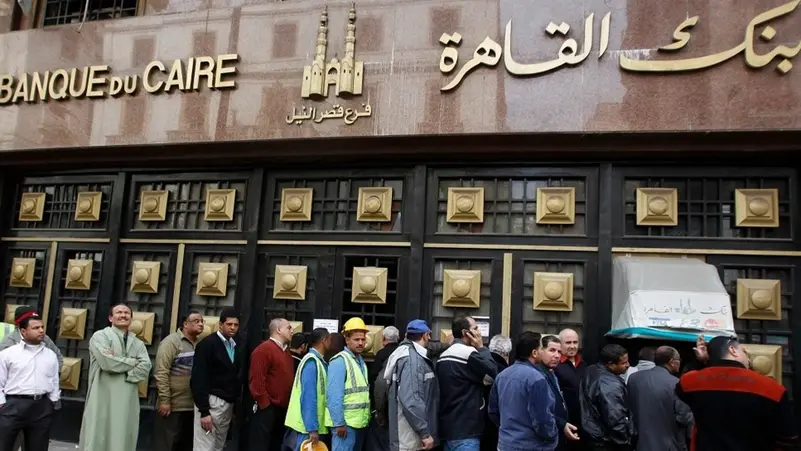
A little for the public, a lot for the state: PM launches small social spending package prioritizing ‘fiscal wisdom’
The new government launched a new social support package worth LE40 billion during a televised press conference on Sunday.
Of the total, LE15 billion will go to the Haya Karima initiative, LE8 billion to food subsidies and LE6 billion to state-funded medical treatment. LE3.3 billion is earmarked to fast-track the integration of Minya Governorate into the universal health insurance system. Wheat farmers are set to receive LE4 billion, with a further LE4 billion directed to beneficiaries of the cash transfer programs, Takaful and Karama.
The social spending packages, which have been rolled out annually since 2022, are a form of bonus spending beyond the allocations to social spending approved in the general budget at the start of each fiscal year.
The government first launched the packages in response to exceptional cost-of-living pressures — beginning with the devaluation of the Egyptian pound amid a financial crisis triggered by shocks such as the Russia-Ukraine war.
But this year, the new package announced by the new Cabinet established last week under Prime Minister Mostafa Madbuly, is not tied to the same kind of urgent economic pressure.
It comes instead as inflation has eased over recent months, with headline inflation dropping to 11.9 percent year-on-year in January, down from the record high 38 percent reached in September 2023, according to data from the Central Bank of Egypt.
While state media emphasized the launch of the bonus package in line with the beginning of Ramadan later this week — as was the case with packages launched over the past two years — the government framed its rationale differently.
Prime Minister Mostafa Madbuly said the package was designed on the basis of improved state revenues, with Finance Minister Ahmed Kouchouk echoing the logic and explaining that the government believes that the resources should be channeled toward citizens’ welfare “with the utmost care.”
MP Abdel Moneim Imam, deputy head of Parliament’s Planning and Budget Committee, explained the policy further, noting that the timing of the announcement comes as Egypt approaches the end of the third quarter of the current fiscal year, 2025/26.
“At this point,” Imam told Mada Masr, “it becomes clearer whether the government will achieve the revenue projections it made at the outset of the fiscal year.”
Imam stressed the importance of this timing. “Taxes are, of course, the state’s primary revenue source. And here we must remember that corporate tax returns are filed in January.” By February, he explained, the government has a much clearer picture of at least a significant portion of its anticipated tax income.
The government’s caution in determining its bonus social spending allocation, waiting to do so until the final stretch of the fiscal year, reflects some of the fiscal constraints tied to its current agreement with the International Monetary Fund.
Under the extended IMF program launched in 2024 the government committed to fiscal “discipline,” with a target primary budget surplus of no less than four percent of gross domestic product in 2025/26, rising to five percent by 2026/27, according to the fourth review of the program.
The primary surplus measures the gap between revenues and expenditures excluding interest payments.
Imam anticipated that tax revenues would have grown relatively well in the first three quarters of the fiscal year. He pointed to the rollout of new phases of tax facilitation measures, noting that the early stages of those reforms in the previous fiscal year contributed to a 35 percent increase in tax receipts.
But the package announced Sunday nevertheless represents a particularly conservative set of allocations, amounting to only around 0.8 percent of total spending in the 2025/26 fiscal year budget.
Unlike last year, there are no allocations for wage increases, fixed bonuses for public-sector employees or cost of living allowances. Nor has the government announced a permanent increase in payments under the Takaful and Karama program.

Source: Social packages data collected by Mada Masr since 2021/22]
Kouchouk said the latest package aligns with the state’s strategic shift over recent years toward cash-based support — another recommendation of previous IMF programs.
Celebrating the shift, Kouckouk said that families will be free to choose the goods that best suit their needs from available outlets, as “they know best how to make optimal use” of the funds.
In addition, the finance minister said that 5.2 million households registered under the Takaful and Karama program will receive exceptional cash assistance of LE400 per month for two consecutive months. Kouchouk stressed that there will be no overlap between the Takaful and Karama beneficiaries and ration card holders.
The cash allocations exceed those granted under last year’s package. Payments under Takaful and Karama have risen by 25 percent, while the largest increase has gone to ration card beneficiaries. This year, the government unified the payment amount, no longer differentiating based on the number of children listed on the card — a change that translates into a 220 percent increase in the grant for that group.
The government has also earmarked support for 30,000 children and 15,000 women under the Child Pension and the Rural Women Pioneers programs, providing LE300 twice to each beneficiary. Kouchouk noted that this measure was introduced at the request of the Social Solidarity Ministry.
Beyond direct cash interventions, the package extends to the health sector, with increased allocations for three items: state-funded medical treatment, the clearance of waiting lists for surgical operations funded by the state and the accelerated integration of Minya into the universal health insurance system. Each of these three components will receive LE3 billion.
Minya — one of the five Egyptian governorates with the highest poverty rates and home to around seven million people according to the latest Household Income, Expenditure and Consumption Survey — represents a suitable priority for fast-tracking into the health insurance system, a researcher of social support systems told Mada Masr on condition of anonymity.
Launched in 2019, the universal health insurance system is one of the state’s healthcare programs and is currently operational in six governorates. Once implemented in a given governorate, it replaces other treatment schemes — including state-funded medical care — according to the system’s official website.
But healthcare allocations within social support packages, the researcher added, should also include the provision of medication for patients with chronic illnesses — such as hypertension, diabetes, cancer and kidney failure — particularly in light of unprecedented rises in drug prices and the persistence of waiting lists for access to essential medications.
At the press conference, Kouchouk also announced the allocation of LE15 billion to complete the first phase of the Haya Karima initiative aimed at improving the quality of life in rural areas. The initiative, launched nearly seven years ago, accounts for roughly 38 percent of the total value of the current package. The funding is intended to bring around 1,000 projects into implementation in the coming weeks, according to Kouchouk.
The social support researcher, however, argued that counting spending on Haya Karima within the social package allocations is problematic, as it conflates social assistance with investment. In their view, Haya Karima constitutes state investment in infrastructure, such as expanding access to clean water, upgrading sewage networks and other essential services across villages.
Mahmoud Samy, a member of the Planning and Budget Committee, told Mada Masr that the implementation of the Haya Karima initiative has been slow in recent years, attributing the delays to government-imposed restrictions on investment, particularly as the cost of completing the project has surged amid record inflation over the past few years.
Samy described the government’s decision to disburse this exceptional social spending package as easy to make, given its very limited size in relation to total budgetary spending.
The budget, he noted, was fundamentally austerity-oriented, meaning the package does not represent a departure from its initial direction.
According to Mada Masr’s calculations, the subsidies, grants and social benefits category ranks as the second slowest-growing category in the state budget over the past decade. Allocations for this category have risen by less than 270 percent between fiscal years 2015/16 and 2025/26.
By contrast, spending on loan repayments has increased by more than 733 percent over the same period, while interest payments have grown by 843 percent.
While Kouchouk stressed that the government relied on existing mechanisms to determine the allocations for the social package, which he said was to ensure swift implementation, key data on household spending patterns remain unavailable. In particular, there has been no updated data on expenditure trends among lower-income families, nor of how poverty levels have shifted across governorates or what proportion of households live below the poverty line.
For more than four years, no new Household Income, Expenditure and Consumption Survey data has been released, economist Salma Hussein, head of the economic and social justice unit at the Egyptian Initiative for Personal Rights, told Mada Masr on Sunday.
A report Mada Masr published last year cited unpublished data from the 2021/22 income and expenditure survey indicating that the national poverty rate had reached 34 percent during that period, an increase of 4.3 percent from the 2019/20 edition.
Samy suggested that the launch on Sunday of the social package could instead be tied to the government’s desire to boost its popularity, amid criticism that the recent Cabinet reshuffle introduced only limited change, particularly as the prime minister himself, who oversaw the period marked by severe economic pressures, has remained in office.
تقارير ذات صلة

Govt’s launch of ‘Citizen Bonds’ challenges domestic banks, sources say
The Finance Ministry’s new “Citizen Bond” is being rolled out today, available for individuals exclusively through Egypt Post branches. The 18-month savings and investment instrument offers a fixed annual return…
Trade-off: Madbuly’s big debt target and even bigger debt problem
A grand debt-swap proposal is gaining government and media traction

Egypt’s auto market: From liberalization to iron-grip monopolies
The government’s policies and the erratic execution of its decisions have fueled frustration
Your support is the only way to ensure independent, progressive journalism survives.
You have a right to access accurate information, be stimulated by innovative and nuanced reporting, and be moved by compelling storytelling. Subscribe now to become part of the growing community of members who help us maintain our editorial independence.
Join us