
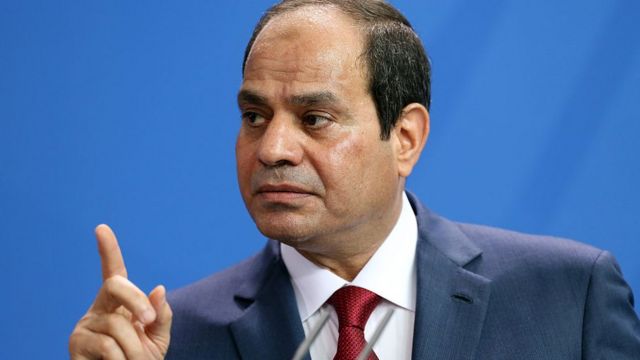
Exposition, character, scene: Staging the upcoming presidential elections
“He wants people who understand the country’s crisis in non-political matters, who know that democracy and elections won’t solve the problems.”
So says a source with access to the halls of power in Cairo, conveying President Abdel Fattah al-Sisi’s read on the current state of affairs at the end of his second term in office and nearly a decade in power.
Sisi’s second term in office ends on April 1, 2024. Under amendments to the Constitution made in 2019, he can be reelected for a third, six-year term that would run until 2030. Preparations for the election will start in October, with the election to be held in February 2024, State Information Service head Diaa Rashwan announced earlier this month.
As such, presidential election time is pressing down upon the country amid the ravages of an entrenched economic crisis.
As part of preparations, says the source, speaking on condition of anonymity, Sisi met recently with senior state figures. He told them he’s looking for a new framework for managing the country’s affairs, says the source, one that would see different parties and forces play a role in proposing solutions for Egypt’s problems. A youth conference will be convened, the source says, for Sisi to listen to new thinking on how to deal with the challenges the country faces.
Sisi has already spent much of his 10 years at the top ostensibly looking for fresh ideas, presiding over a series of youth conferences and calling in 2022 for the convention of the National Dialogue forum. But the latter has proved a disappointment to him, the source says. In the president’s view, “the opposition reduced the National Dialogue to ‘make us a democracy’ and ‘free Douma,’ while ignoring the country’s problems and their solutions,” according to the source.
As much as the president sees many problems in the way the country is currently being managed, the source continued, and he doesn’t think the fresh thinking needed to find solutions should come from a successor to the presidency. He doesn’t believe his departure will be a solution, the source says, and thinks it could make the situation worse if there’s no ready alternative.
It’s axiomatic that a change in leadership doesn’t necessarily equal a change in the status quo. But the precept was taken to the extreme in 2018 when, another source close to decision-making circles tells Mada Masr, Sisi was in favor of running solo, making the elections less a moment of political renewal and more of a referendum on his popularity. Former US Vice President Mike Pence pressed at the time for Egypt to hold multi-candidate elections under pressure from Congress and Sisi ultimately had an ostensible opponent. But the situation is now different, according to the second source, who noted that “the Americans are busy and no one is paying attention to us right now.”
Whether or not Sisi could run solo remains moot. But across the political scene over recent weeks, election season chatter has increasingly suffused the conversation and a set of potential presidential hopefuls are already emerging to test the waters of public opinion. With them, a set of character types has emerged, distilling with them the types of challenge — or lack of it — they could present to Sisi’s legacy and the prospect of his ongoing presidency.
There’s the dummy candidate, or candidates — akin to Ghad Party leader Moussa Mostafa Moussa, who mounted a forgettable challenge to Sisi in 2018. Then, there’s the prospect of a real contender, someone ready and willing to mount a genuine challenge and to leverage the weight of a power bloc that could match the current president’s.
***
Such was the energy behind the campaign of former MP Ahmed Tantawi when he announced in April that he intended to submit his candidacy. Tantawi described the effort as part of his duty to his country and has already opened a headquarters in downtown, Cairo.
But the former head of the Karama Party, one of the seven groups making up the opposition Civil Democratic Movement alliance, was yet to gain the backing of the bloc. His efforts to do so ran off course earlier this month, throwing into jeopardy the prospects of the nominally progressive group throwing its unified momentum behind a single candidate.
To consider their stance on Tantawi’s presidential bid, the CDM convened at the Conservatives Party headquarters on June 7, says a member of the movement speaking to Mada Masr on condition of anonymity. Tantawi presented his platform for the election, according to the source. But the gathering was derailed by a dispute. Toward the end of the four-hour session, a leading CDM member speaking to Mada Masr on condition of anonymity says that Justice Party spokesperson Moataz al-Shennawy asked Tanatwi about his position on the Muslim Brotherhood, which is classified domestically as a terrorist group. Tanatwy responded to say that anyone who breaks the law should be punished and that it is up to the law to decide which parties can operate in the country, according to the leading member. Shennawy pressed for a more categorical rejection of the Muslim Brotherhood, says the source, at which Tantawi repeated his initial response.
Two days later, a few parties with close ties to the state, including the Tagammu Party and the Generation Party issued statements condemning the meeting, even though only CDM party leaders had attended. The statements called on the movement to take a clear position regarding Tantawi’s comments on the Muslim Brotherhood. Commenting on the series of events, the second CDM member told Mada Masr that Tantawi himself had not brought up the Muslim Brotherhood at all, and that the Justice Party leader and spokesperson had created the controversy.
But now, several CDM member parties appear to be mulling fielding their own candidates. Last week, the executive council of the Conservative Party made a preliminary call for party leader Akmal Qortam to run for president, says the council’s secretary-general, Mohamed Amin.
A similar process is taking place at the Dostor Party, according to a party source, who says that several members have called for their leader, Gamila Ismail, to announce her candidacy. Mada Masr tried to contact Ismail but received no response as of the time of writing.
The array of would-be contenders may well be placing their bids on the table with little hope of winning. In the 2018 elections, noted the second source close to decision-making circles, security bodies collected the necessary nomination forms from parliamentarians to secure Moussa as running mate against Sisi with just hours to go until the deadline. If security bodies do not do the same this time, they explained, most candidates will not be able to run.
Presidential candidates must be backed by at least 20 MPs or at least 25,000 eligible voters from at least 15 different governorates, with a minimum of 1,000 per governorate.
Regardless, many potential candidates are seeking the social prestige that comes with the title of “former candidate,” says the second CDM source, and hoping to secure a number of seats in the next parliamentary elections. “We’re just starting and three potential candidates are already coming out of the movement. Who knows who else will follow.”
Outside of the opposition, Wafd Party leader Abdel Sanad Yamama has announced his intention to submit for candidacy in the presidential election in a notably non-combative bid, at the same time as calling for Sisi to be iconized alongside figures like Saad Zaghloul and Mohamed Ali. “Wafd deserves to compete for the presidency,” Yamama told Mada Masr, adding that the party leaders approve his bid, though a ruckus around approving his candidacy broke out among senior party echelons over recent days.
Yet Yamama was clear in rejecting implications that he would not truly be contesting the country’s top position. “When I talk about myself and my history, I do not accept being a runner-up, a marionette, or a stunt double.”
Another name has also been floated as a potential state-accommodated candidate. Former secretary-general of the National Democratic Party, the ruling party under the late ousted President Hosni Mubarak, and now National Dialogue advisor Hossam Badrawi pushed back against rumors that he had been groomed to run against Sisi on May 22. “No one contacted me, and no one negotiated with me in the first place. There is no such thing as a competitor choosing who to compete with. Let's give this place its value. This is illogical and shameful talk.” Yet a source close to Badrawy tells Mada Masr that Badrawi recently committed to considering making a presidential bid, adding that Badrawi has met with Sisi during the past weeks.
As for “a serious competitor, not coming to play or for a walk in the park,” Reform and Development Party leader Mohamed Anwar al-Sadat has hinted both at having inclinations to mount a campaign himself, says the leading CDM member who spoke on condition of anonymity, and at the potential of a “surprise candidate,” describing this latter as someone with a military background — a hallmark feature of a majority of Egypt’s leaders — and the trust of many.
Yet Sadat has ceased to bring up this mysterious candidate during his most recent meetings with the civil movement, the CDM member says. This unnamed potential candidate remains undecided, Sadat has said in recent statements, and will most likely not be able to run due to reasons “out of his control,” which Sadat ascribed to the difficulty of obtaining the approval of the Armed Forces.
Contenders in the 2018 race with military backgrounds were met with decisive roadblocks to their candidacies. Former Armed Forces Chief of Staff Sami Anan announced his intention to run, was arrested in January and handed two military court sentences condemning him to six years in prison for forging military documents, running in an election while still affiliated with the Armed Forces, and for violating military rules by publishing writings on social media. Anan spent nearly 2 years in detention before the sentences were suspended. In a public speech shortly prior to his arrest, Sisi had mentioned those, “known for their corruption, and who won’t be allowed to reach the presidency.”
As for Ahmed Shafiq, a former prime minister and Egyptian Air Force commander, his candidacy announcement was followed by Emirati authorities enacting his prompt arrest in December 2017. He was deported to Egypt, where he was placed under house arrest.
Another military man, Colonel Ahmed Konsowa, was also arrested after announcing his intention to run, and sentenced by a military court to six years in prison, where he remains to this day.
As of yet, the National Elections Authority is yet to open the doors to admit would-be candidate registrations.
Sisi himself is yet to comment on the matter, and journalist Mohamed al-Baz, who has close ties to the authorities, has hinted at the possibility of Sisi not running at all. “I expect Sisi to run in the upcoming presidential election. But surprises are possible.”
In the meantime, the country awaits the list of names for which they will be asked to cast their votes.
* Writing by Ahmed Bakr

تقارير ذات صلة
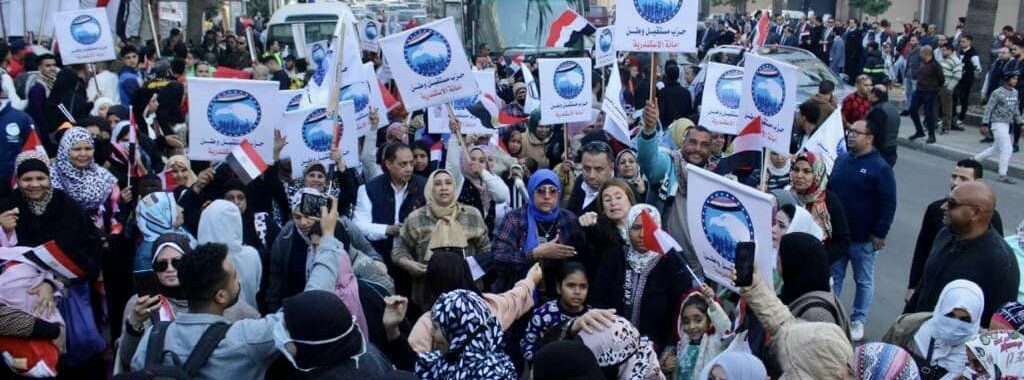
The turnout behind Sisi’s reelection
“There are no obstacles, sir. Voting is proceeding smoothly,” one of the judges supervising polling sites told National Elections Authority director Ahmed Bendari during a conference call, one of many…
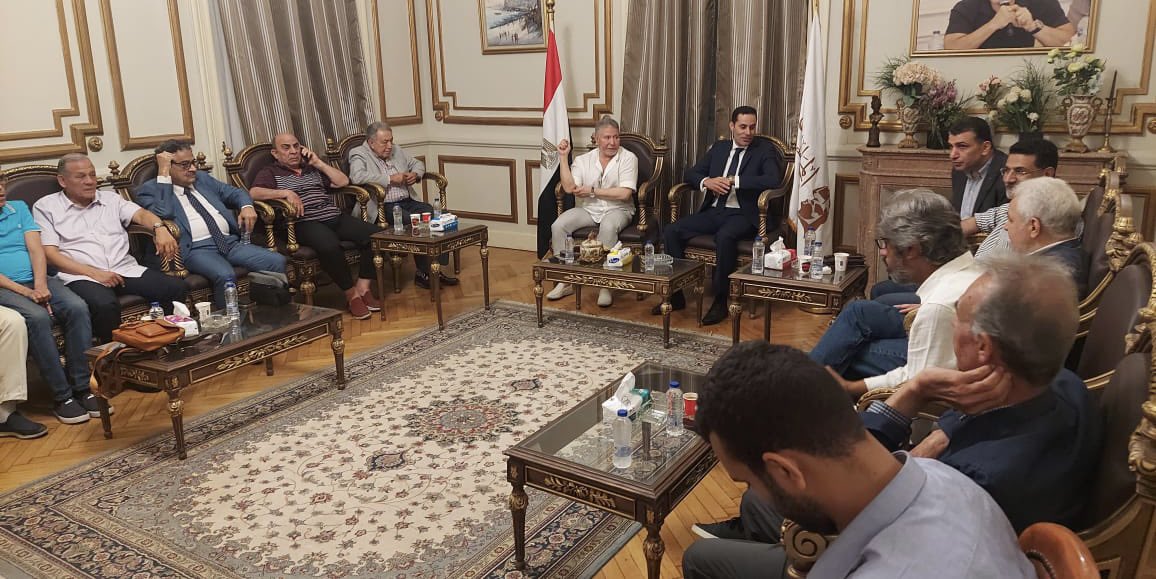
Presidential elections: Seasonal oppositional division
9 of 12 political groups associated with the Civil Democratic Movement urged the public to abstain.
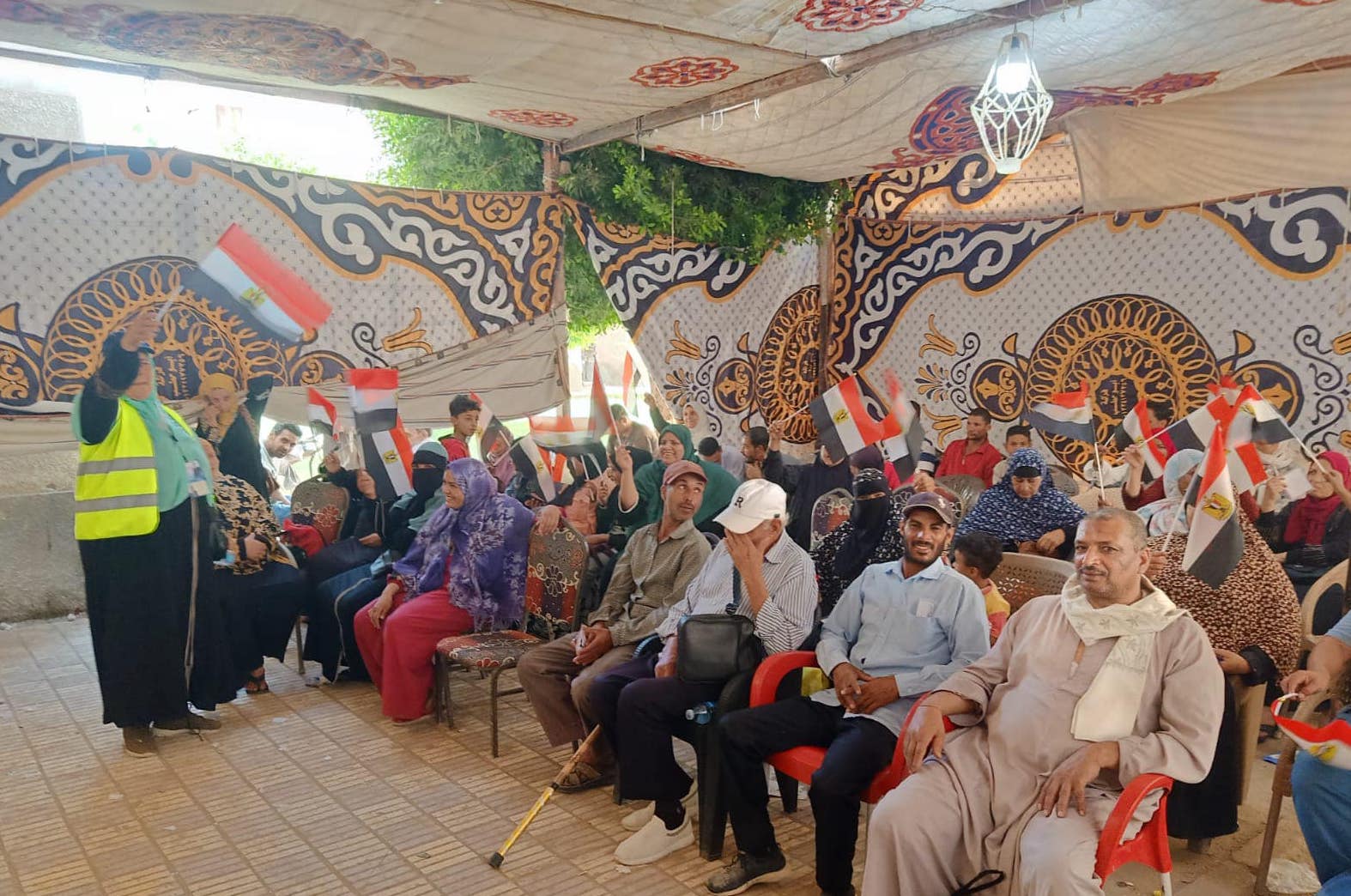
Phase one: The ‘battle’ for presidential endorsements
The effort seemed like part of a plan to create an image of massive public support for Sisi
Your support is the only way to ensure independent, progressive journalism survives.
You have a right to access accurate information, be stimulated by innovative and nuanced reporting, and be moved by compelling storytelling. Subscribe now to become part of the growing community of members who help us maintain our editorial independence.
Join us