
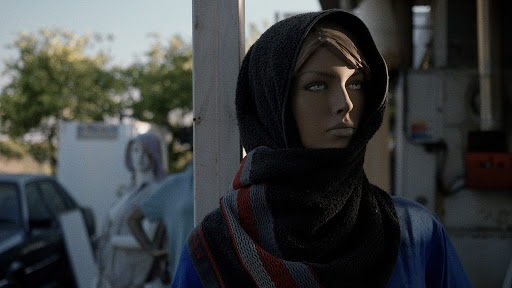
I’ve never lived through catastrophe — some hardships, yes. The loss of loved ones. To disease or unreconciled forces. My memories of such experiences conflict and change. Visceral memories stay with me, momentarily taking over my body. None, however, are as articulated as one survivor of the Beirut port explosion tells filmmaker Sarah Kaskas.
“I remember my jaw”, he says.
How can one remember his jaw? As I type, I feel muted. Strain in my temporomandibular joints, prickling in my cheekbones. Dryness of my tongue, leading through my throat and into my esophagus. My stomach churns, sending trembling signals throughout my body. This is how I imagine him remembering his jaw. This is how I feel it, while watching from a distance.
Kaskas does not allow him to elaborate. His soundbite blends with those of other survivors of one of the most devastating non-nuclear explosions we know of. In Kaskas’ six-minute video, titled “Struck,” each survivor remembers where they were, what they did, how they felt on August 4, 2020. She is one of the five filmmakers selected by Beirut DC and International Media Support for the program “Filming Catastrophe: Beirut - One year later.”
The five shorts are perhaps inevitably apocalyptic.

“Struck” opens with magnificent hellish cloud formations. Pinkish red and black smoke fills the sky. Kaskas does not reveal its source from the start. What’s certain is that it is alluring, simultaneously horrific and beautiful. She further aggravates the mood with the music score she composed. The opening scene reminds me of how Kuwaiti artist Monira Al Qadiri chose to present in “Behind the Sun” (2013), her childhood memories of the 1991 Gulf War. Smoke from the burning oil fields is also magnified and abstracted almost like fiery flowers, and we hear a preacher wondering at God’s power and creations. Narrating her film, Kaskas introduces us instead to her city. She tells us of a self-proclaimed gynecologist who cuts her off while driving to continue his survey of virgin women in the neighborhood. We learn about the crash of the Lebanese lira and the persistent black market. We learn of the foreigners who refuse to leave. We hear it all, until the port explodes. It is then that she transposes us to the survivors and their attempts to grapple with the present. How helpful can it be to try to forget or escape when such an event might seem like yet another manifestation of the systems long-governing the city? “Just stay in Beirut” says one survivor to another. “You don’t have gas to leave.”

Jean-Claude Boulos is among the survivors who, to his own bewilderment, chose to stay. In “Recovery,” he takes us along with his dog for a stroll through the city. We see Beirut through his eyes — using documentary shots that translate the conversation he directs at his dog. The images are sometimes too literal — seeing a broken lamppost when he speaks of power cuts, showing a water hose flowing in the rubble as he speaks of water shortages. He captures the now-empty sites of protest that he had taken part in over the past two years. We see that he has kept his broken glasses and camera, almost like artifacts. The literal representation of his words might feel annoying to viewers if it weren’t so effective in making us visualize the socio-economic and political context leading up to the explosion. Boulos has heard Nizar Qabbani’s poem “Beirut, The Mistress of the World,” more than he can remember. But he chooses to be hopeful even when he feels the need to completely withdraw back into his house. Over the course of the seven years when the ammonium nitrate sat at one of the port’s warehouses, there were 220.8 million, he tells us — a different possibility for every second.

The five filmmakers featured in the program avoid showing images of destruction — recurrent in mass media. The iconic purplish mushroom cloud and the collapsing grain silos appear only scarcely. The chosen points of view are micro, centered on survivors, victims and overlooked parts of Beirut in “Declaration of War” with images of normal life. Workers start their day at the fish market. A woman hangs her laundry to dry. Kids play. A middle-aged security guard plays on his cellphone, while seated by a collapsed wall and a pile of rubble. A shade of blue tints the scenes, offering viewers some distance as they watch the different sides of Beirut. With the exception of one jumpy shot of a dog crossing the street, the camera is almost static and the pace is slow. It’s as if the city’s residents are conserving their energy for a different time. Dagher narrates “A Declaration of War” as a monologue. He questions where the shock-turned-fear-turned-rage-turned-urge for action and accountability has gone. How did this sense of normalcy and adaptability settle in?

In “Minerva,” the closest of the five films to documentary form, Lucien Bou Rjeily commemorates Minerva Fakhir Chartouni. The 69-year-old lived in a flat overlooking the port — a view that the family long felt was a privilege. The film recreates in its opening scene how the titular character felt one minute before the port exploded. She tells her son Joseph not to worry after she deleted a voice note she had just sent him about the smoke rising from the port. It is Joseph who walks us through the events using photographs and footage he shot when he raced to her rescue. He also walks us through his months-long efforts to have the government recognize his mother as a victim of the blast. He is determined not to have her forgotten between a highly bureaucratic and cold state with a never-ending list of requirements on one side and the human instinct to move on, to survive.
We’ve already seen posters of other victims being scraped off a wall in “Recovery.” We’ve watched daily life seemingly restored in “A Declaration of War.” We’ve heard Kaskas actively resist forgetfulness by looking at her old scars.

These are all valid ways to deal with the catastrophe, and the four films play them out to different degrees. Each film complicates our understanding of how we perceive our realities, to endure them or survive them. The documentary material included in every film is colored by the director’s memories and understanding of such an event, that which preceded it and its aftermath.
Perhaps the film that pushes this idea most profoundly is Panos Aprahamian’s “Odorless Blue Flowers Awake Prematurely.” Aprahamian presents areas of the city by the Beirut River after the world has ended. Some humans have survived it such as the narrator, the group who commissioned her to make this film, and the rich who huddled in their towers away from the persistent poverty, pandemic and destruction. But we rarely see anyone on screen. It feels eerily still until we realize the generative power of nature taking over. The end of the world is beautiful as fertilizer powder stuck in the air amid shattered glass, dust and flesh particles allowed the city’s flowers to bloom everywhere. It is so beautiful — if only we could smell it. Aprahamian presents it as a normalized reality. With the calm pace of his film and choice of images, he allows us to slow down, completely, to put our guard down after such an intense watching experience. To pause, breathe … to introspect without judgment.
-----------
On August 4, 2020, two explosions occurred at the port of the city of Beirut. The explosion killed over 200, injured 7,500 and displaced some 300,000 from their homes. For the explosion’s anniversary, Beirut DC (a non-profit supporting independent films) along with International Media Support are presenting an online screening program titled “Filming Catastrophe” which shows a selection of Arab films dealing with crises, including the sub-program “Beirut: One Year Later.”
“Beirut: One Year Later” is also part of a month-long campaign that involves civil society that is calling for accountability.
You can watch the five films at Aflamuna
تقارير ذات صلة
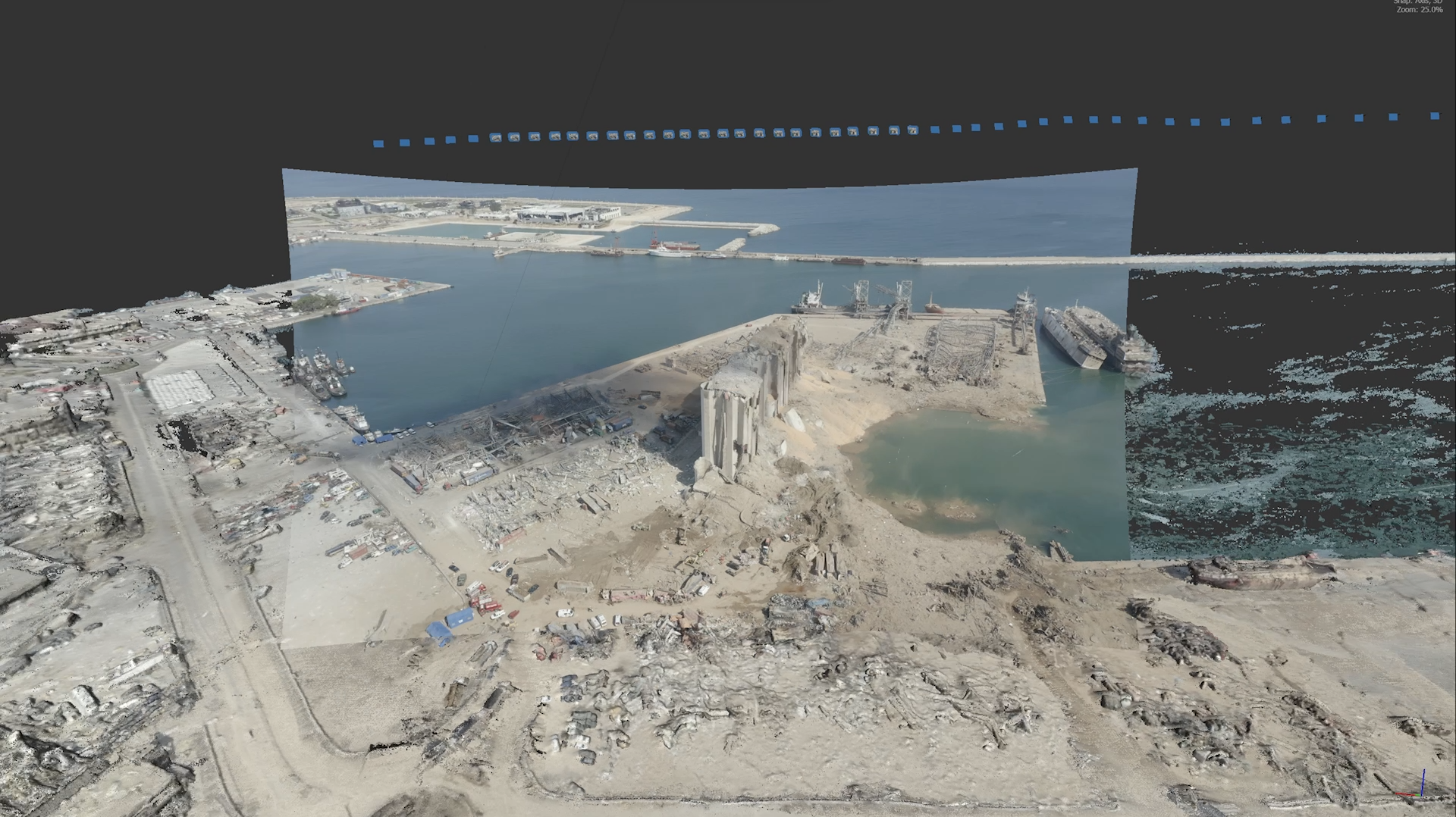
Video | Destruction of destruction: The Beirut Port silos
Febrayer partnered with Forensic Architecture to create a unified narrative of the silo's collapse
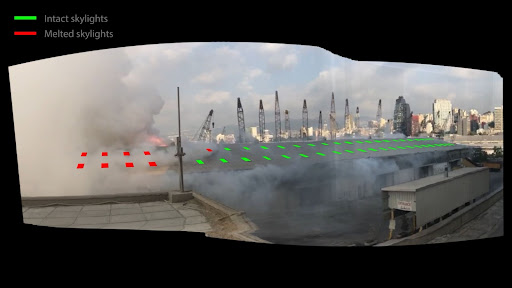
Video | Not the welders
Mada Masr obtained copies of the FBI and Lebanese Internal Security reports outlining their accounts

Beirut: Images on fire
Your support is the only way to ensure independent, progressive journalism survives.
You have a right to access accurate information, be stimulated by innovative and nuanced reporting, and be moved by compelling storytelling. Subscribe now to become part of the growing community of members who help us maintain our editorial independence.
Join us